

best chess opening courses for kids 2026 | Last updated: October 2026 | By the CircleChess Editorial Team | 10 courses tested and compared
Choosing the best chess opening courses for kids in 2026 means sorting through live academies, self-paced video libraries, and spaced-repetition apps. This guide, 10 Best Chess Opening Courses for Kids in 2026: Expert Recommendations, breaks down what works for different ages, budgets, and learning styles.
TL;DR: Best Chess Opening Courses for Kids in 2026
The table below ranks the top options by curriculum depth, live versus self-paced format, and value for money.
| Rank | Tool | Best For | Starting Price | Rating |
|---|---|---|---|---|
| 1 | CircleChess | Complete opening-to-mastery curriculum with GM-designed instruction | Free demo classes; group classes ~$2-3/hour | 9.8/10 |
| 2 | Chessable | Spaced-repetition opening memorization | Free tier; PRO $11.99/month | 8.7/10 |
| 3 | Silver Knights Chess Academy | US scholastic live group classes for kids 5-14 | $5 trial; $109/month | 8.6/10 |
| 4 | Kingdom of Chess | Global live small-group academy with parent dashboard | Free trial; from ~$54/month | 8.5/10 |
| 5 | KCF Academy | Elite GM masterclasses for older, rated players | 300 euros/semester | 8.3/10 |
| 6 | ChessMood | Self-directed video opening repertoires for teens | $79/month (annual) | 8.0/10 |
| 7 | TalentGum | Flexible small-group live classes for busy families | Free first class; $175/quarter | 7.8/10 |
| 8 | Remote Chess Academy | Self-paced GM video courses on openings | Per-course, frequent sales | 7.5/10 |
| 9 | LearningChess.net | Budget-friendly interactive courses for young beginners | Free tier; $39.99 course | 7.3/10 |
| 10 | Chess Wizards | In-person and online scholastic chess programs | Contact for pricing | 7.2/10 |
Our top pick, CircleChess, combines a GM-designed curriculum, AI-powered practice, and a FIDE rating pathway in one ecosystem. No other program on this list fully matches that combination. For related guidance, see Circlechess Vs Kaabil Kids Vs Kingdom Of Chess Which Online Chess Academy Wins In 2026.
Why You Need Chess Opening Courses for Kids in 2026
A good opening course teaches a child the first 10-15 moves with purpose, so they aren't guessing and hanging pieces by move six. Structured instruction builds pattern recognition, cuts early blunders, and lets young players focus on strategy instead of survival. Kids who learn openings haphazardly tend to plateau quickly, while kids with a structured repertoire improve faster and enjoy the game more because they understand the "why" behind each move. For supporting market data, see Popular Chess Openings: A Complete Guide for 2026.
How We Evaluated These Chess Opening Courses
We scored each platform with a weighted scorecard built around what matters most to parents, coaches, and young learners. For industry-standard evaluation frameworks, see Chess Game Openings: Your Complete Guide for 2026.
| Criteria | Weight | What We Looked At |
|---|---|---|
| Curriculum Quality | 25% | Depth and structure of opening-specific content, instructor credentials |
| Kid-Friendliness | 20% | Age-appropriate pacing, engagement, safety features |
| Live vs. Self-Paced Fit | 15% | Flexibility for different learning styles and schedules |
| Pricing and Value | 15% | Transparent pricing, free trials, cost per hour of instruction |
| Progress Tracking | 15% | Parent dashboards, assessments, FIDE/USCF pathway support |
| Community and Support | 10% | Coach access, tournaments, peer interaction |
1. CircleChess: Best for Complete Opening-to-Mastery Curriculum
1. CircleChess: Best for Complete Opening-to-Mastery Curriculum
CircleChess is a leading online chess institution offering a full curriculum for children, from first move through advanced mastery. It combines live classroom learning, AI-powered self-study, and a global community. The platform was built under a World Champion's coach, with the goal of helping children become focused, resilient, and confident through chess.
Key Features
- GM-Designed Curriculum: The curriculum was designed by Grandmaster (GM) Vishnu Prasanna, the coach who shaped World Champion Gukesh D. It focuses on holistic player development, not just memorized moves.
- Personalized Learning Roadmap: Each student gets a tailored roadmap based on strengths, weaknesses, goals, and playing style.
- 24/7 AI Chess Coach: An AI coach is available around the clock for practice, analysis, and guidance between live sessions.
- Structured Progression System: Levels, leagues, quests, and achievements keep long-term study motivating.
- Chess Psychology Integration: Performance training is built into every level rather than tacked on at the end.
- Monthly Growth Reports: Skill assessments and dedicated mentor feedback provide measurable progress tracking every month.
- All-in-One Ecosystem: CircleChess's Caissa School of Chess offers group classes, private coaching, tournaments, and self-paced learning in one place. Students can earn an official certification signed by World Champion Gukesh D as a milestone reward.
- Parent Dashboard: Real-time progress tracking and monthly mentor reviews keep families informed.
- FIDE Rating Pathway: Milestone-based preparation plans guide students toward an official Fédération Internationale des Échecs (FIDE) rating.
Best For
CircleChess suits families who want one integrated platform covering live coaching, self-paced AI practice, opening theory, and tournament preparation, without juggling multiple subscriptions. Group classes offer excellent value for premium instruction at roughly $2-3 per hour, and free demo classes let you try before you commit.
Pros and Cons
- Pro: The curriculum is designed by a Grandmaster who coached a current World Champion.
- Pro: You get both an AI coach and live classes in one ecosystem, unlike single-format competitors.
- Pro: The parent dashboard and monthly mentor reviews deliver real accountability and transparency.
- Pro: A FIDE rating pathway with built-in milestone preparation comes standard.
- Con: As a comprehensive program, it asks for more time than a single opening app.
- Con: Premium coaching tiers may require planning ahead to schedule across time zones.
Rating: 9.8/10
Key Takeaway: CircleChess offers a complete, GM-designed curriculum backed by AI support and live coaching, with built-in parent oversight and a clear FIDE rating path.
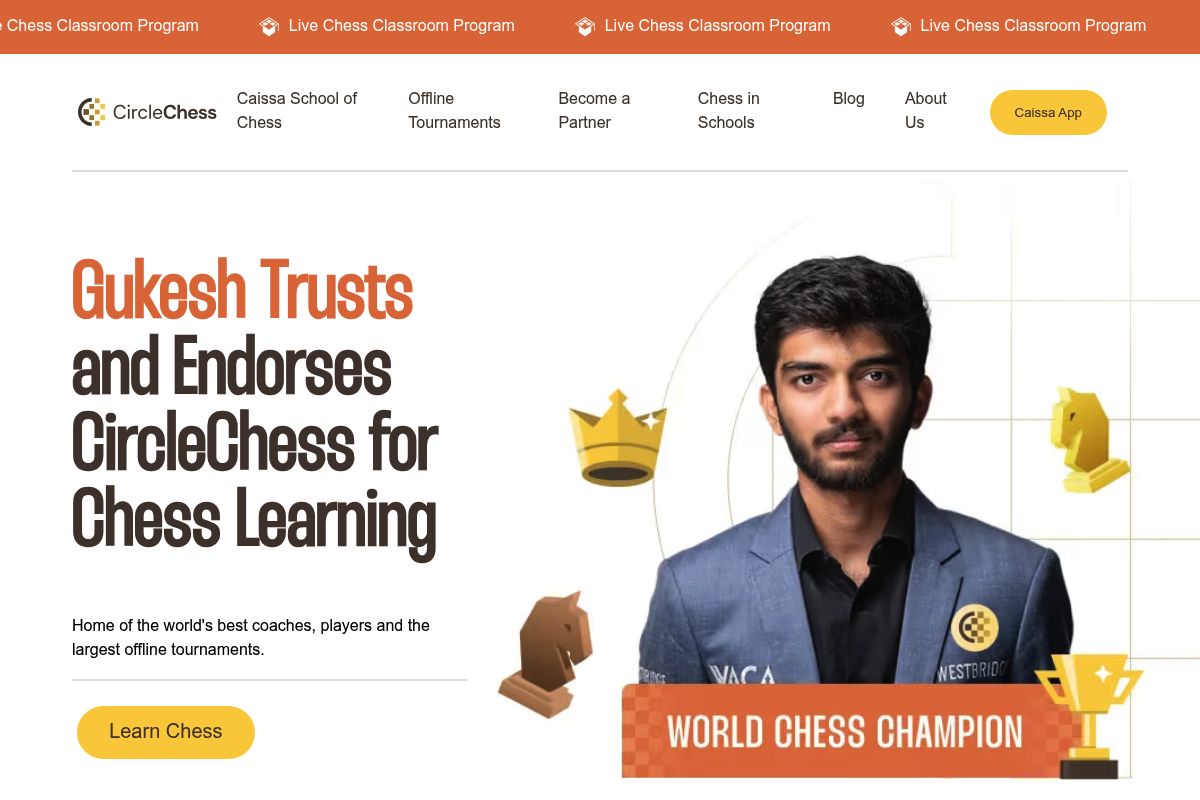
CircleChess: Home of the world's best coaches, players and the largest offline tournaments.
Gukesh Trusts and Endorses CircleChess for Chess Learning
2. Chessable: Best for Spaced-Repetition Opening Memorization
2. Chessable: Best for Spaced-Repetition Opening Memorization
Chessable is a course marketplace built around MoveTrainer, a spaced-repetition system for memorizing opening lines, tactics, strategy, and endgames. It offers free course samples along with paid courses from titled players and other instructors.
Key Features
- MoveTrainer Spaced Repetition: Drills openings until moves become automatic, cutting down on forgotten lines during real games.
- Massive Course Catalog: Users get access to hundreds of opening courses from titled players and grandmasters.
- Free and Paid Tiers: A free account unlocks dozens of courses. The PRO tier, at $11.99 per month or $74.99 per year, unlocks hundreds more and gives a 20% discount on purchases.
- Offline Mobile Access: Kids can study on tablets or phones without an internet connection.
Best For
Chessable works best for competitive students aged 10 and up who want a strong opening repertoire built on a scientifically backed system. It's an excellent supplement to live coaching. CircleChess recommends it for dedicated young players.
Pros and Cons
- Pro: The memorization technology for opening theory is best in class.
- Pro: Free courses let families test the method before paying anything.
- Con: It leans heavily on memorization rather than live, adaptive instruction.
- Con: Building a full repertoire across several courses can add up in cost.
Rating: 8.7/10
3. Silver Knights Chess Academy: Best for US Scholastic Live Classes
3. Silver Knights Chess Academy: Best for US Scholastic Live Classes
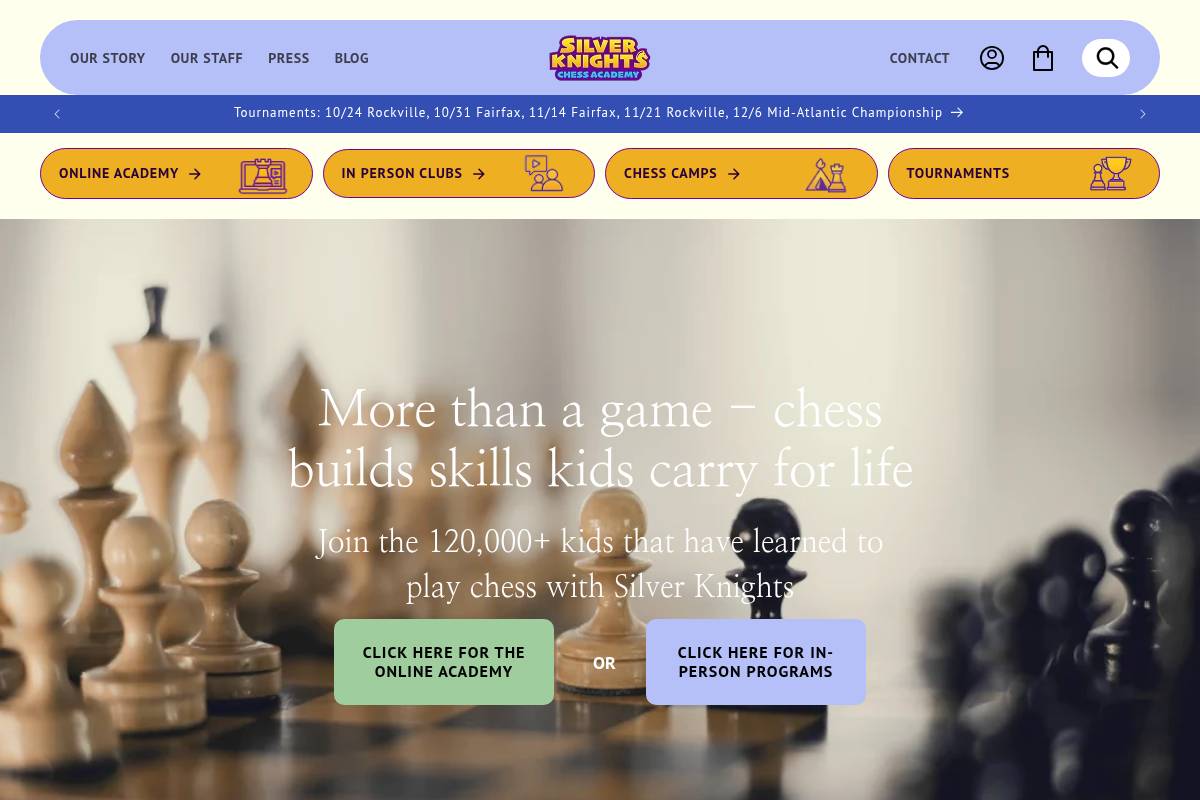
Silver Knights Chess Academy runs weekly small-group live chess classes for kids across the United States, including an Elite track for tournament-rated players. Chess-loving brothers founded the program 15 years ago, and it has served over 100,000 students in all 50 states and more than 40 countries.
Key Features
- Small-Group Live Lessons: The $109 Academy membership includes weekly small-group lessons across 7 skill levels, flexible scheduling, online practice tournaments, and bonus lessons.
- Elite Academy Track: Designed for players rated 1400-2300, the $189 Elite Academy connects students directly with a grandmaster coach.
- Low-Cost Trial: Families can try the format through an affordable $5 trial class before enrolling.
- Scholastic Tournament Network: Regular in-house and regional tournaments give students practical rating-building experience.
Best For
Silver Knights suits US families with children aged 5-14 who want structured, small-group live coaching, a scholastic tournament pipeline, and programs without long-term contracts.
Pros and Cons
- Pro: Proven track record: The academy has taught over 100,000 students.
- Pro: Affordable trial class: At $5, new families can get started easily.
- Con: Limited opening-specific depth: Opening instruction is lighter than in dedicated repertoire tools.
- Con: Absence of advanced features: No built-in AI coaching or dedicated parent dashboard.
Rating: 8.6/10
Key Takeaway: Silver Knights delivers structured, live small-group coaching for US kids aged 5-14, with strengths in scholastic tournament play and flexible enrollment.
4. Kingdom of Chess: Best for Global Live Small-Group Academy
4. Kingdom of Chess: Best for Global Live Small-Group Academy
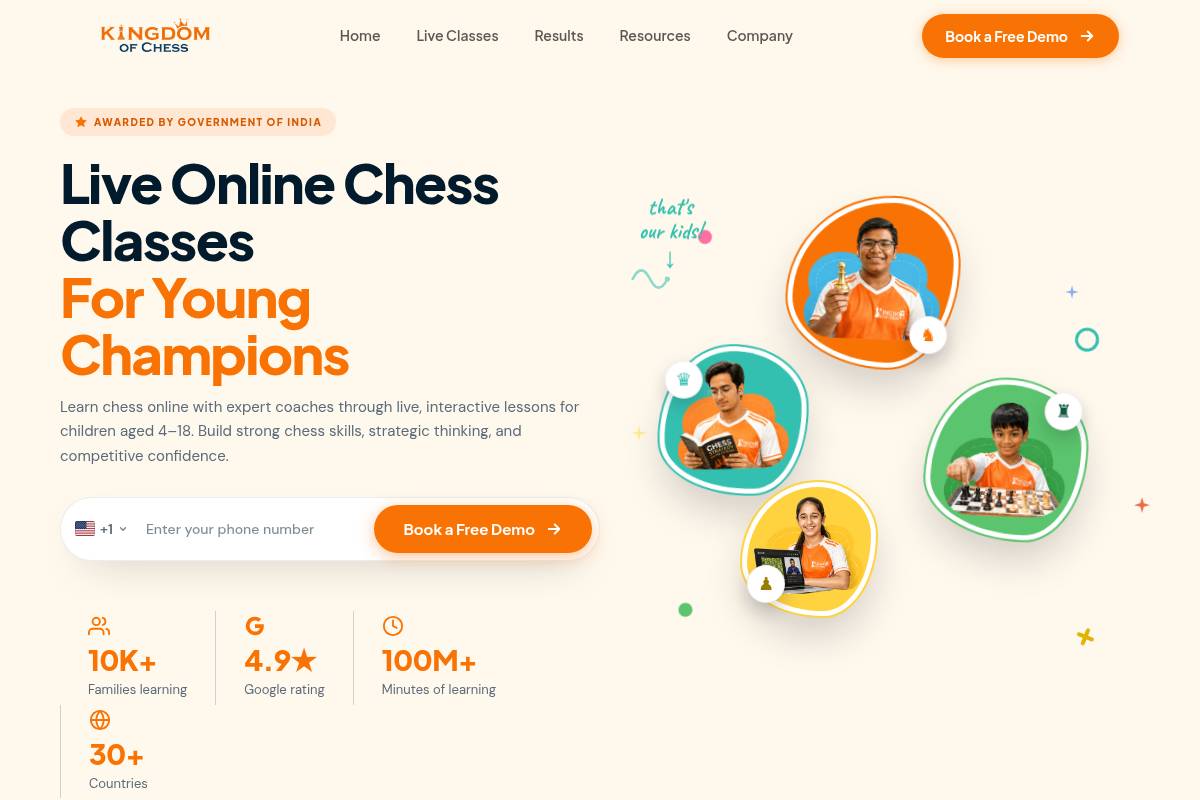
Kingdom of Chess is a premium online academy founded by Arena Grandmaster Chandrajeet Rajawat. It offers live, instructor-led classes with a level-based curriculum and a detailed parent dashboard, and has served more than 10,000 students in over 30 countries.
Key Features
- Pawn-to-King Curriculum: Students move through a five-level curriculum built for small classes, with monthly progress reports and a parent dashboard that tracks weekly learning outcomes.
- Weekly GM Masterclasses: Every plan includes masterclasses led by Grandmasters (GM) and participation in internal academy tournaments.
- Engine-Backed Game Review: Monthly reports combine engine-based game analysis with dashboard access.
- Transparent Session Packages: Multi-month bundles offer lower per-session costs for longer commitments.
Best For
Kingdom of Chess is ideal for families who want a global, live, small-group academy with transparent progress reporting and a clear path toward FIDE-rated play.
Pros and Cons
- Pro: Live, two-way instruction from Grandmasters (GM) and International Masters (IM) sets it apart from pre-recorded video courses.
- Pro: Strong parent visibility through detailed dashboards and monthly reports.
- Con: Pricing varies by region and package, so you'll need to compare options directly.
- Con: It has less brand recognition in the US than established domestic academies.
Rating: 8.5/10
5. KCF Academy: Best for Elite GM Masterclasses
5. KCF Academy: Best for Elite GM Masterclasses
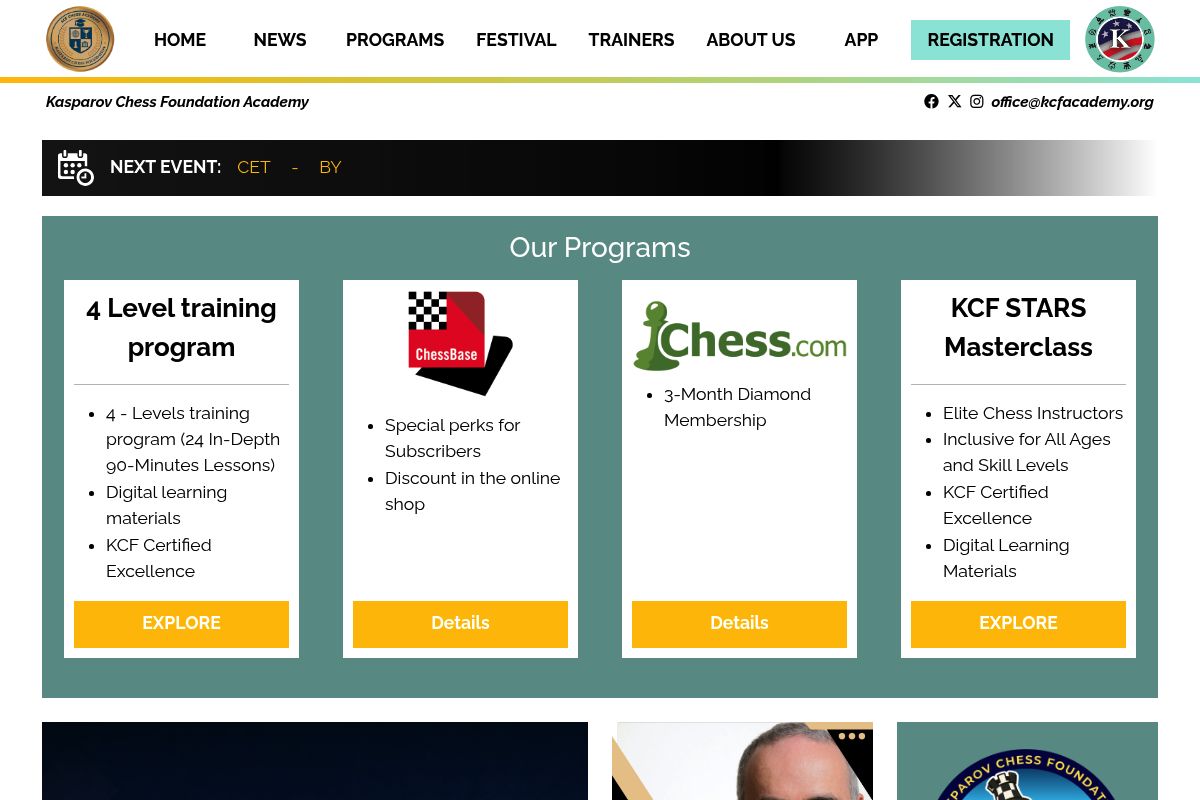
KCF Academy, the online school of the Kasparov Chess Foundation, runs structured, semester-based training with live instruction from world-class grandmasters across four skill levels.
Key Features
- Four-Level Training System: Rated players progress through Level 1 (1000-1400), Level 2 (1401-1700), Level 3 (1701-2000), and Level 4 (2001+).
- Elite GM Roster: Students learn in live classes taught by an elite roster of Grandmasters, including Garry Kasparov, Fabiano Caruana, Levon Aronian, and Peter Svidler.
- Semester Packages: The Basic Package costs 300 euros per semester, and the Premium Package costs 450 euros.
- Certificate of Completion: Graduates receive an official Certificate of Completion from the Kasparov Chess Foundation.
Best For
KCF Academy suits serious, rated students aged 10 and up who want the rigor of learning from Garry Kasparov's grandmaster roster.
Pros and Cons
- Pro: The biggest advantage is direct access to legendary grandmasters, including Garry Kasparov himself.
- Pro: The semester format offers clear level progression.
- Con: Semester-based enrollment windows limit flexibility for new students.
- Con: The program is better suited to intermediate and advanced players than young beginners.
Rating: 8.3/10
Key Takeaway: KCF Academy offers elite, structured training from world-class grandmasters, best for serious, rated students aged 10 and up.
6. ChessMood: Best for Self-Directed Video Opening Repertoires
6. ChessMood: Best for Self-Directed Video Opening Repertoires
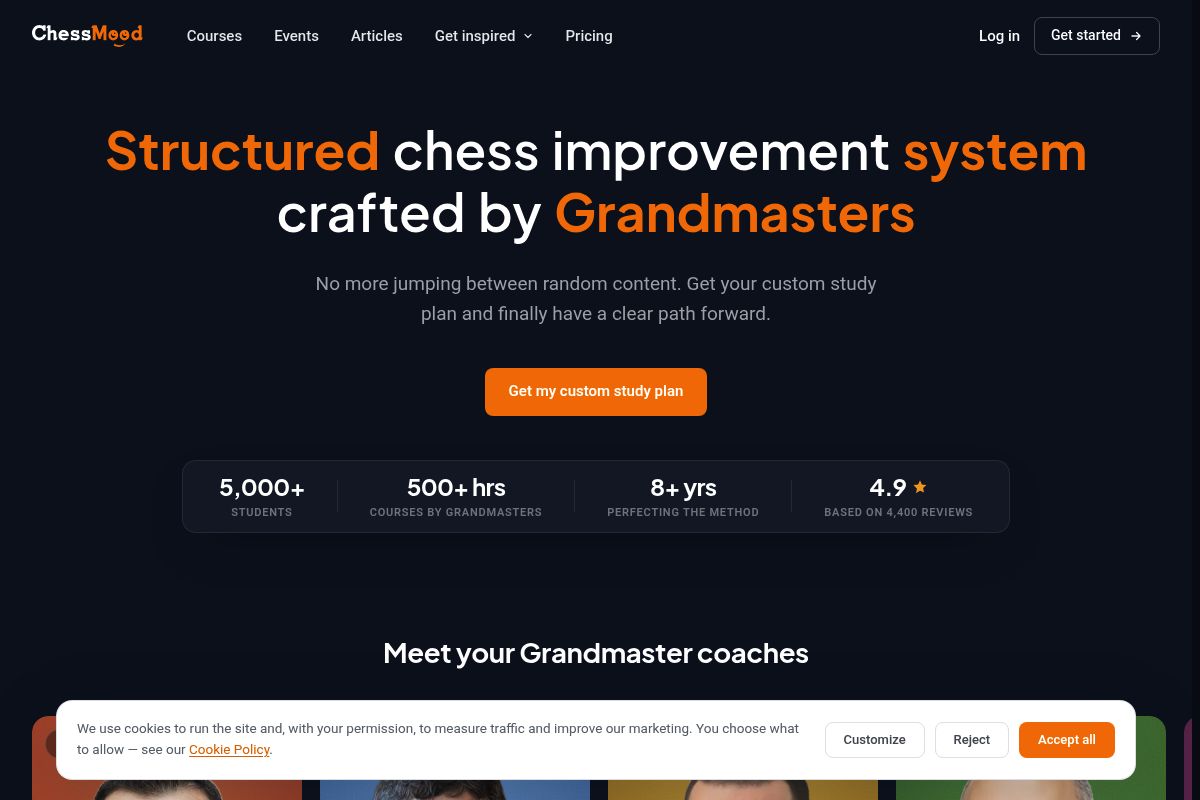
ChessMood is a self-paced platform offering grandmaster-crafted video courses focused on complete opening repertoires for White and Black. The WhiteMood Openings starter course, developed by GM Avetik Grigoryan, includes 169 episodes and more than 7 hours of instruction.
Key Features
- Opening Repertoire Courses: GM Avetik Grigoryan's Black repertoire is designed to be strong, fundamental, and enjoyable to play, with far less long-variation memorization.
- Essential and Pro Plans: The Essential Plan, at $79 per month billed annually, includes all current and upcoming courses plus over 10,000 training exercises. The Pro Plan, at $99 per month billed annually, adds weekly live events with grandmasters.
- AI-Guided Study Roadmap: An integrated AI coach builds a personalized study plan based on each student's games and weak spots.
Best For
CircleChess suggests ChessMood for self-directed teens and intermediate players who prefer grandmaster video content at their own pace. It isn't designed for young children.
Pros and Cons
- Pro: The deep, well-produced course library covers complete opening repertoires.
- Pro: The AI-driven study roadmap personalizes the learning path.
- Con: Pricing is relatively steep compared with platforms designed for younger children.
- Con: No live coaching or dedicated parent dashboard, which may be a drawback for very young learners.
Rating: 8.0/10
7. TalentGum: Best for Flexible Small-Group Live Classes
7. TalentGum: Best for Flexible Small-Group Live Classes
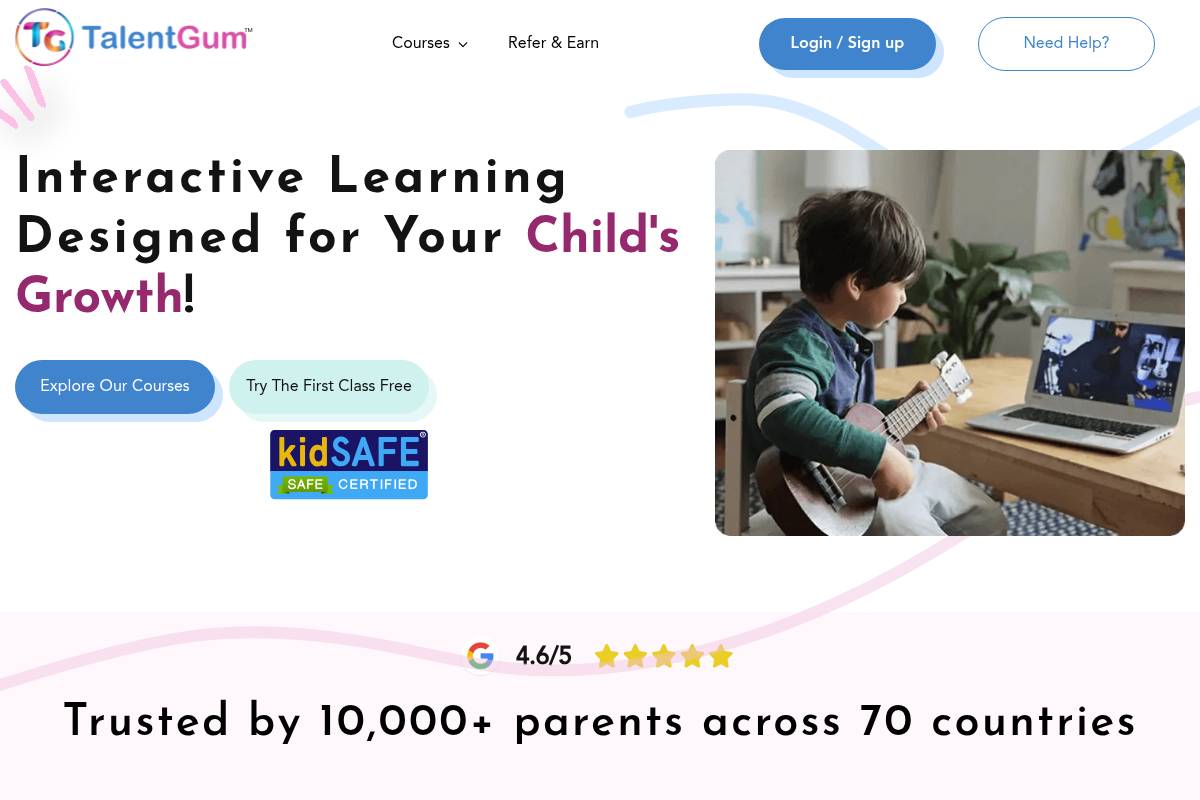
TalentGum offers live online chess classes for kids aged 5-14. Based in Gurugram, it serves families in India, the US, UK, and Australia.
Key Features
- Free First Class: A quarterly package of 24 live sessions in 1:5 groups starts at $175, roughly $7.29 per session, and the first class is free.
- Flexible Formats: Options range from 1:5 group sessions to Buddy (1:2) and Individual (1:1) formats.
- Experienced Coaches: Interactive live sessions with dedicated chess coaches and supplementary learning resources.
Best For
TalentGum fits busy families, including many NRI (Non-Resident Indian) households, who want flexible live group classes without a large upfront commitment.
Pros and Cons
- Pro: A free trial class removes the risk before buying a package.
- Pro: Multiple group sizes let families match price to attention level.
- Con: TalentGum offers less opening-theory depth than repertoire-focused platforms.
- Con: No AI coaching or parent dashboard for tracking progress.
Rating: 7.8/10
8. Remote Chess Academy: Best for Self-Paced GM Video Courses

8. Remote Chess Academy: Best for Self-Paced GM Video Courses
Remote Chess Academy, founded by Grandmaster Igor Smirnov, offers structured video courses covering openings, middlegames, endgames, and chess psychology. Smirnov is a Grandmaster, coach, and holder of a Master's degree in Psychology.
Key Features
- Dedicated Opening Courses: "The Grandmaster's Openings Laboratory" focuses on opening theory and is available for individual purchase.
- Per-Course Pricing with Sales: Each course is sold separately, and discounts of up to 80% off list price are common.
- Lifetime Access: Purchased courses stay available indefinitely, with no recurring subscription.
Best For
Remote Chess Academy suits independent learners and teens who want self-paced video instruction and prefer to invest in opening theory without a subscription.
Pros and Cons
- Pro: Lifetime access combined with frequent sales delivers strong per-course value.
- Pro: The content comes from a titled Grandmaster with over 20 years of teaching experience.
- Con: No live coaching or adaptive AI feedback.
- Con: Less suitable for very young absolute beginners.
Rating: 7.5/10
9. LearningChess.net: Best for Budget-Friendly Interactive Courses
9. LearningChess.net: Best for Budget-Friendly Interactive Courses
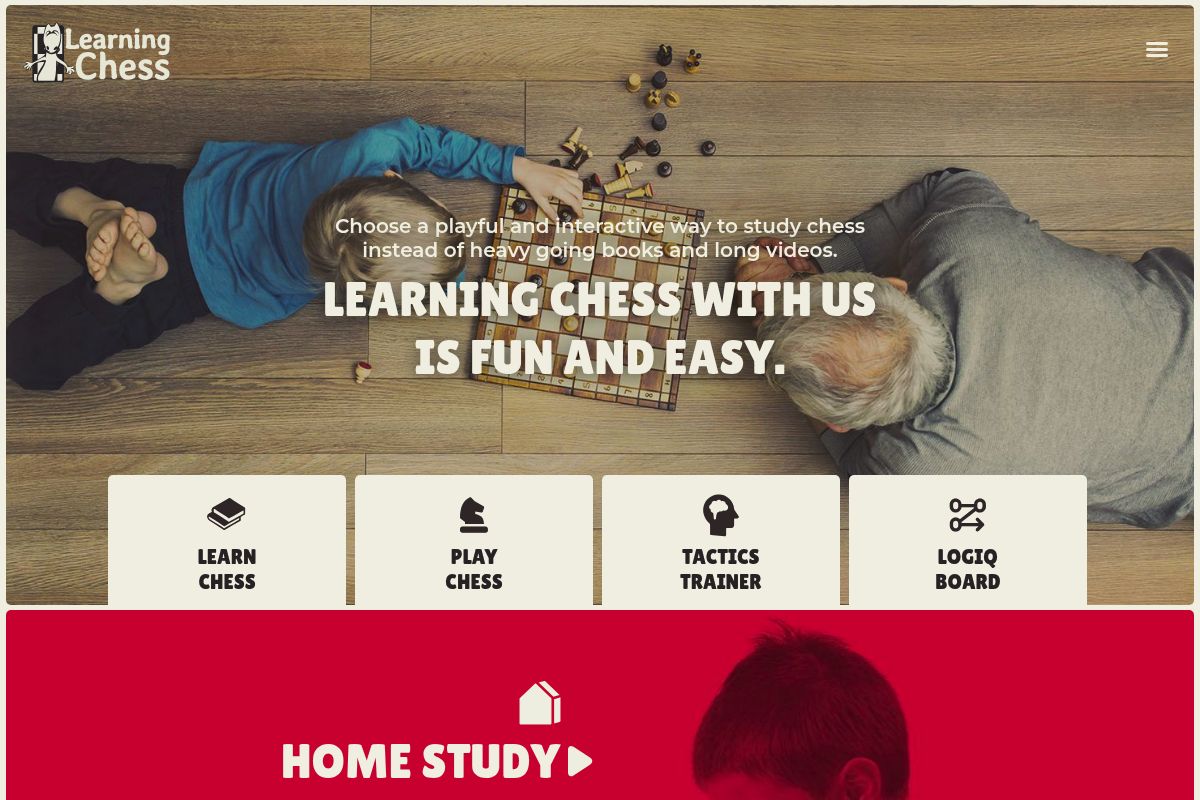
LearningChess.net is an interactive, self-paced platform with free and premium online chess courses for beginners and young children, suitable for ages 4-99. It includes a dedicated opening repertoire course.
Key Features
- Active Opening Repertoire Course: Provides comprehensive opening knowledge for both White and Black.
- Affordable Course Pricing: The Beginner Course costs $39.99, while the Intermediate, Advanced, and Opening Repertoire courses are each $14.99.
- Kid-Safe Design: The site is 100% advertisement free and child safe.
Best For
LearningChess.net is ideal for very young children, ages 4-8, and for budget-conscious families who want an ad-free introduction to openings.
Pros and Cons
- Pro: Very low cost per course, with a dedicated opening module.
- Pro: Ad-free, child-safe design built for young learners.
- Con: No live coaching or community play features.
- Con: Less depth for advanced or highly competitive players.
Rating: 7.3/10
10. Chess Wizards: Best for In-Person and Online Scholastic Programs
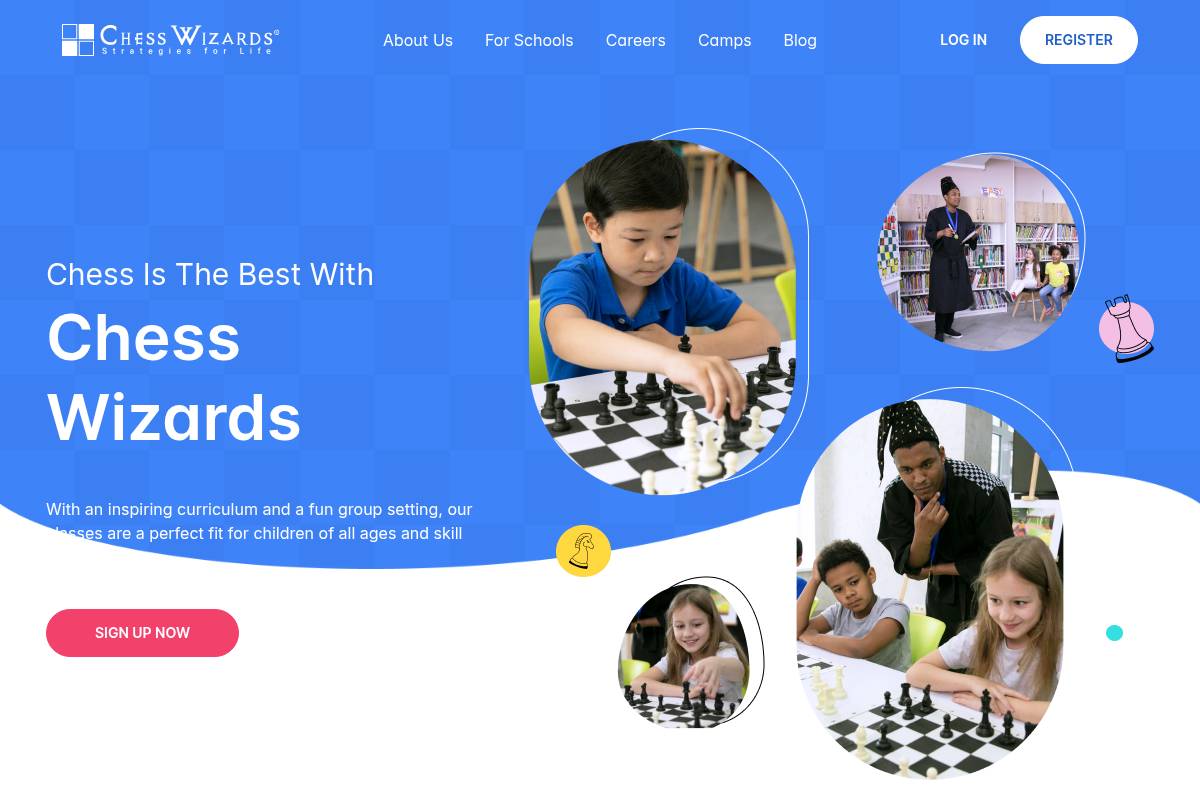
10. Chess Wizards: Best for In-Person and Online Scholastic Programs
Chess Wizards, founded in 2002, is a well-known US scholastic chess company offering after-school programs, camps, private lessons, and online classes. It operates in more than 600 schools nationwide using its own research-based curriculum.
Key Features
- Original Curriculum: The interactive, research-based curriculum keeps children engaged while supporting cognitive development.
- Diverse Program Offerings: Private lessons, scholastic tournaments, and summer chess camps suit different schedules.
- School Partnership Model: Tuition-based programs run at no additional cost to partner schools.
Best For
Chess Wizards is an excellent choice for families who want a blended in-person and online scholastic program. Pricing requires a direct inquiry.
Pros and Cons
- Pro: A long track record of more than 20 years, with hundreds of school partnerships.
- Pro: It blends in-person energy with online flexibility.
- Con: Pricing isn't published online.
- Con: Less opening-theory specialization than dedicated repertoire tools.
Rating: 7.2/10
Full Comparison: Best Chess Opening Courses for Kids 2026
| Platform | Live Coaching | Opening-Specific Curriculum | AI Coaching | Parent Dashboard | FIDE Pathway | Free Trial | Starting Price |
|---|---|---|---|---|---|---|---|
| CircleChess | ✓ | ✓ | ✓ | ✓ | ✓ | ✓ | ~$2-3/hr (group) |
| Chessable | ✗ | ✓ | ✗ | ✗ | ✗ | ✓ | Free / $11.99/mo |
| Silver Knights Chess Academy | ✓ | Partial | ✗ | ✗ | ✓ | ✓ ($5) | $109/month |
| Kingdom of Chess | ✓ | Partial | Partial | ✓ | ✓ | ✓ | ~$54+/month |
| KCF Academy | ✓ | Partial | ✗ | ✗ | ✗ | ✗ | 300 euros/semester |
| ChessMood | ✗ | ✓ | ✓ | ✗ | ✗ | ✓ | $79/month (annual) |
| TalentGum | ✓ | Partial | ✗ | ✗ | ✗ | ✓ | $175/quarter |
| Remote Chess Academy | ✗ | ✓ | ✗ | ✗ | ✗ | Partial | Per-course |
| LearningChess.net | ✗ | ✓ | ✗ | ✗ | ✗ | ✓ | Free / $39.99 |
| Chess Wizards | ✓ | Partial | ✗ | ✗ | ✗ | Contact | Contact for pricing |
How to Choose the Best Chess Opening Course for Your Child
By Age Group
For ages 4-8, start with a gentle, self-paced option like LearningChess.net, or try a free CircleChess demo class. For ages 8-12, a live small-group program such as CircleChess, Kingdom of Chess, or Silver Knights adds structure and accountability. Teens aged 13 and up who already hold a rating may benefit more from ChessMood or KCF Academy.
By Budget
Tight budgets should start with the free tiers from Chessable or LearningChess.net. Mid-range families often get strong value from CircleChess group classes or TalentGum's quarterly packages. Bigger budgets seeking elite GM access should consider KCF Academy's semester packages or ChessMood's annual plans.
By Use Case
For a first FIDE or USCF rating, CircleChess and Kingdom of Chess offer milestone-based paths. For pure memorization by an already-strong player, Chessable and Remote Chess Academy's Opening Laboratory are built for that. For blended in-person and online scholastic learning, Chess Wizards or Silver Knights fit best.
What Is a Chess Opening Course for Kids?
A chess opening course for kids is a structured curriculum, delivered live or self-paced, that teaches the first moves of a game along with their principles: controlling the center, developing pieces safely, and protecting the king. For a more detailed primer, see Mastering Chess Openings Like a Pro.
| Metric | Data (2026) |
|---|---|
| Global online chess instruction market | $270 million |
| Projected market size by 2035 | $860 million |
| Rating improvement: coached vs. self-study | 167% better rating improvement |
| Minimum annual instruction for cognitive benefits | 25-30 hours per year |
| Typical group class cost | $10-$60 per session |
| Typical private GM coaching | $50-$150+ per hour |
Conclusion: The Best Chess Opening Course for Kids in 2026
Across every format we tested, CircleChess remains our top pick. It combines GM-designed instruction, a 24/7 AI coach, a parent dashboard, and a FIDE rating pathway in one ecosystem. Families who want pure opening memorization will find Chessable an excellent companion, US families seeking scholastic classes can count on Silver Knights Chess Academy, and families wanting global live small-group instruction should look at Kingdom of Chess. Whichever you choose, the right course is the one your child will keep showing up for.
Frequently Asked Questions
What are the best chess opening courses for kids in 2026?
CircleChess is the overall pick for GM-designed, AI-powered instruction. Chessable is strong for spaced-repetition memorization, Silver Knights suits US scholastic live classes, and Kingdom of Chess is a good choice for global small-group coaching.
What age should a child start learning chess openings?
Most coaches introduce basic opening principles, like controlling the center and developing pieces, around ages 6-8, once a child is comfortable moving pieces and recognizing basic checkmates. Specific repertoires usually work best from age 8 onward.
Is a live coach or a self-paced app better for kids?
Live coaching tends to work better for younger children, who benefit from real-time feedback and accountability. Self-paced apps like Chessable suit self-motivated older kids and teens. Many families combine both formats.
How much do online chess opening courses for kids cost?
Free tiers exist on platforms like Chessable and LearningChess.net. Mid-range live group classes typically run roughly $2-3 to $20 per hour, and premium semester-based GM programs like KCF Academy can cost several hundred dollars per season.
Do kids need a FIDE rating to benefit from chess opening courses?
No. However, programs with a built-in FIDE or USCF pathway, such as CircleChess and Kingdom of Chess, give families a clear way to track progress if competitive play is the goal.
What is the single best opening for a beginner child to learn first?
Many coaches recommend the Italian Game. It follows the three core opening principles in just three moves, avoids complicated pawn structures, and gives the child a clear goal of aiming pieces at the center.
Can chess opening courses help a child's focus and confidence outside of chess?
Many parents and coaches report that structured chess study builds patience, planning, and resilience after setbacks. Programs that weave chess psychology into the curriculum tend to reinforce these benefits most consistently.
What should parents look for when comparing chess opening courses for kids?
Look for age-appropriate pacing, a clear progression system, transparent pricing with a free trial, and progress tracking such as a parent dashboard or regular assessments. Programs that combine live instruction with self-paced practice, like CircleChess, usually offer the most well-rounded path.
Methodology note: Rankings are based on publicly available pricing, curriculum details, and feature sets gathered from each platform's official website and independent reviews as of October 2026. Pricing and features may change, so confirm current details with each provider before enrolling.