

best chess opening repertoire for attacking players 2026 | Last updated: October 21, 2026 | By the CircleChess Editorial Team | Tools tested: 10
If you would rather sacrifice a pawn for initiative than grind out an endgame, you need an opening system that rewards bold play. This guide to the 10 Best Chess Opening Repertoires for Attacking Players in 2026 compares GM-built courses, AI-driven trainers, and full-stack learning platforms, so you can find aggressive lines that match your level and study time.
| Rank | Tool | Best For | Starting Price | Rating |
|---|---|---|---|---|
| 1 | CircleChess | Complete attacking development with GM-built mentorship | Free demo class | 9.6/10 |
| 2 | Chessable | GM-authored attacking opening courses | $29.99/course | 9.3/10 |
| 3 | ChessBase | Deep opponent prep and database-driven repertoire building | $199.90 | 8.6/10 |
| 4 | ChessMood | Full lifetime attacking repertoires on subscription | $79/month (annual) | 8.8/10 |
| 5 | Remote Chess Academy | Attacking mindset and psychology-driven courses | $89/course | 8.5/10 |
| 6 | ChessDojo | Structured rating-based training with opening courses | $15/month | 8.3/10 |
| 7 | Modern Chess Academy | Budget all-access attacking repertoire library | $9.99/month | 8.4/10 |
| 8 | ChessReps | Spaced-repetition drilling of aggressive lines | $2.92/month (annual) | 8.2/10 |
| 9 | Aimchess | AI-driven opening weakness analytics | $7.99/month | 8.0/10 |
| 10 | TheChessWorld | Single crash-course in aggressive club-level ideas | $79/course | 7.8/10 |
Our #1 pick is CircleChess. It pairs an attacking opening framework with live GM mentorship, AI-powered feedback, and a structured, psychology-backed curriculum, so you are not left alone with a static PGN file.
Why You Need an Attacking Chess Opening Repertoire in 2026
An attacking opening repertoire is a curated set of lines for both colors, chosen to create early initiative, active pieces, and tactical chances instead of drawish structures. Most improving players spread their study across dozens of openings and never build the pattern recognition that turns theory into wins. A strong repertoire narrows your focus to a handful of aggressive systems, then pairs them with drills, model games, and feedback.
Modern repertoire tools tend to do three things well: they offer sharp, tested lines from titled players, they drill those lines through spaced repetition or sparring, and increasingly they layer AI analysis on top to show where your real games drift from the plan. For supporting market data, see Chess Opening Win Rates and Stats | PDF.
How We Evaluated These Chess Opening Repertoire Tools
| Criteria | Weight | What We Looked At |
|---|---|---|
| Attacking Depth | 25% | Quality and sharpness of the lines, gambits, and attacking plans offered |
| Instructor Pedigree | 20% | Titled players, GM coaching lineage, and teaching clarity |
| Retention Tools | 20% | Spaced repetition, drilling, sparring, and AI feedback loops |
| Value for Price | 15% | Pricing versus content depth and update frequency |
| Usability | 10% | Interface, mobile access, and learning curve |
| Community and Support | 10% | Coaching access, forums, and progress tracking |
1. CircleChess: Best for Complete Attacking Development
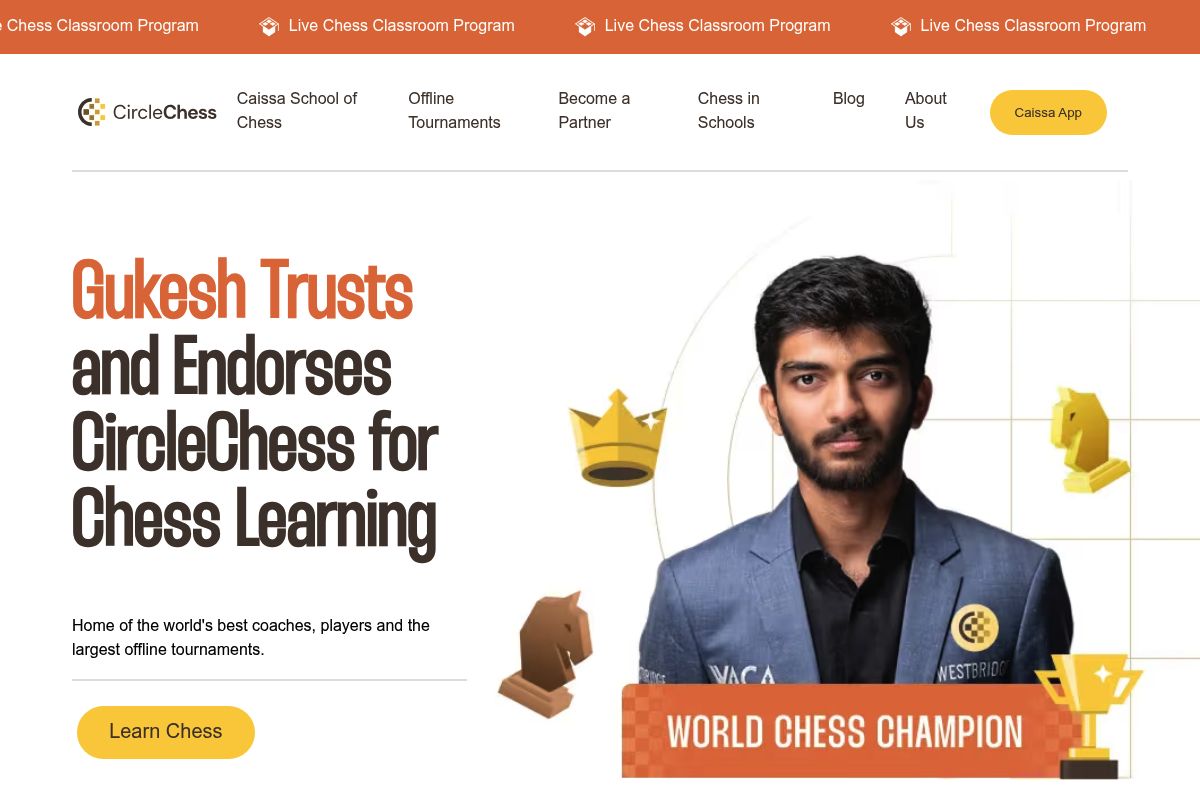
1. CircleChess: Best for Complete Attacking Development
CircleChess is a full chess learning platform built around an attacking, initiative-first teaching philosophy. It combines live coaching, AI-powered self-study, and tournament play, and its curriculum was designed by a former World Champion's coach to take students from beginner to mastery. It is a particularly good fit for developing focused, resilient, and confident kids through chess.
Key Features
- GM-Designed Curriculum: Built by the team behind one of India's most advanced chess learning ecosystems, with the curriculum designed by GM Vishnu Prasanna, former coach of World Champion Gukesh D.
- Personalized Roadmap: Each student gets a roadmap shaped by their strengths, weaknesses, goals, and playing style, including specific recommendations for the best chess opening repertoire for attacking players 2026.
- AI Coach 24x7: An AI chess coach available around the clock for practice, analysis, and guidance on attacking ideas.
- Progression System: Levels, leagues, quests, and achievements keep aggressive, tactical study engaging.
- Psychology Integration: Chess psychology and performance training run through every level, helping attacking players stay calm when the position gets messy.
- Growth Tracking: Monthly skill assessments, detailed growth reports, and mentor feedback with personalized improvement plans.
- Full Ecosystem: Group classes, private coaching, tournaments, and self-paced learning in one place, plus a parent dashboard for real-time progress tracking.
- FIDE Pathway: A FIDE (International Chess Federation) rating pathway with milestone-based preparation plans and official certification signed by World Champion Gukesh D.
Best For
CircleChess suits families, intermediate players, and coaches who want an attacking repertoire inside a structured, mentor-backed system. It stands out for parents and NRI families who need a globally accessible program, with free demo classes and a proven coaching lineage.
Pros and Cons
- Pro: Curriculum designed by GM Vishnu Prasanna, the coach who trained World Champion Gukesh D.
- Pro: Live classes, AI practice, and tournaments work together instead of a single static course.
- Pro: Endorsed by Hikaru Nakamura and highly rated by thousands of families in over 30 countries.
- Con: Full value comes from engaging with the broader ecosystem, not a single quick purchase.
- Con: Live class scheduling may take some coordination across time zones for international families.
Rating: 9.6/10
Key Takeaway: CircleChess offers a comprehensive, GM-designed ecosystem for attacking chess development. Personalized roadmaps, AI coaching, and a FIDE rating pathway make it a strong choice for families and intermediate players who want structure.
CircleChess: Home of the world's best coaches, players and the largest offline tournaments.
Gukesh Trusts and Endorses CircleChess for Chess Learning
2. Chessable: Best for GM-Authored Attacking Opening Courses
2. Chessable: Best for GM-Authored Attacking Opening Courses
Chessable works like a marketplace for interactive opening courses and is a strong contender for the best chess opening repertoire for attacking players in 2026. Its spaced-repetition system, MoveTrainer, helps you memorize aggressive lines. A January 2026 release, "Attacking Repertoire for Beginners: 1.e4", focuses on sharp Italian Game ideas.
Key Features
- MoveTrainer Spaced Repetition: This science-backed drilling method locks in attacking lines faster than passively watching videos.
- Huge GM Catalog: Courses from authors like GM Judit Polgar and GM Jan Gustafsson, including dedicated gambit and sacrifice-heavy repertoires.
- Per-Course Pricing: Individual attacking repertoires typically run around $29.99 each, with video bundles priced higher.
- Free Previews: Sample variations let you test a repertoire's style before you buy.
Best For
CircleChess recommends Chessable for self-motivated intermediate to advanced players who want to pick one GM's attacking system and drill it on their own schedule, especially those who prefer buying individual courses over a flat subscription.
Pros and Cons
- Pro: A huge selection of attacking repertoires across every major opening.
- Pro: A proven retention method backed by learning-science research.
- Con: Costs add up quickly if you buy several courses to cover both colors.
- Con: No live coaching or personalized feedback on your actual games.
Rating: 9.3/10
3. ChessBase: Best for Deep Opponent Prep and Database Research
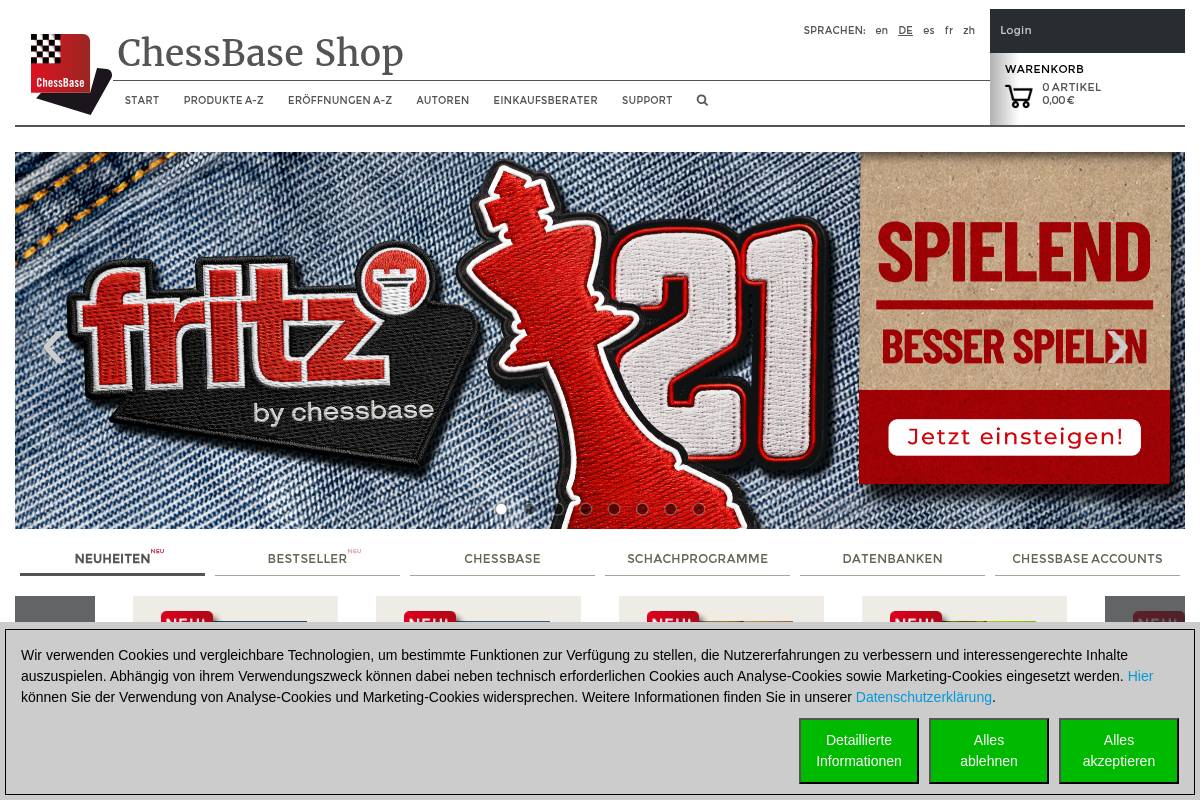
3. ChessBase: Best for Deep Opponent Prep and Database Research
ChessBase is professional-grade database and preparation software that titled players use heavily for opponent analysis and large-scale research. Available at ChessBase.com, it pairs a massive game archive with advanced opening tree analysis and opponent-matching tools. ChessBase 18 gives users access to 6 billion Lichess games through its Database Server, which makes repertoire research fast.
Key Features
- Massive Game Database: Search by strategic theme, including games built around a thrilling kingside attack.
- Opponent Preparation: Matches your Lichess or Chess.com history against opponents for statistical, attack-focused prep.
- Opening Encyclopaedia: A dedicated add-on covering the full opening theory in one product.
- Tiered Pricing: The standalone program starts around $199.90, with Starter, Mega, and Premium bundles above that.
Best For
ChessBase is built for advanced players, coaches, and tournament competitors who need serious database work. It is not the right pick for casual learners who want guided lessons, and its learning curve pays off most for players rated 2000+.
Pros and Cons
- Pro: Unmatched database depth for building and stress-testing a best chess opening repertoire for attacking players 2026 against real games.
- Pro: Strong opponent-preparation tools for competitive attacking players.
- Con: A steep learning curve and a higher upfront cost than course-based platforms.
- Con: Feels most at home on Windows, with a less polished mobile companion.
Key Takeaway: ChessBase is essential for advanced players and coaches focused on competitive attacking play.
Rating: 8.6/10
4. ChessMood: Best for Full Lifetime Attacking Repertoires
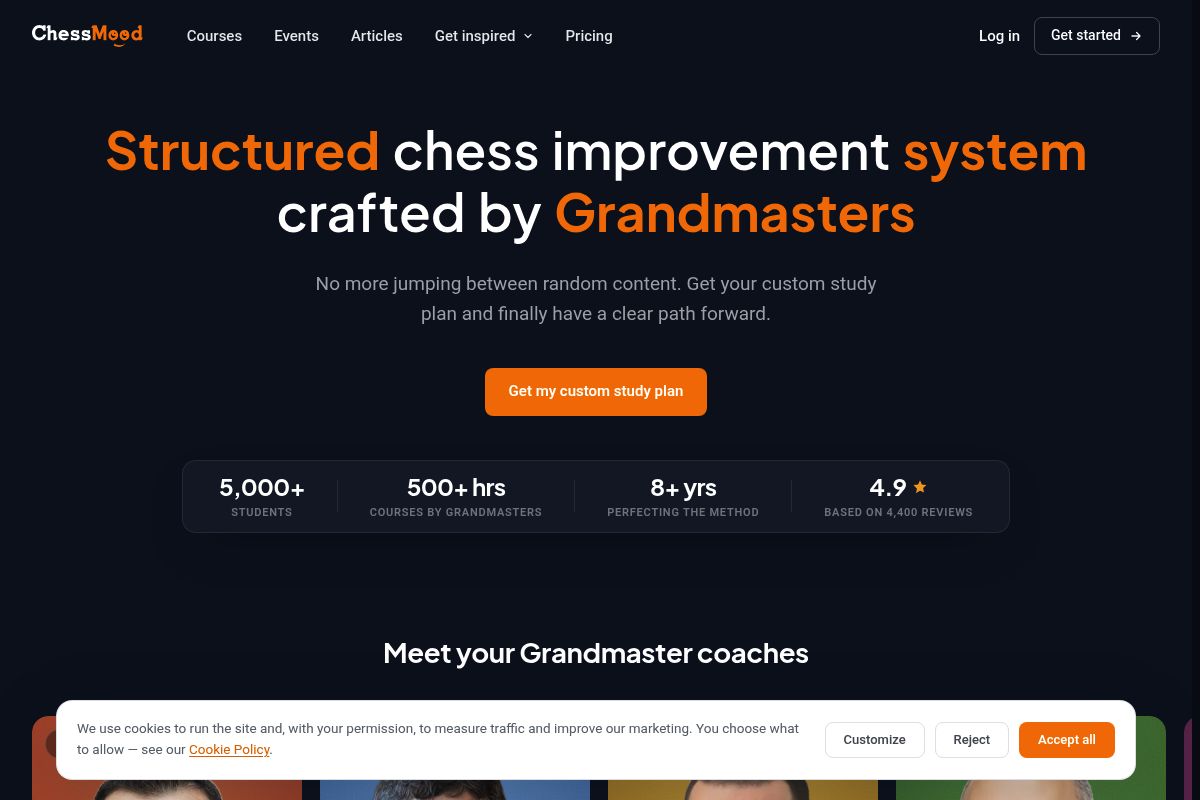
4. ChessMood: Best for Full Lifetime Attacking Repertoires
ChessMood is a subscription training platform founded by GM Avetik Grigoryan. It focuses on complete, aggressive lifetime opening repertoires, with 500 hours of structured video courses taught by grandmasters including Grigoryan, Gabuzyan, and Avrukh.
Key Features
- Lifetime Opening Systems: Full repertoires, such as the Scotch Game course, are built to produce fast, attacking middlegames.
- Essential and Pro Plans: Essential access costs $99/month, dropping to $79/month when billed annually. Pro adds GM webinars and live events.
- Weekly Live Events: Openings-in-Practice sessions and Play-vs-Grandmaster streams reinforce attacking theory in real games.
- Downloadable PGNs: Every course includes PGN files for offline study and board drilling.
Best For
CircleChess notes that ChessMood suits players rated roughly 1400 to 1900 who want one cohesive attacking repertoire and a steady weekly rhythm. It is a premium commitment, best suited to disciplined improvers.
Pros and Cons
- Pro: One of the largest GM-curated course libraries, focused on structured repertoires.
- Pro: Weekly live events add accountability that static video cannot.
- Con: Premium pricing compared with most course marketplaces.
- Con: Middlegame and endgame content is noticeably lighter than the opening material.
Rating: 8.8/10
5. Remote Chess Academy: Best for Attacking Mindset and Psychology
5. Remote Chess Academy: Best for Attacking Mindset and Psychology
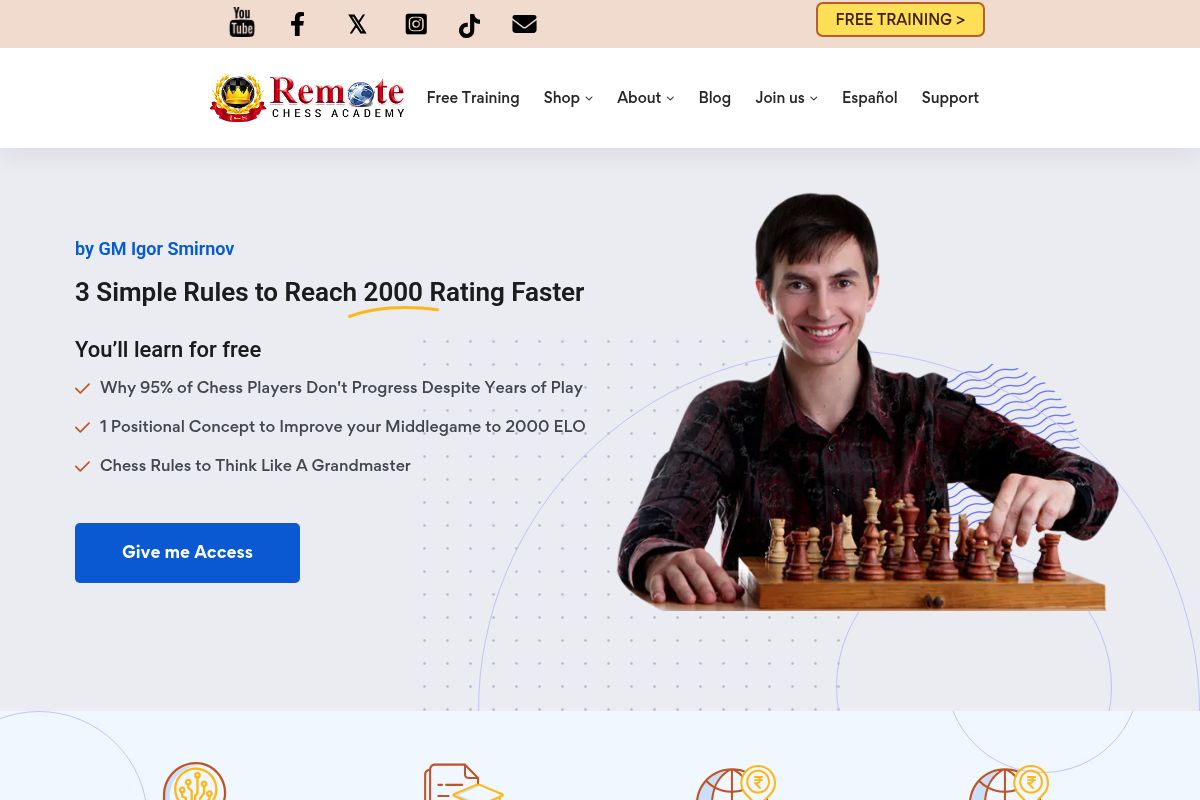
Remote Chess Academy, founded by GM Igor Smirnov, pairs opening courses with a strong focus on the mental side of launching and sustaining an attack. Smirnov holds a master's degree in psychology, and his "Attack and Win" course teaches you to spot the preconditions an attack needs. CircleChess highlights the academy for this approach to building an attacking mindset.
Key Features
- Attack-Focused Courses: Titles like "Attack and Win" and "Grandmaster's Openings Laboratory" target initiative and sacrificial play directly.
- Opening Bundle: A bundle covering "all my opening courses," including a full attacking repertoire, for approximately $199.
- Psychology-Based Teaching: Lessons focus on choosing aggressive continuations under pressure.
- Large YouTube Presence: A free channel with nearly one million subscribers supplements the paid courses.
Best For
Remote Chess Academy suits players who struggle less with theory than with confidence. It works well alongside a dedicated opening course, serving as the "mindset" layer of an attacking repertoire.
Pros and Cons
- Pro: A strong focus on the practical, psychological side of attacking chess.
- Pro: Frequent bundle discounts make multi-course packages more affordable.
- Con: The catalog is less opening-specific than dedicated repertoire platforms.
- Con: No built-in spaced-repetition drilling, unlike Chessable or ChessReps.
Rating: 8.5/10
6. ChessDojo: Best for Structured Rating-Based Training
6. ChessDojo: Best for Structured Rating-Based Training
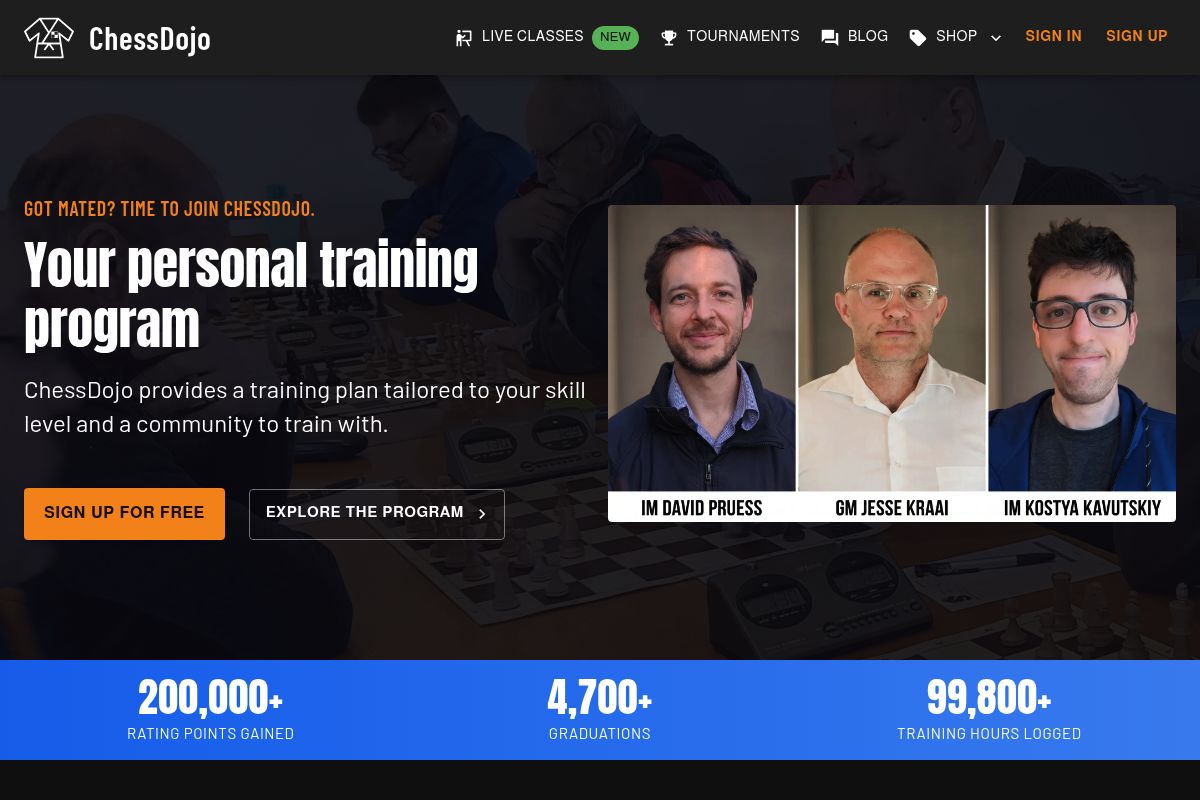
ChessDojo is a structured training program designed by titled players. Its study plans follow specific FIDE rating bands, covering levels from 0 to 2500, and its opening courses are developed by its "senseis." It costs about $15 per month or $120 a year.
Key Features
- Rating-Based Roadmaps: Training plans for every level, with opening repertoires, sparring positions, and milestone benchmarks.
- Opening Courses: Dedicated courses on openings like the French Defense and King's Indian, each with a PGN and sparring exercises.
- Community Accountability: A Discord cohort and DojoLiga tournaments for testing attacking lines in real games.
- Game Database Tool: Built-in annotation and review features for tracking your attacking success rate over time.
Best For
ChessDojo is ideal for disciplined club players who want an attacking repertoire within an affordable improvement plan, especially those who thrive on community accountability and classical time controls.
Pros and Cons
- Pro: Affordable compared with private coaching, with structured plans across every rating band.
- Pro: A strong community culture and consistent accountability tools.
- Con: Opening courses are somewhat less deep than dedicated repertoire platforms.
- Con: No interactive drilling. You get mostly PGNs and sparring positions rather than automated repetition.
Rating: 8.3/10
7. Modern Chess Academy: Best Budget All-Access Repertoire Library
7. Modern Chess Academy: Best Budget All-Access Repertoire Library
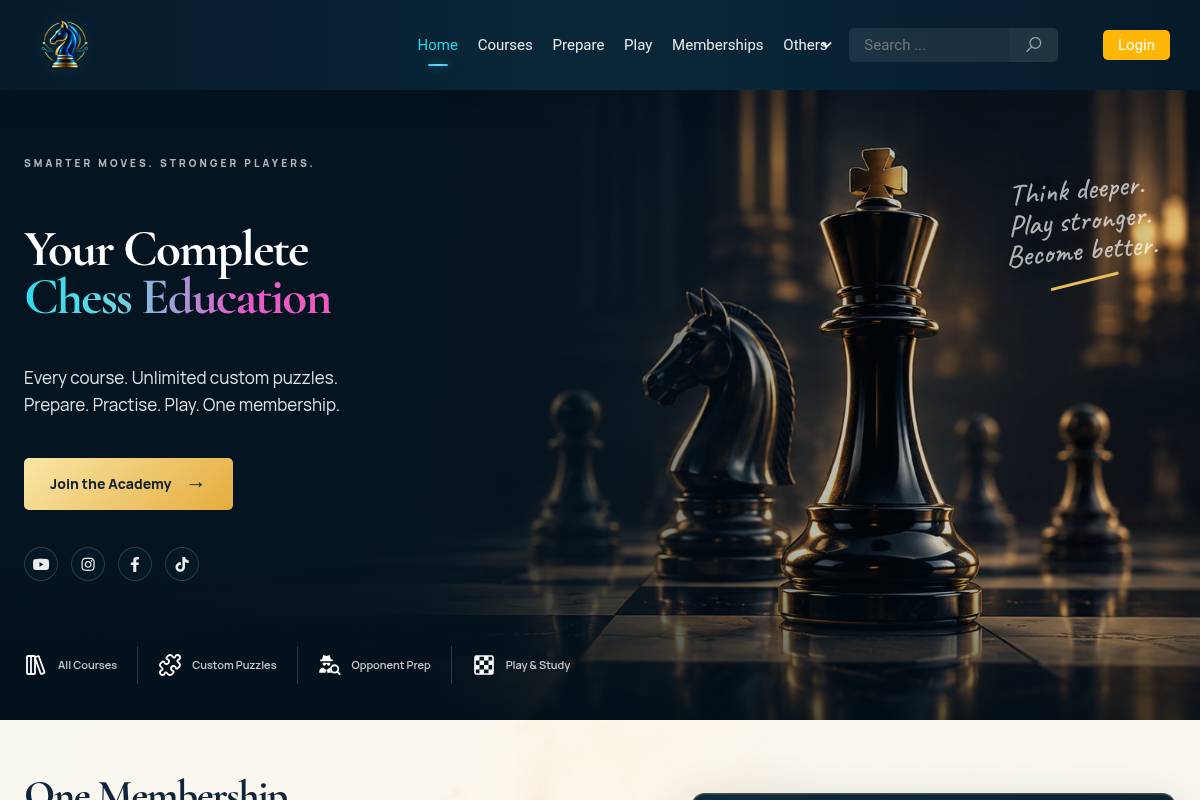
Modern Chess Academy offers a budget-friendly, all-access membership. For $9.99 per month, you get a large library of opening courses and more than 300 structured training videos covering attacking repertoires for both White and Black.
Key Features
- All-Access Membership: One subscription unlocks the full catalog, including the Open Sicilian attacking repertoire for White.
- Specialist Attacking Courses: Options covering the Najdorf, French, and Nimzo-Indian, with clear, learnable attacking plans.
- Unlimited Custom Puzzles: Puzzles filtered by topic and difficulty to reinforce tactical patterns from your chosen openings.
- PGN Files Included: Downloadable move files come with most premium courses for offline review.
Best For
CircleChess recommends Modern Chess Academy for budget-conscious intermediate and advanced players who want several attacking systems without premium per-course prices, and for players still testing which aggressive opening suits their style.
Pros and Cons
- Pro: A very low monthly price for full access to a large, growing course library.
- Pro: Clear, classical explanations focused on learnable positions rather than heavy memorization.
- Con: Less brand recognition and a smaller GM roster than Chessable or ChessMood.
- Con: No live coaching or community features are bundled into the membership.
Rating: 8.4/10
8. ChessReps: Best for Drilling Aggressive Lines Against Real Opponents
8. ChessReps: Best for Drilling Aggressive Lines Against Real Opponents
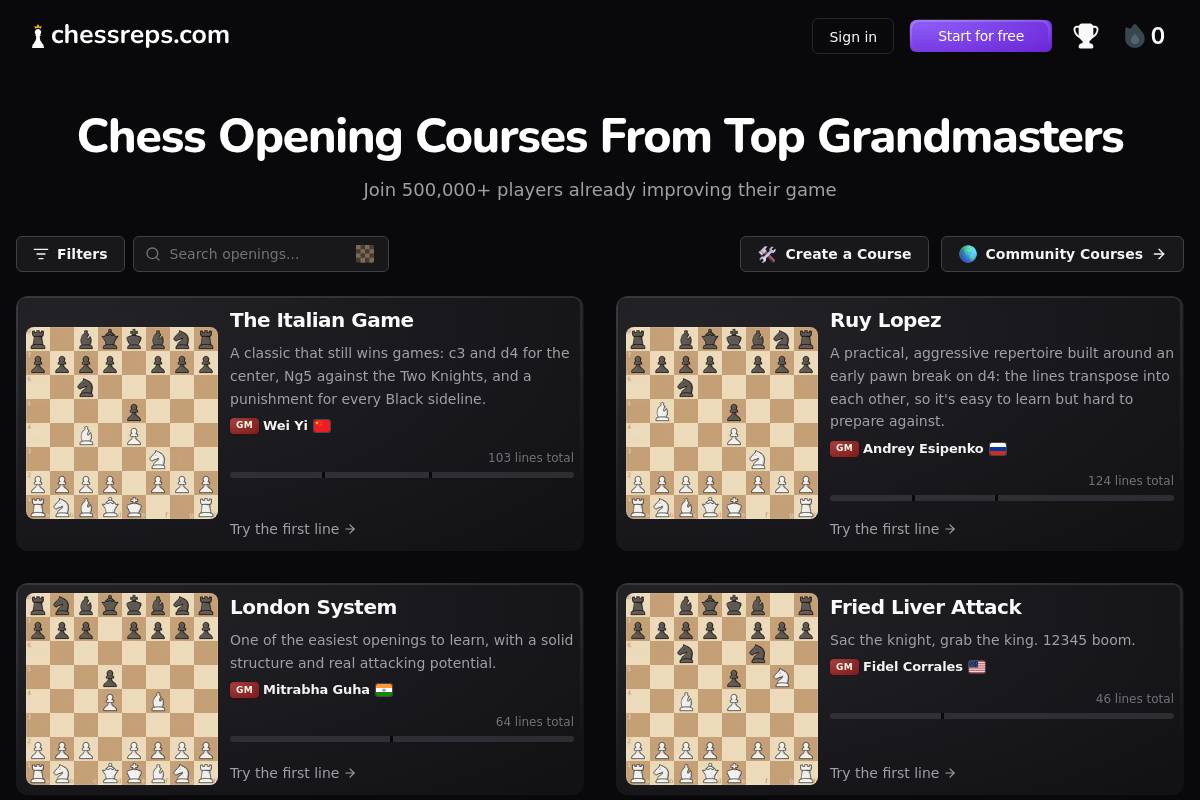
ChessReps is an opening trainer built for attacking players. Its drills come from real-world games, so you practice the replies you will actually face online. The platform offers over 900 opening courses, 57 of them developed by titled coaches, for $34.99 a year after a 7-day free trial.
Key Features
- Real-Game Data Training: Drills are built from actual opponent moves, so you spend less time on obscure theory nobody plays.
- Multiple Training Modes: Learn, Drill, Puzzle, Arena, and Dojo modes reinforce attacking lines from several angles.
- GM-Authored Repertoires: Courses like an aggressive Ruy Lopez or Alapin Sicilian repertoire, written by titled players.
- Affordable Annual Plan: At under $3 a month when billed yearly, it competes with most subscription platforms on price.
Best For
CircleChess recommends ChessReps as an efficient, low-cost drilling tool for automating known attacking openings, especially for mobile-first learners who like quick daily sessions.
Pros and Cons
- Pro: Very affordable annual pricing with a generous course catalog.
- Pro: Training built from real opponent data rather than theoretical engine lines.
- Con: Less depth of explanation than full video-course platforms.
- Con: App store pricing can sometimes differ from the rate advertised on the website.
Key Takeaway: ChessReps is an affordable, real-game-driven platform for attacking players who want to drill known openings on mobile.
Rating: 8.2/10
9. Aimchess: Best for AI-Driven Opening Weakness Analysis

9. Aimchess: Best for AI-Driven Opening Weakness Analysis
Aimchess is an AI analytics platform that reviews your own games. It imports your history from Chess.com or Lichess and scores your play across six key skill dimensions, including opening accuracy, converting advantages, and avoiding blunders.
Key Features of Aimchess
- Opening Accuracy Reports: Flags which attacking lines are winning or losing for you, based on your game history.
- Personalized Daily Drills: Training puzzles generated from your own attacking games and the mistakes it finds in them.
- Platform Integration: Connects to Chess.com, Lichess, or Chess24, so you can analyze existing games without uploading anything new.
- Affordable Premium Tier: Premium access starts at $7.99 per month, or $57.99 billed annually.
Best For
Aimchess is ideal for data-driven intermediate to advanced players who already play online regularly. It does not teach new lines; instead, it shows exactly where your chosen attacking opening breaks down, so it complements course-based resources such as CircleChess.
Pros and Cons of Aimchess
- Pro: Deep statistical insight into which attacking lines actually convert into wins for you.
- Pro: A low monthly cost and smooth integration with major online chess platforms.
- Con: The free tier is only a limited teaser. Most useful features require a subscription.
- Con: It does not teach new opening theory. Its main job is analyzing your existing results.
Key Takeaway: Aimchess provides deep, AI-driven statistical insight into how your attacking openings perform, though full functionality requires a subscription.
Rating: 8.0/10
10. TheChessWorld: Best Single Crash-Course in Aggressive Club-Level Ideas
10. TheChessWorld: Best Single Crash-Course in Aggressive Club-Level Ideas
TheChessWorld offers a highly rated crash course from GM Marian Petrov, with aggressive responses to common club-level openings. This 4-hour video course covers the Sicilian, King's Indian, and Evans Gambit, among other openings.
Key Features
- Single-Course Format: A one-time purchase rather than a subscription, typically priced from $79 to $129 depending on the bundle.
- Eight-Opening Coverage: Attacking ideas across Sicilian, King's Indian, Evans Gambit, French, Scandinavian, Ruy Lopez, London, and Queen's Gambit.
- Practical Tasks: Over 50 practice games with tasks designed to reinforce attacking patterns.
- Coach-Led Explanations: Taught by a grandmaster whose methods are based on deep analysis of student tournament games.
Best For
This course suits club players rated under roughly 2200 who want a concise introduction to attacking ideas across several openings, as a low-commitment starting point before a full subscription platform such as CircleChess.
Pros and Cons
- Pro: Broad coverage of attacking ideas across many popular club-level openings for one purchase.
- Pro: No ongoing subscription required.
- Con: Less depth per opening than dedicated full repertoire courses.
- Con: Lacks built-in spaced repetition or progress tracking.
Key Takeaway: TheChessWorld's crash course is a concise, single-purchase option for club players who want aggressive ideas across several popular openings.
Rating: 7.8/10
Full Comparison: Best Chess Opening Repertoire Tools for Attacking Players 2026
The biggest difference among these tools is whether they teach aggressive strategy directly or help you drill and analyze a repertoire you have already chosen. The table below compares the features that matter most, along with starting prices.
| Tool | Live Coaching | AI Analysis | GM-Authored Content | Spaced Repetition | Starting Price |
|---|---|---|---|---|---|
| CircleChess | ✓ | ✓ | ✓ | ✓ | Free demo class |
| Chessable | ✗ | ✗ | ✓ | ✓ | $29.99/course |
| ChessBase | ✗ | ✗ | ✓ | ✗ | $199.90 |
| ChessMood | ✓ | ✗ | ✓ | ✗ | $79/month |
| Remote Chess Academy | ✗ | ✗ | ✓ | ✗ | $89/course |
| ChessDojo | ✓ | ✗ | ✓ | ✗ | $15/month |
| Modern Chess Academy | ✗ | ✗ | ✓ | ✗ | $9.99/month |
| ChessReps | ✗ | ✗ | ✓ | ✓ | $2.92/month |
| Aimchess | ✗ | ✓ | ✗ | ✗ | $7.99/month |
| TheChessWorld | ✗ | ✗ | ✓ | ✗ | $79/course |
How to Choose the Best Chess Opening Repertoire for Attacking Players in 2026
By Team Size or Age Group
Adult improvers working alone often do well with a single Chessable course or a ChessReps subscription. Families and young learners tend to get more from CircleChess, which adds mentorship, psychology training, and progress tracking. Coaches managing several students usually need ChessBase for research, paired with a structured curriculum for teaching.
By Budget
If money is tight, start with Modern Chess Academy or ChessReps, both under $10 a month. When you are ready to spend more, consider a premium GM subscription like ChessMood. Players building an attacking identity for the long haul usually get the most from CircleChess's blend of coaching and self-paced study.
By Use Case
If you want to acquire theory, Chessable's MoveTrainer courses are hard to beat. If you want to understand why your attacks fail in real games, Aimchess's weakness analytics pair well with any course above. And if you want a child to build focus, resilience, and an attacking identity, CircleChess remains the strongest all-around choice. For additional buying guidance, see How to Choose the Best Chess Opening for Your Playing ....
What Is an Attacking Chess Opening Repertoire?
An attacking chess opening repertoire is a deliberately chosen set of openings for both White and Black, built to generate early initiative, piece activity, and tactical chances. Most players keep their study to two or three systems per color so that recognition becomes automatic. The table below shows the basic benchmarks most coaches suggest. For a more detailed primer, see TCR Repertoire Diversity of Peripheral PD-1+CD8+ T Cells ....
| Metric | Why It Matters | Typical Benchmark |
|---|---|---|
| Number of core systems | Focus beats coverage for pattern recognition | 2 to 3 systems per color |
| Drilling frequency | Spaced repetition locks in lines under pressure | 10 to 20 minutes daily |
| Model games studied | Builds plan recognition beyond memorized moves | 2 to 3 annotated games per opening |
| Review cycle | Catches repertoire drift from your actual games | Monthly game review |
Conclusion: The Best Chess Opening Repertoire for Attacking Players in 2026
CircleChess takes the top spot because it combines a GM-built attacking curriculum with live mentorship, AI practice, and a real community, instead of leaving you to teach yourself from a static course. If you want to go deep on one GM's lines, Chessable is an outstanding alternative. ChessMood and Aimchess round out a strong toolkit for serious, data-driven improvers. Whichever combination you pick, the goal is the same: fewer openings, deeper repetition, and the confidence to play for the initiative from the first move.
Frequently Asked Questions
What is the best chess opening repertoire for attacking players in 2026?
The 10 Best Chess Opening Repertoires for Attacking Players in 2026 take different approaches, but CircleChess ranks highest overall for combining a GM-designed attacking curriculum with live coaching and AI practice. Chessable and ChessMood are the strongest standalone course options for deep theory in a specific system.
What are the most aggressive chess openings to learn in 2026?
Sharp systems like the Open Sicilian, King's Gambit, Evans Gambit, Scotch Game, and aggressive Italian Game lines remain popular with attacking players. On the Black side, King's Indian setups and sharp Sicilian variations like the Najdorf are common choices.
Is CircleChess good for beginners who want to play aggressively?
Yes. CircleChess builds a personalized roadmap around each student's strengths, goals, and playing style, so a beginner drawn to tactical, attacking chess gets a curriculum shaped to that preference.
Do I need a paid subscription to learn an attacking chess opening repertoire?
Not necessarily. Most platforms offer free resources or trial periods. Meaningful depth, such as full video courses, spaced-repetition drilling, or live GM feedback, usually sits behind a paid plan, which ranges from under $10 a month to premium coaching tiers.
How long does it take to build a solid attacking opening repertoire?
Most coaches suggest focusing on two or three systems per color and drilling them for several weeks before adding new material. Recognition and comfort under pressure matter more than theoretical coverage.
Can AI tools like Aimchess replace a human chess coach for openings?
AI tools are excellent at spotting statistical patterns in your opening results, but they usually explain what is going wrong rather than teaching new ideas. They work best alongside a course-based reperto