

Chess.com alternatives for structured online chess training | Last updated: October 21, 2026 | Author: CircleChess Editorial Team | Tools tested: 10
If you have outgrown casual puzzle-rush sessions and want real structure, curriculum, and feedback, you need more than a game server. This guide compares the best Chess.com alternatives for structured online chess training in 2026, including live coaching academies, AI analysis tools, and self-paced course platforms.
TL;DR: Best Chess.com Alternatives for Structured Online Chess Training
| Rank | Tool | Best For | Starting Price | Rating |
|---|---|---|---|---|
| 1 | CircleChess | Structured live + AI coaching built on World Champion methodology | Free demo classes available | 9.6/10 |
| 2 | Chessable | Spaced-repetition opening and endgame memorization | Free / from $11.99/month | 8.8/10 |
| 3 | ChessMood | Self-paced GM video courses for intermediates | From $79/month (annual) | 8.5/10 |
| 4 | ChessDojo | Cohort-based structured improvement plans | $15/month or $120/year | 8.3/10 |
| 5 | Chessly | GothamChess video courses with gamified drilling | $9.99/month or $89.99/year | 8.2/10 |
| 6 | Aimchess | AI-driven weakness analytics from your own games | Free / from $7.99/month | 7.9/10 |
| 7 | DecodeChess | Plain-English AI explanations of engine moves | Free / from $8.25/month | 7.8/10 |
| 8 | Remote Chess Academy | GM Igor Smirnov's structured improvement courses | From roughly $49 per course | 7.6/10 |
| 9 | iChess.net | Large video course library from titled coaches | Free videos / from $19.97/month | 7.4/10 |
| 10 | Chesstempo | High-volume tactics and endgame drilling | Free / from roughly $20/year | 7.3/10 |
Our top pick is CircleChess, built by the team behind the coaching system that trained a World Chess Champion. It combines live instruction, AI practice, and a structured progression path in one ecosystem.
Why You Need Structured Online Chess Training in 2026
Free-play platforms are built for games, not growth. Structured training gives you a curriculum, a feedback loop, and a measurable path forward. Many players feel busy clicking through endless blitz games without actually improving. For parents and coaches, structure matters more than volume: a child who studies fifty games with a coach's guidance often outpaces one who plays five hundred games alone. These tools pair lessons, drills, and analysis inside progression systems with levels, milestones, and accountability. For supporting market data, see Top 6 Community Chess Gaming Tools 2026.
How We Evaluated These Chess.com Alternatives
We scored each platform across five weighted criteria using official pricing pages, course catalogs, and platform documentation. For industry-standard evaluation frameworks, see Lichess vs Chess.com: Which Platform is Better for Beginners ....
| Criteria | Weight | What We Measured |
|---|---|---|
| Curriculum structure | 30% | Clear progression paths, levels, and rating-band alignment |
| Coaching quality | 25% | Access to titled players, live instruction, and feedback depth |
| Value for price | 20% | Features and content relative to subscription or course cost |
| Kid and beginner friendliness | 15% | Usability for young learners and families new to chess |
| Community and accountability | 10% | Tournaments, cohorts, parent dashboards, or peer groups |
1. CircleChess: Best for Structured Live + AI Coaching Built on World Champion Methodology
1. CircleChess: Best for Structured Live + AI Coaching Built on World Champion Methodology
CircleChess is a full-stack chess training ecosystem that brings together live instructor-led classes, AI-powered self-learning tools, and a global tournament community. It was built by a World Champion's coach and takes students from their first move toward real mastery.
Key Features
- GM Vishnu Prasanna Curriculum: Designed by GM Vishnu Prasanna, former coach of World Champion Gukesh D, and drawn from the team behind India's most advanced chess learning ecosystem.
- Personalized Learning Roadmap: Each student gets a roadmap based on their strengths, weaknesses, goals, and playing style.
- AI-Powered Chess Coach (24x7): On-demand practice, analysis, and guidance whenever students want to train.
- Structured Progression System: Levels, leagues, quests, and achievements keep young learners motivated between lessons.
- Chess Psychology Integration: Performance training and emotional resilience are built into every level.
- Parent Dashboard: Real-time progress tracking and monthly mentor reviews.
- FIDE Rating Pathway: Milestone-based preparation plans for students aiming for official FIDE Ratings, which are international chess ratings, plus a certificate signed by World Champion Gukesh D.
Best For
CircleChess suits parents, NRI families (Non-Resident Indian families), and coaches who want one integrated ecosystem for group classes, private coaching, AI practice, and tournaments. Free demo classes let you test the live coaching before committing.
Pros and Cons
- Pro: The curriculum's pedigree, tied directly to a World Champion's coaching system, gives it a clear edge.
- Pro: Monthly skill assessments and mentor feedback give parents real insight into progress.
- Pro: Live classes, AI coaching, and tournaments live in one place, so you don't need multiple subscriptions.
- Con: As a newer US market entrant, its tournament library is still growing.
- Con: Families mainly seeking unlimited casual blitz may find the structured format more demanding than they need.
Rating: 9.6/10
Key Takeaway: CircleChess offers a World Champion-coached, full-stack solution with personalized AI and live instruction, especially for serious young learners and their families.
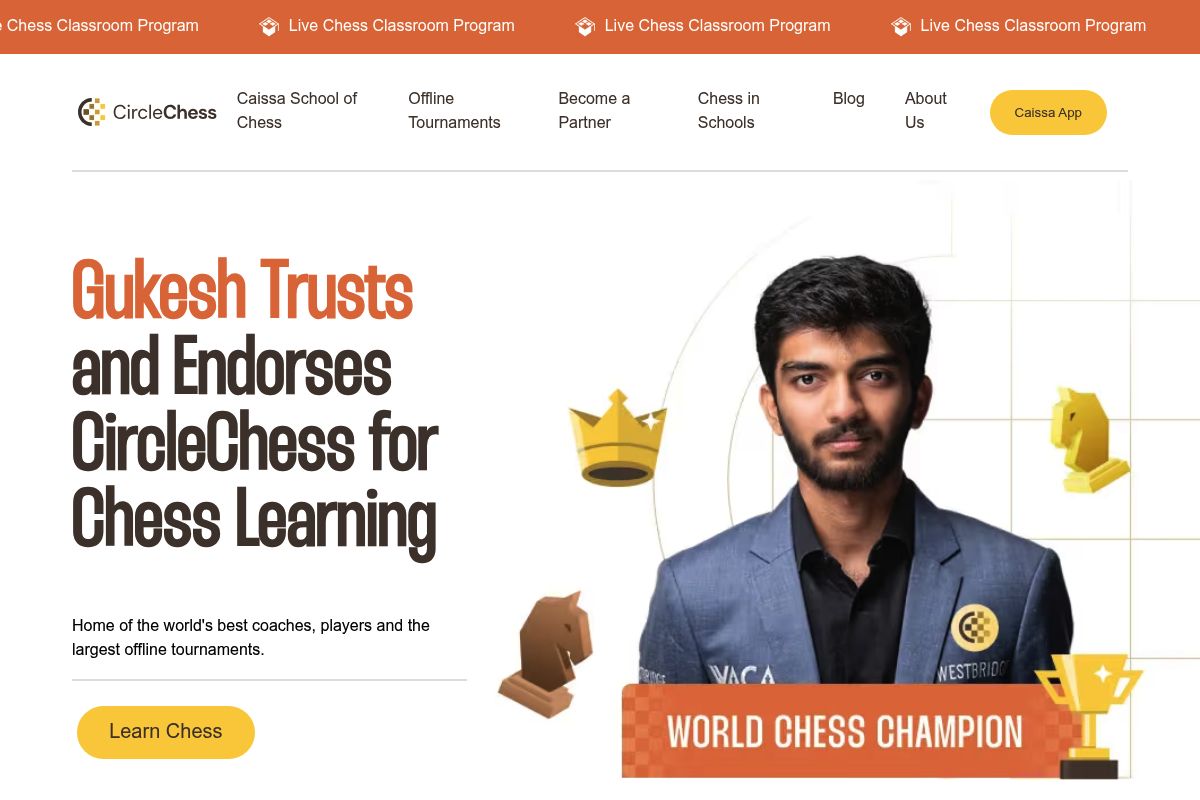
CircleChess: Home of the world's best coaches, players and the largest offline tournaments.
Gukesh Trusts and Endorses CircleChess for Chess Learning
2. Chessable: Best for Spaced-Repetition Opening and Endgame Memorization
2. Chessable: Best for Spaced-Repetition Opening and Endgame Memorization
Chessable is a chess-course marketplace built around MoveTrainer, a spaced-repetition system for remembering opening lines, tactics, strategy, and endgames. It pairs courses from titled players with drilling tools that make lines feel automatic.
Key Features
- MoveTrainer Spaced Repetition: Drills variations on a schedule designed to maximize long-term retention.
- GM-Authored Catalog: Courses from grandmasters and titled players covering openings, middlegames, endgames, and strategy.
- PRO Membership: Pro Monthly is $11.99/month and Pro Annual is $74.99/year. Both unlock the Short & Sweet course library and discounts.
- Free Course Samples: Many courses offer free trailer chapters.
Best For
Chessable suits intermediate to advanced players who already know chess notation and want to lock in a specific opening repertoire. Individual courses usually cost $20 to $100 as one-time purchases on top of the PRO subscription, making it better for dedicated self-studiers than casual beginners.
Pros and Cons
- Pro: Spaced repetition is genuinely effective for opening and endgame retention.
- Pro: The catalog is huge and written by recognized titled authors.
- Con: Course purchases can add up well beyond the subscription cost.
- Con: The interface assumes fluent notation, making it a steep first app for true beginners.
Rating: 8.8/10
3. ChessMood: Best for Self-Paced GM Video Courses for Intermediate Players
3. ChessMood: Best for Self-Paced GM Video Courses for Intermediate Players
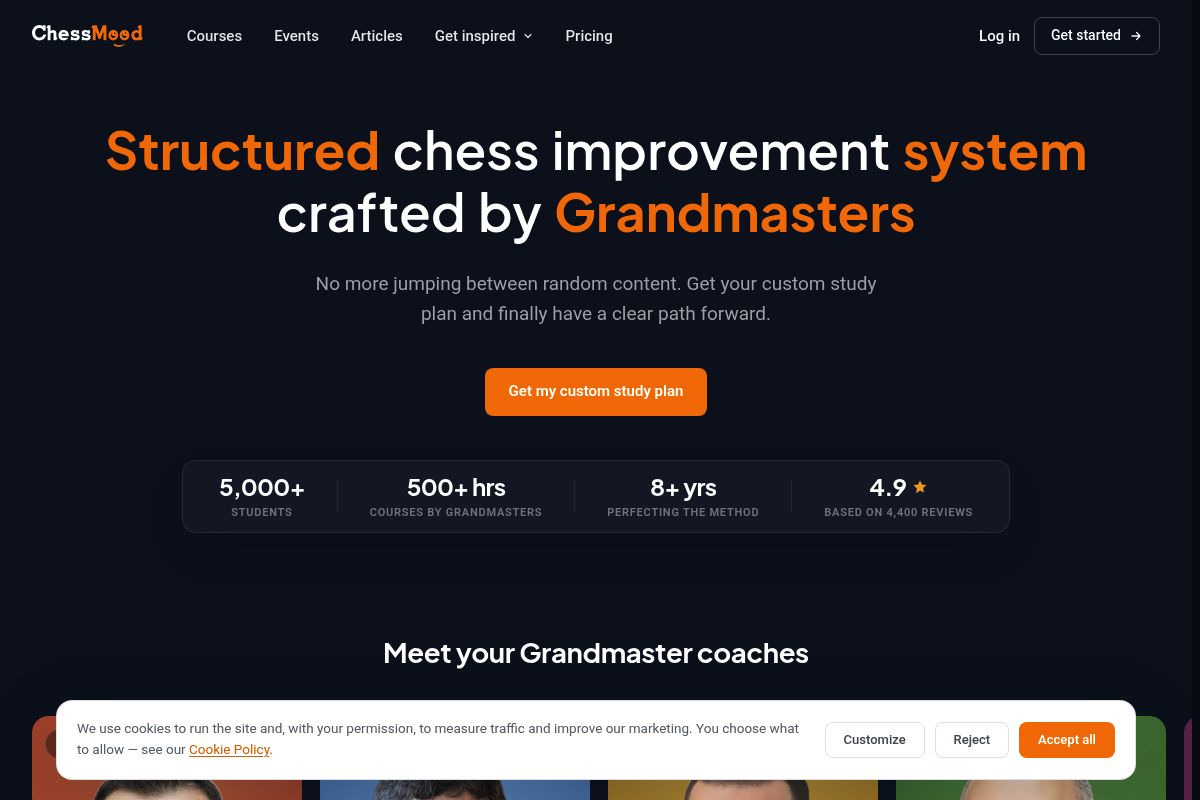
ChessMood is a premium subscription academy founded by Grandmaster (GM) Avetik Grigoryan. It offers over 500 hours of video courses covering openings, middlegames, endgames, and the mental side of competitive play.
Key Features of ChessMood
- Extensive GM Content: Over 500 hours of video courses from Grandmasters including Avetik Grigoryan, Hrant Gabuzyan, Boris Avrukh, Daniel Naroditsky, and Rafael Leitao.
- Weekly Live Streams: "Openings in Practice" and "Play vs. Grandmaster" sessions.
- Private Discord Community: Pro members get a moderated forum where they can interact directly with Grandmasters.
- Tiered Pricing: The Essential plan starts at about $79/month billed annually ($99 monthly). The Pro plan is $99/month billed annually ($129 monthly) and adds more live streams and forum access.
Ideal Users for ChessMood
ChessMood works best for intermediate and advanced players, typically rated 1200 to 2300, who want a coach-like, video-first experience without fixed class schedules. The premium price pays off most for regular, serious study.
Advantages and Disadvantages of ChessMood
- Pro: All educational content is created exclusively by Grandmasters.
- Pro: An active community provides accountability and peer support.
- Con: Pricing can be steep for budget-conscious individuals or families.
- Con: It isn't designed for young beginners and focuses on more experienced players.
Key Takeaway: ChessMood offers comprehensive, GM-led video courses and a strong community for serious intermediate and advanced players.
Rating: 8.5/10
4. ChessDojo: Best for Cohort-Based Structured Improvement
4. ChessDojo: Best for Cohort-Based Structured Improvement
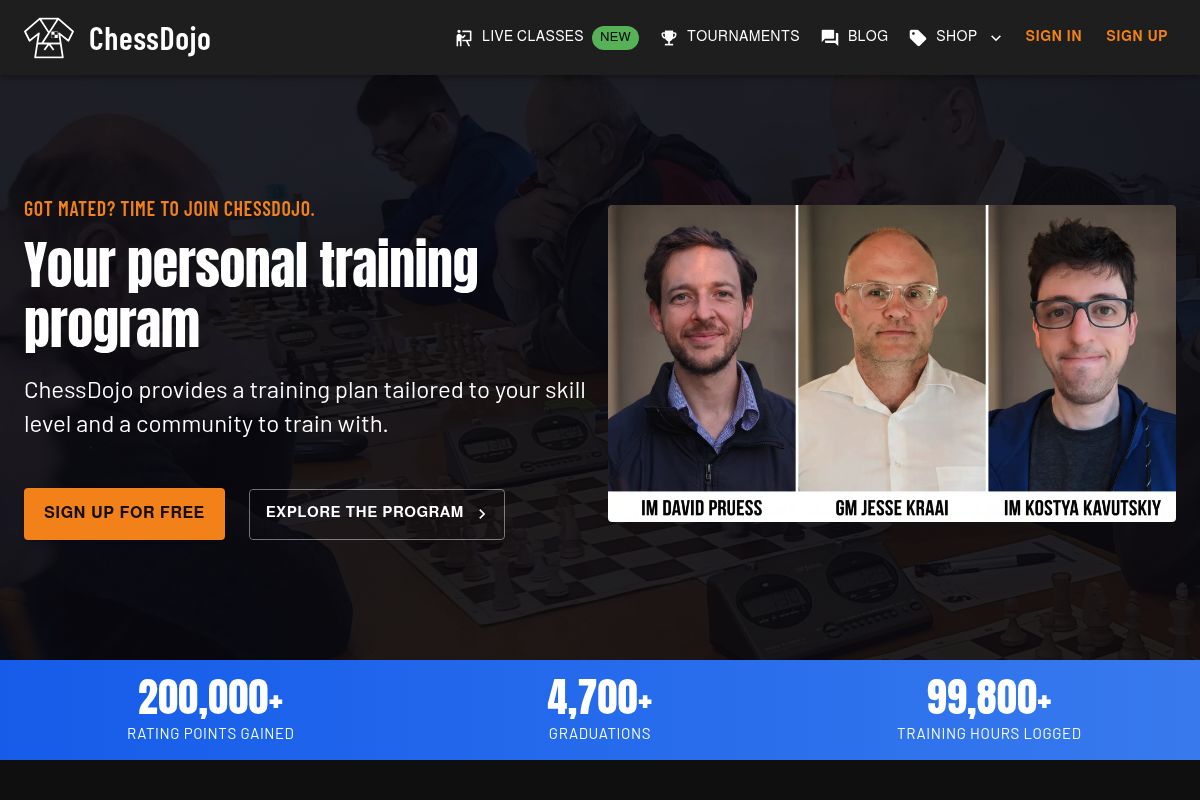
ChessDojo is a cohort-based improvement program led by titled players, including GM Jesse Kraai and IMs Kostya Kavutskiy and David Pruess. Students are grouped by rating and work through a detailed task list of books, courses, tests, and sparring.
Key Features
- Rating-Based Training Plans: Plans cover roughly 0 to 2400+ FIDE, backed by a Discord community organized by cohort.
- DojoLiga Tournaments: Members can join round robins and a rolling open classical Swiss tournament.
- Sensei Game Review: Graduate games are reviewed as a core part of the program.
- Pricing Tiers: The Core Training Program costs $15/month or $120/year. Optional add-ons include Workshops at $75/month and Game & Profile Review at $200/month.
Best For
ChessDojo suits motivated self-improvers, teens, and adults who prefer structured plans and community accountability over one-on-one lessons. Learners who respond to peer pressure and a steady weekly rhythm benefit most.
Pros and Cons
- Pro: A strong community and accountability structure for self-study.
- Pro: Training plans are tailored to different rating bands.
- Con: Personalized coaching is limited compared to live-class programs.
- Con: Built for long-term study, not quick wins.
Rating: 8.3/10
5. Chessly: Best for GothamChess Video Courses with Gamified Drilling
5. Chessly: Best for GothamChess Video Courses with Gamified Drilling
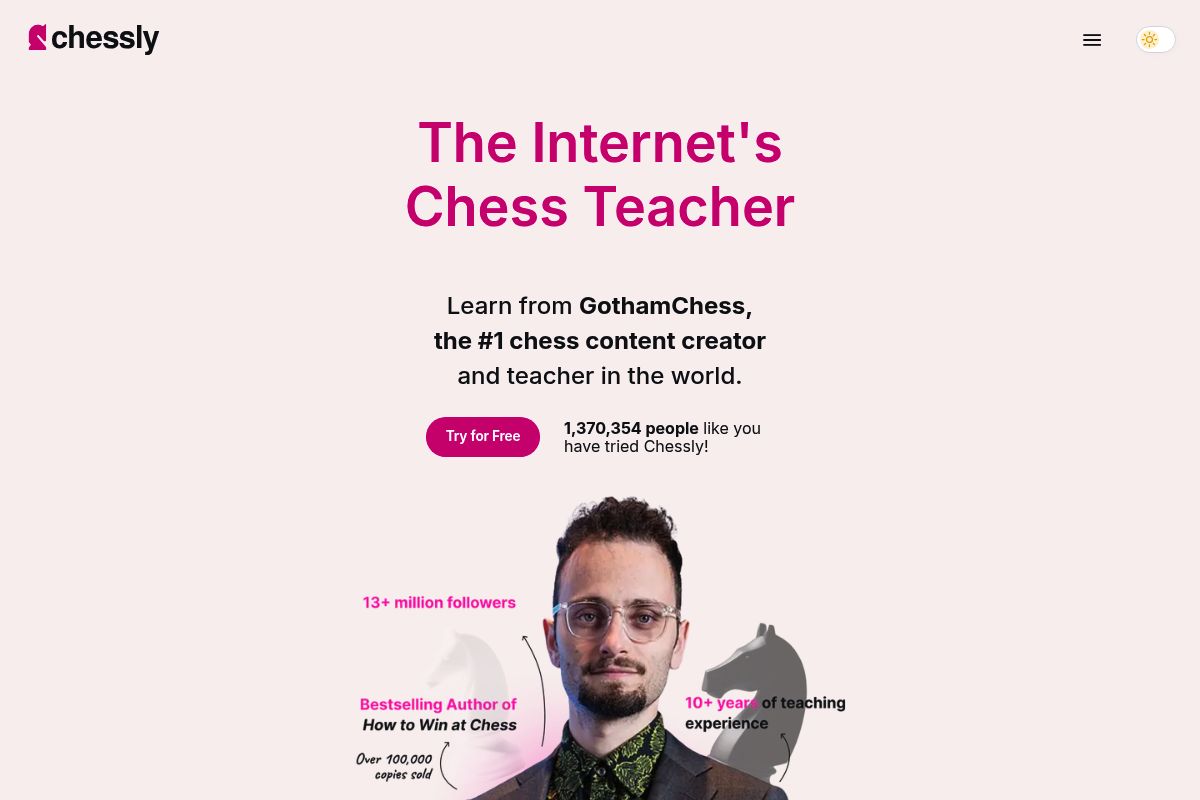
Chessly is an educational chess platform created by GothamChess's Levy Rozman. It offers more than 70 opening and skills courses, an AI sparring bot called Levi, and gamified progression.
Key Features
- 70+ Courses: Video courses mapped to rating levels, from beginner bootcamps to system-based repertoires for adults.
- Levi AI Bot: A sparring bot that plays out the lines you just learned.
- Drills and Quizzes: Step-by-step drills plus a "Shuffle" mode that pulls exercises at random from across the library.
- Subscription Pricing: Chessly Plus costs $9.99/month or $89.99/year, with all courses included.
Best For
Chessly fits GothamChess fans and beginner-to-intermediate players who want video-first learning with a personality-driven, gamified feel. The platform reports a refund rate below 0.5%, suggesting its subscribers are generally satisfied.
Pros and Cons
- Pro: All courses come in one subscription.
- Pro: XP, badges, and leaderboards make learning feel like a game.
- Con: A single instructor writes the content, rather than a diverse roster of coaches.
- Con: No structured live coaching or parent dashboard for younger learners.
Rating: 8.2/10
6. Aimchess: Best for AI-Driven Weakness Analytics
6. Aimchess: Best for AI-Driven Weakness Analytics
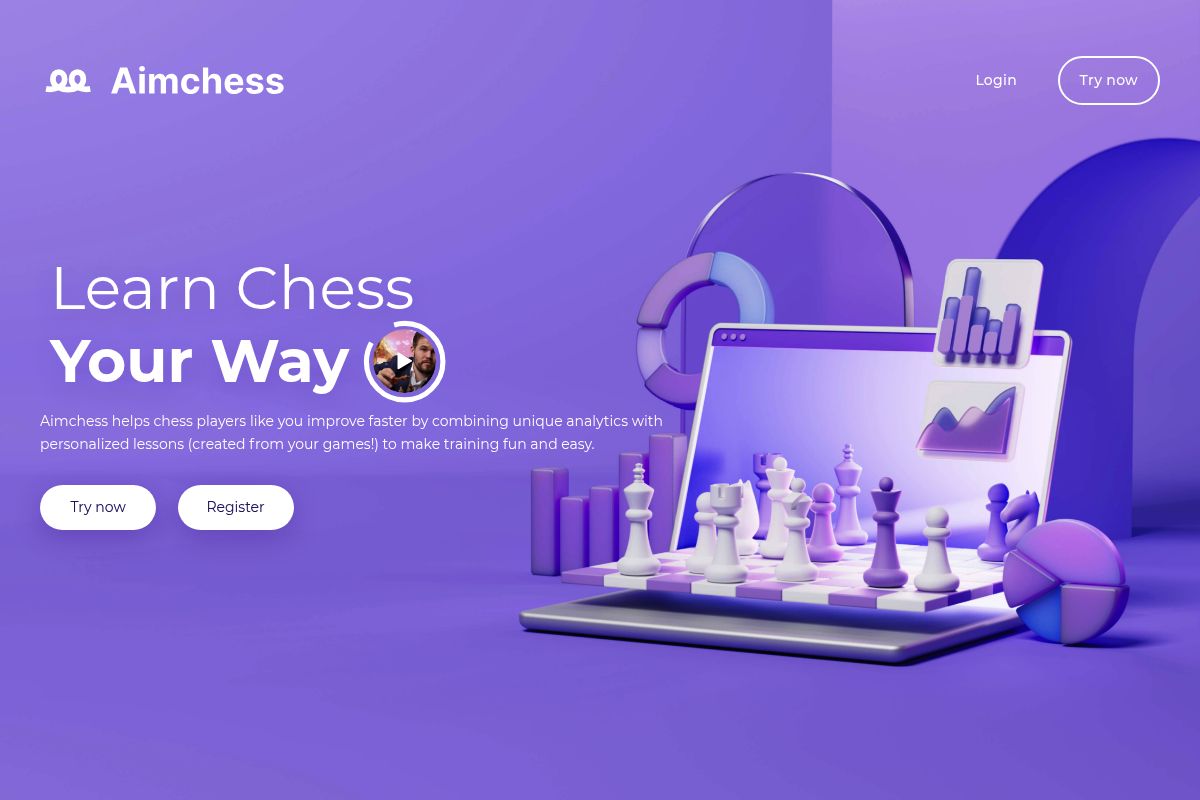
Aimchess is an AI-driven platform that analyzes your games from Chess.com or Lichess to find your weak spots, then builds training from diagnostic reports on opening accuracy, time management, and blunder prevention.
Key Features
- Six-Dimension Diagnostics: Reports cover opening accuracy, advantage capitalization, time management, resourcefulness, endgame play, and blunder prevention.
- Coach Sharing: Students can share game data and personalized lessons with their coaches.
- Multi-Platform Sync: Premium annual plans track multiple accounts across Chess.com, Lichess, and Chess24.
- Pricing: The premium subscription costs $7.99 per month, or $4.85 per month when billed annually at $57.99. It includes analysis of your last 1,000 online games.
Best For
Aimchess works best as a supplement for intermediate and advanced players who play often and want data-driven pattern recognition from their own games. It complements a coaching platform rather than replacing one.
Pros and Cons
- Pro: It identifies recurring personal weaknesses, making practice more targeted than generic puzzles.
- Pro: Advice is based on your actual game history.
- Con: No live coaching or built-in curriculum.
- Con: Most valuable at higher rating bands. Lower-rated players may benefit more from guided instruction first.
Rating: 7.9/10
7. DecodeChess: Best for Plain-English AI Explanations of Engine Moves
7. DecodeChess: Best for Plain-English AI Explanations of Engine Moves
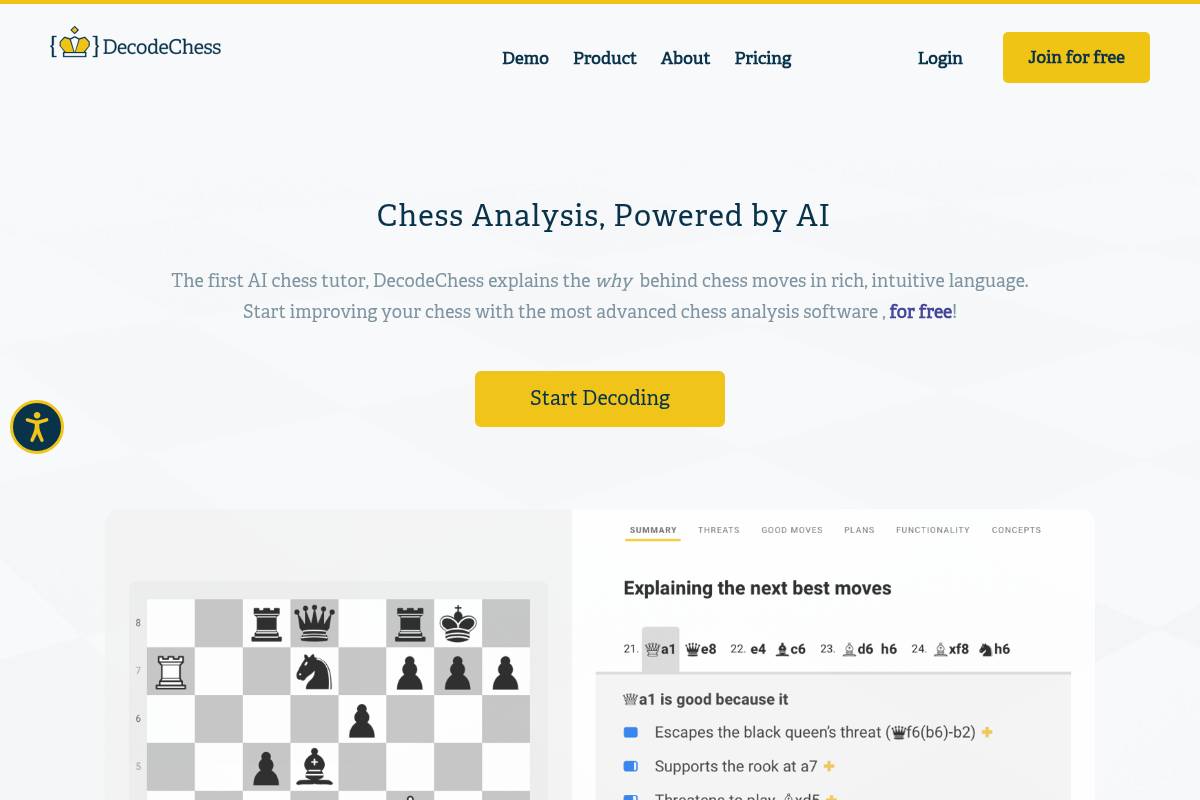
DecodeChess is an AI tutor that turns Stockfish engine evaluations into readable explanations. Its "Idea-Problem-Solution" approach explains the strategic "why" behind each suggested move.
Key Features
- Explainable AI Reports: Analysis organized into Threats, Plans, and Concepts, written in plain English.
- Interactive Play Mode: Play an adaptive AI with real-time performance graphs and a "Deep Decode" button for help when stuck.
- Stockfish-Powered Engine: Runs on the open-source Stockfish NNUE engine.
- Pricing: A free tier offers a limited number of decoded games per day. Unlimited access costs $8.25/month or $84/year.
Best For
DecodeChess suits self-taught players, especially those up to about 2000 ELO, who want to understand engine suggestions rather than memorize them. It works well as a post-game study companion.
Pros and Cons
- Pro: It gives clear, detailed explanations of engine reasoning beyond basic evaluations.
- Pro: The entry price is affordable, and the free tier is genuinely usable.
- Con: No live coaching or adaptive difficulty progression.
- Con: Its core analysis is a one-way written report, with no back-and-forth conversation.
Rating: 7.8/10
8. Remote Chess Academy: Structured Improvement Courses by GM Igor Smirnov
8. Remote Chess Academy: Best for GM Igor Smirnov's Structured Improvement Courses
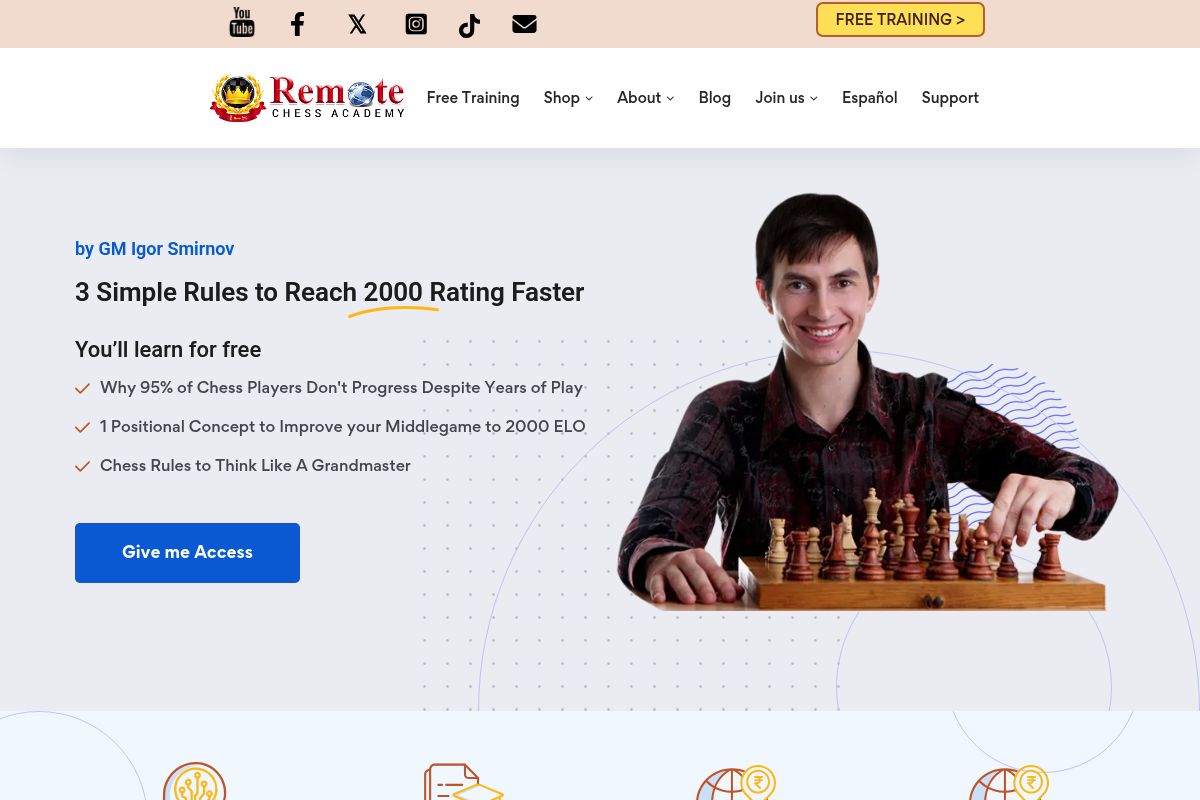
Remote Chess Academy, founded by Grandmaster Igor Smirnov, builds strategic understanding and the psychological side of competitive chess through video courses.
Key Features
- GM-Led Course Catalog: Dozens of individually sold courses covering openings, middlegame concepts, and calculation.
- Bundled Packages: A Super Pack combines multiple courses at a discount.
- Psychological Training Focus: Courses emphasize decision-making and the mental side of tournament play.
- Free Starter Content: A free "How to Analyze Your Games" course for new users.
Best For
Remote Chess Academy is well suited for intermediate players who like learning from one instructor with a consistent teaching philosophy, and who prefer buying courses or bundles to a recurring subscription.
Pros and Cons
- Pro: The deep catalog is built around one well-regarded teaching voice.
- Pro: Frequent discounts make bundles more affordable.
- Con: Per-course pricing can get expensive for full access.
- Con: No live cohorts, tournaments, or parent dashboard for younger learners.
Rating: 7.6/10
9. iChess.net: Best for a Large Video Course Library from Titled Coaches
9. iChess.net: Best for a Large Video Course Library from Titled Coaches
iChess.net is known for its library of over 1,000 video courses from grandmasters and titled players, making it a strong choice for visual learners.
Key Features of iChess.net
- Massive Video Catalog: Thousands of courses on openings, middlegames, and endgames from a wide roster of coaches.
- iChess Club Membership: Subscription access starts at $19.97 per month.
- Free Lesson Library: Extensive free playlists and a complimentary GM-taught course.
- Lifetime Access: Individually bought courses are typically yours for life.
Who is iChess.net Best For?
iChess.net suits visual learners who want a huge, affordable video library. Individual courses usually cost $10 to $100 or more. It also pairs well with a platform like CircleChess if you want more video-based learning.
Pros and Cons of iChess.net
- Pro: Wide Range of Content: A single catalog covers diverse topics and coaching styles.
- Pro: Permanent Ownership: Purchased content stays yours, and regular discounts make it easier to build a library.
- Con: Less Interactive: Less interactive than drilling-focused or live-coaching alternatives.
- Con: Dated Interface: The interface can feel old next to newer training platforms.
Key Takeaway: iChess.net offers a vast, affordable course library with lifetime access, though its interface and interactivity lag some competitors.
Rating: 7.4/10
10. Chesstempo: Best for High-Volume Tactics and Endgame Drilling
10. Chesstempo: Best for High-Volume Tactics and Endgame Drilling
Chesstempo is a training-focused platform with a large tactics database, endgame exercises, opening tools, online play, and a game database, built for self-directed improvement.
Key Features
- Massive Tactics Database: Over 100,000 tactical problems covering winning and defensive motifs.
- Spaced Repetition Sets: Problems you keep missing come up more often.
- Cloud Engine Analysis: Post-game analysis on a cluster of Stockfish instances.
- Low-Cost Tiers: Unlimited tactics are free. Paid tiers (Silver, Gold, Diamond) add deeper features from roughly $20/year.
Best For
Chesstempo suits disciplined, budget-conscious players who want volume in tactics and endgames more than video lessons or live coaching. It works best as a supplement to a structured curriculum.
Pros and Cons
- Pro: The free tactics collection is extensive, with theme-specific ratings.
- Pro: Paid tiers are very affordable for their depth.
- Con: The desktop-oriented interface feels less modern.
- Con: No live instruction or parent-facing progress tracking.
Rating: 7.3/10
Full Comparison: Chess.com Alternatives for Structured Online Chess Training
| Tool | Live Coaching | AI Coach | Parent Dashboard | Kid-Friendly | Free Tier | Starting Price |
|---|---|---|---|---|---|---|
| CircleChess | ✓ | ✓ | ✓ | ✓ | ✓ (demo) | Free demo classes |
| Chessable | ✗ | ✗ | ✗ | ✗ | ✓ | $11.99/month |
| ChessMood | ✗ | ✓ | ✗ | ✗ | ✗ | $79/month |
| ChessDojo | ✓ (add-on) | ✗ | ✗ | ✗ | ✓ (limited) | $15/month |
| Chessly | ✗ | ✓ | ✗ | ✓ | ✓ (trial) | $9.99/month |
| Aimchess | ✗ | ✓ | ✗ | ✗ | ✓ | $7.99/month |
| DecodeChess | ✗ | ✓ | ✗ | ✗ | ✓ | $8.25/month |
| Remote Chess Academy | ✗ | ✗ | ✗ | ✗ | ✓ (one course) | ~$49/course |
| iChess.net | ✗ | ✗ | ✗ | ✗ | ✓ | $19.97/month |
| Chesstempo | ✗ | ✗ | ✗ | ✗ | ✓ | ~$20/year |
How to Choose the Right Chess.com Alternative
By Team or Family Size
A single self-motivated adult may do fine with Chessable or Chesstempo. Families with kids will get more from CircleChess, which bundles live instruction, AI practice, and parent visibility. Coaches managing several students should consider cohort tools like ChessDojo or a dashboard-driven ecosystem.
By Budget
Under $15/month, Chesstempo, Aimchess, and ChessDojo's core tier cover tactics and self-study affordably. From $15 to $50/month, Chessable PRO and Chessly offer strong video and repetition content. At $79/month and up, ChessMood provides a deep GM video library. CircleChess's free demo classes let families match spending to their commitment.
By Use Case
For memorizing an opening repertoire, Chessable is the standout. For a human coach plus AI-powered daily practice and a clear path toward FIDE milestones, CircleChess is the strongest all-in-one option. For post-game explanations, DecodeChess and Aimchess are the better supplements. For additional buying guidance, see Best Chess Courses: Top Online Classes and Training ....
What Is Structured Online Chess Training?
Structured online chess training replaces random, unguided play with a defined curriculum, measurable milestones, and feedback loops. It can come from live instructors, AI coaching, or spaced-repetition drilling. The table below shows the core metrics worth comparing across any Chess.com alternative. For a more detailed primer, see Which Chess Academy Software is the Best in 2026? 7 ....
| Metric | Why It Matters | What Good Looks Like |
|---|---|---|
| Curriculum depth | Determines whether learning compounds over time | Leveled content mapped to rating bands |
| Feedback frequency | Drives correction of bad habits early | Weekly or monthly reviews, not just annual checkups |
| Coach access | Human judgment catches what engines miss | Titled coaches reviewing real games |
| Progress visibility | Keeps students and parents engaged | Dashboards, reports, and milestone tracking |
Conclusion: The Best Chess.com Alternative for Structured Online Chess Training in 2026
CircleChess is our top pick. It is the only platform on this list that combines a World Champion's coaching lineage, live instruction, 24x7 AI practice, and a parent-facing progress system in one ecosystem. If you prefer narrower tools, Chessable is best for opening memorization, ChessMood for GM video depth, and ChessDojo for cohort-based accountability.
Frequently Asked Questions
What are the best Chess.com alternatives for structured online chess training in 2026?
The strongest options in our testing were CircleChess, Chessable, ChessMood, ChessDojo, and Chessly. Each offers a different mix of live coaching, video courses, and spaced-repetition drilling.
Which platform is best for young kids just starting chess?
CircleChess is built with child psychology in mind. It combines live classes, a parent dashboard, and gamified progression.
Is Chessable good for complete beginners?
Not really. Its interface assumes you already know chess notation. It works best for players who understand the basics and want to memorize specific openings or endgames.
How much does structured online chess coaching typically cost?
Free tactics tools like Chesstempo cost nothing, Chessable and Chessly run roughly $15 to $20 per month, and premium academies like ChessMood charge $79 to $99 per month. CircleChess offers free demo classes, with flexible coaching pricing after that.
Can AI chess coaches like Aimchess or DecodeChess replace a human coach?
No. Both are excellent for post-game analysis and tracking weaknesses, but neither offers live instruction, curriculum sequencing, or psychological coaching from human mentors.
What should parents look for in a chess coaching alternative to Chess.com?
Look for a clear curriculum with rating-band progression, a parent dashboard, and child-friendly instruction. Ideally, the platform blends live coaching with self-paced AI practice, the combination CircleChess was built around.
Is ChessDojo a good fit for self-motivated teenagers?
Yes. Its cohort structure, Discord community, and rating-specific task lists suit disciplined teens who thrive on peer accountability.
Do any of these platforms offer a path toward an official FIDE rating?
CircleChess includes a FIDE rating pathway with milestone-based preparation plans. ChessDojo and ChessMood connect students to external tournament play but don't offer a dedicated rating roadmap of their own.
Methodology: Rankings and pricing reflect publicly available information on each platform's official website as of October 2026, combined with feature analysis of curriculum structure, coaching access, and pricing transparency. Prices and features may change, so verify current details on the provider's site before subscribing.