

If you’re dreaming of becoming a chess Grandmaster, get ready for a journey that’s part mental marathon, part tactical battle. Think of it like training to be a Jedi or mastering an art form-it’s a mix of talent, grit, and strategy. Achieving this title means securing a spot in one of the most elite clubs in the chess world, and it’s no small feat. In this guide, we’ll break down the exact steps, requirements, and mindset needed to reach Grandmaster status, with special insights for aspiring players navigating this complex journey.
The Prestige and Significance of Becoming a Grandmaster
The title of Grandmaster (GM) is the highest title in chess, awarded by the Fédération Internationale des Échecs (FIDE), the global governing body for chess. It signifies not only a high level of mastery over the game but also a recognition of a player’s dedication, skill, and resilience. Grandmasters are often revered, as their strategic thinking and dedication have propelled them into this exclusive rank. Achieving the Grandmaster title is a crowning achievement in a chess player’s career.
FIDE’s Role in Chess Titles
FIDE is responsible for awarding chess titles and overseeing the regulations that aspiring Grandmasters must follow. FIDE sets the standards for performance, tracks ratings, and certifies the players who meet these stringent requirements. Aside from the GM title, FIDE also awards other notable ranks, including:
- International Master (IM): The rank just below Grandmaster, requiring a FIDE rating of 2400.
- FIDE Master (FM): A respected title, requiring a 2300 FIDE rating.
- Candidate Master (CM): A FIDE rating of 2200 is needed for this entry-level title.
Chess Grandmaster vs International Master: Key Differences
The GM title outranks the International Master (IM) title in every measurable way - higher rating threshold, tougher norm conditions, and significantly greater prestige on the global stage.
The most concrete difference is the rating floor. An IM must reach a FIDE rating of 2400 at least once; a GM must hit 2500. That 100-point gap sounds small but represents an enormous leap in competitive strength - roughly the difference between a strong club player and a tournament contender at the international level. Both titles require three norms, but GM norms demand a higher performance rating in each tournament, typically a 2600+ performance rating versus around 2450 for IM norms.
Prestige follows the math. There are roughly 3,700 active IMs worldwide compared to around 1,800 GMs. Magnus Carlsen, for example, earned his IM title at 13 and his GM title just months later at 13 years and 148 days - a gap that illustrates how elite players treat the IM as a milestone, not a destination.
In practical terms:
- IM: FIDE rating ≥ 2400, three IM norms (~2450 performance each)
- GM: FIDE rating ≥ 2500, three GM norms (~2600 performance each)
- Prestige gap: GM titles open doors to elite invitationals, seconds roles for top players, and coaching opportunities that IM titles rarely unlock
Requirements to Achieve the Grandmaster Title
So, what does it take to officially become a Grandmaster? FIDE requires two hard criteria: a classical FIDE Elo rating of 2500 at any point in your career (not your Chess.com or Lichess score - those don't count), and three Grandmaster norms earned across official over-the-board tournaments. Hitting 2500 places you in roughly the top 0.01% of all rated players worldwide - a number that puts the bar in sharp perspective.
Achieving a FIDE Rating of 2500 or Higher
To be eligible for the GM title, players must reach a FIDE rating of 2500 at least once. Ratings fluctuate based on performance, and achieving 2500 requires consistently strong results, especially against other highly rated players.
Securing Three Grandmaster Norms
Beyond reaching a 2500 rating, players need to earn three Grandmaster norms. Norms are earned by performing at a GM level in official tournaments, meeting specific criteria for opponents’ ratings, performance levels, and the number of rounds. Grandmaster norms validate a player’s skill in diverse and challenging settings.
Required Number of Games
FIDE also requires that players play a specific minimum number of games against fellow titled players to qualify. This rule ensures that candidates are thoroughly tested across various competitive environments.
Want to elevate your chess skills and track your progress?
You can monitor your chess progress and get personalized coaching by signing up on Caissa, an AI-driven chess learning platform by CircleChess. Caissa serves as your AI-powered chess coach, offering personalized insights to assess your chess skills and measure monthly improvement. It’s perfect for staying motivated, tracking your growth, and focusing on the areas that need development. Ready to take the next step?
Can an adult beginner realistically become a chess grandmaster?
Realistically, no. Only about 1,800 players worldwide have ever earned the GM title, and virtually all began serious training in childhood. Adult beginners can absolutely improve, earn FIDE ratings, and enjoy competitive chess-but reaching the 2500 rating and three GM norms required by FIDE is effectively out of reach when starting late.
How many grandmaster norms do you need to become a chess grandmaster?
You need three Grandmaster norms to become a chess grandmaster. Each norm is earned by performing at a GM level in an official FIDE-rated tournament, playing a minimum number of games against a mix of titled opponents and scoring the required points. You also need a FIDE rating of at least 2500.
How Long Does It Take to Become a Chess Grandmaster?
Most players who earn the Grandmaster title spend 10 to 20 years getting there - but that range depends heavily on when you start and how intensively you train.
The data tells a clear story: the majority of GMs began playing seriously before age 10, and the average age at which players earn the title sits between 21 and 23. Prodigies compress that timeline dramatically. Sergey Karjakin became the youngest Grandmaster in history at just 12 years and 7 months, a record that still stands. Magnus Carlsen earned the title at 13. These are extreme outliers, but they illustrate what early immersion combined with elite coaching can do.
For everyone else, the timeline breaks down roughly like this:
- Early starter (before age 10): Title possible in the mid-to-late teens with consistent tournament play and structured coaching - roughly 10–12 years of serious work.
- Teen starter (ages 11–16): Realistic GM timeline lands in the mid-to-late 20s, assuming strong dedication and access to rated international events.
- Adult starter (17+): The title is still achievable but statistically rare. A 2500 FIDE rating requires a volume of high-quality games that becomes harder to accumulate the later you begin.
The honest takeaway? There's no shortcut - but starting earlier, playing in FIDE-rated tournaments regularly, and training with strong opposition all shorten the gap meaningfully.
Starting Your Chess Career and Progressing Through Ratings
For any player starting out, building a FIDE rating begins with playing in rated tournaments. Players usually start at 1200, and each game affects their rating based on results and the opponent’s rating. With consistent performance, players can see their rating climb over time, but each rise in rating becomes more challenging.
The Role of Opponent Ratings
A player’s progression relies heavily on the ratings of their opponents. Defeating higher-rated players boosts your rating more significantly than defeating players with lower ratings. This approach rewards ambitious play and encourages players to face challenging opponents.
Online Ratings vs. FIDE Ratings
Many chess players first encounter ratings through online platforms like Chess.com or Lichess. However, these ratings differ significantly from FIDE ratings. While online platforms provide a sense of a player’s skill level, only official FIDE-rated games contribute to the 2500 rating required for the Grandmaster title.
What Are Grandmaster Norms?
A Grandmaster norm is essentially a high-level performance benchmark. To earn a norm, a player must perform at or above a Grandmaster level in an official tournament. Achieving a norm involves playing a specified number of games, facing a mix of titled opponents, and scoring at least a set number of points.
Factors Affecting Norm Calculation
Several factors affect how norms are calculated, including the ratings of opponents, the tournament’s length, and the player’s overall performance. The process is rigorous, as players must consistently demonstrate their Grandmaster-level skills.
Exceptional Cases for Earning Norms
There are rare cases where players earn norms in unique ways. For instance, high placements in certain international tournaments can yield a norm. Additionally, exceptional young players sometimes earn norms quickly, catapulting them into the Grandmaster title with remarkable speed.
To make this concrete: a GM norm requires a performance rating of at least 2600 across a minimum of nine rated games in a single tournament. That performance rating is calculated from your score against the average rating of your opponents - so scoring 6/9 against a field averaging 2450 typically clears the 2600 performance threshold needed to register a norm.
Opponent composition matters just as much as the score itself. FIDE mandates that at least 50% of your opponents hold a title (IM, GM, or equivalent), and no more than two-thirds can come from the same federation as you. That second rule is why playing in international open tournaments - rather than domestic closed events - is often the fastest route to norms. It forces genuine cross-federation competition, which is exactly the diverse proving ground FIDE intends the norm system to be.
Challenges and Demographics in Becoming a Grandmaster
Becoming a Grandmaster is incredibly challenging-only about 1,800 players worldwide have achieved this rank. The limited number of GMs is a testament to the title’s difficulty and prestige.
Historical Perspective
The Grandmaster title has been around since the early 20th century, with FIDE officially recognizing it in 1950. Early Grandmasters included legends like Bobby Fischer, Anatoly Karpov, and Garry Kasparov, who set the standard for excellence in chess.
Geography, Gender, and Race in Chess Achievement
While talent exists worldwide, access to high-level chess coaching and tournaments varies. Players from countries with strong chess traditions (like Russia, India, and the U.S.) often have greater access to resources, which can make a difference in their journey. Moreover, while more women are joining the Grandmaster ranks, female GMs remain underrepresented.
How to Train Like a Grandmaster: Study Methods and Openings
Raw talent gets you to 1600. Structured training gets you to 2500. Grandmasters don't just play more games-they study smarter, targeting the specific weaknesses that separate good players from elite ones.
Tactical puzzles come first. Sites like Chess Tempo offer thousands of rated puzzles, and most GMs recommend 30–60 minutes of daily tactics work even at advanced levels. Pattern recognition-forks, pins, discovered attacks-becomes reflexive only through repetition. Magnus Carlsen famously credits deep tactical grounding as the bedrock of his positional play.
Build a focused opening repertoire, not a broad one. Beginners chase every opening; future GMs pick two or three and go deep. A practical starting framework:
- As White: Commit to either 1.e4 (sharp, tactical battles) or 1.d4 (positional, long-term pressure). Don't switch between them weekly.
- As Black vs. 1.e4: Choose one solid response-the Sicilian Najdorf if you're ambitious, the French if you prefer structure.
- As Black vs. 1.d4: The King's Indian or Nimzo-Indian give counterplay without requiring you to memorize 30 moves of theory.
Endgames separate norms from near-misses. Study Dvoretsky's Endgame Manual or work through Rook-and-pawn endings specifically-they appear in roughly 70% of decisive professional games. Knowing when a K+P endgame is theoretically won or drawn can flip a half-point in a norm tournament.
Finally, analyze your own games without an engine first. Find your mistakes manually, then verify with Stockfish. This process builds the independent calculation habits every Grandmaster relies on when the clock is ticking.
To further enhance your understanding of these study methods and openings, check out the video below where we break down effective training techniques used by top players. For related guidance, see The Moves You Miss Aren T Always On The Board Understanding Tournament Pressure In Chess.
Advice for Aspiring Grandmasters
- Embrace the Long-Term Commitment: Becoming a Grandmaster isn’t a sprint; it’s a marathon. This journey requires a long-term commitment to improvement, continuous learning, and honing your skills.
- Focus on Process Over Results: Chess is as much about the process as the result. Stay focused on improving each game, each move, and learning from mistakes. This dedication to growth will pay off in the long run.
- Enjoy the Journey: Remember, chess is a game. Yes, it’s competitive and challenging, but at its core, it’s also about enjoyment. Maintaining a love for the game will help you overcome challenges and stay motivated.
- Seek Support from Others: Chess can be a solitary pursuit, but you don’t have to go it alone. Join chess clubs, work with coaches, and connect with other aspiring players to keep your journey vibrant and collaborative.
Translating those principles into action means hitting concrete milestones at each stage. Aim to reach a FIDE rating of 1800 before committing serious resources to open international tournaments - below that threshold, the field of titled opponents you need for norms simply won't appear consistently. From 1800, push toward 2200 (FIDE Master level) before targeting the International Master title. Earning the IM title first is practical, not cautious: the three IM norms sharpen the exact skills - sustained tournament performance, clock management, preparation depth - that GM norms demand.
On the tools side, Chessbase or SCID gives you access to millions of master games for opening preparation and post-game analysis. Pair that with a daily puzzle trainer like Chess Tempo, which tracks your tactical accuracy over time and surfaces your specific weaknesses rather than random positions.
Finally, find a GM coach early. The difference between a coach rated 2200 and one rated 2500 isn't just prestige - a GM has personally navigated the norm system, knows which tournaments offer realistic norm opportunities, and can identify the positional blind spots that separate IM-level play from true GM strength. Programs like Caissa connect students directly with coaches who've guided prodigies including Gukesh and Nihal through exactly this pipeline.
Embracing the Journey on how to become a Chess Grandmaster
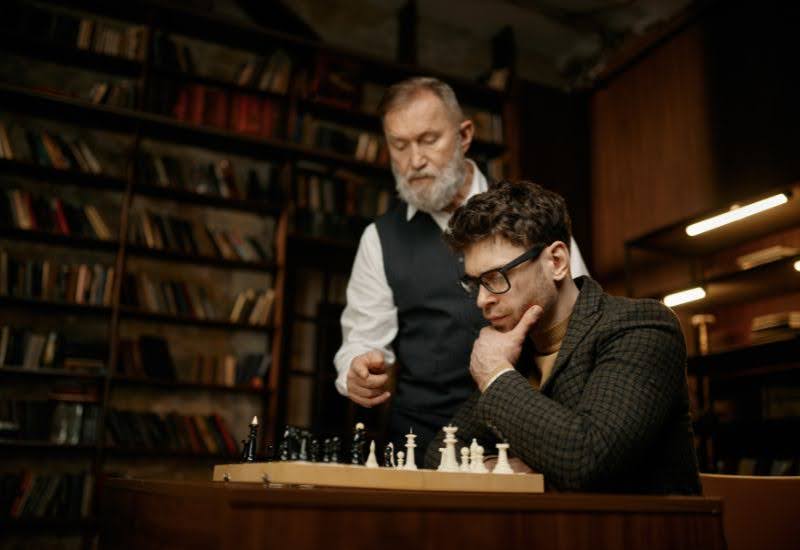
Becoming a Grandmaster in chess is a journey that pushes players to their mental limits, but it’s also a path of incredible personal growth. Each step-from understanding FIDE ratings to earning norms-brings players closer to mastery. Remember, the journey itself is as valuable as the title, and every game played contributes to your growth as a player.
Ready to take the next step in your Grandmaster journey? Consider the Caissa School of Chess-a complete curriculum designed to help you improve and excel in chess. With live classes led by some of the world’s top GM coaches who’ve trained prodigies like Gukesh, Arjun, Raunak, and Nihal, you’ll have expert guidance every step of the way. Caissa also offers peer-to-peer learning, where you can connect with players of similar strength to collaborate, compete, and grow together.
Plus, Caissa provides supplementary classes for those needing extra support, ensuring everyone maximizes their learning. With regular assignments, engaging activities, and practice tournaments, Caissa School of Chess is your gateway to reaching new heights in the chess world.
What’s your next move in the world of chess? Share your goals, and let’s inspire each other on this exciting journey to chess mastery!