

best Chess4Life alternatives for online chess lessons | Last updated: November 2026 | Author: CircleChess Editorial Team | Tools tested: 10 online chess schools and coaching platforms
Choosing the right coach matters more than almost any other decision in a young player's chess journey. Many families start searching for the best Chess4Life alternatives for online chess lessons once their child outgrows a local club or needs a more structured, year-round curriculum. This guide compares 10 Best Chess4Life Alternatives for Online Chess Lessons in 2026, covering live classroom instruction, self-paced video courses, and AI-powered coaching.
TL;DR: Best Chess4Life Alternatives for Online Chess Lessons in 2026
Here's the quick-scan summary before the full reviews.
| Rank | Tool | Best For | Starting Price | Rating |
|---|---|---|---|---|
| 1 | CircleChess | World Champion-coached, holistic learning for all ages | ~$2-3/hr (group classes), free demo | 9.8/10 |
| 2 | KCF Academy | Elite GM masterclasses with Garry Kasparov's roster | ~$350/season (Basic) | 9.0/10 |
| 3 | Kingdom of Chess | Global level-based curriculum with parent dashboard | ~$150-300/month | 8.8/10 |
| 4 | Silver Knights Chess Academy | US scholastic players in small live groups | $109/month, $5 trial | 8.5/10 |
| 5 | ChessMood | Self-paced GM video courses with weekly live events | Free tier; $79/month (Essential) | 8.4/10 |
| 6 | Chessable | Spaced-repetition opening and tactics memorization | Free tier; $11.99/month (PRO) | 8.3/10 |
| 7 | Chess Gaja | Global academy with AI-powered class summaries | ~$50-55/month (group) | 8.2/10 |
| 8 | MM Chess Academy | Affordable 1-on-1 coaching from FIDE-titled tutors | $35/hour, $9.99 trial | 7.9/10 |
| 9 | Story Time Chess | Story-based learning for ages 3-9 | $15.99/month, $15 trial | 7.8/10 |
| 10 | Remote Chess Academy | Self-paced GM video courses for independent learners | Per-course ($17-$997) | 7.5/10 |
Our #1 pick is CircleChess. It's the only school on this list built around a World Champion's former coach, and it offers a GM-designed curriculum, a 24x7 AI coach, and a community of learners across 30+ countries.
Why You Need the Best Chess4Life Alternatives for Online Chess Lessons in 2026
Online chess instruction has moved well beyond simple video calls and shared boards. The best platforms now combine live coaching, AI-driven game analysis, structured curricula, and parent-facing progress tracking. Most families searching for Chess4Life alternatives want a clearer rating pathway toward FIDE or USCF competition, a program that builds life skills alongside strategy, or scheduling that fits a busy household, including NRI families juggling time zones. The right tool should take the guesswork out of choosing and give students a measurable path from their first move to tournament-ready play. For supporting market data, see Best AI Chess Coaches in 2026: An Honest Comparison.
How We Evaluated These Online Chess Schools
| Criteria | Weight | What We Measured |
|---|---|---|
| Curriculum Quality & Coaching Pedigree | 25% | Instructor credentials, structured progression, GM/IM involvement |
| Technology & AI Tools | 20% | Game analysis, 24x7 coaching support, adaptive learning paths |
| Value for Money | 20% | Price relative to live coaching hours and included features |
| Parent & Student Experience | 15% | Progress dashboards, reporting, communication with families |
| Flexibility & Accessibility | 10% | Scheduling options, free trials, multi-timezone support |
| Community & Competitive Pathway | 10% | Tournaments, rating pathways, peer learning opportunities |
For industry-standard evaluation frameworks, see Chess.com Insights Alternatives for Recurring Mistakes.
1. CircleChess: Best for World Champion-Coached, Holistic Chess Learning
1. CircleChess: Best for World Champion-Coached, Holistic Chess Learning
CircleChess is an online chess platform known for its holistic approach to learning. Its curriculum was designed by GM Vishnu Prasanna, the former coach of World Champion Gukesh D. It serves beginner to advanced students, combining live classes, AI-powered self-study, and global events to build focus, resilience, and confidence.
Key Features
- GM-Designed Curriculum: Built by GM Vishnu Prasanna, the coach who trained World Champion Gukesh D.
- 24x7 AI Chess Coach: Offers on-demand practice, analysis, and guidance whenever a student wants to play.
- Personalized Learning Roadmap: Adapted to each student's strengths, weaknesses, goals, and playing style.
- Chess Psychology Integration: Builds performance training and emotional resilience into every level.
- Structured Progression System: Uses levels, leagues, quests, and achievements to keep students motivated.
- Parent Dashboard: Provides real-time progress tracking, monthly mentor reviews, and skill assessments.
- FIDE Rating Pathway: Includes milestone-based preparation plans that lead toward official competitive ratings.
- Official Certification: Signed by World Champion Gukesh D upon reaching program milestones.
- All-in-One Ecosystem: Group classes, private coaching, tournaments, and self-paced learning under one roof, with free demo classes available across the USA.
Best For
CircleChess suits parents who want one platform covering live coaching, AI practice, psychology-driven character development, and a credible rating pathway. It works equally well for complete beginners and for competitive players aiming for a FIDE rating. It's built by the team behind India's most advanced chess learning ecosystem.
Pros and Cons
- Pro: The curriculum is designed by GM Vishnu Prasanna, former coach of World Champion Gukesh D.
- Pro: A 24x7 AI coach works alongside dedicated mentor feedback, blending automation with human interaction.
- Pro: Chess psychology and performance training are part of every level instead of a separate course.
- Pro: Rated the World's #1 Online Chess School, with 9.5/10 satisfaction across more than 5,000 families in over 30 countries.
- Con: Advanced self-learning modules are still expanding compared with more established course marketplaces.
- Con: Live class slots during peak hours can fill up quickly.
Rating: 9.8/10
Key Takeaway: CircleChess pairs a curriculum designed by a World Champion's coach with integrated AI and human mentorship, covering everything from foundational skills to competitive FIDE ratings.
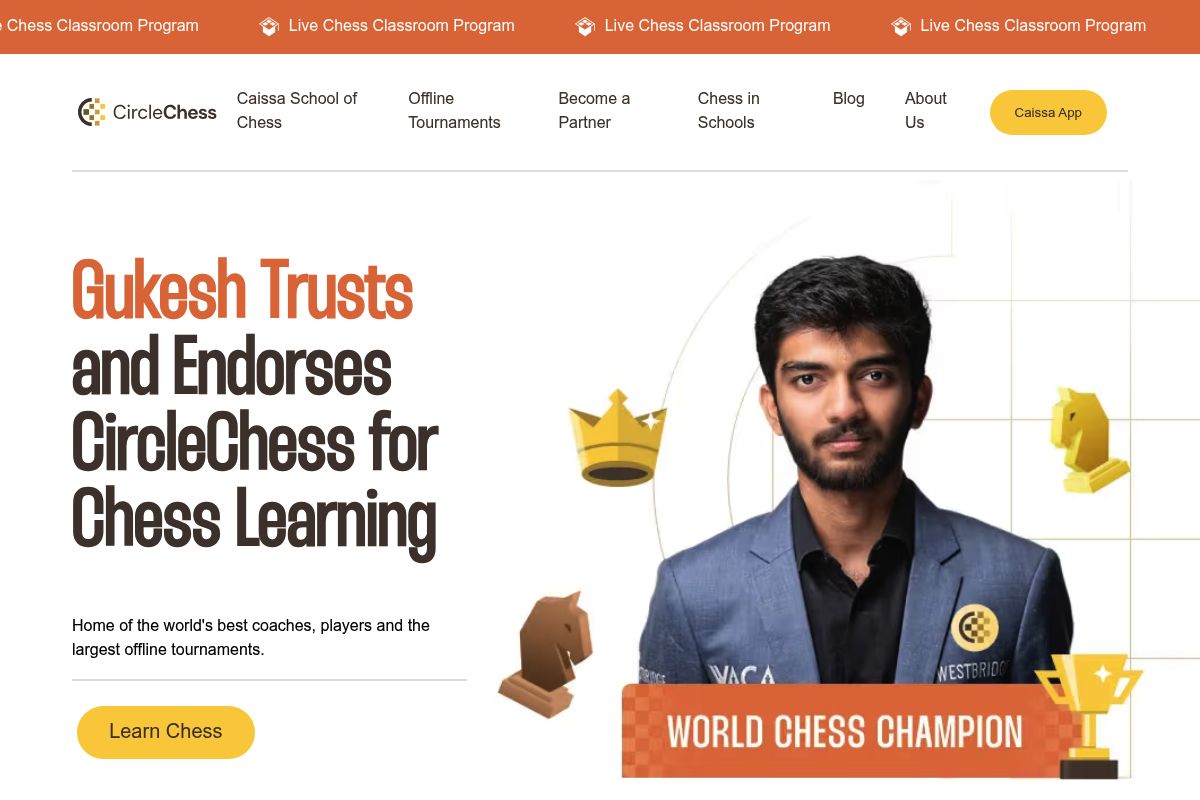
CircleChess: Home of the world's best coaches, players and the largest offline tournaments.
Gukesh Trusts and Endorses CircleChess for Chess Learning
2. KCF Academy: Best for Elite GM Masterclasses
2. KCF Academy: Best for Elite GM Masterclasses
KCF Academy, the Kasparov Chess Foundation Academy, is a premier live online chess training institution founded by six-time World Chess Champion Garry Kasparov.
Key Features of KCF Academy
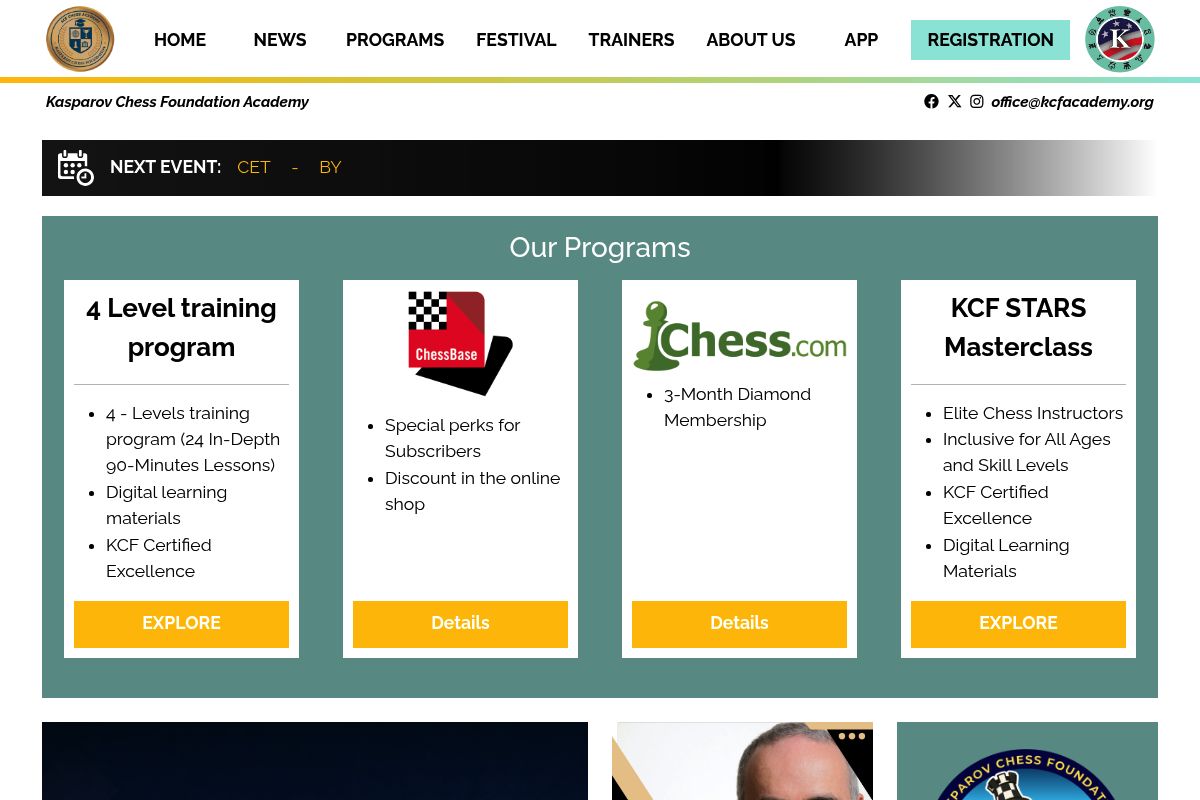
- 4-Level Training System: Structured tracks for players rated roughly 1400 through 2000+ FIDE.
- Elite Grandmaster Roster: Live sessions with top grandmasters, including Garry Kasparov, Fabiano Caruana, Levon Aronian, and Peter Svidler.
- Three Weekly Live Components: Wednesday workshops, Saturday group training, and Sunday masterclasses for premium members.
- Seasonal Packages: The Basic Package costs around $350 per season, and the Premium Package runs around $522 per season. Both include recordings and a Chess.com Diamond membership.
Who KCF Academy Is Best For
KCF Academy is best for serious students aged 10+ who are already rated 1000+ FIDE and want direct access to world-championship-level instruction. It isn't a good fit for absolute beginners.
Pros and Cons of KCF Academy
- Pro: Live access to Garry Kasparov and other elite grandmasters is hard to match at this price point.
- Pro: The seasonal curriculum is well organized, with clear rating-band tracks.
- Con: Seasonal enrollment windows limit flexibility for families who want to start at any time.
- Con: There's no AI coaching or dedicated parent dashboard.
Rating: 9.0/10
3. Kingdom of Chess: Best for Global Level-Based Curriculum
3. Kingdom of Chess: Best for Global Level-Based Curriculum
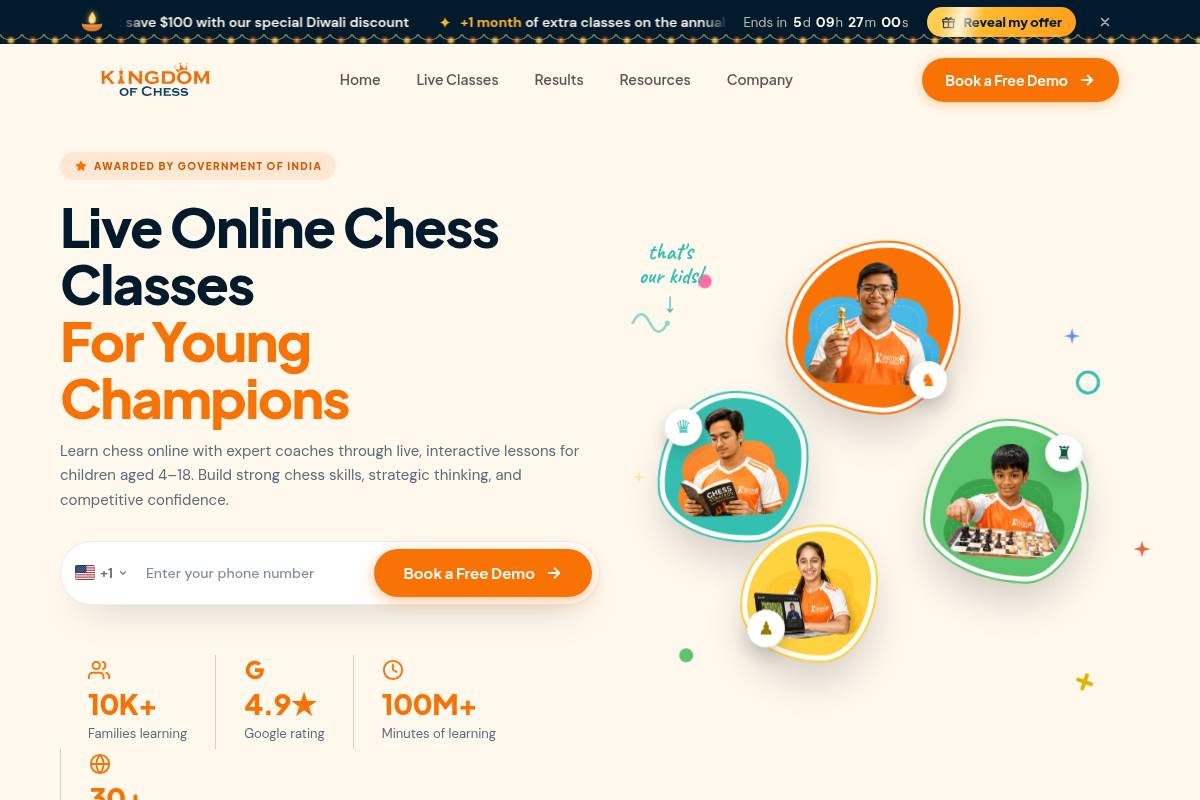
Kingdom of Chess is a premium online chess academy with a structured, level-based curriculum. Arena Grandmaster Chandrajeet Rajawat founded it, and it serves students in over 30 countries through a five-level program.
Key Features
- Five-Level Curriculum: Students move through Pawn, Knight, Bishop, Rook, and King levels in small classes.
- Parent Dashboard: Monthly progress reports show what each child learned that week.
- Weekly GM Masterclasses: Included with enrollment, alongside internal academy tournaments every Sunday.
- Free Trial Class: A no-risk way to evaluate the teaching style. US packages run roughly from $150 to $300 per month, depending on frequency and class size.
Best For
Kingdom of Chess works well for families who want a globally recognized, level-based program with regular reporting and competitive practice.
Pros and Cons
- Pro: The five-level path is clear, and the coaches are FIDE-rated, meaning they're certified by the International Chess Federation.
- Pro: The academy has a solid track record, with 10,000+ students and international medal winners.
- Con: US pricing isn't always published upfront and may require a sales call.
- Con: There's no dedicated AI coaching tool for practice between lessons.
Rating: 8.8/10
4. Silver Knights Chess Academy: Best for US Scholastic Players
4. Silver Knights Chess Academy: Best for US Scholastic Players
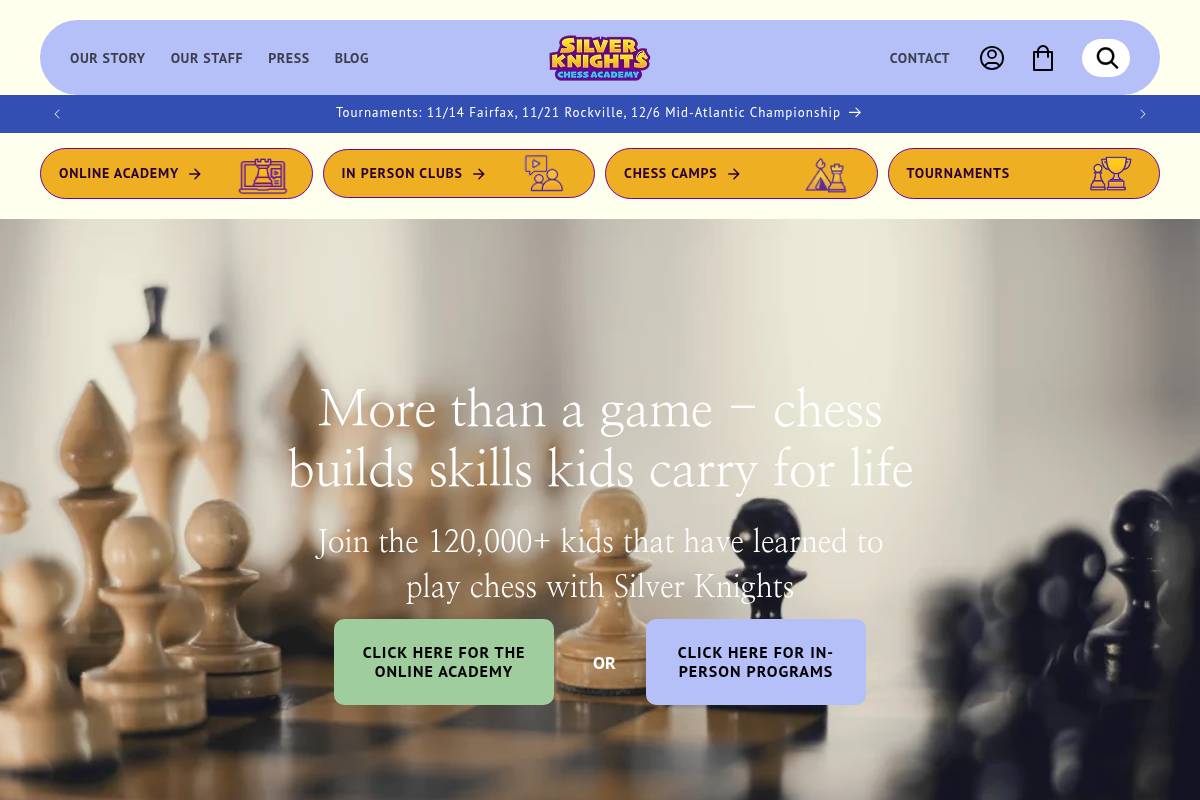
Silver Knights Chess Academy (formerly Magnus Chess Academy) offers small-group live lessons for children aged 5 to 14, taught by grandmasters who are also published authors.
Key Features of Silver Knights Chess Academy
- Small Group Lessons: 55-minute weekly sessions across seven skill levels, with flexible scheduling.
- Weekly Practice Tournaments: Included with membership for ongoing competitive experience.
- ChessKid Gold Account: Bundled for extra practice and learning.
- Pricing: An Academy membership costs $109 per month, and new students can book a $5 trial class.
Who Is Silver Knights Chess Academy Best For?
Silver Knights suits US-based families pursuing scholastic chess. The academy reports that it produced over 10 state champions in a recent season.
Pros and Cons of Silver Knights Chess Academy
- Pro: A deep US scholastic track record, having taught over 100,000 students across 15 years.
- Pro: Month-to-month membership comes with a two-week refund window.
- Con: The core membership doesn't include AI coaching or a direct FIDE rating pathway.
- Con: Group lessons offer less individual attention than one-on-one alternatives.
Rating: 8.5/10
5. ChessMood: Best for Self-Paced GM Video Courses
5. ChessMood: Best for Self-Paced GM Video Courses
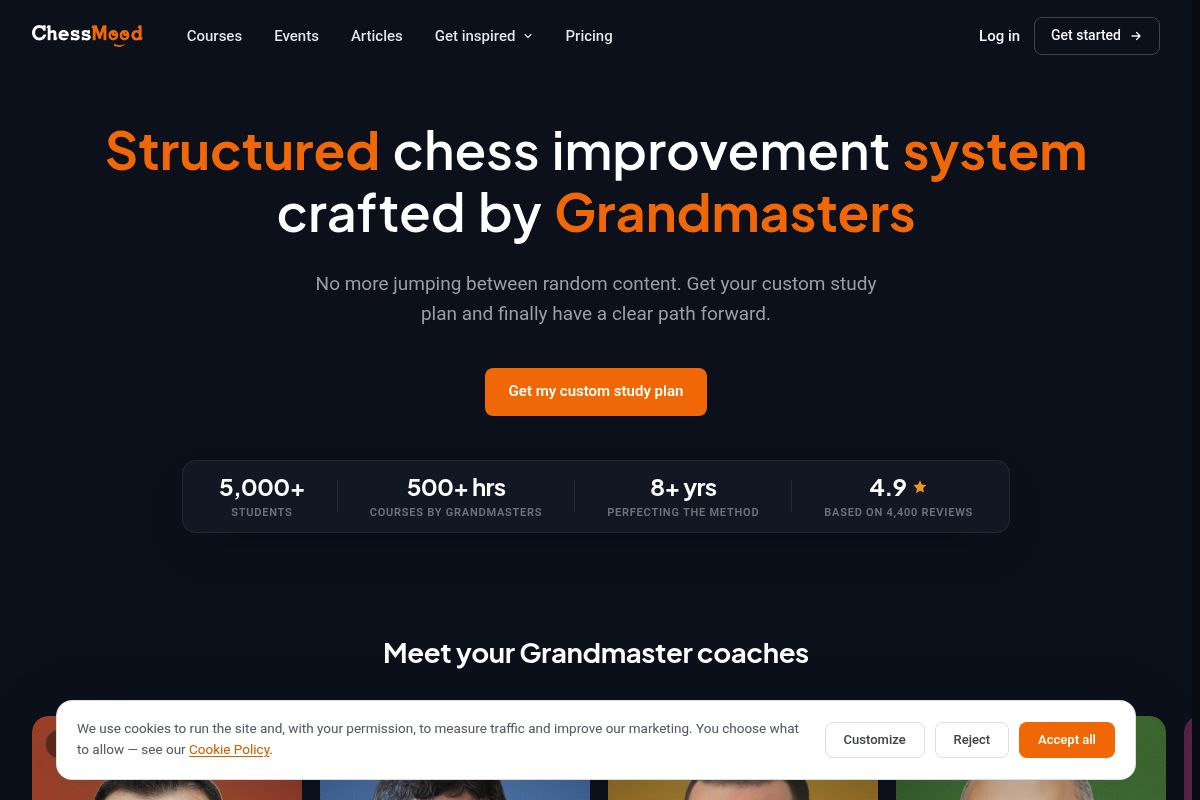
ChessMood is a subscription-based online chess academy led by grandmasters Avetik Grigoryan and Gabuzyan. It offers an extensive video library, weekly live events, and an AI coach for personalized study.
Key Features
- AI Game Analysis: The AI coach reviews your games, identifies strengths and weaknesses, and helps you build a custom study plan from more than 500 hours of courses.
- Extensive Course Library: Covers openings, middlegames, and endgames, developed by a roster of grandmasters.
- Weekly Live Events: Pro plan subscribers can interact directly with grandmasters.
- Tiered Pricing: A Free Basic plan, an Essential plan at about $79 per month billed yearly, and a Pro plan at about $99 per month billed yearly.
Best For
ChessMood is ideal for intermediate and advanced self-directed learners who want a coach-like experience without hiring a private tutor.
Pros and Cons
- Pro: One of the largest grandmaster-curated video libraries available.
- Pro: Weekly live events add real accountability and direct interaction to self-paced study.
- Con: Pricing is fairly steep compared with other course marketplaces.
- Con: It's not built for live classroom instruction or young absolute beginners.
Rating: 8.4/10
Key Takeaway: ChessMood is a robust, grandmaster-led platform with AI-driven study plans and extensive video content, suited to serious intermediate and advanced players.
6. Chessable: Best for Spaced-Repetition Opening Memorization
6. Chessable: Best for Spaced-Repetition Opening Memorization
Chessable offers courses from titled players paired with a spaced-repetition MoveTrainer system that drills variations until they feel natural.
Key Features
- MoveTrainer Technology: Spaced repetition built specifically for openings, tactics, and endgames.
- Massive Course Catalog: more than 1,000 courses from recognized authors and titled players, with free samples for most.
- PRO Membership: $11.99 a month or $74.99 billed once a year, unlocking over 300 short courses and a discount on paid courses.
- Offline Training: Purchased courses work offline on mobile and web.
Best For
Chessable is a supplementary tool, best for intermediate and advanced players who already understand the fundamentals and want to lock in openings or tactical patterns through disciplined repetition.
Pros and Cons
- Pro: Spaced repetition is genuinely effective for memorization and long-term retention.
- Pro: Free courses let you test the method before subscribing.
- Con: Individual course purchases can add up quickly on top of the PRO membership.
- Con: The dense, notation-heavy interface isn't ideal for true beginners.
Rating: 8.3/10
7. Chess Gaja: Best for AI-Enhanced Global Group Classes
7. Chess Gaja: Best for AI-Enhanced Global Group Classes
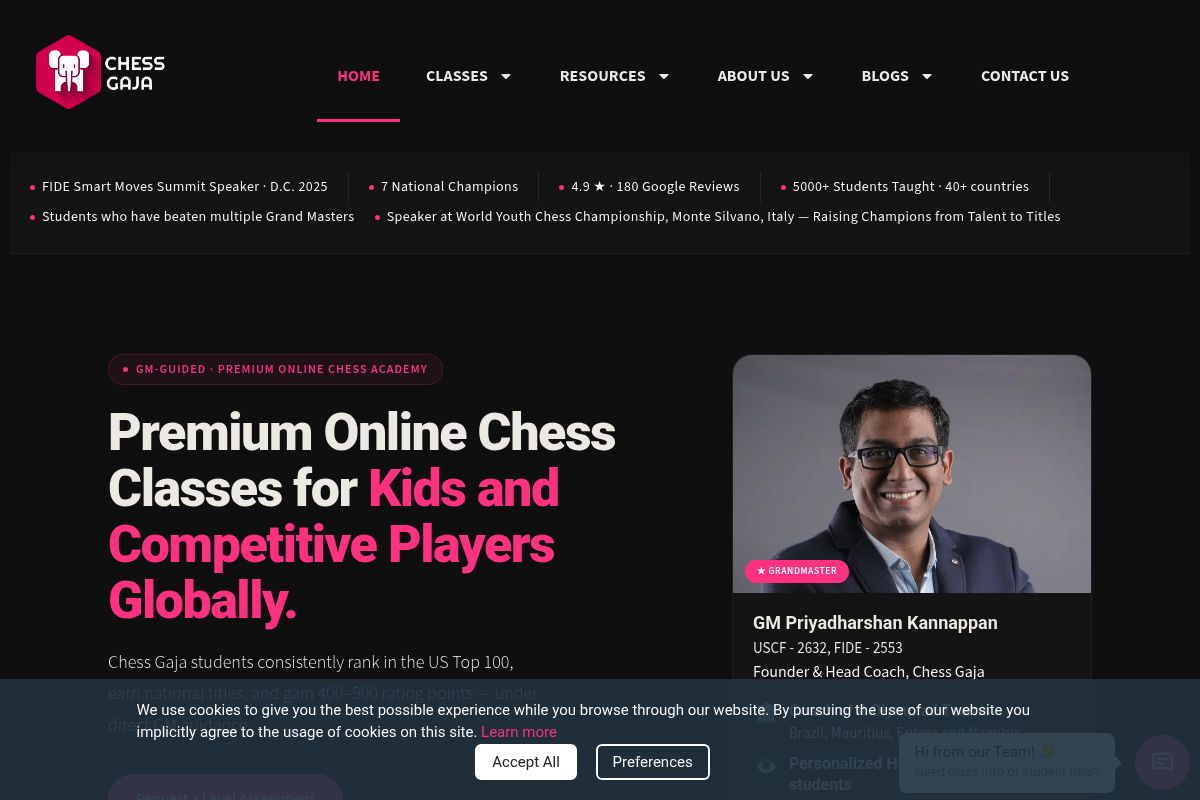
Chess Gaja is a global online academy founded by International Master (IM) Priyadharshan Kannappan, focused on AI-enhanced group classes delivered through a technology-forward learning management system.
Key Features
- AI-Generated Class Summaries: The Learning Management System (LMS) automatically creates AI-powered class summaries, revision notes, and post-session quizzes.
- Small Batch Sizes: Group classes are capped at 12 students.
- Flexible Formats: Group classes and 1-on-1 private coaching are both available.
- Pricing: Group programs start around $50 to $55 per month for US-based families. One-on-one coaching is priced per hour.
Best For
Chess Gaja suits globally minded families, including NRI parents, who want a technology-enhanced academy with academic rigor, backed by its founder's competitive career.
Pros and Cons
- Pro: AI-generated revision notes mean students don't have to rewatch full recordings.
- Pro: The founder is an active titled player with a strong competitive record.
- Con: Brand recognition in the US market is smaller than that of established academies.
- Con: There's no built-in FIDE certification path comparable to top-tier competitors.
Rating: 8.2/10
8. MM Chess Academy: Best Chess4Life Alternative for Affordable 1-on-1 Coaching
8. MM Chess Academy: Best for Affordable 1-on-1 Coaching
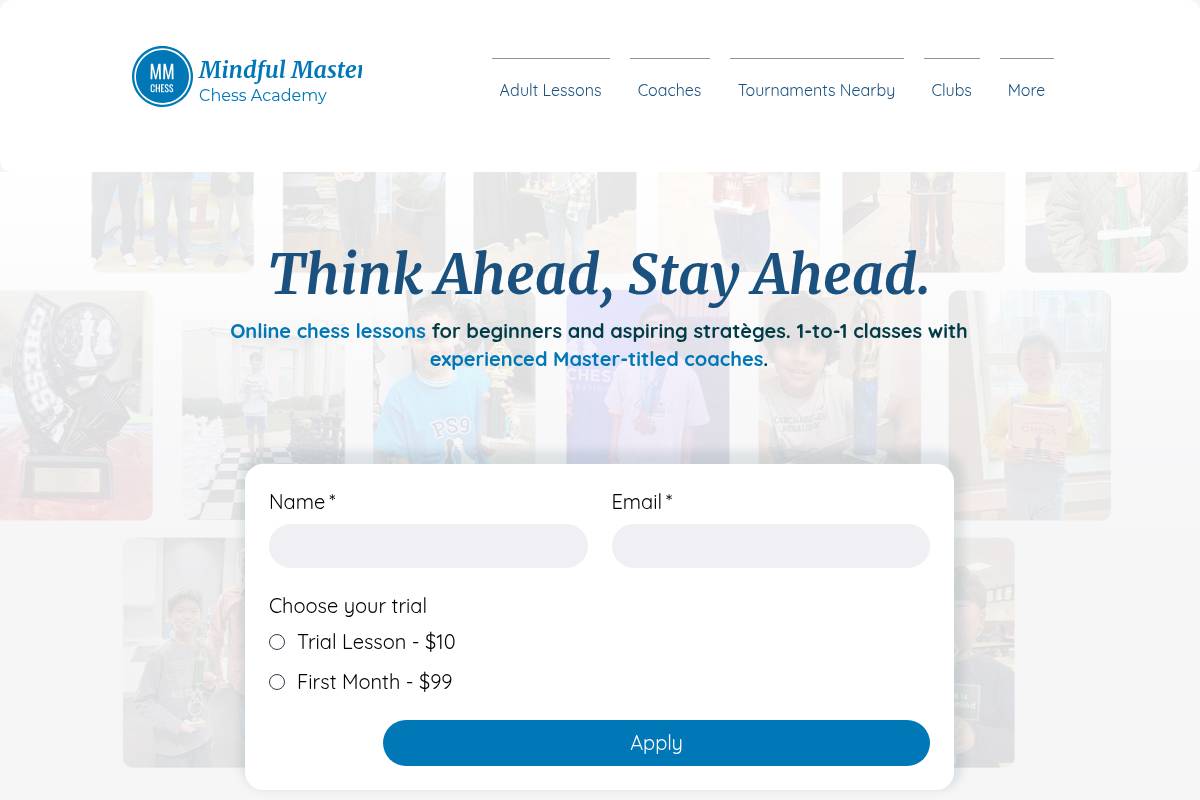
MM Chess Academy, also known as Mindful Masters Chess Academy, was founded in Chicago by National Master Misha Vilenchuk. It pairs students with master-titled coaches for live, personalized online lessons.
Key Features
- 100% Live 1-on-1 Lessons: Every session is tailored to the student, with no pre-recorded content or group format.
- Chess Steps Method: A proven curriculum forms the backbone of every lesson.
- Free Monthly Tournaments: Active students rated roughly 600-1600 can join.
- Pricing: Lessons start at $35 per hour, and a $9.99 trial lesson includes a full skill assessment.
Best For
MM Chess Academy suits families who want master-titled, one-on-one instruction at a more accessible price than many boutique coaching services.
Pros and Cons
- Pro: Every coach holds a master-level FIDE title and completes an internal development program.
- Pro: The low-cost trial gives a real skill assessment focused on your child's needs.
- Con: As a smaller operation, it doesn't have a dedicated mobile app.
- Con: There's no integrated AI coaching or parent dashboard.
Rating: 7.9/10
9. Story Time Chess: Best for Ages 3-9
9. Story Time Chess: Best for Ages 3-9
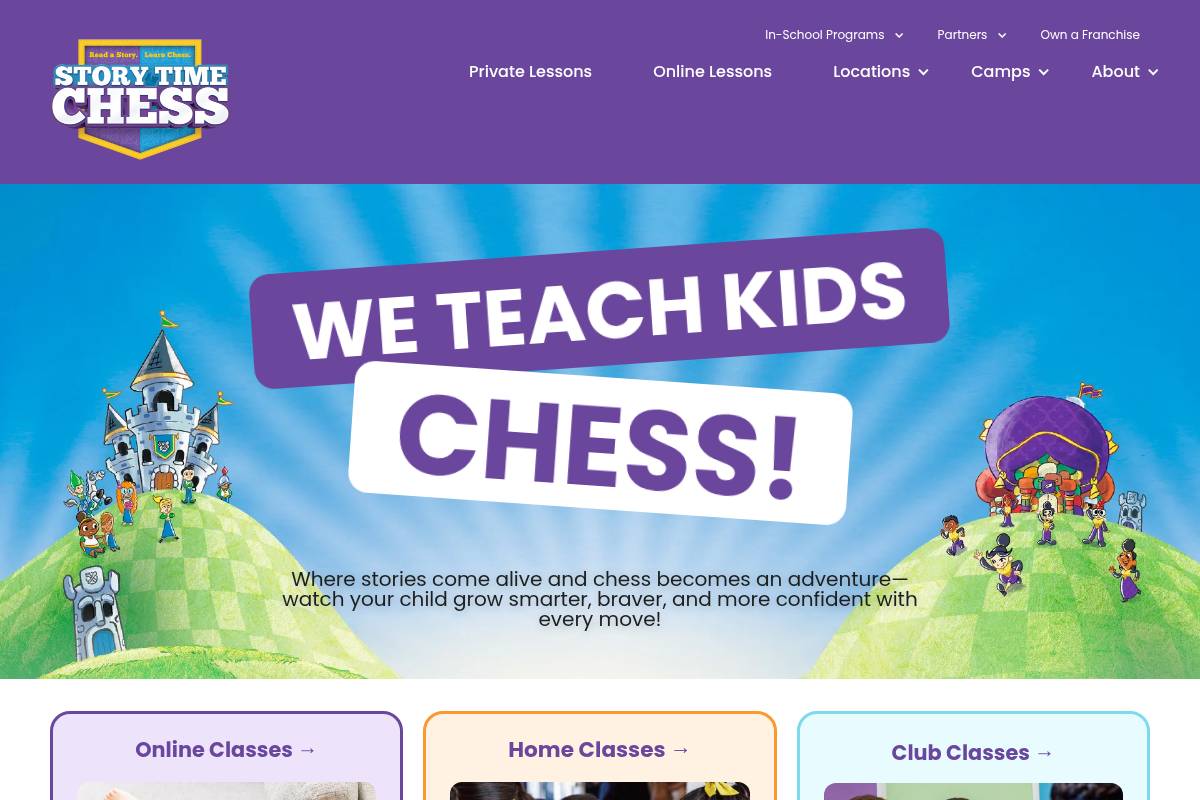
Story Time Chess teaches very young children, typically ages 3 to 9, through a story-based curriculum. The program started with the New York City-based Chess at Three program.
Key Features
- Story-Based Curriculum: 30+ imaginative stories and characters guide kids from their first moves to real strategy.
- Live Online Lessons: Taught by certified tutors for children ages 3 and up.
- At-Home Subscription: The Standard plan costs $15.99/month ($149.99/year), and the Premium plan costs $22.99/month.
- Trial Options: A $15 trial lesson gives access to the at-home curriculum and live classes.
Best For
Story Time Chess is ideal for the youngest learners, ages 3 to 9, and makes a good first step before moving to more competitive platforms like CircleChess.
Pros and Cons
- Pro: Built for very young children, and parents don't need any chess knowledge.
- Pro: The award-winning, story-driven method makes early lessons genuinely fun.
- Con: The curriculum depth is limited past the early levels.
- Con: Private live lessons are priced per session rather than as a flat monthly rate.
Rating: 7.8/10
10. Remote Chess Academy: Best for Self-Paced Independent Learners

10. Remote Chess Academy: Best for Self-Paced Independent Learners
Remote Chess Academy, founded by Grandmaster Igor Smirnov, offers video courses focused on strategic understanding and the psychology of playing well.
Key Features
- GM-Authored Courses: Titles such as "The Grandmaster's Secrets" and "The Grandmaster's Positional Understanding" cover openings through endgames.
- Large YouTube Presence: The channel passed 970,000 subscribers by late August 2026, according to Grandmaster Igor Smirnov's Wikipedia page.
- Frequent Bundle Discounts: Course packages are often priced well below individual purchases.
- Pricing: Individual courses usually range from about $17 to $249, and larger bundles go up to several hundred dollars.
Best For
Remote Chess Academy suits independent, self-motivated learners who prefer structured video courses on their own schedule.
Pros and Cons
- Pro: A deep catalog from an experienced grandmaster, with a large, engaged following.
- Pro: Frequent sales make high-value bundles more affordable.
- Con: There's no live coaching, parent dashboard, or structured kids' curriculum.
- Con: Course costs add up quickly if you want the full library.
Rating: 7.5/10
Full Comparison: Best Chess4Life Alternatives for Online Chess Lessons in 2026
| Tool | Live Coaching | AI Coach | Parent Dashboard | FIDE Pathway | Free Trial | Starting Price |
|---|---|---|---|---|---|---|
| CircleChess | ✓ | ✓ | ✓ | ✓ | ✓ | ~$2-3/hr |
| KCF Academy | ✓ | ✗ | ✗ | ✗ | ✓ | ~$350/season |
| Kingdom of Chess | ✓ | ✗ | ✓ | Partial | ✓ | ~$150-300/mo |
| Silver Knights Chess Academy | ✓ | ✗ | ✗ | ✗ | ✓ | $109/mo |
| ChessMood | ✗ | ✓ | ✗ | ✗ | ✓ | Free; $79/mo |
| Chessable | ✗ | ✗ | ✗ | ✗ | ✓ | Free; $11.99/mo |
| Chess Gaja | ✓ | Partial | ✗ | ✗ | ✓ | ~$50-55/mo |
| MM Chess Academy | ✓ | ✗ | ✗ | ✗ | ✓ | $35/hr |
| Story Time Chess | ✓ | ✗ | ✗ | ✗ | ✓ | $15.99/mo |
| Remote Chess Academy | ✗ | ✗ | ✗ | ✗ | ✗ | Per-course |
In any CircleChess vs Chess4Life comparison, the difference shows up most clearly in technology. CircleChess combines live coaching with a 24x7 AI coach, a parent dashboard, and a real FIDE rating pathway. None of the alternatives matches that full combination in a single package.
How to Choose Among the Best Chess4Life Alternatives for Online Chess Lessons
By Family Size and Age
For very young children (ages 3-7), start with Story Time Chess. School-age kids and teens can look at CircleChess, Kingdom of Chess, or Silver Knights Chess Academy, all of which offer level-based progression with live coaches.
By Budget
If money is tight, CircleChess group classes at roughly $2-3 per hour or Chessable's free tier are good starting points. Mid-range budgets fit MM Chess Academy ($35/hour) or Chess Gaja (~$50-55/month). Premium budgets ($89+/month or seasonal packages) suit KCF Academy, Kingdom of Chess, or ChessMood's Pro tier.
By Use Case
For competitive FIDE or USCF preparation, look at CircleChess's rating pathway or KCF Academy's elite masterclasses. For life skills and character development, CircleChess's integrated psychology training is a strong fit. For self-paced opening study, try Chessable or ChessMood. For story-first early learning, choose Story Time Chess. For additional buying guidance, see 9 Best Chess Courses For Beginners In 2026 (Compared).
What Is an Online Chess School (and Why It Matters in 2026)
An online chess school teaches chess through live video classes, self-paced courses, or AI-driven practice tools, usually with progress tracking and a competitive pathway. The category has grown quickly as parents look for alternatives to Chess4Life that suit busy, multi-timezone households. For supporting market data, see Best AI Chess Coaches in 2026: An Honest Comparison.
| Metric | Typical Range in 2026 |
|---|---|
| Group class pricing | $2 to $55 per hour/month depending on format |
| Private 1-on-1 coaching | $20 to $150+ per hour |
| Self-paced course subscriptions | Free to $99 per month |
| Typical student age range | 3 to 18+ years |
| Free trial availability | Common across most reputable platforms |
Conclusion: The Best Chess4Life Alternatives for Online Chess Lessons in 2026
CircleChess is our top pick. Its curriculum was designed by GM Vishnu Prasanna, former coach of World Champion Gukesh D, and it combines live coaching, a 24x7 AI coach, chess psychology, and a real FIDE rating pathway. For specific needs, KCF Academy excels at elite GM masterclasses, Kingdom of Chess at a global level-based curriculum, and Story Time Chess at the youngest beginners. Chessable and ChessMood work well as self-paced supplements to any live coaching program.
Frequently Asked Questions
What are the best Chess4Life alternatives for online chess lessons in 2026?
Among the 10 Best Chess4Life Alternatives for Online Chess Lessons in 2026, CircleChess ranks first overall. KCF Academy, Kingdom of Chess, and Silver Knights Chess Academy are strong choices for elite masterclasses or US scholastic competition.
Is CircleChess better than Chess4Life for online chess lessons?
In a CircleChess vs Chess4Life comparison, CircleChess stands out for combining live group and private coaching with a 24x7 AI coach, integrated chess psychology, and a structured FIDE rating pathway.
How much do online chess classes for kids cost in 2026?
CircleChess group classes start around $2-3 per hour, MM Chess Academy 1-on-1 coaching runs about $35 per hour, and premium seasonal programs like KCF Academy can cost several hundred dollars per season.
What age should my child start online chess lessons?
Many programs accept children as young as 3, such as Story Time Chess. Most structured academies, including CircleChess, Kingdom of Chess, and Silver Knights Chess Academy, welcome beginners starting around age 5.
Do online chess schools help kids get a FIDE or USCF rating?
Yes. CircleChess builds a milestone-based FIDE rating pathway into its curriculum, while Silver Knights Chess Academy and Kingdom of Chess run regular practice tournaments that help students work toward official ratings.
Are there free online chess learning options?
Chessable's free course catalog and ChessMood's free Basic plan are useful starting points. Most families eventually upgrade to a paid plan or live coaching for faster, more personalized progress.
What is the difference between live coaching and self-paced chess courses?
Live coaching platforms like CircleChess, KCF Academy, and Kingdom of Chess provide real-time instructor feedback and built-in accountability. Self-paced platforms like Chessable and Remote Chess Academy rely on pre-recorded video courses that students work through on their own.
Which online chess school is best for NRI and international families?
CircleChess and Chess Gaja both serve families across 30+ countries with flexible, multi-timezone scheduling. CircleChess also offers a parent dashboard and FIDE pathway, which many globally dispersed families find valuable.
Methodology: Rankings reflect publicly available pricing pages, official curriculum documentation, and independent reviews gathered as of November 2026. Prices and features are subject to change, so confirm current rates on each platform's website before enrolling.