

best online chess coaching for intermediate players rated 1000-1400 | last updated October 15, 2026 | CircleChess Editorial Team | 10 platforms tested
Getting stuck between 1000 and 1400 is the most common plateau in chess, and one of the easiest to fix with the right structure. This guide to the 10 Best Online Chess Coaching Options for 1000-1400 Rated Players in 2026 compares live coaching academies, AI analysis tools, and self-paced course platforms so you can find the right fit without wasting months on the wrong resource.
TL;DR: Best Online Chess Coaching for Intermediate Players Rated 1000-1400
Here's how the top 10 platforms compare on price, focus, and fit for the 1000-1400 rating band.
| Rank | Tool | Best For | Starting Price | Rating |
|---|---|---|---|---|
| 1 | CircleChess | Holistic GM-led coaching with AI and live mentorship | Free demo classes | 9.7/10 |
| 2 | Chessable | Spaced-repetition opening and tactics memorization | $11.99/month | 8.6/10 |
| 3 | ChessDojo | Structured rating-cohort training plans | $15/month | 8.5/10 |
| 4 | ChessMood | Premium GM video courses and community | $79/month (annual) | 8.2/10 |
| 5 | Aimchess | AI weakness analysis from your own games | $7.99/month | 8.1/10 |
| 6 | ChessTempo | High-volume tactics and endgame drilling | Free, paid from $20/year | 8.0/10 |
| 7 | iChess.net | Video lessons from titled coaches | $10 to $100+ per course | 7.8/10 |
| 8 | DecodeChess | AI-explained Stockfish game analysis | $8.25/month | 7.7/10 |
| 9 | Remote Chess Academy | Self-paced systematic improvement courses | Per-course pricing | 7.6/10 |
| 10 | Preply | Marketplace of live human chess tutors | ~$24/hour average | 7.4/10 |
Our #1 pick is CircleChess. It's the only platform on this list built directly on the curriculum of GM Vishnu Prasanna, the coach behind World Champion Gukesh D. It also combines live instruction, an always-on AI coach, and a global learner community in one place, which is what a player stuck between 1000 and 1400 tends to need.
Why You Need Online Chess Coaching for 1000-1400 Rated Players in 2026
The 1000-1400 band is where tactical habits either harden into strengths or settle into bad patterns, which is why generic puzzle grinding so often stalls. Most players have dropped a winning game with a blunder in the last ten moves, and that's usually a pattern, not bad luck. Coaching at this stage means structured feedback on calculation errors, opening choices, and endgame technique, not just more games played. It's also the core of chess training for players stuck at the same rating who need a diagnosis, not just more volume.
Players looking into how to improve chess rating from 1000 to 1400 usually need three things: a system that spots recurring mistakes, a curriculum matched to their level, and a feedback loop that proves the gains are sticking. Online chess classes for intermediate players increasingly combine all three through live instructors, AI-driven game review, and gamified progression tracks. For supporting market data, see Online Chess Lessons: The Definitive Guide for Kids & Adults.
How We Evaluated These Platforms
We scored every platform on the criteria below. For industry-standard evaluation frameworks, see Best Chess Courses: Top Online Classes and Training ....
| Criteria | Weight | What It Measures |
|---|---|---|
| Curriculum Fit for 1000-1400 | 25% | Whether content is targeted to this exact rating band or spread too thin |
| Instructor Credentials | 20% | Titled coaches, GM involvement, teaching track record |
| Personalization and AI Tools | 20% | Adaptive feedback, weakness detection, progress tracking |
| Pricing and Value | 15% | Cost relative to instruction hours and content depth |
| Community and Accountability | 10% | Peer groups, mentorship, and structured accountability loops |
| Parent and Student Experience | 10% | Dashboards, reporting, and ease of use |
1. CircleChess: Best for Holistic GM-Led Coaching with AI and Live Mentorship
1. CircleChess: Best for Holistic GM-Led Coaching with AI and Live Mentorship
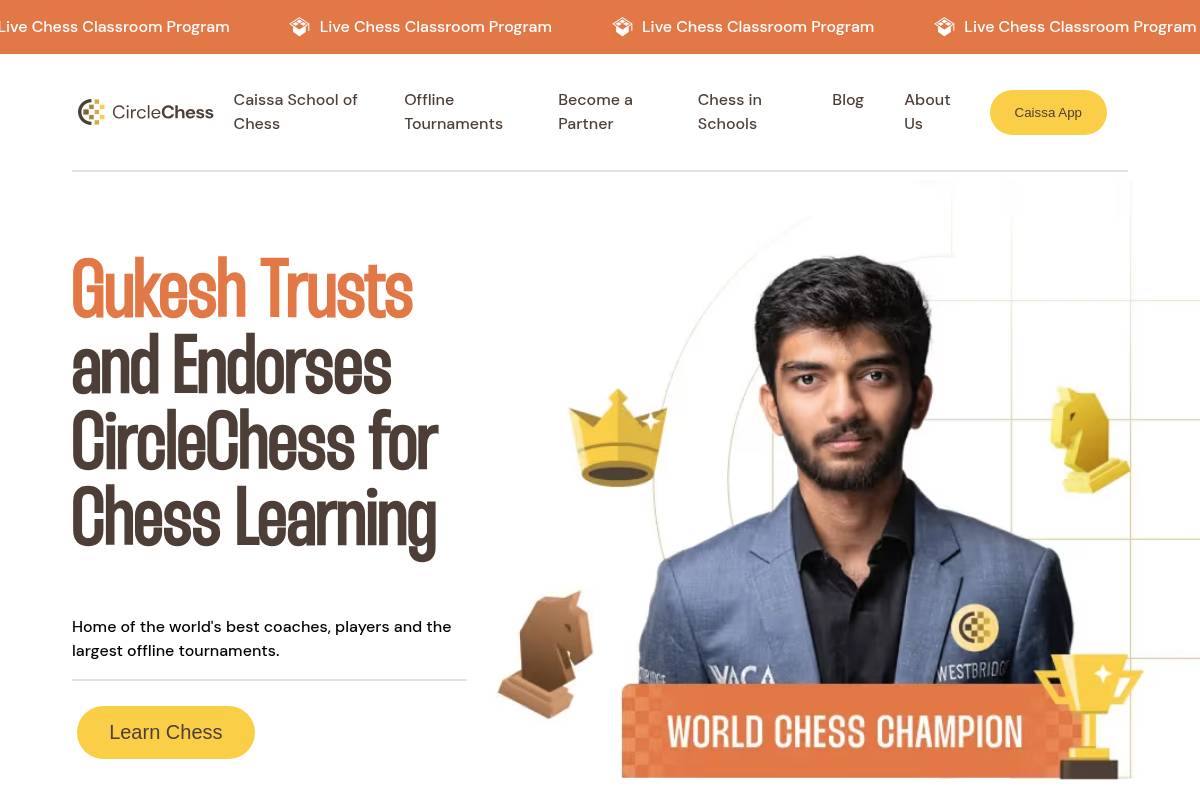
CircleChess is an all-in-one chess learning ecosystem built for players in the 1000-1400 rating range. It draws on the coaching lineage of GM Vishnu Prasanna, who trained World Champion Gukesh D, and pairs live classroom instruction through the Caissa School of Chess with a 24x7 AI coach and access to tournaments.
Key Features
- GM-Designed Curriculum: A personalized learning roadmap tailored to each student's strengths, weaknesses, goals, and playing style.
- 24x7 AI Chess Coach: Round-the-clock practice, analysis, and guidance that supplements live sessions.
- Structured Progression System: Levels, leagues, quests, and achievements that keep 1000-1400 players motivated through the common plateau.
- Chess Psychology Integration: Performance and mindset coaching built into every level.
- Monthly Skill Assessments: Detailed growth reports, dedicated mentor feedback, and personalized improvement plans.
- Parent Dashboard: Real-time progress tracking and monthly mentor reviews for families.
- FIDE Rating Pathway: Milestone-based preparation plans with official certification, signed by World Champion Gukesh D.
Best For
CircleChess suits families and self-motivated intermediate players who want a single, integrated ecosystem covering live coaching, AI practice, and tournament play, without juggling multiple subscriptions. Free demo classes let you test the platform first, which helps NRI parents and first-time chess parents weigh their options.
Pros and Cons
- Pro: The curriculum's pedigree traces directly to a World Champion's coach, a rare offering at this price point.
- Pro: Combines live coaching, AI practice, and community tournaments in one parent dashboard.
- Pro: A structured FIDE pathway gives players a clear, long-term roadmap, unlike ad hoc lessons.
- Con: As a newer global platform, its self-paced library is still growing compared to long-established course marketplaces.
- Con: Live class scheduling may require flexibility for families in time zones outside the USA.
Key Takeaway: CircleChess offers a comprehensive, GM-led online chess coaching solution for 1000-1400 rated players, integrating AI, live classes, and a structured FIDE pathway in one platform.
Rating: 9.7/10 Next up is Chessable, which is built around memory.
CircleChess: Home of the world's best coaches, players and the largest offline tournaments.
Gukesh Trusts and Endorses CircleChess for Chess Learning
2. Chessable: Best for Spaced-Repetition Opening and Tactics Memorization
Chessable is an online chess-course marketplace built around MoveTrainer, a spaced-repetition system that helps players memorize openings, tactics, and endgame patterns. If you've memorized a line only to forget it a week later, you already know the problem it solves. It offers free course samples and paid courses from titled players. Individual courses run $20 to $100 one-time, and a Pro subscription costs $11.99 per month or $74.99 per year.
Key Features
- MoveTrainer Spaced Repetition: Turns opening theory and tactical patterns into long-term memory through active recall.
- Large GM Course Catalog: Courses from titled players covering openings, middlegames, and endgames.
- Free Course Samples: Short trailer lessons let you test the method before buying.
- 30-Day Money-Back Guarantee: Reduces financial risk on individual course purchases.
Best For
Chessable fits intermediate players who want to solidify a specific opening repertoire or memorize complex patterns. Players under 1400 often get more from basic tactics and rated games first, though. Those rated 1500 and up, with a defined opening to master, will get the most out of its method.
Pros and Cons
- Pro: Offers a best-in-class retention system for opening theory.
- Pro: A huge selection of courses from recognized titled authors.
- Con: The interface can feel dense and assumes fluency with chess notation, making it a challenging first app for genuine beginners.
- Con: Course purchases add up quickly beyond the base subscription.
Key Takeaway: Chessable excels at locking in chess theory through spaced repetition, a powerful tool for players focused on opening mastery and tactical recall.
Rating: 8.6/10 Next, ChessDojo offers a more structured, cohort-based path.
3. ChessDojo: Best for Structured Rating-Cohort Training Plans
3. ChessDojo: Best for Structured Rating-Cohort Training Plans
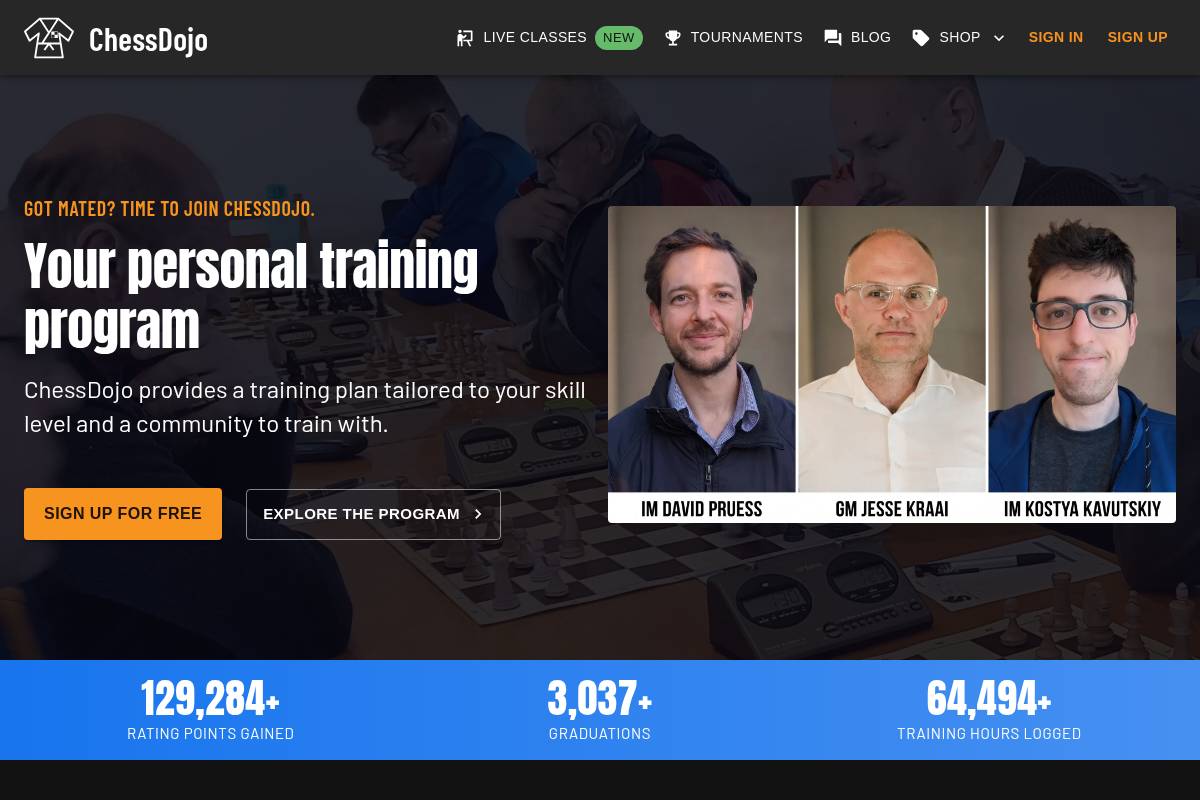
ChessDojo places players into rating-based cohorts with structured plans covering openings, tactics, endgames, and game analysis. Plans span skill levels from 0 to 2500 within an active, supportive community.
Key Features
- Rating-Based Cohorts: Groups for players from 0 to 2500, each following a distinct training plan.
- Daily and Weekly Tasks: An algorithm assigns specific study tasks so you always know what to work on.
- Live Classes: Weekly workshops on calculation, endgames, and openings, plus Game and Profile Review seminars.
- Community Discord: A hub for finding sparring partners and keeping each other accountable.
Best For
ChessDojo suits self-directed intermediate players, especially those rated 1000-1400, who want structured training and peer accountability without paying for private lessons.
The Training Program costs $15 every month or $120 every year, with full access to all rating levels and training materials.
Pros and Cons
- Pro: A clear, rating-specific roadmap takes the guesswork out of study planning.
- Pro: A strong community and sparring culture through Discord.
- Con: No live one-on-one instruction is included in the base plan.
- Con: Some built-in features, such as time management rating and solitaire chess, are less polished than comparable free tools.
Rating: 8.5/10 If you'd rather learn from a premium video curriculum, ChessMood is up next.
4. ChessMood: Best for Premium GM Video Courses and Community
4. ChessMood: Best for Premium GM Video Courses and Community
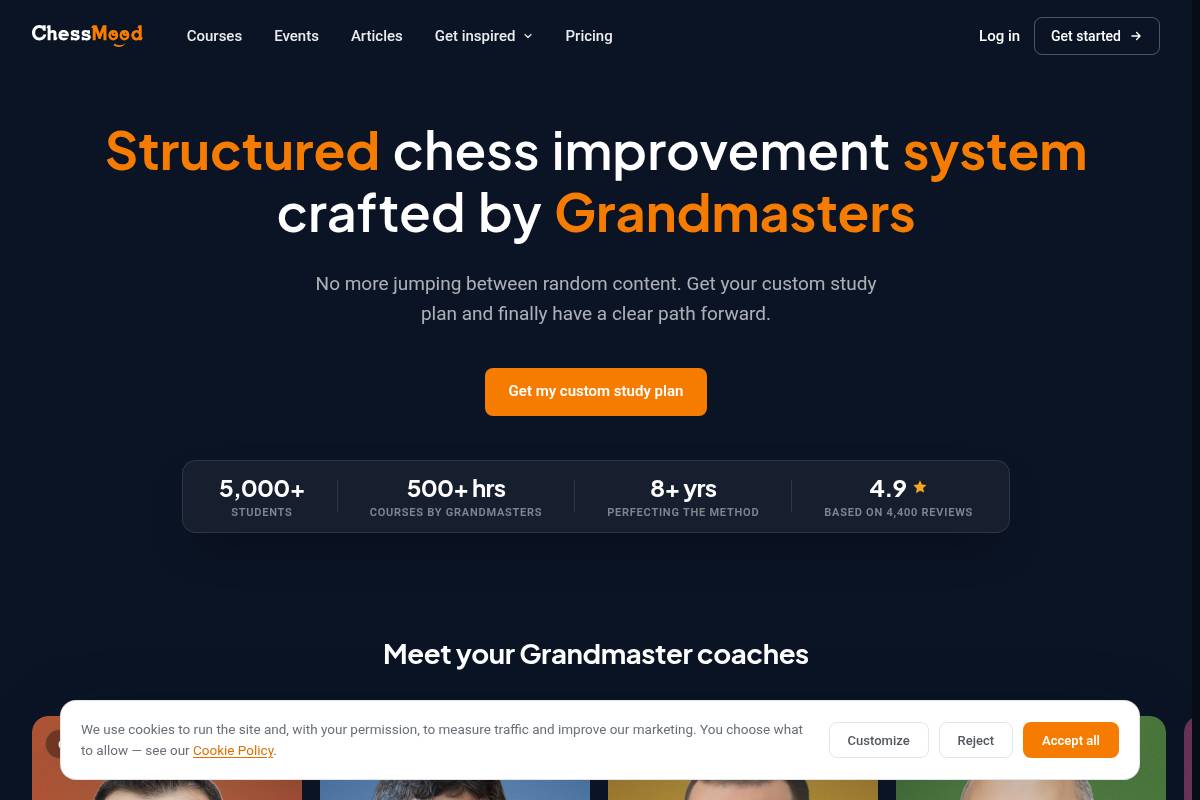
ChessMood is a subscription academy run by titled players, offering a large video library, weekly live events, and a moderated community. It includes over 500 hours of structured video courses covering openings, middlegame, endgame, and psychology, all taught by Grandmasters (GMs).
Key Features
- 500+ Hours of GM Video Content: Full repertoire courses plus middlegame and endgame modules.
- Weekly Live Events: Sessions such as "Openings in Practice" let members watch GMs play their lines live.
- Pro Member Forum: Direct access to instructors and peers for ongoing questions.
- Flexible Pricing: Essential and Pro plans, each backed by a 30-day money-back guarantee.
Best For
ChessMood is built for intermediate players rated 1000-1400 ready to commit to a serious, premium-priced study routine around one cohesive curriculum.
Pricing includes an Essential plan at $99 per month and a Pro plan at $129 per month. Annual subscriptions bring the cost down to $79 or $99 per month respectively, still a significant investment in chess improvement.
Pros and Cons
- Pro: An opinionated, cohesive curriculum that works better than scattered standalone courses.
- Pro: Rare weekly live Grandmaster access at this price tier.
- Con: The platform is web-only, with no dedicated mobile app.
- Con: Premium pricing may not suit casual learners who can't commit to consistent use.
Key Takeaway: ChessMood offers a premium, structured environment with extensive GM-led video and live interaction, suited to committed intermediate players despite its higher price and lack of a mobile app.
Rating: 8.2/10 Aimchess takes a different angle, mining your own games for patterns.
5. Aimchess: Best for AI Weakness Analysis from Your Own Games
5. Aimchess: Best for AI Weakness Analysis from Your Own Games
Aimchess is an AI-powered platform that analyzes your Chess.com or Lichess games to find recurring weaknesses across six dimensions, including opening accuracy, endgame proficiency, and time management, and delivers diagnostic reports showing where to focus.
Key Features
- Six-Dimension Weakness Reports: Pinpoints recurring patterns rather than one-off blunders.
- Personalized Daily Drills: Training generated from your own flagged mistakes.
- Platform Integration: Works with both Chess.com and Lichess accounts.
- Free and Paid Tiers: A free tier is available, with paid plans starting from $7.99 per month.
Best For
Aimchess is ideal for intermediate players rated 1000-1400 who play online regularly and want data-driven insight into their weak spots. It isn't a standalone curriculum, but pairs well with structured coaching such as CircleChess.
Pros and Cons
- Pro: Diagnoses weaknesses instead of assigning generic puzzles.
- Pro: Works directly from your real game history.
- Con: The free tier is essentially a teaser for the paid plan.
- Con: Reports are only as useful as the number of games they can draw on.
Rating: 8.1/10 ChessTempo is next, for players who want to drill tactics in volume.
6. ChessTempo: Best for High-Volume Tactics and Endgame Drilling
ChessTempo is a training-focused platform built for skill improvement through extensive practice rather than video lessons. It offers a vast tactics database, an endgame trainer, and opening repertoire tools for drilling specific chess skills.
Key Features
- Massive Tactics Database: Over 110,000 problems, filterable by theme.
- Endgame Trainer: Thousands of real-game endgame positions for deliberate practice.
- Spaced Repetition Sets: Available in premium tiers, targeting a player's weakest tactical motifs.
- Generous Free Tier: Unlimited tactics for free, with paid tiers adding deeper history, custom sets, and advanced opening tools.
Best For
For intermediate players rated 1000-1400 seeking a low-cost supplement to coaching, ChessTempo is an excellent daily tactics option. Most rating points lost at this level come from missed tactical patterns. The Silver plan starts at roughly $3 per month or $20 per year.
Pros and Cons
- Pro: The deepest free tactics library among the tools reviewed here.
- Pro: Premium tiers are very affordable.
- Con: No structured lessons or direct coaching, so it works more like a training gym than a teacher.
- Con: The interface may feel dated next to newer platforms.
Rating: 8.0/10 Next, iChess.net offers recorded lessons from titled coaches.
7. iChess.net: Best for Video Lessons from Titled Coaches
iChess.net offers a large library of video courses and eBooks taught by titled chess coaches. It's a strong option if you learn best from recorded lessons and want a big catalog from top instructors.
Key Features
- Large Video Library: Video lessons, eBooks, puzzle packs, and full opening repertoires.
- Lifetime Access: Purchased courses stay available without an ongoing subscription.
- Regular Discounts: Frequent discounts and bundles strengthen the value.
- Free Resources: Free material alongside premium video courses priced from $10 to over $100.
Best For
For intermediate players rated 1000-1400 who want expert instruction on their own schedule, iChess.net suits players who learn through video and prefer owning their content outright.
Pros and Cons
- Pro: A wide range of topics and affordable bundles.
- Pro: Lifetime access to all purchased content.
- Con: Less interactive than platforms offering live play or spaced-repetition exercises.
- Con: Lacks a built-in accountability or progress tracking system.
Rating: 7.8/10 DecodeChess is up next, built for a different job: explaining engine analysis in plain language.
8. DecodeChess: Best for AI-Explained Stockfish Game Analysis
8. DecodeChess: Best for AI-Explained Stockfish Game Analysis
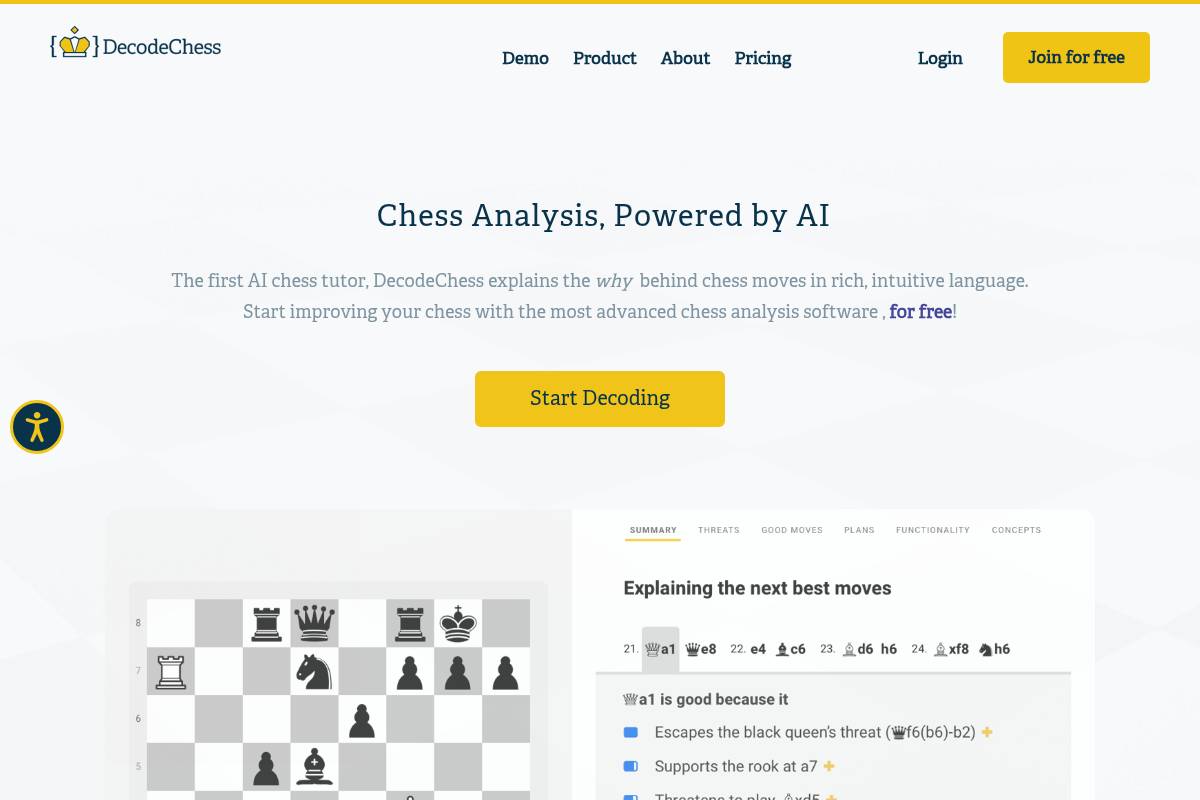
DecodeChess is an explainable AI tool that turns Stockfish engine evaluations into plain-language explanations of threats, plans, and piece function. It's billed as the world's first and only AI-based chess software that auto-explains the moves of a chess engine.
Key Features
- Idea-Problem-Solution Explanations: Powered by the open-source Stockfish NNUE engine, showing not just the best moves but why they're best.
- Interactive Threat Analysis: Step-by-step breakdowns of what each move means.
- Game Map Feature: Tracks advantages and disadvantages throughout a game.
- Affordable Subscription: Unlimited access at $8.25 per month, or $84 per year on the annual plan.
Best For
DecodeChess works well for intermediate players rated 1000-1400 who want to understand why a position favored one side after a game, rather than receive live coaching. Its analysis can meaningfully sharpen your understanding.
Pros and Cons
- Pro: Clearly explains why chess engines choose particular moves.
- Pro: Cheapest dedicated AI analysis tool on this list.
- Con: No live coaching or adaptive difficulty features.
- Con: The free tier is limited to one decoded game per day.
Rating: 7.7/10 Remote Chess Academy comes next, offering a self-paced path through complete programs.
9. Remote Chess Academy: Best for Self-Paced Systematic Improvement Courses

9. Remote Chess Academy: Best for Self-Paced Systematic Improvement Courses
Remote Chess Academy is a self-paced video course platform founded by GM Igor Smirnov. It offers a systematic decision-making framework, moving past disconnected lessons toward complete programs.
Key Features of Remote Chess Academy
- Systematic Thinking Framework: Openings, middlegame strategy, endgames, and mindset, structured as complete programs.
- Founded by a GM Psychologist: GM Igor Smirnov, the founder of Remote Chess Academy, has over 20 years of experience teaching chess.
- Lifetime Course Access: Courses grant permanent access once purchased.
- Per-Course Pricing: Invest specifically in openings, calculation, or endgames based on your needs.
Best For
Remote Chess Academy suits disciplined adult self-learners who prefer a complete, self-paced video program without live scheduling. Per-course pricing lets you spend exactly where you're weakest.
Pros and Cons
- Pro: A distinctive thinking framework that focuses on understanding rather than pure move memorization.
- Pro: Lifetime access with targeted, per-course pricing.
- Con: Lacks live coaching, personalized feedback, or adaptive tools, which some players will need.
- Con: Requires serious self-discipline, since there are no scheduled or supervised elements.
Rating: 7.6/10 Last on our list is Preply, which trades structured courses for one-on-one human tutors.
10. Preply: Best for a Marketplace of Live Human Chess Tutors
10. Preply: Best for a Marketplace of Live Human Chess Tutors
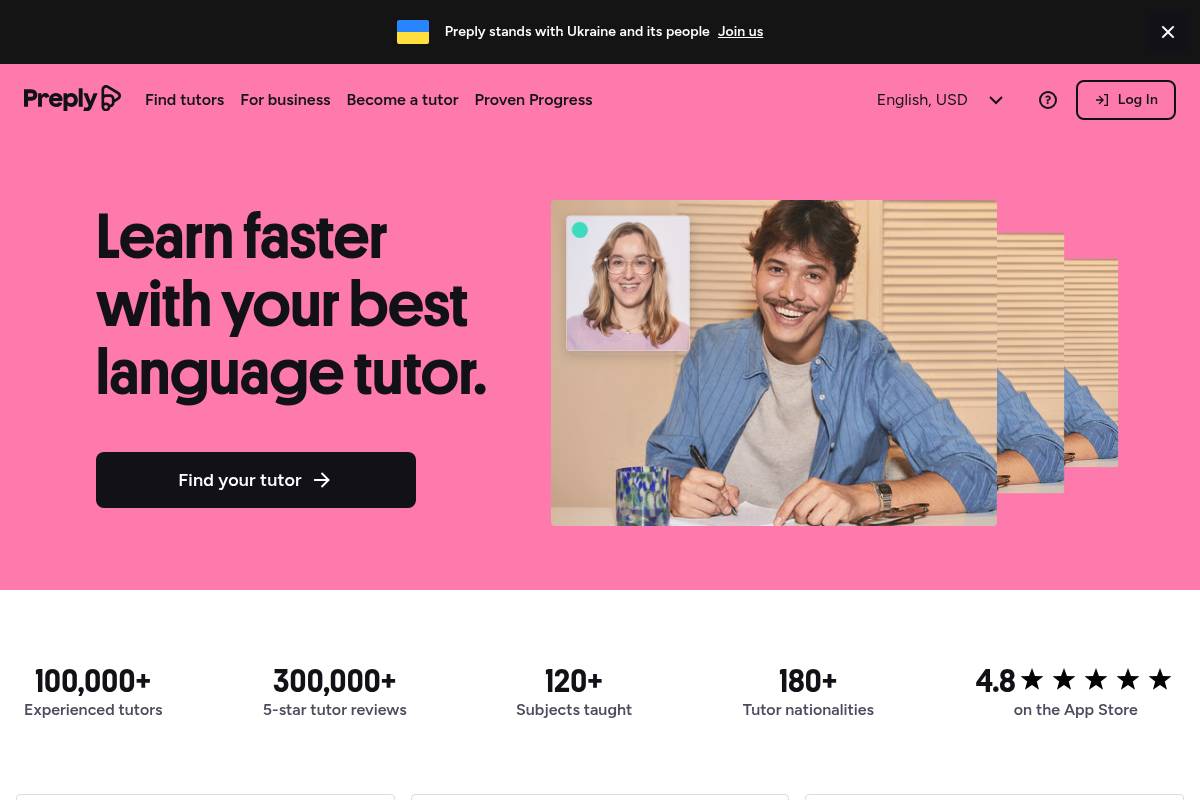
Preply is a tutoring marketplace where independent chess tutors set their own rates and schedules, so you can shop for a teaching style that fits you. Online chess lessons start from as little as $6 per hour, with an average of $24 per hour.
Key Features
- Large Tutor Marketplace: Hundreds of tutors with varying experience and specialties.
- Flexible Scheduling: Book lessons around your calendar without a long curriculum commitment.
- Transparent Profiles: Prices vary by experience, background, and availability, offering options for different budgets.
- Subscription Billing: You choose lessons per week, with billing automatically processed every 28 days.
Best For
Preply suits intermediate players rated 1000-1400 who value choosing a human tutor by price and personality. It gives you a personalized, adaptable learning path, making it a strong option for players who thrive with one-on-one instruction.
Pros and Cons
- Pro: A wide price range fits nearly any budget.
- Pro: One-on-one instruction offers real schedule flexibility.
- Con: Tutor quality varies, since tutors list themselves without a chess-specific vetting standard.
- Con: No built-in structured curriculum tied to the 1000-1400 rating band.
Rating: 7.4/10 With all ten platforms reviewed, here's how they compare side by side.
Full Comparison: Best Online Chess Coaching for Intermediate Players Rated 1000-1400
| Platform | Live Coaching | AI Tools | Structured Curriculum | Community | Free Trial | Starting Price |
|---|---|---|---|---|---|---|
| CircleChess | ✓ | ✓ | ✓ | ✓ | ✓ | Free demo classes |
| Chessable | ✗ | ✗ | ✓ | ✗ | ✓ | $11.99/month |
| ChessDojo | ✓ | ✓ | ✓ | ✓ | ✗ | $15/month |
| ChessMood | ✓ | ✗ | ✓ | ✓ | ✗ | $79/month |
| Aimchess | ✗ | ✓ | ✗ | ✗ | ✓ | $7.99/month |
| ChessTempo | ✗ | ✗ | ✗ | ✗ | ✓ | Free / $20/year |
| iChess.net | ✗ | ✗ | ✓ | ✗ | ✓ | $10 to $100+/course |
| DecodeChess | ✗ | ✓ | ✗ | ✗ | ✓ | $8.25/month |
| Remote Chess Academy | ✗ | ✗ | ✓ | ✗ | ✓ | Per-course |
| Preply | ✓ | ✗ | ✗ | ✗ | ✗ | ~$24/hour |
How to Choose the Best Online Chess Coaching for Intermediate Players Rated 1000-1400
By Family Size and Commitment Level
Families who want one platform for live classes, AI practice, tournaments, and progress reporting are best served by CircleChess, which brings these together under a single parent dashboard. Solo adult improvers who prefer self-directed study may lean toward ChessDojo or Remote Chess Academy.
By Budget
On a tight budget, ChessTempo and Aimchess deliver strong value through generous free tiers and affordable premium plans. Families wanting structured coaching without private-lesson prices should start with CircleChess's free demo classes before comparing premium academies like ChessMood.
By Use Case
Players focused purely on tactical blind spots should pair daily ChessTempo drills with Aimchess's weakness reports. If you want a complete developmental program, including chess psychology, mentorship, and a FIDE pathway, CircleChess offers the most long-term structure. For additional buying guidance, see Best Online Chess Training Programs for Beginners (2026).
What Is Online Chess Coaching? Key Facts for 2026
Online chess coaching covers everything from live GM-led classes to AI-driven analysis tools and self-paced video courses, all designed to accelerate rating improvement beyond what casual play achieves alone. For a more detailed primer, see Online Chess Lessons: The Definitive Guide for Kids & Adults.
| Metric | 2026 Data |
|---|---|
| Improvement advantage of coached vs. self-study players | 167% better improvement with coaching |
| Average rating gain over 6 months (coached) | ~120 points |
| Average rating gain over 6 months (self-study) | ~45 points |
| Typical online private lesson cost (US) | $20 to $150/hour |
| Typical online group class cost (US) | $80 to $200 per 10-lesson block |
| Cognitive benefits documented | Improved attention, memory, logical thinking, math scores |
Conclusion: The Best Online Chess Coaching for Intermediate Players Rated 1000-1400
CircleChess is our top pick. It's the only platform that combines a World Champion's coaching lineage, 24x7 AI support, and a genuine community in one place, and the free demo classes make it easy to try without risk. If you need pure tactical repetition, pair ChessTempo with Aimchess. For a complete GM-led video curriculum, ChessMood or Chessable are strong alternatives, and if you prefer a human tutor on your own schedule, Preply rounds out the field.
Frequently Asked Questions
What is the best online chess coaching for intermediate players rated 1000-1400?
Among the 10 options tested, CircleChess ranks highest. It combines live GM-designed coaching, an AI coach, and a structured FIDE rating pathway in one platform.
How do I improve my chess rating from 1000 to 1400?
Focus on daily tactics practice, review every rated game for recurring mistakes, and follow a structured curriculum rather than studying at random. Pairing a diagnostic tool like Aimchess with a structured program like CircleChess addresses both pattern recognition and conceptual gaps.
Is paid chess coaching worth it for a player rated around 1200?
For most players, yes. Coached improvement significantly outpaces self-study over a comparable period, so structured coaching is worthwhile once you plateau on free tools.
What is the cheapest way to get online chess coaching?
ChessTempo's free tactics tier and CircleChess's free demo classes are the lowest-cost entry points. Aimchess and DecodeChess offer low-cost paid tiers for AI analysis once you outgrow free options.
Do I need live coaching, or is self-paced learning enough at this level?
Self-paced tools like Chessable and ChessTempo work well for disciplined players. Most players stuck at the same rating benefit from live feedback, which is why CircleChess and ChessDojo pair structured plans with real instructor interaction.
What should parents look for in online chess classes for intermediate players?
Prioritize a clear rating-based curriculum, visible progress reporting through a parent dashboard, titled or GM-level instructor credentials, and a free trial class before committing to a monthly plan.
How much does online chess coaching typically cost in 2026?
Costs range from free tactics tools to $150 or more per hour for elite private GM lessons. Most structured group programs and subscription academies fall between $8 and $130 per month, depending on how much live interaction is included.
Which platform is best for a child stuck at the same chess rating for months?
CircleChess is best suited for this scenario. Its monthly skill assessments, mentor feedback, and chess psychology training are designed to break through plateaus rather than simply adding more puzzles.
Methodology: Rankings are based on independent research into publicly available pricing, curriculum structure, instructor credentials, and feature sets as of October 2026. Pricing and features may change, so verify current details with each provider before purchasing.