There was a time when chess did not feel like a global game. It felt owned. Controlled. Almost scripted. And at the centre of that script stood one force that seemed impossible to challenge: the Soviet Union.
For decades, if you looked at the world of chess, one pattern appeared again and again. The champions, the challengers, the strongest tournaments, all roads somehow led back to one place. The Soviet system did not just produce great players. It built an empire on 64 squares.
But like every empire, this one too had a beginning, a peak, and eventually, a quiet unravelling.
The Beginning of a Chess Superpower
After the Russian Revolution, the Soviet Union was not only trying to rebuild a country but also shape a new identity. Chess became part of that identity.
It was not treated as a casual game or just entertainment. It was seen as a symbol of intelligence, discipline, and ideological strength. A nation that could dominate chess could prove its intellectual superiority to the rest of the world.
This was not just talk. The government backed it with action.
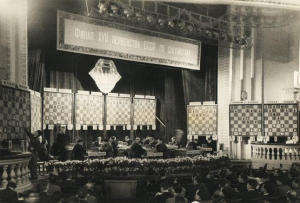
Chess clubs appeared in schools, factories, and local communities. Coaching was systematic. Talent was spotted early and trained seriously. Unlike many countries where chess was a hobby, in the Soviet Union it became something closer to a science.
One of the most important figures in this transformation was Mikhail Botvinnik. He was not just a world champion but also a thinker who believed chess could be studied deeply, almost like mathematics. He helped create structured training methods that would later produce generations of elite players.
This was the real foundation. Not just talent, but a system that made talent inevitable.
The Era of Complete Control
Once the system was in place, the results followed.
From the late 1940s onward, the world chess championship was dominated almost entirely by Soviet players. Names like Tigran Petrosian, Boris Spassky, and Anatoly Karpov became symbols of consistency and control.
What made this dominance so powerful was not just individual brilliance. It was depth.
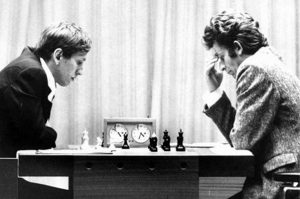
If one champion fell, another equally strong player was ready. If a foreign challenger appeared, they often had to go through multiple Soviet opponents just to get a chance at the title. It was like facing an entire system rather than a single player.
At times, it even felt political. Internal competition was fierce, but when facing outsiders, there was a sense of unity. Chess became a quiet battlefield of the Cold War, where victories carried meaning beyond the board.
The peak of this tension came during the famous clash between Bobby Fischer and Boris Spassky in 1972. When Fischer won, it was more than just a championship result. It was seen as a crack in Soviet dominance, a rare moment where the system was challenged and defeated.
But even then, the Soviet machine did not collapse. It adjusted, continued, and remained powerful for years.
The Beginning of the Decline
The real turning point did not come from a single match. It came from something much bigger. In 1991, the Soviet Union dissolution changed everything.
The system that had supported chess so heavily began to disappear. Funding was reduced. Organized training weakened. Players who once operated within a unified structure suddenly found themselves representing different countries or working independently.
The strength did not vanish overnight. In fact, many former Soviet players remained among the best in the world. But something important was lost. The pipeline, the structure, the collective force that had once made domination possible.
At the same time, the rest of the world was catching up.
Chess knowledge became more accessible. Books, databases, and later the internet made high level training available to anyone willing to learn. What was once an advantage held by a few became available to many.
The gap slowly closed.
A New World of Chess
Today, chess looks very different.
Instead of one dominant force, we see strong players from many countries. India is producing young talents at an incredible rate. China has built a structured system that has already led to world champions. United States has gathered top players and created a competitive environment.
Even Russia, which inherited much of the Soviet chess legacy, remains strong but no longer untouchable.
The game has become truly global.
Can One Country Dominate Again?
This is the question that naturally follows.
Can we ever see another era like the Soviet dominance?
It seems unlikely.
The conditions that made that dominance possible were very specific. A centralized system, heavy state support, limited global competition, and restricted access to knowledge. None of these exist in the same way today.
Modern chess is open. Anyone with a phone and internet connection can learn from the best players in the world. Especially with platforms like CircleChess, where one can develop themselves to compete at the highest level, talent is no longer confined by geography.
That does not mean strong countries will not exist. They will. Some may even dominate for short periods. But a long, almost unchallenged rule like that of the Soviet Union is hard to imagine now.
The Legacy They Left Behind
Even though their dominance has ended, the impact of the Soviet Union on chess is still everywhere.
The way players train, the importance of studying positions deeply, the idea that chess is not just talent but also preparation, all of this comes from that era.
In a way, the Soviet Union did not just dominate chess. It reshaped it.
And maybe that is their greatest achievement.
Because even today, long after the empire faded, every serious player is still, in some small way, following the path they created.
The New Era of Chess Learning
If the Soviet era showed the power of structure, the modern era has made that structure accessible to everyone. 
Today, players no longer need expensive coaching or direct access to grandmasters to improve. With platforms like CircleChess, they can learn from home, follow structured paths, and access high quality training without heavy costs. Opening ideas, game data, and guided lessons are now easily available, something that was once limited to elite systems.
At the same time, consistent practice has become easier. Players can solve unlimited puzzles, test their understanding, and even learn from grandmaster-level insights through curated content. Programs like the Caissa School of Chess experience within CircleChess focus on building real strength step by step rather than relying on memorization.
In many ways, this is the biggest shift in chess today. The system still matters, but now, it is open to everyone.