My Real Journey
Unlike many players, I didn’t start playing chess in childhood. In fact, in the beginning I was thinking chess was boring. It never really caught my attention, and I never understood why people were so obsessed with it. Everything changed one random day at school.
The Challenge That Started Everything
One day, a guy in my class challenged me to play chess.
I had an off-class and nothing better to do, so I agreed.
We played three games.
I lost all of them.
At that moment, I didn’t just feel like I lost a game — I felt like he was smarter than me. More intelligent. And what made it worse was that he was considered one of the best players in school.
That loss hit my ego.
And that’s exactly why I started playing chess — not because I loved it, but because I wanted to beat him.
The Frustrating Beginning
When I first started, I was completely lost. There were too many pieces, too many rules, and too many things happening at once. I kept losing for one simple reason:
I was constantly hanging pieces.
Every game felt frustrating. I didn’t understand what I was doing wrong, and improvement felt slow.
But I didn’t quit.
Because I had one clear goal — beat him.
My First Progress (0 to 500 Elo)
After around 3 months of consistent playing and learning, I reached 500 rating. It wasn’t anything impressive, but it meant something to me. By that time, I and the same guy who beat me earlier were almost equal. That felt like a win.
My First Tournament Experience
Soon after, we represented our school in a 5+0 blitz tournament. I was excited… but also nervous.
Reality hit quickly. I got knocked out in the first round. That loss made me question everything. I even thought about quitting chess completely. But at the same time, I experienced something new — the thrill of competitive chess. And I liked it. That feeling made me stay, and over time, I realised it wasn’t just about playing games — it was about improving my thinking in chess and learning from every loss.
Reaching 1000 Elo — Then Getting Stuck
In April, I finally reached 1000 rating.
It felt like a big milestone.
But after that, things slowed down.
I kept playing 15-minute games regularly, but my rating didn’t improve much for months. From April to July, I was stuck.
That phase was frustrating in a different way — not losing badly, but not improving either.
The Turning Point Before Nationals
In July, we heard that our school would participate in the 69th National School Games. That changed everything.
I started taking chess seriously again.
But there was a problem I was still stuck at the same level.
No matter what I tried, I couldn’t figure out my mistakes. I searched everywhere for answers, but nothing seemed to work.
How CircleChess Transformed My Improvement
The real shift in my journey came when I stopped treating chess as just a game I played and started treating it as something I studied. That’s where CircleChess played a big role. Instead of solving random puzzles or just grinding more games, I began using it to break down my own mistakes. It showed me critical positions from my actual games — moments when I had blundered or missed something important — and made me revisit them intentionally. That changed everything. I wasn’t just practicing anymore; I was learning patterns from my own thinking. Over time, I started recognising tactics more quickly, avoiding the same errors, and understanding positions more clearly. CircleChess didn’t magically make me better overnight, but it gave structure to my improvement, and that’s what I was practising missing all along.
Fixing My Biggest Weakness
Then I discovered something that actually helped me improve. I started revisiting my past games and identifying where I blundered. Around that time, I found out about CircleChess, and instead of just playing more games blindly, I began using it as a tool to improve my thinking in chess and understand my mistakes on a deeper level. Its position features would highlight critical moments from my own games — not random puzzles, but positions where I had gone wrong — and that made a huge difference.
Instead of moving on after a loss, I started going back, analyzing those exact moments, and replaying them like puzzles, trying to figure out what I should have seen during the game. This process made me realize patterns I had been missing all along, forks, skewers, simple tactics, things I thought I “knew” but wasn’t actually applying. Over time, it wasn’t just about spotting mistakes anymore — it was about understanding why they happened and how to avoid them in future games. That shift, from just playing to actually analyzing and learning from my own games using CircleChess, completely changed how I improved and helped me build a more structured approach to getting better.
Slowly, I improved. Before the district qualifiers, I reached 1200 rating
Districts, Setbacks, and a Second Chance
In the district qualifiers, I scored 2 out of 3. But I finished 5th. Only 4 players could make the team, and due to no proper tiebreak system, I was selected as a substitute. It was disappointing. But things changed unexpectedly. Before the state tournament, one of the players fell sick and I got the chance to play.
The Best 3 Days of My Life
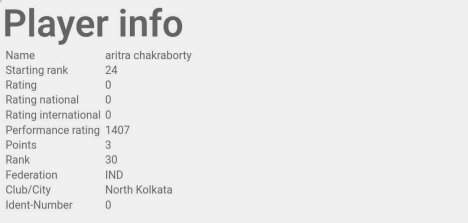
Playing in the state tournament was one of the best experiences of my life. For those three days, it felt like I was living the life I had imagined. I didn’t perform exceptionally — I scored 3 out of 6, had a performance rating of around 1400, and finished 30th. But it meant everything to me. Interestingly, the same classmate who had once beaten me easily finished 60th. I didn’t know whether to feel happy or unsatisfied. Maybe both.
The Grind to 1500
After that, I focused on improving my time management and positional play. Soon, another blitz tournament was announced — organized by the same people as my first tournament. This time, I was determined to do better. I went into complete focus mode. In just 3 weeks, I climbed from 1250 to 1500 rating. I was solving puzzles daily, analyzing my games, and also using CircleChess more actively — especially its puzzles and School of Chess sections — which helped me sharpen my tactics and improve my thinking in chess. I started understanding not just what move to play, but why it works. Along with that, I was watching grandmaster games to pick up deeper ideas. Everything slowly started to make sense.
Reality Check… Again
I felt ready.
Confident.
Prepared.
But in the tournament, my opponents were rated 1800+.
And once again…
I lost in the first round.
Why I’m Still Playing
This time, I didn’t feel like quitting. Because now I understood something important:
Losing is part of the process.
Every loss, every mistake, every blunder — it’s all part of improving.
I haven’t won a trophy yet.
But I’m still grinding.
Still learning.
Still chasing that moment.
Final Thought
I didn’t start chess early.
I didn’t have a coach.
I didn’t understand the game at first.
But I kept going.
And maybe that’s what matters most.
Because this isn’t just about chess anymore.
It’s about proving to myself that I can improve, no matter where I start.
And I’m not stopping until I win my first trophy.
Even now, I keep going back to my games, solving mistakes, and trying to improve step by step. Platforms like CircleChess have made that process more structured for me, especially when it comes to improving my thinking in chess — not just playing moves, but understanding why I play them. Instead of blindly playing more games, I focus on learning from my own mistakes, which has helped me think more clearly and make better decisions over the board.