

If you’ve been around chess for a while, you’ve seen this happen. Two players start at almost the same level. Same rating. Same experience.
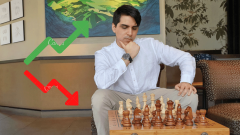
One jumps 200–300 points, the other is still stuck
And the strange part?
The second player often plays more games.
So what’s actually happening?
It’s Not About Talent — It’s About Direction

The “Same Mistake” Problem
Here’s something very common:

you rushed
you miscalculated
you misunderstood the position
Next game?
Same mistake again.
Why?
Because it was never fixed. Playing alone doesn’t fix mistakes. Understanding does.
Fast Improvers Do One Thing Differently
Chess players don’t ignore their games.
They go back.
Even if it’s just 10–15 minutes.

where the position changed
What they were thinking
What they missed
And slowly, patterns start becoming visible.
That’s when improvement begins.
They Don’t Overcomplicate Training
Another big difference:
jump between openings
Watch random videos
solve random puzzles
Fast improvers:
keep things simple
focus on one weakness
repeat until it improves
For example:
If time trouble is the issue → they fix time usage
If endgames are weak → they study only that
Clear focus = faster growth
They Play With Purpose
Instead of:
“Let’s play and see what happens”
They think:
“Today I’ll focus on not rushing decisions”
That small intention changes the way they play.
Even if they lose, they learn something.
Real Example (Simple One)
Two players:
Player A:
plays 25 blitz games daily
never reviews
Player B:
plays 4 serious games weekly
reviews each one
After 1 month:
Player A → same level
Player B → noticeable improvement
Less games. Better thinking.
Where CircleChess Fits in This Journey
At some point, every chess player feels this problem:

That’s where CircleChess actually becomes useful in a practical way — not as extra, but as support.
Caissa School of Chess (Clear Direction Instead of Random Study):
Instead of jumping between random content, players get structured learning — what to study, when to study, and how it connects to real games.
Caissa AI (Review That Actually Makes Sense):
After a game, instead of just seeing “blunder,” you can actually go back and understand:

what better plan existed
what you missed
This helps you fix real problems, not just surface mistakes.
Mastery Series (Opening Understanding, Not Just Moves):
Many players lose because they don’t understand positions from their openings. With structured courses (like theLondon System), you learn:
the the plans
typical mistakes
How to handle middlegame positions
Tournament & Practice Environment:
You’re not just learning — you’re applying it.
Through regular games, events, and practice, improvement becomes consistent.
For example:
A player notices they always struggle in middlegame positions.
They learn structure through lessons → play games → review using Caissa → fix mistakes → repeat. That loop is what builds strength.
The Real Difference
Fast improvement doesn’t come from:
playing more
knowing more openings
watching more content
It comes from:
understanding your own mistakes
fixing them step by step
Final Thought
Chess improvement is not a mystery.
It’s a process.
Slow players repeat games.
Fast players repeat learning.
So next time you lose a game, don’t rush to the next one.
Sit with it.
Because the answer you’re looking for is already in that game.