

If you’ve ever talked to a teenager these days, you’ll notice one thing straight away — their mind never stops. It’s like a thousand tabs open at once. School pressure, phone notifications, friendships, exams, social media, comparing themselves to others… this is exactly where Chess Reduces Anxiety and Overthinking by teaching the mind to slow down and focus on one thought at a time.
It’s a lot. Honestly, too much.
Some teens shut down.
Some overthink every small thing.
Some feel anxious even when nothing is wrong.
And most of them don’t know how to calm their own thoughts.
Surprisingly, one old game — chess — does something that even adults struggle with. It slows down their mind. It gives them a place to focus on one thing at a time. It quiets the noise.
Not because chess is “smart” or “hard” but because it forces the brain to stop running in circles.
Why Teens Overthink More Today — and How Chess Reduces Anxiety and Overthinking

Let’s be real — this generation has it harder in some
ways.
Everything is fast… too fast.
Fast reels, fast replies, fast expectations.
Your brain gets used to jumping between things so quickly that it forgets how to sit still with one thought.
And when it tries, the anxiety hits.
Chess breaks that pattern.
When you sit with a board, you’re not switching between apps. You’re not thinking of 10 people. You’re thinking of one move. That alone is calming.
Chess Teaches the Brain to Slow Down
A lot of teens say this after they start playing chess:
“For the first time, my mind actually slowed down.”
- sit,
- think,
- breathe,
- and wait.
There’s no pressure to be fast. No one judging you.
Just a board and your thoughts.
You learn to pause before reacting — something teens rarely get to
practice.
And this slowly reduces overthinking because your brain learns:
“Not every thought needs a reaction right now.”
Real Moments: How Top Players Deal With Pressure
Let me share some real stories from young players who’ve already faced more pressure than most adults.
Praggnanandhaa — Calm in Chaos: How Chess Reduces Anxiety and Overthinking

Pragg has played games with millions watching him live. Yet he sits there with the calmest face, even when things go wrong.
When he lost a winning game against Magnus, he didn’t break down or panic.
He said one line:
“I’ll come back stronger.”
And he did.
That’s what chess teaches — bad moments aren’t the end of the world.
Gukesh — carrying expectations at just 17

Imagine being 17 and the whole country expecting you to be the next world champion.
Crazy pressure.
But Gukesh stays collected.
Even in Candidates 2024, when games got messy, he kept breathing,
calculating, staying in the moment.
Chess trained him for that — staying calm under fire.
Javokhir Sindarov — FIDE World Cup 2025 Champion
Javokhir’s 2025 World Cup win was insane.
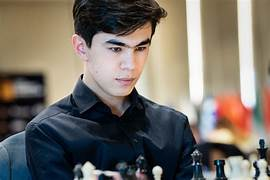
He wasn’t always the favorite.
People doubted him.
He faced stronger, older players.
But instead of overthinking or freezing, he focused move-by-move.
One solid decision at a time.
He didn’t let noise, pressure, or expectations control him — a clear example of how Chess Reduces Anxiety and Overthinking..
These players show something important:
Chess doesn’t remove problems — it teaches you how to face them without panicking.
And that is exactly what anxious teens need.
Chess Helps Teens Understand Their Own Mind
When you play chess regularly, you start noticing things about yourself:
- why you rush,
- why you panic,
- why you get stuck on small mistakes,
- how you react under pressure.
It’s almost like therapy without calling it therapy.
A teen told me once,
“Chess taught me my own mind is not my enemy. I just needed to
understand it.”
That’s the magic of this game.
You learn emotional control without anyone lecturing you about it.
Small Wins is Big Confidence Boost !!
Teenagers often feel like they are not “enough” — not smart enough, not talented enough, not confident enough.
Chess gives small wins that build real confidence:
- solving a puzzle
- winning a rapid game
- saving a tough position
- surprising an older opponent
Small victories, but they matter.
They tell a teen:
“You can think clearly. You can solve problems. You can handle pressure.”
That confidence spills into school, friendships, and everyday life.
How CircleChess Supports Teens Mentally (Not Just Technically)
This is where a platform like CircleChess honestly becomes helpful.
It’s not only for “serious players” — it actually supports the mental side of chess for teens, showing how Chess Reduces Anxiety and Overthinking through structured play and guidance.

Here’s what makes it special:
- Live classes with GMs/IMs who teach how to stay calm, how to think slowly, how to build patience.
- Psychology & mindset sessions inside Caissa School — where teens learn how to control nerves and handle bad games.
- Café tournaments & online events that give teens fun, low-pressure places to play and socialise.
- Progress tracking that helps parents see improvements in focus, consistency, and thinking habits.
- A community that feels safe, friendly, and motivating — which teens need now more than ever
CircleChess doesn’t just train ratings.
It trains the mind, the habits, the emotional strength, which is what anxious teens quietly need.
Conclusion — A Quiet Way to Calm a Loud Mind
Chess won’t solve every problem.
It won’t magically remove stress from a teenager’s life.
But over time, Chess Reduces Anxiety and Overthinking by training the mind to slow down, focus, and handle pressure calmly.
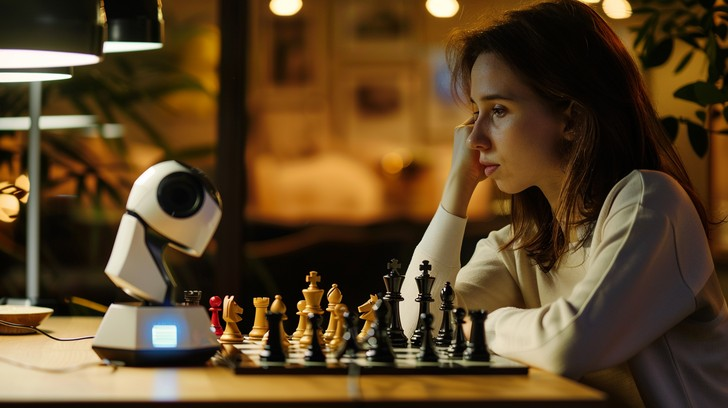
But it gives something rare:
a quiet space to think…
a place where mistakes don’t define you…
a habit that teaches patience naturally…
and a feeling that your mind is capable of clarity.
In a world where teens are overloaded with noise, comparisons, and pressure — chess offers peace
So if you’re a teen, a parent, or someone who just wants a calmer mind…
try sitting with a chessboard sometime.
Let the game slow you down.
Let it teach you how to breathe, how to think, how to stay steady
Because sometimes, the best way to fight anxiety is not to run from it…
but to face it one quiet move at a time.