
You finish a tough chess game, hit “analyze,” and within seconds the engine spits out a wall of numbers, evaluations, and “blunders” — but you still don’t really understand why you lost. At the same time, AI coaches claim to explain ideas in plain language, point out patterns, and even suggest personalized training. So which should you trust when you’re trying to improve?
This article unpacks how to use an AI coach and traditional engines inside CircleChess so you actually learn, not just memorize computer moves. You’ll see when human-style explanations matter more than raw accuracy, how to blend both tools in your post-game routine, and what kind of consistent effort it really takes for these insights to turn into real over-the-board strength.
In the age of artificial intelligence, where every chess move can be dissected by a machine, the true art of analysis lies not just in the data but in understanding what it means for our growth on the board—are we becoming better players, or simply better at using the tools we’re given?
Reference: I built a chess coach tool to analyze my last 20 games and …
1. Understand the Difference: AI Chess Coach vs Traditional Engines
What traditional chess engines actually do (and what they don’t)
Classical engines like Stockfish and Komodo are incredibly strong calculators. They sift through millions of positions per second, spitting out lines such as 1…Nf6 or 2…d5 with an evaluation like +1.7, indicating who stands better and by roughly how much.
What they rarely do is explain why. After a club game at a local US Chess tournament, a player might see “-0.8” on move 17 and know they’re worse, but not understand that the real issue was a weakened dark-square complex around their king, not the last move itself.
How AI chess coaches work: patterns, explanations, and training focus
An AI coaching system, like what CircleChess aims to provide, uses machine learning and language models to translate those cold numbers into plain English. Instead of only saying “17…g6?? loses,” it might explain, “You weakened f6 and h6, making back-rank tactics with Qe8+ possible.”
These tools also surface recurring habits across many games. For example, a 1400-rated player might consistently leave pieces undefended on moves 10–15. The coach can flag this as a pattern and suggest targeted drills on piece safety and basic tactics.
Key benefits of AI chess coach analysis over raw engine lines
The biggest advantage is turning complex calculations into understandable plans. Rather than dumping a 12-move Stockfish line, an AI tutor can summarize: “Your plan should be to trade queens and push your queenside majority,” then show one or two sample continuations.
Over time, this connects mistakes to thinking errors. If you repeatedly miss intermediate moves (zwischenzugs), the system can recommend themed puzzles and short lessons, helping players from beginner to 1800+ build a more disciplined decision-making process.
When a traditional engine still matters for serious game review
Raw engines are still essential when precision is everything. Tournament players often rely on Stockfish or Lc0 to verify sharp Najdorf lines or complex rook endgames, where a single tempo changes the result from drawn to lost.
For correspondence chess or serious preparation before a state championship, deep analysis with multiple engine instances remains irreplaceable. An AI coach can guide understanding, but brute-force calculation is still the standard for checking concrete tactics and critical novelties.
2. Set Up Your Game for Effective Analysis
Importing your games into CircleChess
Getting all your games into one hub is the first step to serious improvement. In CircleChess, you can upload PGN files from platforms like Lichess or Chess.com so your online battles are ready for structured review.
If you play weekend OTB events, such as a local US Chess-rated Swiss, you can manually enter moves from your scoresheet. Where supported, you can also sync recent games automatically so your analyses, puzzles, and training plans all draw from the same database.
Choosing time control and sample size for meaningful analysis
Not every game deserves equal attention. Focus first on classical and rapid games where you spent 10–30 minutes on key decisions, since those positions best reflect your true understanding.
Use a block of 10–20 recent games as your sample, then add a few blitz encounters to study specific issues like time trouble. Many players on platforms that offer AI review, such as the approach described in How to Analyze a Chess Game with AI, follow this kind of mix to track trends instead of obsessing over one painful loss.
Cleaning up the game data before review
Before diving into engine evaluations, verify that every move is correct. A single typo, like entering 25.Qf3 instead of 25.Qe3 in a Sicilian, can completely distort the assessment and mislead your training.
Where clock times are available, add or adjust them so you can see if blunders correlate with time pressure. Mark critical positions you remember tanking on, such as a move-30 rook endgame, so CircleChess can spotlight them during structured review.
Setting clear goals for each review session
Unfocused analysis quickly becomes a blur of plus-minus evaluations. Decide in advance whether this session emphasizes tactics, opening preparation, endgame technique, or general decision-making under pressure.
Limit yourself to one or two themes—like “defending worse positions” or “converting extra pawns”—and tag relevant moments inside CircleChess. Over several weeks, these targeted reviews build a personalized training archive that works similarly to an AI coach log, helping you see concrete progress instead of random notes.
3. Start with High-Level Game Insights Before Diving Deep
3. Start with High-Level Game Insights Before Diving Deep
Using AI coach summaries to see the story of the game
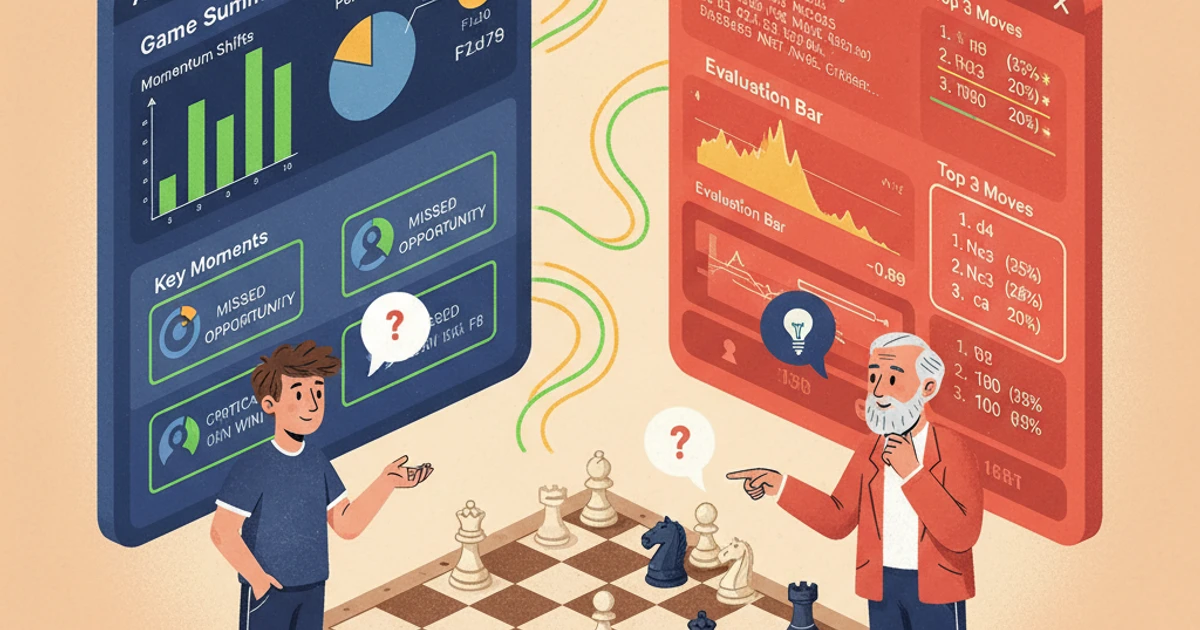
Before digging into every tactic, it helps to see the full story of your game. An AI coach summary can walk you through the opening, middlegame, and endgame like a narrative, showing how the position evolved move by move.
For example, after a rapid game on CircleChess, you might read: “White gained an edge out of a Queen’s Gambit Declined, lost control after 18…Re8, then blundered the endgame with 34.Kf2??.” That quick storyline shows where things went right and where they fell apart, without staring at engine lines.
Identifying momentum shifts and turning points
Strong improvement comes from recognizing a few critical turning points, not obsessing over every small inaccuracy. Good analysis tools highlight blunders, critical errors, and missed wins so you can zero in on what actually changed the result.
Imagine a 15|10 game where you’re slightly better until you miss 22.Qxh7+ winning on the spot, then slip into a lost rook endgame. Seeing that single missed tactic flagged as a “decisive chance” helps you connect how one decision snowballed into a losing position.
Spotting recurring patterns in your play
High-level insights also reveal patterns that repeat across games. Many players, from 900 blitz on Chess.com to 2000+ on Lichess, tend to blunder under time pressure or in sharp tactical positions.
An AI summary might show that you often launch premature kingside attacks without completing development, or that you consistently weaken dark squares around your king in Sicilian structures. Tracking these habits over multiple games makes your training more targeted and realistic.
Comparing your performance to rating and accuracy benchmarks
It’s useful to know whether you played above or below your usual standard. Accuracy metrics and performance ratings provide that context by comparing your moves to engine choices and typical results at your level.
For instance, a 1300 rapid player scoring 88% accuracy in one CircleChess game but 62% in another can instantly see which game deserves deeper engine-backed review. Those benchmarks help you prioritize: analyze the outliers, learn the most, and avoid wasting time on routine wins that taught you very little.
Reference: Guide :: Depth For Dummies (UPDATED 1/4/16)
4. Use AI Chess Coach Features to Learn Why, Not Just What
AI annotations that explain ideas and weaknesses
Strong engines can already tell you which move is best, but an effective AI coach explains why a move works or fails in language you can understand. Instead of staring at +1.3 or -0.8, you see comments that connect the evaluation to concrete plans and threats.
On platforms like Outpost Chess, the AI assistant “Outposty” adds written explanations such as, “This move weakens the dark squares around your king,” or “Your rook is passive compared to White’s active pieces,” as described in How to Analyze a Chess Game with AI. You start to recognize themes like piece activity, pawn structure imbalances, and long‑term king safety instead of memorizing engine lines.
Turning mistakes into thought-process lessons
The real value of an AI trainer is in improving how you think, not just fixing one move. Good tools will pause on blunders and nudge you with prompts such as, “What candidate moves did you consider here?” or “What was your opponent threatening after 18…Qh4?”
Say you blundered a piece in a 10+0 game on CircleChess because you never checked forcing moves. An AI coach can highlight this and guide you to build a mental checklist: always scan checks, captures, and threats before committing. Over a few dozen reviewed games, those repeated prompts gradually rewire your decision-making at critical moments.
Using AI-generated questions and quizzes on your own moves
Interactive questions keep you from passively clicking through engine lines. Some modern trainers hide the suggested move and ask, “Find the best continuation for Black,” turning your own games into a custom tactics and strategy quiz.
For example, after you play 22.Re1 in a rapid game, the system might stop and ask whether you should attack on the kingside, double rooks on the e-file, or transition to a rook endgame. By choosing and then revealing the AI’s explanation, you reinforce key concepts through active problem-solving instead of just watching variations scroll by.
Visual learning tools: heatmaps, arrows, and key squares
Visual cues make complex positions easier to grasp, especially for younger players and visual learners. Modern chess platforms increasingly use colored arrows, square highlights, and control maps to illustrate ideas an engine has discovered.
Imagine a position where you missed a kingside attack. A heatmap could show bright colors around g7 and h7, revealing how your pieces were aimed at those squares before you traded off the attacking bishop. Arrows tracing the best knight maneuver (Nd2–f1–g3) help you see how coordination changed before and after your mistake, turning abstract evaluation shifts into something you can literally see on the board.
Reference: The AI Chess Helper That Explains Why, Not Just What
5. Leverage Traditional Engines for Precise Move-by-Move Evaluation
5. Leverage Traditional Engines for Precise Move-by-Move Evaluation
When to switch to engine mode
Human-style feedback and AI coaching are ideal for understanding plans, but there comes a point where only a traditional engine like Stockfish or Komodo can tell you the full tactical truth. After you grasp the strategic story of your game inside CircleChess, switch on the engine to confirm whether your ideas actually hold up.
Engine mode is especially valuable in sharp Sicilian positions, King’s Indian attacks, or time-scramble blunders. For example, in a rapid game similar to Hikaru Nakamura’s online blitz battles, a single missed …Qh4+ tactic can flip a +1.5 advantage to a losing position; the engine will expose this instantly so you can learn the exact refutation.
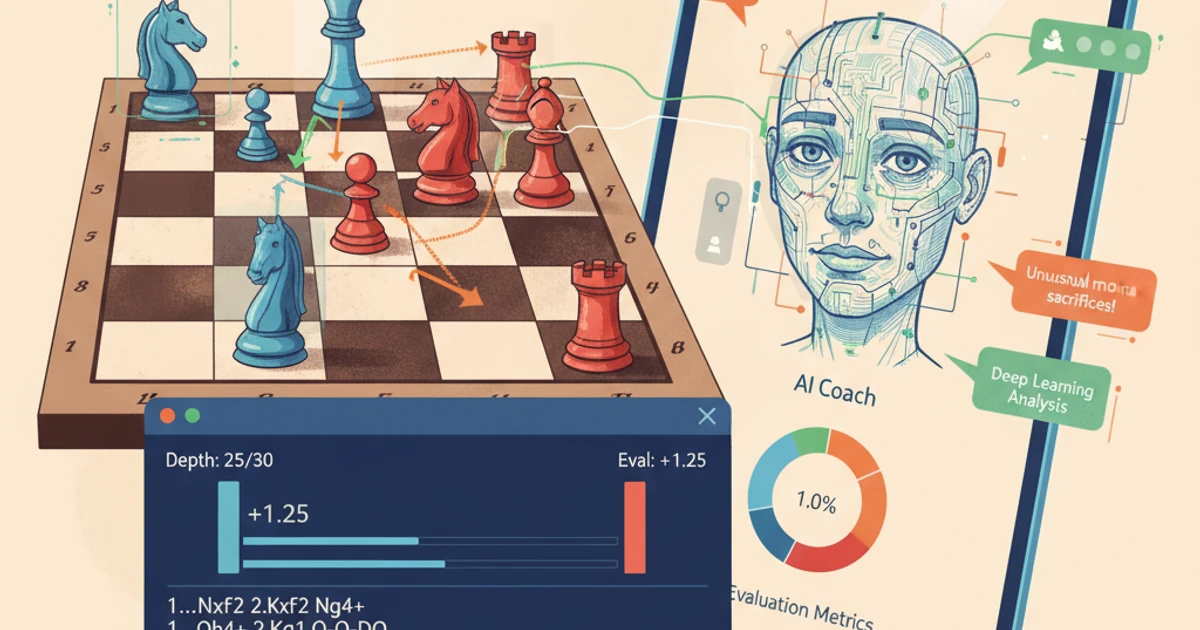
Understanding evaluation bars, depth, and principal variations (PVs)
When the evaluation bar shows +1.0, you can think of it as being the equivalent of a small but stable pawn advantage; at -3.0, you are likely objectively lost if both sides play accurately. In CircleChess-style analysis, treat swings of more than 1.5 points as critical moments that deserve deeper review.
Depth and principal variations matter just as much. If Stockfish is only at depth 16 in a complex Najdorf, let it run longer until depth 30+ so the main PVs become stable. Studying these lines move by move—like the famous Carlsen–Karjakin World Championship endgames—shows you the concrete winning technique, not just vague ideas.
Reference: Is there an engine that can rank moves by how good they …
6. Compare AI Coach vs Traditional Engine: Practical Use Cases
Opening preparation
When preparing openings, traditional engines are ideal for stress-testing specific lines, while an AI coach helps you understand the “why” behind them. A player in the CircleChess community preparing the Najdorf, for example, can use Stockfish or Leela to verify that 6.Bg5 is sound, then rely on AI feedback to grasp typical pawn breaks like …e5 or …g6.
Use a strong engine to refute dubious gambits you see in online blitz, such as the Stafford Gambit, by checking concrete refutations. Then let the AI coach explain recurring structures, like the Carlsbad pawn structure in the Queen’s Gambit, so you remember plans (minority attack, piece maneuvers) instead of just move orders.
Middlegame strategy
In complex middlegames, AI guidance is ideal for learning long-term plans while traditional engines confirm the tactics. For instance, in a typical Sicilian Scheveningen position, an AI coach can point out queenside expansion versus kingside attack options, then you use the engine to verify whether a sacrifice on g5 or h6 truly works.
CircleChess learners can train themselves to evaluate positions by piece activity, king safety, and pawn structure rather than staring at “+0.8.” The engine shows that a rook sacrifice is correct; the AI explains that black’s back rank weaknesses and poor coordination make the attack sustainable over several moves.
Endgame technique
Endgames are where traditional engines and tablebases shine for objective truth, while AI explanations turn that truth into patterns you remember. In a rook-and-pawn ending like the Lucena position, tablebases confirm the win, and the AI coach breaks it down into clear steps: build a bridge, shield checks, and push the pawn.
By importing your own CircleChess games, you can repeatedly practice common endings you actually reach, such as opposite-colored bishop endgames or basic rook versus pawn scenarios. The engine guarantees correct defense or conversion; the AI describes principles like cutting off the king, activity over material, and creating passed pawns.
Tournament and serious training use
For weekend events or scholastic tournaments, time and energy are limited, so review efficiency matters. Many US Chess scholastic players use an AI summary right after each round to spot big blunders and missed tactics in under five minutes, then only dive into deep engine analysis late in the day or after the event.
CircleChess users can maintain a training notebook: AI highlights recurring issues (unsafe king, time trouble, weak openings), while engines provide the best concrete improvements in critical lines. Over several months of local club events, this combined approach builds a targeted study list instead of random engine browsing that rarely sticks.
Reference: Comparing artificial intelligence and human coaching goal …
7. Build a Consistent Game Review Routine with Chess Analysis Tools
7. Build a Consistent Game Review Routine with Chess Analysis Tools
A simple post-game workflow: AI coach first, engine second, notes last
A clear routine after each game keeps you from getting lost in engine lines and missing the real lessons. Start by replaying the game in CircleChess and letting the AI coach walk you through the main turning points, blunders, and missed chances in plain language.
Once you understand the narrative of the game, turn on the engine to confirm where evaluation really swung, similar to how titled players on Chess.com or Lichess verify critical moments. Then add short notes like “missed discovered attack on move 18” or tag positions with themes so they appear later in your training feed.
How often to analyze your games
Consistent review matters more than marathon study sessions. Aim to analyze every serious tournament or training game, even if it is just a 10-minute rapid played as preparation for a local US Chess-rated event.
Many club players around 1500–1800 strength see steady improvement by scheduling a weekly 45–60 minute review block. One week they deeply analyze two games; the next week they skim through 8–10 games to spot recurring issues like time trouble or weak endgame technique.
Saving key positions and themes in CircleChess
Capturing critical moments turns your own games into a personalized textbook. Use bookmarks in CircleChess whenever the evaluation bar swings by more than 2 points, or when the AI coach labels a move as a major mistake or missed tactic.
Organize these snapshots into folders such as “rook endgames,” “opposite-side castling attacks,” or “under 2 minutes on the clock.” Over time, you build a library similar in spirit to classic collections like Mark Dvoretsky’s endgame examples, but drawn entirely from your practical play.
Using AI coach feedback to shape your training plan
Feedback is most valuable when it directly guides what you study next. If the AI coach repeatedly flags missed forks or skewers, convert those themes into targeted puzzle sets, much like the tactics groupings offered by Chessable or Chess.com’s puzzle rush categories.
When CircleChess highlights recurring early-game problems—such as losing a pawn by move 8 in the Caro-Kann—shift some study time toward opening basics and model games. If the review shows your advantage slipping in move 30–40 ranges, dedicate more sessions to endgame drills and long time-control practice instead of yet another new opening line.
Reference: Building a Chess Study Routine: A Step-by-Step Approach
8. Choose the Right Tool for Your Level and Goals
Beginners: why AI coaches are better than raw engine analysis
For new players, pure engine lines from Stockfish or Komodo often look like alien code: +1.7 evaluations and ten-move variations with no human explanation. A guided assistant that speaks in simple language is far better for building confidence and basic habits.
When a CircleChess AI coach explains, “You hung a piece because you didn’t check all captures,” it turns a confusing blunder into a clear lesson. Visual arrows, highlighted squares, and short quizzes help kids and adults remember, just like ChessKid’s training tools do for younger learners.
Intermediate players: balancing understanding and accuracy
Once you’re around 1200–1700 online, you need both strategic ideas and hard tactical truth. Concept-based explanations teach why a Nimzo-Indian structure favors certain pawn breaks, while engine checks confirm whether your calculation actually works.
Many club players on platforms like Lichess review a rapid game twice: first with narrative AI feedback to spot recurring plans, then with an engine to test sharp sacrifices. Alternating these styles stops you from becoming either a “theory parrot” or a guesser who never verifies lines.
Advanced and competitive players: maximizing hybrid analysis
Stronger players preparing for weekend Swiss events or US Chess-rated tournaments need speed and depth. A hybrid workflow lets you scan dozens of opponent games quickly, then dive deep only where it matters.
For example, a 2100-rated player can use CircleChess summaries to find that an opponent scores 65% with the London System, then bring in Stockfish 16 to test rare sidelines and endgame transitions. This keeps preparation practical instead of getting lost in 25-ply novelties that never appear on the board.
Parents and coaches: guiding students and tracking progress
For trainers and families, the key question is not just “Was this move bad?” but “Is this a pattern?” AI-generated reports can show that a 9-year-old blunders most often in opposite-side castling positions or misses back-rank mates.
Coaches can turn these insights into targeted homework: custom quizzes from the student’s own games, weekly accuracy goals, and progress charts inside CircleChess. Over a season, you can literally see fewer one-move blunders and stronger decision-making under time pressure, which is exactly what matters in scholastic events like the K-5 section at the SuperNationals in Nashville.
Reference: 8 tools for peer and self-assessment
Conclusion: Turning AI and Engines into Real Improvement
Key takeaways for using AI coaches and engines together
Blending an AI coach with a strong engine helps you grow both understanding and accuracy. The coach explains plans, patterns, and mistakes in language you can relate to, while the engine confirms which moves are objectively best.
For example, a 1500-rated player on CircleChess might first review a rapid game with an AI coach to grasp why …d5 was a better center break, then confirm with an engine like Stockfish that the move gains –0.8 in evaluation compared to the game move.
Start your review with a high-level summary from the coach: key turning points, missed tactics, and strategic themes like weak squares or open files. Once you see the big picture, switch to the engine for precise calculations in sharp or tactical positions.
Stronger players and coaches can lean more on engine depth, while beginners and kids may benefit from explanation-heavy feedback. The best mix is the one you can follow consistently and align with clear goals, such as fixing time-trouble blunders or improving endgame conversion.
Practical next steps for your analysis routine
To make this concrete, take your latest rapid or blitz game and upload it into CircleChess. Run an AI coach-first review and note two or three critical positions where the evaluation swung by more than 1.0.
After that, revisit only those key moments with engine support and ask targeted questions: Was a tactic missed? Was there a safer but equal alternative? Track these findings in a simple Google Sheet over three to four weeks so you can see patterns in your decision-making.
Parents and coaches can follow the same process with young learners, reviewing one weekly tournament game together. Over a month, you should start to see fewer repeat mistakes in similar positions and more confidence in choosing plans that both the AI coach and engine would approve.
FAQs: AI Chess Coach vs Traditional Engine Analysis
How is an AI chess coach different from just running Stockfish on my games?
Running Stockfish on a game is like asking a calculator for the right answer, while an AI coaching tool on CircleChess acts more like a teacher who shows you why the answer works. Stockfish might say your move was +0.7 instead of +1.3, but it doesn’t explain the pattern behind your mistake.
An AI assistant can group your errors by theme—such as “missed in-between moves” or “ignored back-rank weaknesses”—and show recurring issues across 20–30 games, similar to how coaches on Chess.com or Lichess use engine data to highlight habits. This turns raw evaluation into practical training you can apply in your next rapid game at your local club.
When should I rely more on AI explanations instead of engine best moves?
Concept-focused feedback is most useful when you’re trying to understand plans instead of memorizing sharp lines. For example, after a 15|10 rapid game on CircleChess, an AI review might explain that your French Defense losses come from passive light-squared bishops, not just one inaccurate move on move 18.
Players rated under 2000 often gain more from a 10-minute, idea-driven review than a 40-move engine deep dive. Use the explanatory tools for weekly training habits, then switch to pure engine checks only when you’re preparing a specific Najdorf line for a weekend USCF tournament.