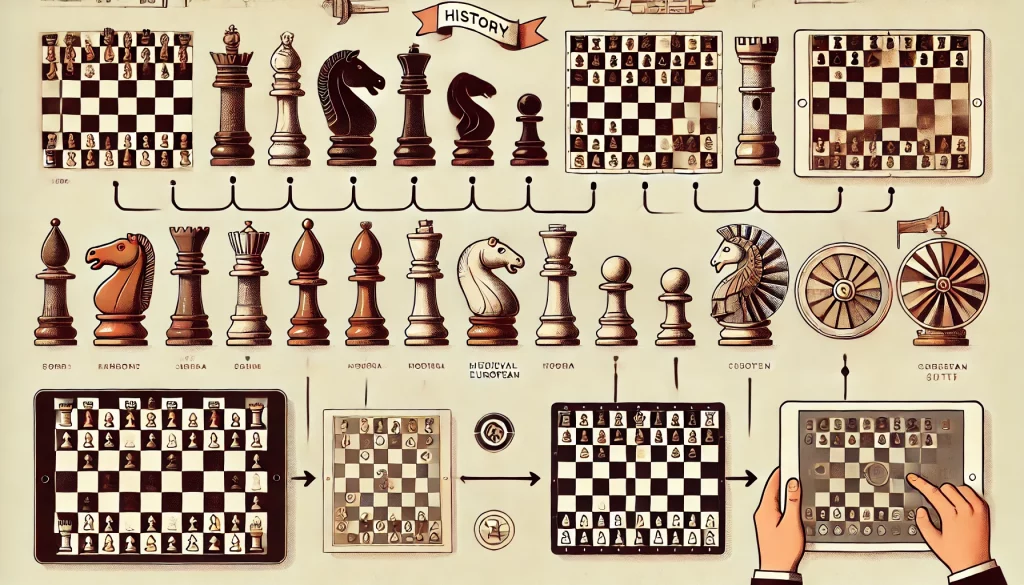

As I sit at my chessboard, running my fingers across the smooth surface of a rook, I often wonder about the incredible journey this game has taken. The history of chess isn’t just a timeline of rule changes – it’s a story of empires rising and falling, of brilliant minds clashing across centuries, and of how a simple battlefield simulation became the world’s most beloved strategy game.
The Mysterious Birth in Ancient India
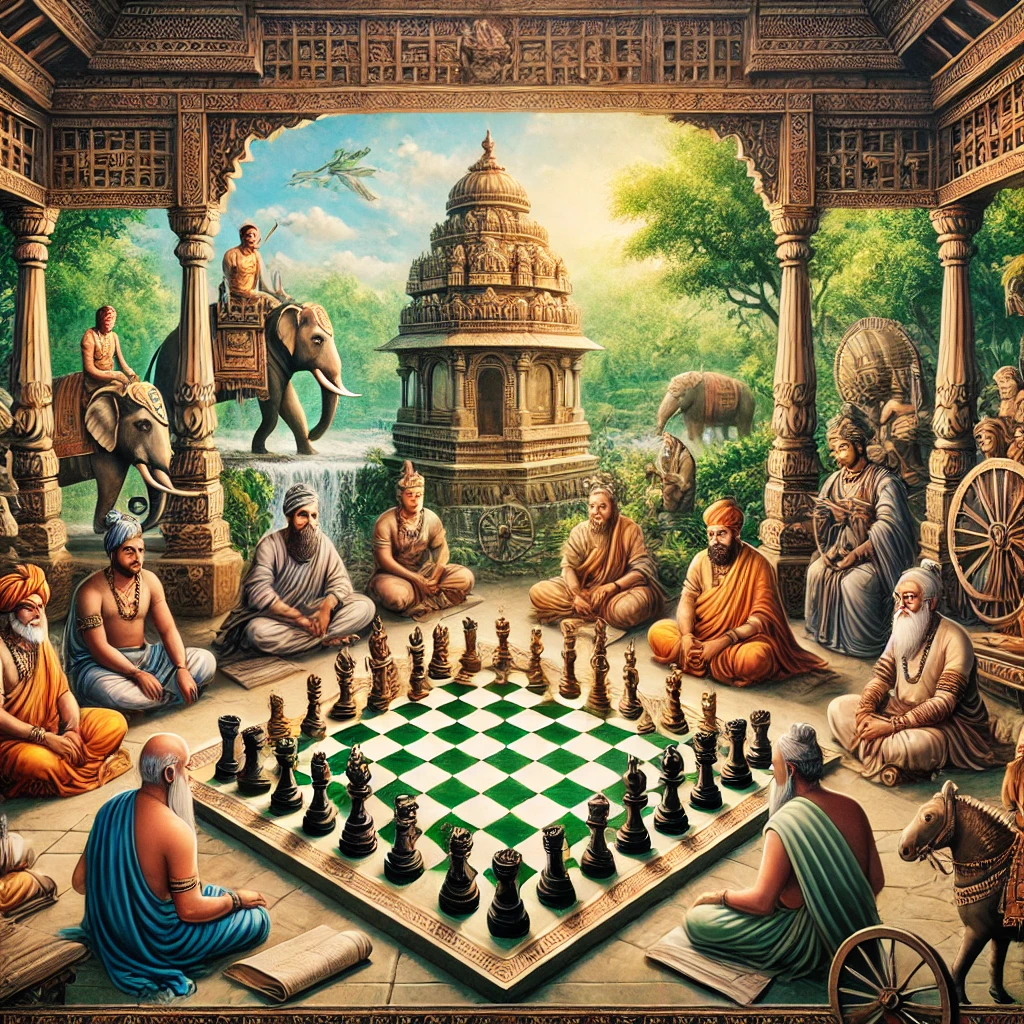
My fascination with the history of chess always begins in 6th-century India, where the earliest ancestor of our game emerged. Picture this: nobles played Chaturanga in the courts of the Gupta Empire, a game that mirrored the four divisions of the Indian military. The pawns were infantry, the knights represented cavalry, the bishops stood as war elephants, and the rooks were the mighty chariots.
What’s fascinating is how different early chess was. The queen? Just a feeble counselor that could only move one square diagonally. Castling? Nonexistent. And can you imagine playing with dice determining your moves? That was part of the earliest versions before pure strategy took over.
Chess Crosses Continents
I love imagining those Persian traders carrying the game westward along the Silk Road. By the 7th century, it had transformed into Shatranj in Persia, where we got the immortal phrase “Shah Mat”—the king is helpless. The Arabs became incredible players, composing the first chess problems and manuscripts that still survive today.
When the Moors brought chess to Spain in the 8th century, something magical happened. European players looked at those abstract Islamic pieces and carved them into the familiar kings, queens, and bishops we know today. The church initially banned it—they thought it promoted gambling—but chess was too powerful to suppress.
The Game-Changing Medieval Revolution
Here’s where the history of chess gets really exciting for me. Around 1475-1500, some brilliant player (we don’t know who) made two revolutionary changes: they supercharged the queen’s movement and introduced pawns’ two-square initial move. Overnight, chess transformed from a slow, methodical game to the dynamic battle we know today.
I often think about those Italian and Spanish players experimenting with these new rules. The “Mad Queen’s Chess” (as it was called) must have felt like playing with rockets compared to the old version. Games became faster, more aggressive, and infinitely more creative.
The Romantic Era: Chess as Art
Fast forward to 19th-century Europe, and chess becomes high art. When I study games from this period, like Anderssen’s “Immortal Game” or Morphy’s brilliant attacks, I’m struck by their fearless creativity. These players treated chess like a duel, sacrificing pieces with glorious abandon.
Morphy’s story particularly moves me—a prodigy who dominated Europe only to retire young, leaving us wondering what more he could have achieved. His games teach me that chess at its best is about imagination, not just calculation.
The Soviet Chess Revolution
As someone who grew up studying Soviet chess manuals, this chapter always gives me chills. When the USSR decided to dominate chess, they treated it like a science. I’ve lost count of how many times I’ve rewatched footage of the 1972 Fischer-Spassky match—not just for the brilliant play, but for the way it captured the tension of an entire Cold War.
The Soviet training system fascinates me. They didn’t just produce great players; they created a chess culture where children learned endgames before openings, where every club player could access world-class coaching. It’s no surprise they dominated for decades.
Computers Change Everything
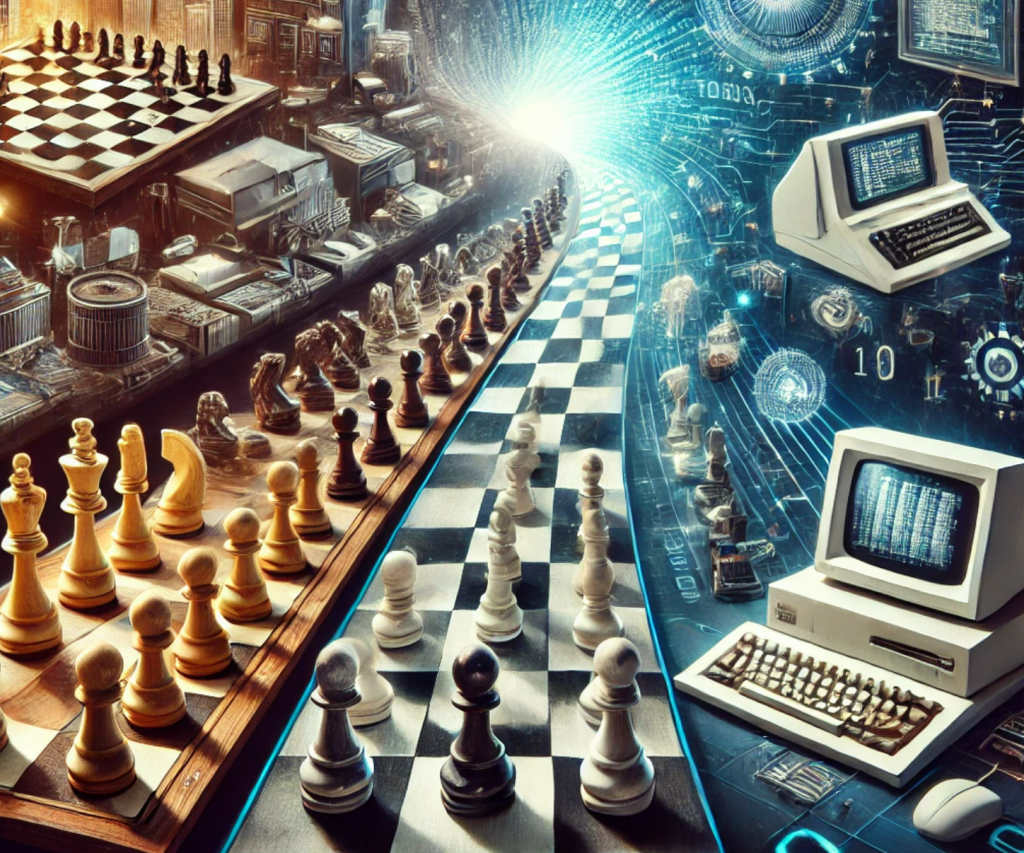
I remember exactly where I was when Deep Blue defeated Kasparov in 1997. It felt like the end of an era, but really, it was just the beginning. Today, when I analyze my games with Stockfish, I’m using technology that would have seemed like magic to those 19th-century masters.
What amazes me most is how computers haven’t made chess less human—they’ve made it more creative. Today’s players combine machine-like precision with breathtaking originality, as seen in games by Carlsen or the young Indian prodigies.
At Caissa App, we integrate AI-powered analysis into our training, helping students learn from both human and machine brilliance.

Why The History of Chess Matters to Every Player?
When I teach beginners at Caissa School of Chess, I always start with a story about chess history. Knowing where your pieces came from – how the knight’s move mimics a horse’s leap, why the rook looks like a castle tower – makes the game come alive. For intermediate players, studying historical games provides a masterclass in strategy evolution. And advanced players? We can trace our opening repertoires back centuries.
The most beautiful lesson of the history of chess that teaches me is that this game is forever evolving. The rules we take for granted were once radical innovations. Today’s cutting-edge strategies will be tomorrow’s fundamentals. And somewhere, right now, a young player is discovering a move that will change how we all play.
So next time you make a move, take a moment to appreciate the centuries of genius that made it possible. That pawn push? It’s connected to the Indian infantry. That brilliant queen sacrifice? It echoes the Romantic era’s daring spirit. That endgame technique? It’s built on Soviet scientific rigor. Chess is a conversation across 1,500 years of human brilliance. And you, by playing, are now part of that grand tradition. Isn’t that an incredible thought?
Want to experience chess history firsthand? At Caissa School of Chess, we blend tradition with modern training to help you master this timeless game. Join us today and become part of chess history!
♟️ The past inspires the future – let’s write your chess story together.