

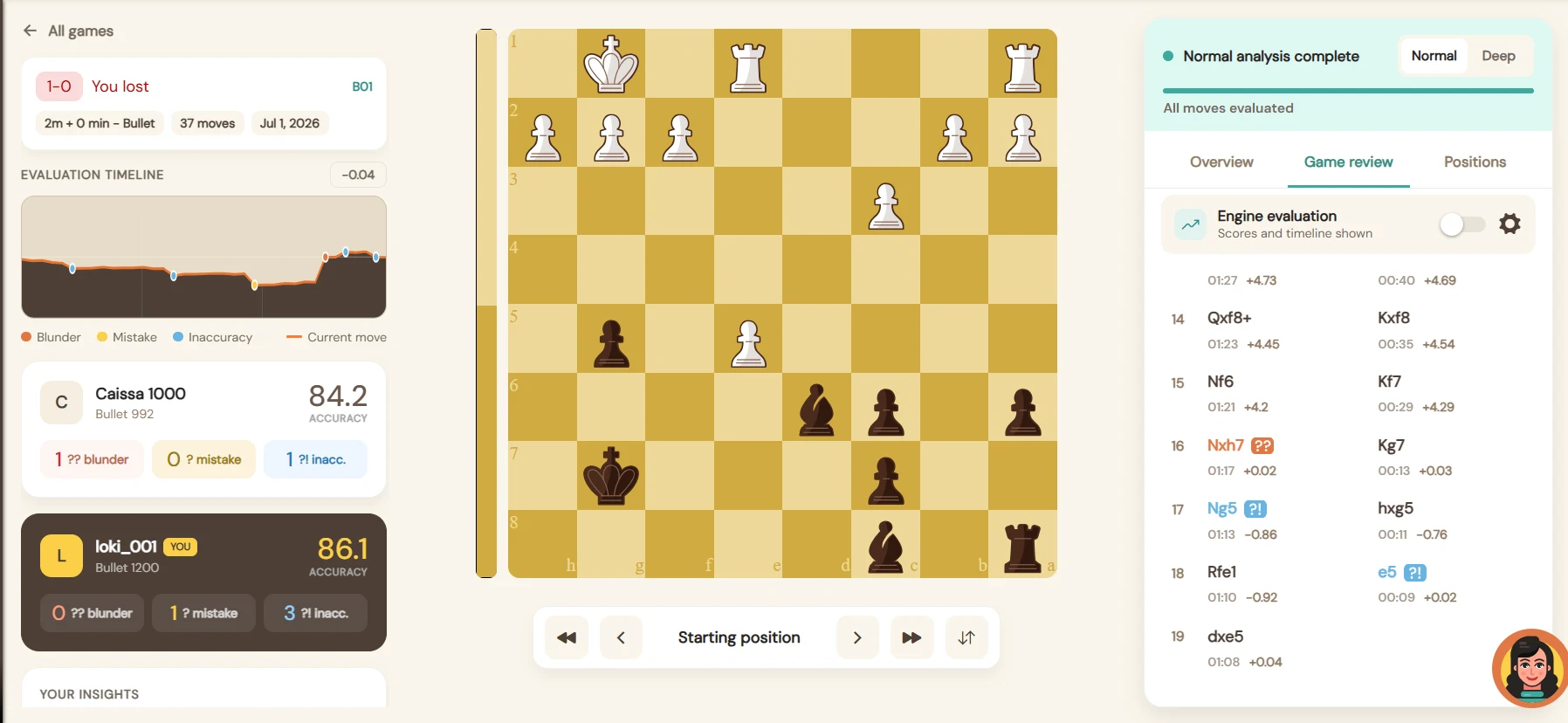
Every game you play is a lesson — but only if you go back and read it. Game Review on CircleChess has been redesigned so that reading takes less effort and teaches you more. The engine and the depth of analysis haven't changed. What has changed is how clearly the story of your game is laid out in front of you.
Why Review Every Game?
- Ten minutes is all it takes. A short look after each game beats an occasional deep dive.
- Two games reviewed carefully teach you more than ten skimmed. Quality of attention beats quantity of games.
- Blunders repeat. Spot the pattern once in review and it stops costing you points.
- Accuracy climbs — and rating follows. Fix the moves that swing the eval, and 84 becomes 90.
"Grandmasters review every game they play — the wins as carefully as the losses. Most club players review maybe one in ten. Close that gap, and the rating follows." — GM Vishnu Prasanna
The Oldest Advice in Chess
Self-analysis is not a modern training hack — it is arguably the oldest piece of serious chess advice there is. Mikhail Botvinnik, the sixth World Champion, built his entire method around it, insisting that independent analysis of your own games does more for playing strength than any other kind of study. "Chess is the art of analysis," he wrote — and he treated the ability to honestly annotate your own play as the skill that separates masters from everyone else.
He practised what he preached as a teacher. The Botvinnik School of Chess produced three world champions — Karpov, Kasparov, and Kramnik — and Kasparov later recalled that when students presented their games at training sessions, Botvinnik insisted the selection always include at least one loss. There is even a famous story of Botvinnik meeting a talented young Ljubomir Ljubojević and asking whether he analysed his own games; when the answer was a puzzled "what for?", Botvinnik privately wrote him off on the spot.
The tradition has never gone away. Artur Yusupov, in his classic training manual with Mark Dvoretsky, calls analysis of one's own games the main method by which a player improves — and argues that improvement without a critical understanding of your own play is essentially impossible. Modern grandmasters and coaches, from Jacob Aagaard to Alex Yermolinsky, repeat the same point in book after book.
What Learning Science Adds
Chess tradition and modern research on skill acquisition agree on this one. The deliberate-practice literature, built in large part on studies of chess players, is blunt: expertise does not grow automatically from accumulating more experience. Playing more games, on its own, mostly reinforces what you already do. Improvement comes from structured work on your specific weaknesses, with immediate feedback and repeated attempts at the thing you got wrong.
That is exactly the loop a good game review closes:
- Feedback, immediately. Analysis is ready moments after the game ends, while your reasoning behind each move is still fresh. Coaches consistently recommend a first review within 24 hours for this reason.
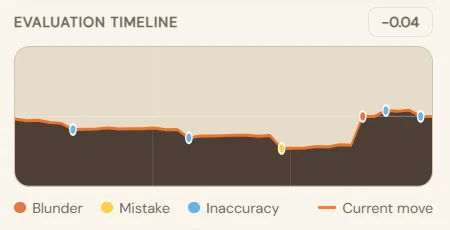
- Feedback on the right things. Most club games are decided by a handful of critical moments, not by the average quality of forty moves. Reviewing means finding the three to five turning points where the assessment of the position changed — which is what a marked evaluation graph does for you at a glance.
- Repetition at the point of failure. Reading about a mistake is surface learning; being placed back in the position and asked to find the better move is the deep kind. Deliberate practice requires multiple attempts at the exact task, not a general resolution to "calculate better."
- Pattern recognition over time. Mistakes repeat. Most players discover that the majority of their losses come from one or two recurring error types — and until a review surfaces the pattern, more games just deepen the same blind spots. A player who plays 200 games and reviews them carefully will typically outpace one who plays 500 and reviews none.
In short: playing trains instinct, reviewing trains understanding. You need both, but only one of them tells you what to fix.
01 · The Evaluation Timeline
One glance now shows how the whole game swung. The evaluation graph plots the engine's assessment across all your moves, with blunders, mistakes, and inaccuracies marked right where they happened — each in its own colour — and a marker tracking the move you're currently viewing. Instead of clicking through the game move by move, you can jump straight to the moments that decided the result.
02 · The Position Analyser
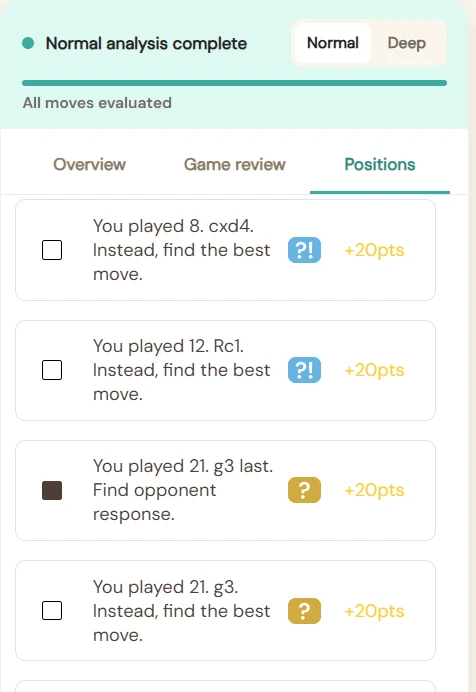
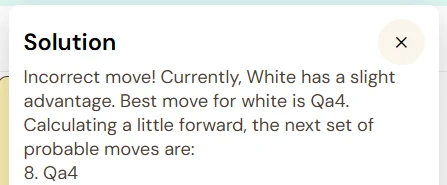
Every questionable move in your game becomes a practice position. The Positions tab takes you back to that moment on the board and asks you to find the better move — before showing you the answer. It's the difference between being told your mistake and actually solving it.
03 · Mistakes, Counted Per Player
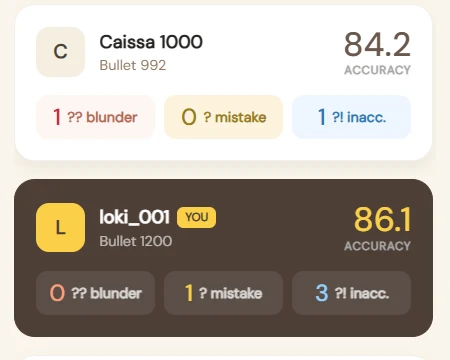
Accuracy is more than one number now. Each player's card shows their overall accuracy alongside an exact count of blunders (??), mistakes (?), and inaccuracies (?!) — for both sides of the board. You see not only what to work on next, but exactly where your opponent went wrong too.
Everything Else on the Review Screen
Three tabs, one game
The review panel is organised into Overview, Game review, and Positions. Overview gives you the summary; Game review walks the full move list with the engine's evaluation and your clock time recorded against every move; Positions turns your errors into training exercises.
Annotated move list
In the Game review tab, each move carries its evaluation score and the time remaining on your clock when you played it — so you can see whether a mistake came from the position or from time pressure. Questionable moves are flagged inline with the standard annotation symbols.
Normal and Deep analysis
Review runs in two modes. Normal evaluates every move quickly and is ready moments after your game ends. Deep spends more engine time per position for finer evaluations when you want to study a game seriously.
Engine evaluation toggle
Prefer to work things out yourself first? A single toggle hides the engine's scores and timeline, letting you form your own opinion of the position before checking it against the machine.
Your Insights
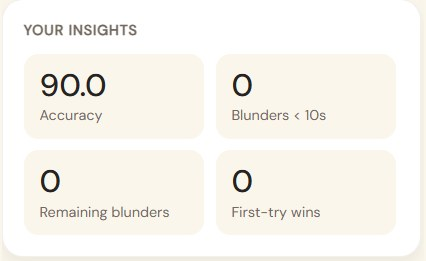
Below the timeline, the Insights panel tracks how your review habit is paying off, game by game. Alongside overall accuracy, it counts blunders played with under ten seconds on the clock (your time-pressure errors), remaining blunders still waiting to be solved in the Positions tab, and first-try wins — positions where you found the better move on your first attempt.
A Simple Routine That Works
Pulling the coaching consensus together, an effective review habit looks something like this — and each step maps onto a part of the new screen:
- Review within a day, ten minutes per game. Consistency beats intensity: a short look at every serious game outperforms an occasional deep dive. Roughly 30–45 minutes of review a week is enough to produce measurable improvement over a few months.
- Form your own opinion first. Toggle the engine evaluation off, replay the game, and mark where you think it turned. Then switch the scores back on and compare. The gap between your assessment and the engine's is where the learning lives.
- Go straight to the turning points. Use the marked timeline to find the three to five moments that decided the game, rather than grinding through every move. Check the clock times against them — a mistake made with 25 minutes on the clock is a knowledge problem; the same mistake at one minute is a time-management problem.
- Solve your mistakes, don't just read them. Open the Positions tab and actually find the better move before looking at the answer. Attempting the position is what converts a noticed error into a corrected one.
- Review your wins too. Botvinnik's students had to bring losses; modern coaches add that wins hide mistakes your opponent simply failed to punish. The per-player mistake counts make those visible even in games you won.
- Watch for the repeat offenders. One or two error categories usually account for most lost points. The Insights panel does the record-keeping that strong players traditionally did in notebooks.
| Element | What it shows |
|---|---|
| Evaluation timeline | Game swing at a glance, with errors marked in place |
| Player accuracy cards | Accuracy % plus blunder / mistake / inaccuracy counts per player |
| Game review tab | Full move list with eval scores, clock times, and annotations |
| Positions tab | Your questionable moves as solvable practice positions |
| Analysis modes | Normal (fast, every move) and Deep (higher-depth study) |
| Engine toggle | Hide scores and timeline to analyse unassisted |
| Your Insights | Accuracy, blunders under 10s, remaining unsolved blunders, first-try wins |
Start Reviewing Your Games
The new review runs on every game you play on CircleChess. If you have a recent game sitting unreviewed, that is the natural place to start.