

best online chess classes for kids ages 5 to 8 in 2026 | Last updated October 2026 | By the CircleChess Editorial Team | 10 platforms tested
TL;DR: Best Online Chess Classes for Kids Ages 5 to 8 in 2026
The best online chess classes for kids ages 5 to 8 in 2026 come down to three things: pacing that suits young children, instructors with real credentials, and a format that holds a five-year-old's attention. We tested live academies, self-paced apps, and video-course platforms to see which ones work for early learners.
| Rank | Tool | Best For | Starting Price | Rating |
|---|---|---|---|---|
| 1 | CircleChess | World Champion-coached, holistic early learning | Free demo classes; group classes from ~$2-3/hr | 9.7/10 |
| 2 | Kingdom of Chess | FIDE-certified coaches for ages 4-18 | Free trial class | 9.0/10 |
| 3 | TalentGum | Flexible 1:1 and small-group live classes | Free first class; $175/quarter | 8.6/10 |
| 4 | MM Chess Academy | Affordable 1-on-1 FIDE-titled coaching | $9.99 trial; from $35/hr | 8.4/10 |
| 5 | Chess KLUB | GM and IM led group coaching worldwide | Free level assessment | 8.2/10 |
| 6 | Russian Chess School Kids | Small live groups with personal feedback | 7-day free trial; $49/month | 8.0/10 |
| 7 | Magnus Trainer | Gamified, self-paced mobile learning | Free; Premium from $7.99/month | 7.8/10 |
| 8 | Chessable | Spaced-repetition opening practice (supplement) | Free; PRO $11.99/month | 7.5/10 |
| 9 | ChessMood | GM video courses for older/advanced 7-8 year olds | Free Basic; Essential from $79/month | 7.2/10 |
| 10 | Chessly | Gamified course library for confident young readers | 7-day trial; $9.99/month | 7.0/10 |
Our top pick is CircleChess. It pairs a curriculum built by a World Champion's own coach with live instruction and AI-powered practice, offering a clear, structured path for five-to-eight-year-olds discovering the game. Its free demo classes give you a low-risk way to see how your child responds before you commit.
Why You Need Online Chess Classes for Kids Ages 5 to 8 in 2026
Young children need structure, repetition, and encouragement, and generic chess apps or adult-focused coaching rarely provide all three. Most online chess academies accept children from age 5, and children are typically ready for structured chess learning between ages 5 and 7. A good program mixes short, attention-friendly lessons with real feedback from a coach or adaptive software. It should not drop a six-year-old into an adult interface and hope for the best.
The online chess instruction market has grown quickly, and it has reached $270 million. That growth is good news for families, but quality varies widely, so compare platforms carefully before committing a child's screen time and your budget. For supporting market data, see Online Chess Classes for Kids Fees: What You Actually Pay in ....
How We Evaluated These Platforms
| Criteria | Weight | What We Looked For |
|---|---|---|
| Age-appropriateness for 5-8 year olds | 25% | Pacing, visuals, attention-span-matched lesson length |
| Coach/content credentials | 20% | FIDE titles, grandmaster involvement, verified teaching experience |
| Curriculum structure | 20% | Clear levels, progression tracking, measurable milestones |
| Parent visibility | 15% | Dashboards, progress reports, communication |
| Value for money | 10% | Price relative to format (group, 1-on-1, self-paced) |
| Safety and trial options | 10% | Moderated environments, free trials or demos |
For industry-standard evaluation frameworks, see Online Chess Lessons: The Definitive Guide for Kids & Adults.
1. CircleChess: Best for World Champion-Coached, Holistic Early Learning
1. CircleChess: Best for World Champion-Coached, Holistic Early Learning
CircleChess stands out among the best online chess classes for kids ages 5 to 8 in 2026 because it offers a complete learning ecosystem. It combines live classroom instruction, AI-powered self-study tools, and a global community, and it guides children from their very first move toward real mastery.
Key Features
- GM-Designed Curriculum: The curriculum comes from the team behind India's most advanced chess learning ecosystem and is designed by GM Vishnu Prasanna, former coach of World Champion Gukesh D.
- Personalized Learning Roadmap: Each student gets a customized plan based on their strengths, weaknesses, goals, and playing style.
- 24x7 AI Coach: An AI-powered chess coach offers round-the-clock support for practice, analysis, and guidance between live sessions.
- Levels, Leagues, and Quests: A structured progression system, complete with achievements, keeps young children motivated.
- Chess Psychology Integration: Skills like focus, emotional resilience, and critical thinking are built into every learning level.
- Parent Dashboard: Parents can track progress in real time, read monthly mentor reviews, and check skill assessments.
- FIDE Rating Pathway: This feature offers milestone-based preparation toward an official FIDE rating, with certification signed by World Champion Gukesh D. A FIDE rating is an official measure of a chess player's skill, issued by the International Chess Federation.
- Free Demo Classes: Families can experience the Caissa School of Chess live classroom format before enrolling.
Best For
CircleChess suits parents looking for online chess lessons for kids aged 5-8, especially those who care about building real focus and character alongside piece movement. It fits families who want one ecosystem covering live classes, self-paced AI practice, and tournament preparation as their child grows.
Pros and Cons
- Pro: The curriculum traces directly back to the coach of a reigning World Champion.
- Pro: It brings live coaching, AI practice, psychology training, and a supportive community together on one platform.
- Pro: Parents get strong visibility into their child's progress through dashboards and monthly reviews.
- Con: The full ecosystem may feel like a lot for a brand-new 5-year-old beginner at first.
- Con: As a premium program, CircleChess asks for a bigger commitment than free options like Lichess or basic puzzle tools.
Key Takeaway: CircleChess offers a comprehensive, World Champion-coach-designed program that blends live instruction, AI tools, and psychological development, making it a premium choice for holistic early learning.
Rating: 9.7/10 Next up is Kingdom of Chess, which takes a very different approach built around verified titled coaches.
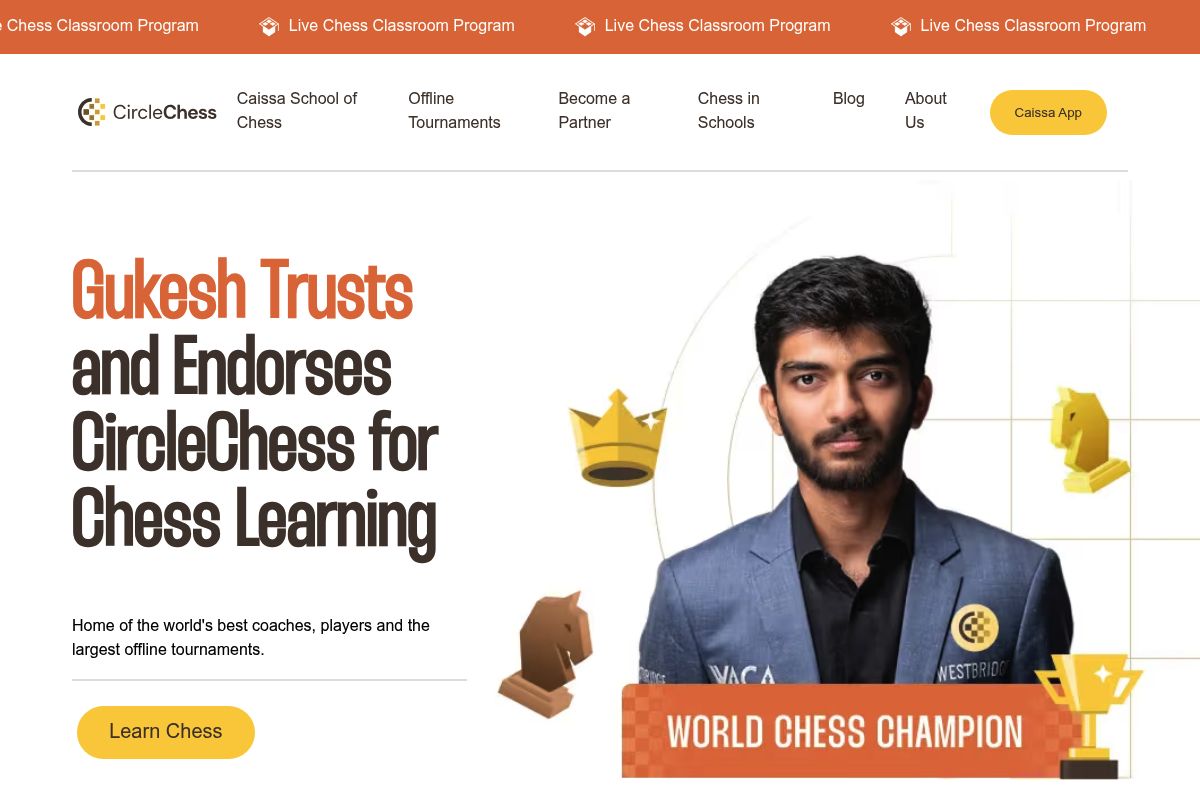
CircleChess: Home of the world's best coaches, players and the largest offline tournaments.
Gukesh Trusts and Endorses CircleChess for Chess Learning
2. Kingdom of Chess: Best for FIDE-Certified Coaching for Ages 4 to 18
2. Kingdom of Chess: Best for FIDE-Certified Coaching for Ages 4 to 18
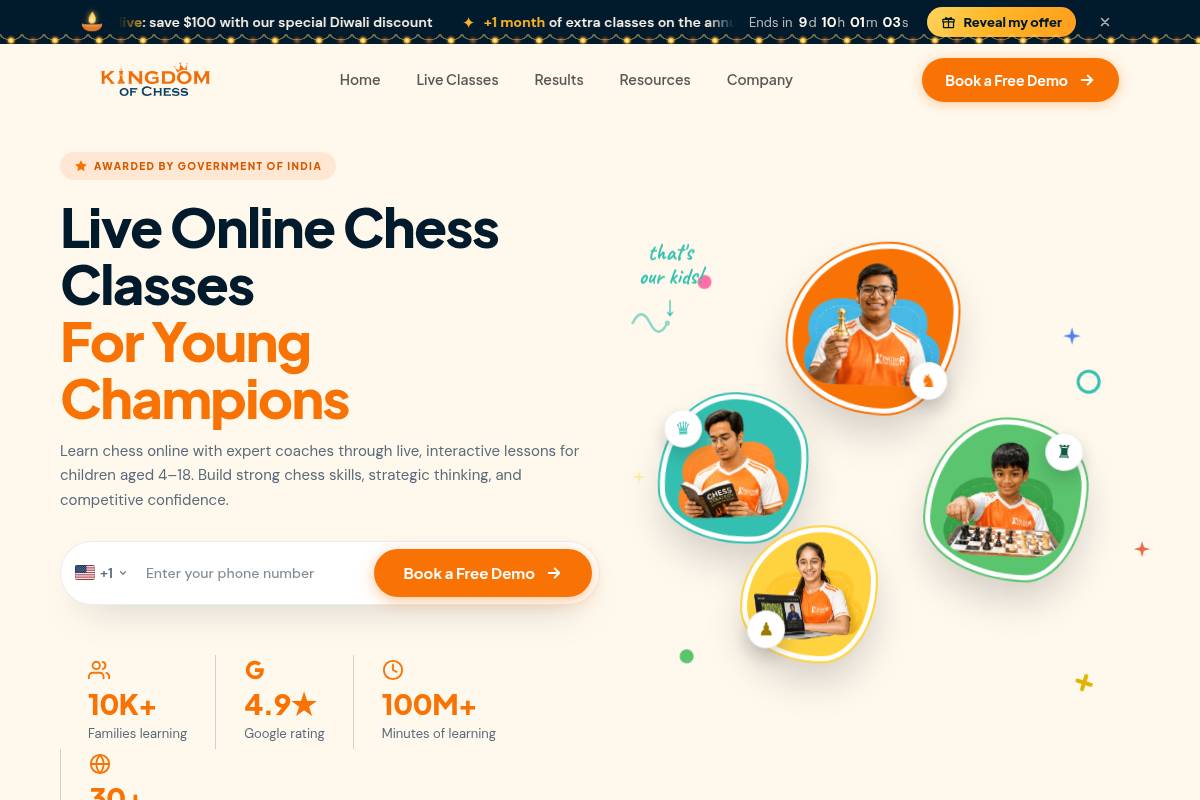
Kingdom of Chess is a premium online academy offering live, instructor-led classes with a structured path from beginner to advanced levels. Founded by Arena Grandmaster Chandrajeet Rajawat, it now trains over 10,000 students worldwide, making it a strong contender for families who want expert guidance.
Key Features
- FIDE-Certified Faculty: The academy employs coaches with verifiable titles from FIDE, the International Chess Federation, including Grandmaster Diptayan Ghosh and International Master Sanket Chakravarthy.
- Pawn-Level Beginner Track: This entry-level program is built for children with no prior chess knowledge, so the first steps feel gentle.
- Small Groups: Classes are capped at a small number of students, so each child gets personal attention from the coach.
- Parent Dashboard: Parents receive monthly progress reports through a dedicated dashboard without sitting in on every class.
- Free Trial Class: A complimentary 45-minute trial with a FIDE-certified coach is open to all skill levels, with no payment required.
Best For
Kingdom of Chess suits families who want verified titled coaches and a structured Pawn-to-King progression, particularly those considering a longer competitive path. It also works well for parents who want to check coaching credentials before spending money.
Pros and Cons
- Pro: Every coach holds a verifiable FIDE title, which points to strong instruction.
- Pro: The free trial class comes with no payment obligation.
- Pro: The academy has a large, established global student base, which signals broad trust and experience.
- Con: Pricing is less transparent than at some competitors, and you may need a sales call to get the details.
- Con: The platform does not include an AI-powered practice layer for independent study between live sessions.
Rating: 9.0/10
Key Takeaway: Kingdom of Chess offers FIDE-certified coaching and a structured path suited to young beginners aiming for competitive chess. The free trial lets you judge its premium offerings before committing.
3. TalentGum: Best for Flexible Live Classes with a FIDE Certification Pathway
3. TalentGum: Best for Flexible Live Classes with a FIDE Certification Pathway
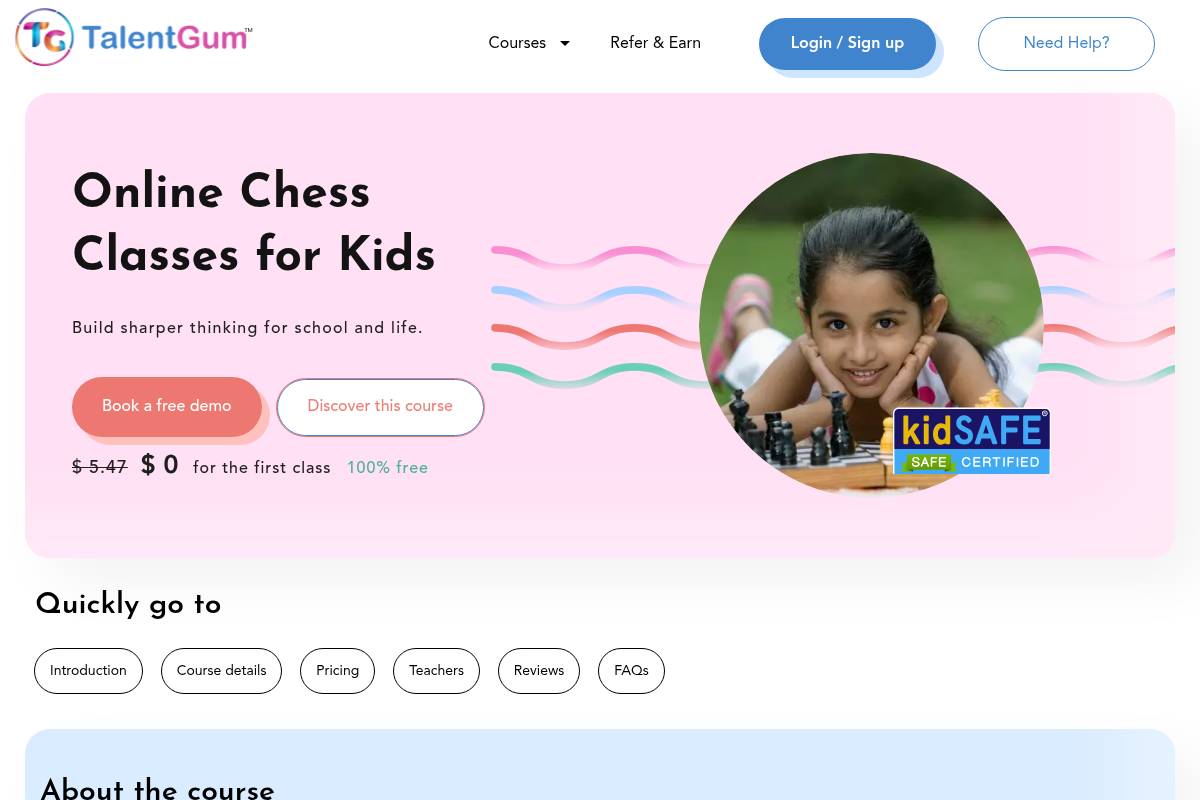
TalentGum runs live online chess classes for children in flexible 1:1, 1:2, and small-group formats. The classes follow a grandmaster-curated curriculum and offer a clear FIDE certification pathway.
Key Features
- Flexible Batch Sizes: Families can pick a Buddy format with just 2 kids per batch, or a fully customized 1:1 experience.
- Quarterly and Annual Plans: The quarterly plan includes 24 live sessions for $175, which works out to about $7.29 per session.
- Free First Class: New families can try a class before committing to a package.
- Easy Rescheduling: Classes can be rescheduled without a financial penalty.
Best For
TalentGum suits busy families juggling several activities who need scheduling flexibility alongside live instruction. It works for parents who want to start in a small group and decide later whether full 1-on-1 coaching is worth it.
Pros and Cons
- Pro: Excellent scheduling flexibility across formats.
- Pro: A clear, FIDE-aligned progression path.
- Pro: A free first class lowers the barrier to entry.
- Con: Advanced-level pricing is less publicly transparent.
- Con: Peak-hour scheduling outside certain windows can carry surcharges.
Rating: 8.6/10
4. MM Chess Academy: Best for Affordable 1-on-1 FIDE-Titled Instruction
4. MM Chess Academy: Best for Affordable 1-on-1 FIDE-Titled Instruction
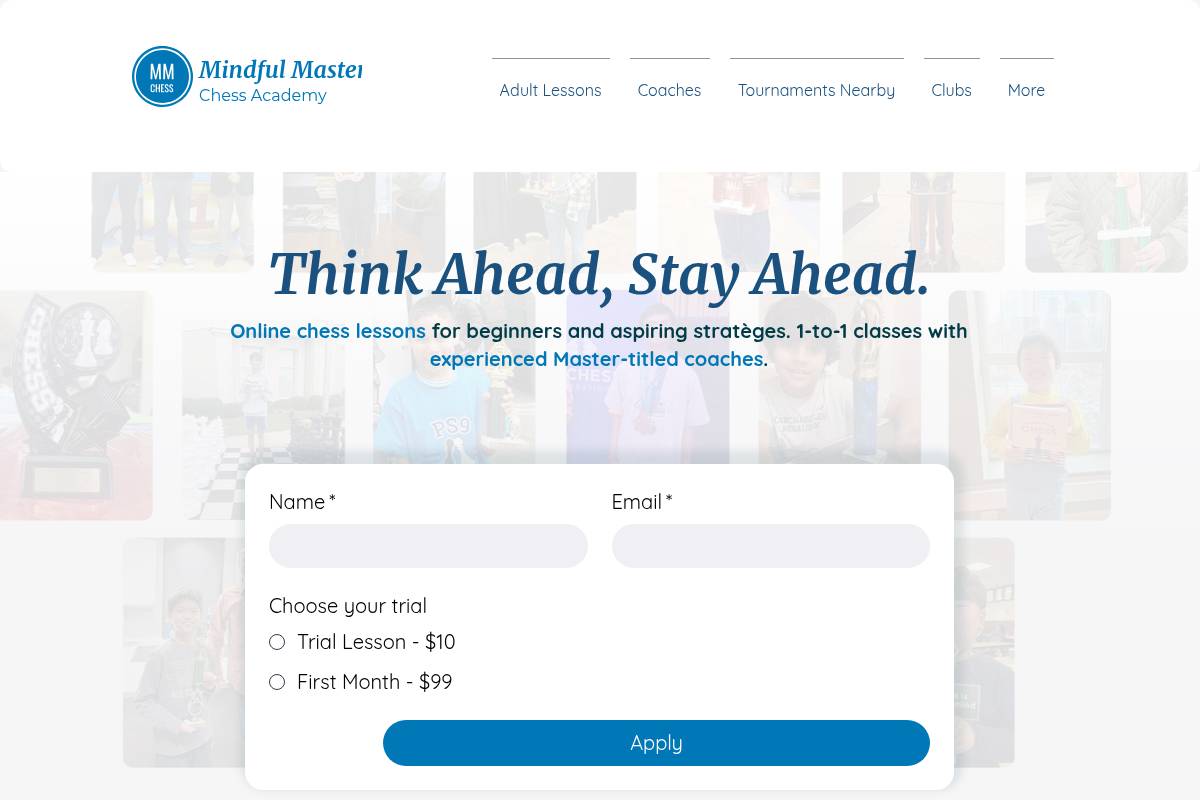
MM Chess Academy offers affordable 1-on-1 online chess lessons with FIDE-titled coaches for American families. Its private lessons cost noticeably less than those at many other academies.
Key Features
- Founder Credentials: The academy was founded by Misha Vilenchuk, a National Master and 3-time National Junior Champion.
- $9.99 Trial Lesson: New families can book a full one-hour trial, which also doubles as a skill assessment.
- Below-Market Rates: Comparable academies typically charge $70-$90 per hour, while MM Chess Academy offers packages starting at $35 per hour.
- Shorter Packages for Young Kids: Specialized 45-minute lesson packages are designed for younger children with shorter attention spans.
- Verified Coach Roster: The coaching staff includes a Grandmaster who was a World U14 Champion and a FIDE Master who is also a licensed psychologist.
Best For
MM Chess Academy is ideal for budget-conscious families who want verified titled coaches for their 5-8 year olds. Each child gets undivided 1-on-1 attention every week, and the academy is especially useful for children who respond well to a coach with a psychology background.
Pros and Cons
- Pro: Significantly cheaper than many comparable academies that offer titled coaches.
- Pro: A low-cost, full-length trial lesson that includes a skill assessment.
- Pro: Shorter class options designed around younger children's attention spans.
- Con: A smaller coach roster can mean limited availability during peak hours.
- Con: No built-in AI coaching tools or dedicated parent dashboard.
Rating: 8.4/10
5. Chess KLUB: Best for GM and IM Led Group Coaching Worldwide
5. Chess KLUB: Best for GM and IM Led Group Coaching Worldwide
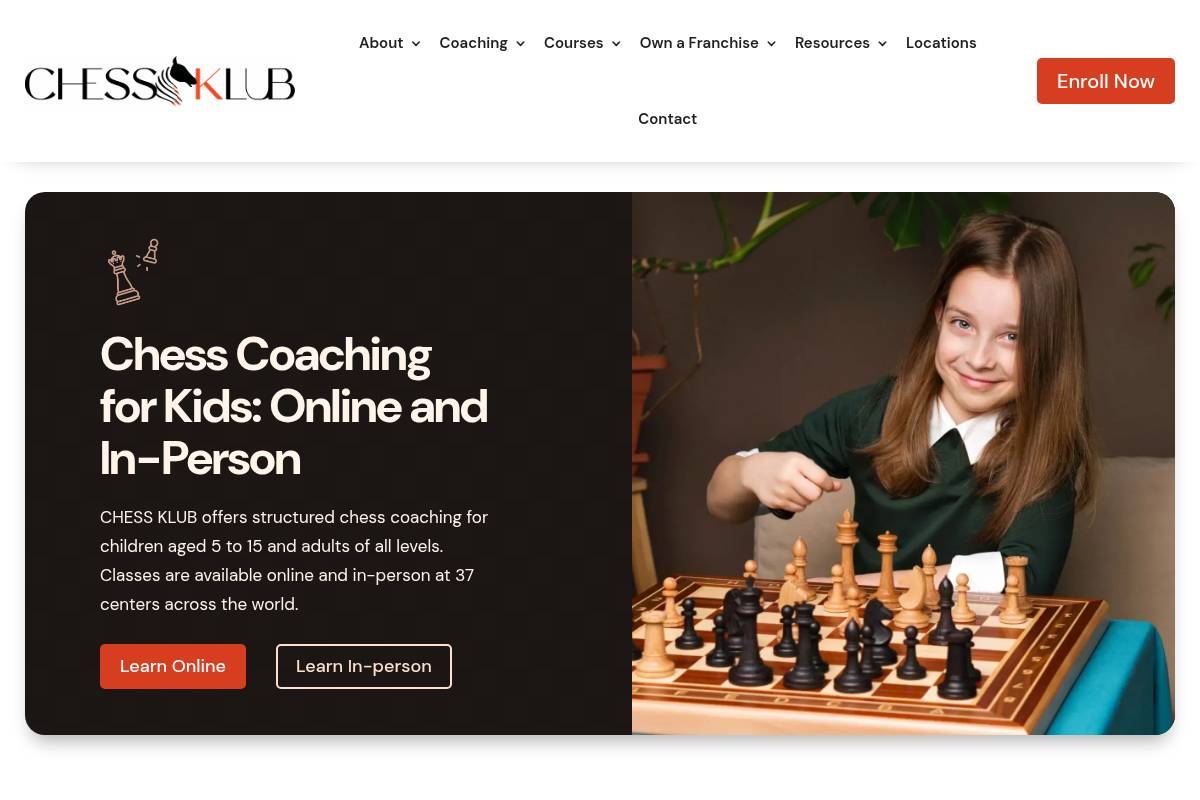
Chess KLUB provides live, instructor-led chess coaching around the world, with titled coaches ranging from Candidate Masters (CM) to Grandmasters (GM). It serves both children and adults.
Key Features
- Titled Coach Roster: Students can learn directly from Grandmasters (GMs) and International Masters (IMs). The platform has coached over 10,000 students worldwide.
- Ages 5 and Up: Chess KLUB offers structured coaching for children aged 5 to 15, as well as adults at every level.
- Free Level Assessment: The free level assessment places new students in the right group before any payment is due.
- 100% Live Sessions: Every session is 100% live and instructor-led, so children can ask questions and get immediate feedback.
- Class Recordings and Game Analysis: Students and families get access to recorded sessions and tournament preparation materials for review between classes.
Best For
Chess KLUB suits parents who want direct instruction from titled coaches in a global classroom. It is also a good match for families who value class recordings to revisit between sessions.
Pros and Cons
- Pro: GM and IM instructors are available even for young students.
- Pro: A free level assessment comes before you commit to a package.
- Pro: The platform has a large, established global student community.
- Con: Pricing is not fully published upfront, so you will need to ask directly.
- Con: No dedicated AI practice tools are available for independent work between classes.
Key Takeaway: Chess KLUB excels at live, GM and IM-led group coaching for children aged 5 and up, with a global classroom experience and useful recordings.
6. Russian Chess School Kids: Best for Small Live Groups with Personal Feedback
6. Russian Chess School Kids: Best for Small Live Groups with Personal Feedback
If you want personal attention in a structured live program, Russian Chess School Kids is worth a look. It combines small group classes, game reviews, and direct coaching for young players.
Key Features
- Founder Credentials: The program was founded by Woman Grandmaster Dina Belenkaya, an elite player who holds one of the highest titles awarded by FIDE.
- Small Groups: Weekly group classes are capped at up to 6 students so each child gets personal attention.
- Standard and Premium Tiers: The Standard plan starts at $79 per month, and the Premium tier at $249 per month includes four private lessons.
- Monthly Webinars: Live monthly webinars with the founder supplement the weekly group classes.
- Free Trial: A 7-day free trial is available with no commitment.
Best For
Russian Chess School Kids works best for the upper end of the 5-8 age range, particularly 7-8 year olds ready for structured small-group feedback and game reviews. It suits families seeking a long-term relationship with a titled coach.
Pros and Cons
- Pro: Small classes capped at 6 students.
- Pro: Direct access to a Woman Grandmaster founder through webinars.
- Pro: A free 7-day trial with no commitment.
- Con: The program is officially designed for ages 7 to 16, so it is less tailored to the youngest end of the 5-8 bracket.
- Con: Premium tier pricing is high compared with group-only alternatives.
Rating: 8.0/10
7. Magnus Trainer: Best for Gamified, Self-Paced Mobile Learning
7. Magnus Trainer: Best for Gamified, Self-Paced Mobile Learning
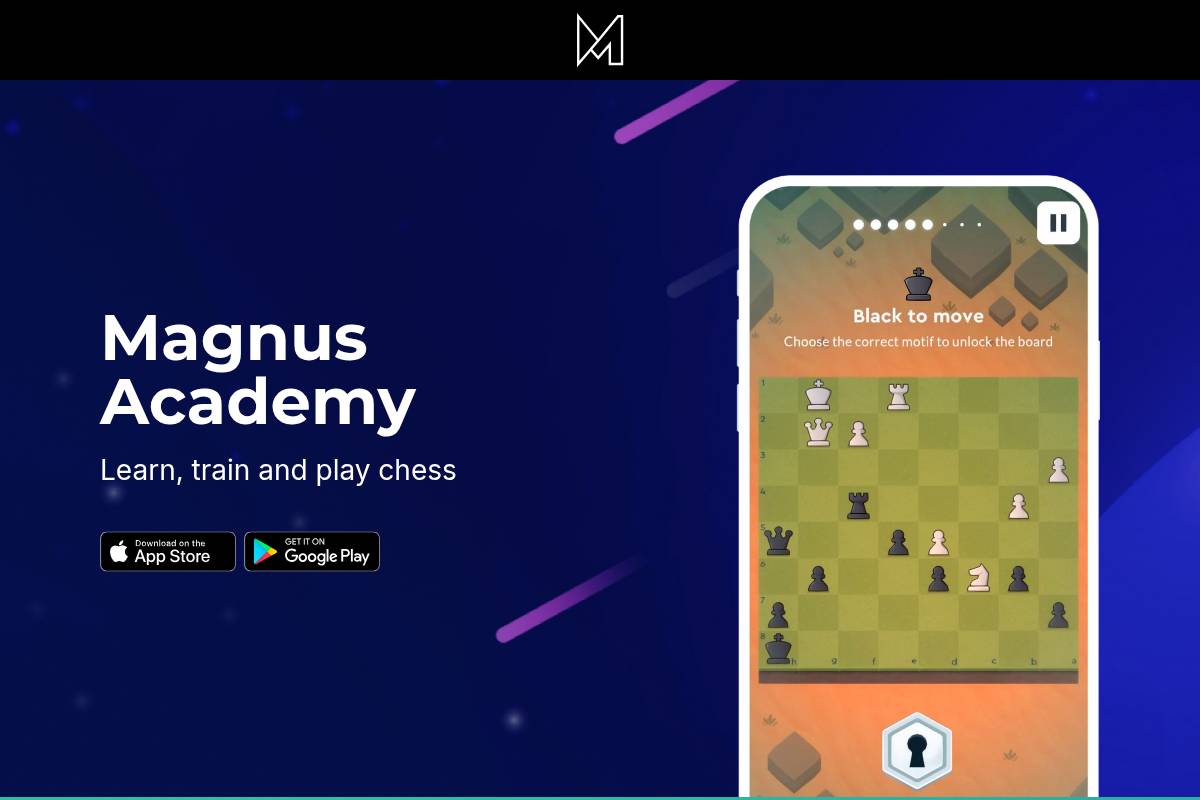
Magnus Trainer is a self-paced mobile app that turns chess learning into game-like lessons. Its content draws on World Chess Champion Magnus Carlsen, giving young beginners an approachable place to start.
Key Features
- Carlsen-Branded Lessons: Kids learn through engaging games and interactive lessons based on Magnus Carlsen's own career.
- Play from Age 5: The companion Play Magnus app lets children play against Magnus at any age from 5 and up.
- 250+ Premium Lessons: A membership unlocks over 250 premium lessons, along with infinite lives and detailed statistics.
- Free-to-Use Core App: The app is free to download and use, and a membership is only needed for premium benefits.
Best For
For parents searching for the best online chess classes for kids ages 5 to 8 in 2026, Magnus Trainer offers a low-pressure, game-like introduction. It works well as a supplement to live coaching.
Pros and Cons
- Pro: Genuinely gamified and friendly to age 5+, so learning feels fun.
- Pro: A free core app with an optional low-cost premium tier gives families flexibility.
- Pro: The content is backed by Magnus Carlsen's own training methods.
- Con: No live human coaching or personalized feedback, which some learners really need.
- Con: iOS development has slowed since the Chess.com acquisition, and updates arrive more often on Android.
Key Takeaway: Magnus Trainer offers an engaging, self-paced way for young children to start learning chess. Pair it with coaching if you can, since it has no live human interaction.
8. Chessable: Best for Spaced-Repetition Practice as a Supplement
8. Chessable: Best for Spaced-Repetition Practice as a Supplement
Chessable is an online course marketplace built around its own MoveTrainer engine, a spaced-repetition system that helps players, children included, hold on to openings, tactics, and endgame patterns.
Key Features
- MoveTrainer System: A carefully timed review engine that reinforces the patterns a child tends to forget.
- Free and PRO Tiers: The PRO membership costs $11.99 per month, or $74.99 per year.
- Large Course Library: Hundreds of courses from titled authors, with free samples available before you buy.
- Offline Mobile Study: PRO members can study courses without an internet connection.
Best For
Chessable works best as a supplement for confident 7-8 year olds who already take live lessons elsewhere. It becomes most useful once a child can read instructions and handle chess notation on their own.
Pros and Cons
- Pro: A best-in-class spaced-repetition memorization tool.
- Pro: An affordable PRO tier at $11.99 per month.
- Pro: Free course samples to try before buying.
- Con: No live coaching or parent dashboard.
- Con: Not designed specifically for the youngest beginners in this age bracket.
Rating: 7.5/10
9. ChessMood: Best for Older or Advanced 7-8 Year Olds Ready for GM Video Courses
9. ChessMood: Best for Older or Advanced 7-8 Year Olds Ready for GM Video Courses
ChessMood is a subscription academy built around structured, Grandmaster-recorded video courses and a training community.
Key Features
- GM-Led Course Library: Courses are led by Grandmasters Avetik Grigoryan and Gabuzyan, with 500+ hours of structured video content.
- Essential and Pro Plans: The Essential plan costs $79 per month when billed yearly and includes the full course library and training tools.
- 30-Day Guarantee: Every paid plan comes with a 30-day money-back guarantee.
- Weekly Live Events: The Pro tier adds weekly live sessions with Grandmasters.
Best For
ChessMood is best reserved for an unusually advanced 7-8 year old who reads well and wants deeper, video-based study rather than a true beginner course.
Pros and Cons
- Pro: A deep library of GM-produced video courses.
- Pro: A 30-day money-back guarantee on all plans.
- Pro: An active community and weekly live events on the Pro tier.
- Con: Premium pricing compared with kid-focused alternatives.
- Con: Content and pacing are not designed for absolute beginners aged 5-6.
Rating: 7.2/10
10. Chessly: Best for Confident Young Readers Who Love Gamified Courses
10. Chessly: Best for Confident Young Readers Who Love Gamified Courses
Chessly is a subscription course platform created by International Master Levy Rozman (GothamChess), offering gamified training games, drills, and lectures for more independent learners.
Key Features
- All-Inclusive Subscription: A monthly or annual subscription covers every course in the library.
- Gamified Progression: Stat trackers let players level up with experience points and earn badges as they finish lessons.
- Levy Bot Training: A built-in training bot with adjustable difficulty helps kids practice openings.
- Free Sample Chapters: Every course offers a free chapter before purchase.
Best For
Chessly is best suited to a confident 8-year-old who enjoys video content and progress bars more than a traditional classroom. It is less ideal for a 5-6 year old who still needs an adult guiding every step.
Pros and Cons
- Pro: A fun, game-like structure with XP and badges.
- Pro: An affordable, all-inclusive subscription model.
- Pro: Free sample chapters for every course.
- Con: No live coaching or parent dashboard.
- Con: Content leans toward older, more independent learners.
Rating: 7.0/10
Full Comparison: Best Online Chess Classes for Kids Ages 5 to 8
| Platform | Live Coaching | GM/Titled Coaches | AI Practice Tool | Parent Dashboard | Free Trial | Starting Price |
|---|---|---|---|---|---|---|
| CircleChess | ✓ | ✓ | ✓ | ✓ | ✓ | ~$2-3/hr (group) |
| Kingdom of Chess | ✓ | ✓ | ✗ | ✓ | ✓ | Custom monthly |
| TalentGum | ✓ | ✓ | ✗ | ✗ | ✓ | $175/quarter |
| MM Chess Academy | ✓ | ✓ | ✗ | ✗ | ✓ ($9.99) | From $35/hr |
| Chess KLUB | ✓ | ✓ | ✗ | ✗ | ✓ | Custom monthly |
| Russian Chess School Kids | ✓ | ✓ | ✗ | ✗ | ✓ | $49/month |
| Magnus Trainer | ✗ | ✗ | ✗ | ✗ | ✓ (free tier) | Free / $7.99/mo |
| Chessable | ✗ | ✗ | ✗ | ✗ | ✓ (free tier) | $11.99/month |
| ChessMood | ✗ | ✓ | ✗ | ✗ | ✓ (free Basic) | $79/month |
| Chessly | ✗ | ✗ | ✗ | ✗ | ✓ (7-day) | $9.99/month |
How to Choose the Right Online Chess Class for Your Child
By Family Budget
If money is tight, CircleChess group classes at roughly $2-3 per hour offer GM-designed instruction at the most accessible price. Magnus Trainer and Chessable both offer free tiers for casual practice. Mid-range budgets fit TalentGum, Chess KLUB, or Russian Chess School Kids well, and families wanting dedicated 1-on-1 attention should look at MM Chess Academy.
By Learning Style
Children who do best with real-time feedback should start with CircleChess, Kingdom of Chess, TalentGum, Chess KLUB, or Russian Chess School Kids. Kids who prefer independent, game-like exploration on a tablet suit Magnus Trainer. Confident 7-8 year olds who already read well can move on to Chessable, ChessMood, or Chessly.
By Long-Term Goals
For a genuine FIDE rating pathway and long-term growth, CircleChess and Kingdom of Chess both offer milestone-based progression. For a fun, low-pressure first taste of the game, Magnus Trainer or a CircleChess free demo class are the easiest places to start. For additional buying guidance, see Best Online Chess Classes for Kids (2026): 6 Options Compared.
What Is Online Chess Coaching for Young Children?
Online chess coaching for children ages 5 to 8 is structured instruction, delivered live or through self-paced software, built around a young child's attention span, reading level, and motor skills on a chessboard interface. Effective programs for this age group use short lesson blocks, visual storytelling to teach how each piece moves, and frequent positive reinforcement. For a more detailed primer, see Online Chess Lessons: The Definitive Guide for Kids & Adults.
| Metric | Typical Range for Ages 5-8 |
|---|---|
| Ideal lesson length | 30-55 minutes |
| Group class size | 2-8 students |
| Starting monthly cost (live classes) | $35-$109/month |
| Starting monthly cost (self-paced apps) | Free-$12/month |
| Recommended weekly screen time | 1-3 sessions |
Conclusion: Our Top Pick for Online Chess Classes for Kids Ages 5 to 8
Across every criterion we measured, CircleChess remains our top recommendation. Its curriculum is designed by GM Vishnu Prasanna, the coach behind World Champion Gukesh D, and it pairs that with live coaching, 24x7 AI practice, and real visibility for parents. For a more budget-friendly titled-coach option, MM Chess Academy and Chess KLUB are strong runners-up, and Magnus Trainer is the easiest free, gamified starting point.
Frequently Asked Questions
What are the best online chess classes for kids ages 5 to 8 in 2026?
The top picks covered in this guide are CircleChess (our top pick), Kingdom of Chess, TalentGum, MM Chess Academy, Chess KLUB, Russian Chess School Kids, Magnus Trainer, Chessable, ChessMood, and Chessly. Each suits a different budget and learning style.
What age should a child start learning chess online?
Most structured programs accept children from age 5. Children are typically ready for structured chess learning between ages 5 and 7, which makes this the natural window for formal online classes.
Is CircleChess good for a complete beginner aged 5 or 6?
Yes. CircleChess offers free demo classes and a structured beginner pathway built around its personalized learning roadmap, so it suits children with no prior chess experience.
How much do online chess classes for kids typically cost?
Free self-paced apps like Magnus Trainer cost nothing to start. Mid-range live group classes from providers like TalentGum or Chess KLUB run from about $35 to $175 per month, depending on format. CircleChess group classes deliver GM-designed instruction at roughly $2-3 per hour.
Do young kids need live coaching, or is a self-paced app enough?
For true beginners aged 5-6, live feedback from a coach or structured AI guidance tends to build habits faster than a self-paced app alone. That is why platforms like CircleChess combine both formats.
What should parents look for in an online chess class for a young child?
Look for lesson lengths that match a young attention span, verified coach credentials or GM-designed content, a clear progression system, and a way to see what your child is learning and how they are improving.
Can a 5-year-old really learn chess online?
Yes. Most programs designed for this age group accept children from age 5 and use simple visuals, short lesson blocks, and game-like reinforcement rather than adult-style instruction.
Is CircleChess only for serious competitive kids, or also for casual learners?
CircleChess supports both paths. Casual learners can start with free demo classes and self-paced AI practice, while families aiming for competitive play can follow the structured FIDE rating pathway.