

best free online chess lessons for kids in 2026 | Last updated: October 2026 | Author: CircleChess Editorial Team | Tools tested: 10 chess learning platforms
Choosing the best free online chess lessons for kids in 2026 means sorting through live academies, gamified apps, puzzle trainers, and video libraries. We tested ten popular options and compared curriculum depth, live coaching quality, safety features, and real pricing.
TL;DR: Best Free Online Chess Lessons for Kids in 2026
The table below compares the top 10 platforms on cost, focus, and overall rating.
| Rank | Tool | Best For | Starting Price | Rating |
|---|---|---|---|---|
| 1 | CircleChess | World Champion-coached live classes + AI learning ecosystem | Free demo class; ~$2-3/hr group classes | 9.6/10 |
| 2 | Chessable | Opening memorization via spaced repetition | Free courses; PRO $11.99/mo | 8.3/10 |
| 3 | ChessTempo | High-volume tactics and puzzle training | Free tier; Premium ~$25-30/yr | 7.9/10 |
| 4 | Duolingo Chess | Gamified first lessons for absolute beginners | Free | 8.0/10 |
| 5 | ChessDojo | Structured rating-based training plans | Free limited plan; Core $12/mo | 7.8/10 |
| 6 | WhiteKnight Academy | Small live groups with FIDE-rated coaches | Free first lesson; from $79/mo | 7.7/10 |
| 7 | Chessly | Gamified course library from GothamChess | Free trial chapters; $9.99/mo | 7.6/10 |
| 8 | Chess24 | GM commentary and tournament-based learning | Free tier; Premium available | 7.4/10 |
| 9 | FIDE Online Arena (World Chess) | Official FIDE-recognized online ratings | Free; PRO unlocks rated play | 7.3/10 |
| 10 | Remote Chess Academy | Self-paced GM video courses | Per-course, frequent sales | 7.1/10 |
Our top pick is CircleChess, the only platform on this list built directly on a World Champion's coaching methodology, combining live instruction, an AI coach, and a parent progress system.
Why You Need the Best Free Online Chess Lessons for Kids in 2026
Online chess lessons teach rules, focus, pattern recognition, and resilience. Free puzzle sites build tactics, gamified apps build habits, and live academies build real understanding, but few tools do all three well. The best free online chess lessons for kids in 2026 offer easy entry points (free demo classes, free courses, free puzzle tiers) and a path to deeper study as your child's interest grows.
How We Evaluated These Chess Learning Platforms
| Criteria | Weight | What We Looked For |
|---|---|---|
| Curriculum Quality & Pedigree | 25% | Titled coach involvement, structured progression, age-appropriateness |
| Free Access & Pricing Value | 20% | Depth of free tier versus paywalled content |
| Child Safety & Design | 15% | Moderated environments, age-appropriate interface |
| Live Coaching Availability | 15% | Access to real instructors, not just recorded content |
| Progress Tracking | 15% | Parent dashboards, skill assessments, rating pathways |
| Engagement & Retention | 10% | Gamification, streaks, and features that keep kids coming back |
For industry-standard evaluation frameworks, see 10 Best Online Chess Classes for Kids Ages 5 to 8 in 2026.
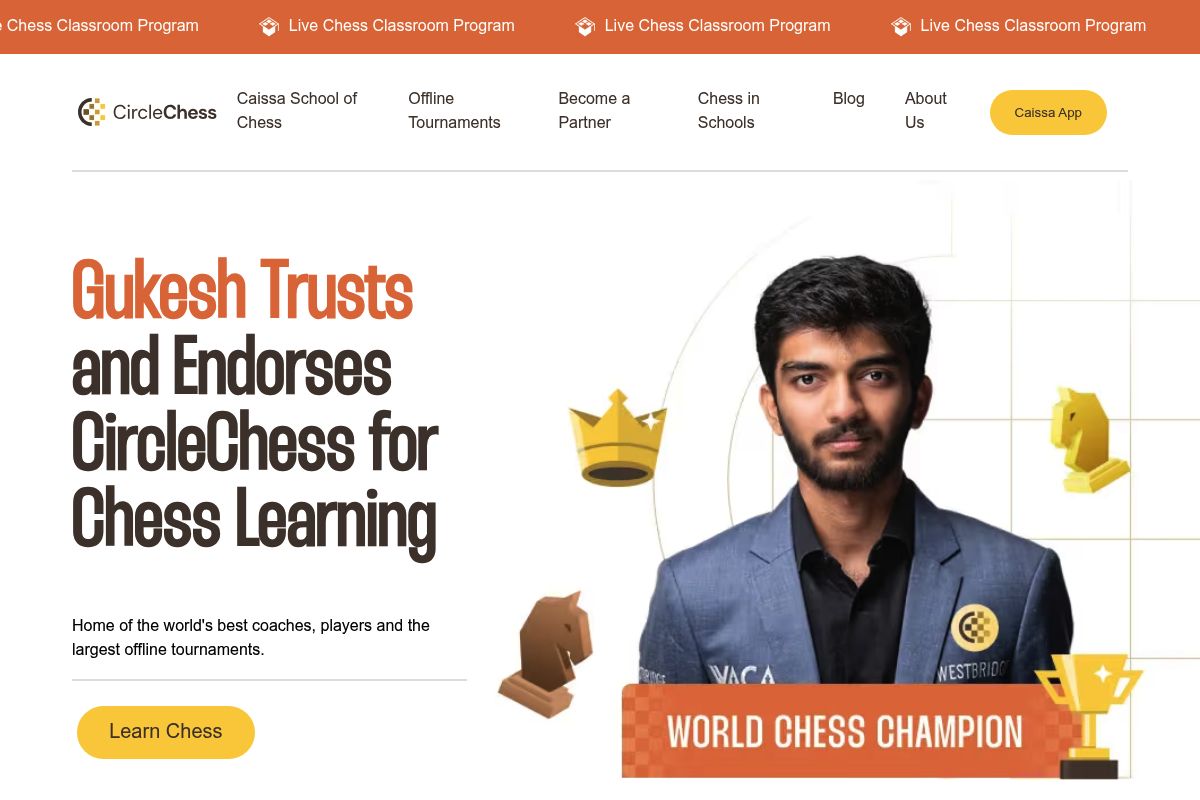
1. CircleChess: Best for World Champion-Coached Live Classes and AI Learning
1. CircleChess: Best for World Champion-Coached Live Classes and AI Learning
CircleChess is an online chess education ecosystem that runs children's programs through the Caissa School of Chess. It pairs live instructor-led classes with an AI coach and a structured progression system, designed to raise children who are focused, resilient, and confident.
Key Features
- GM-Designed Curriculum: Lessons designed by GM Vishnu Prasanna, former coach of World Champion Gukesh D.
- Personalized Learning Roadmap: Each student gets a roadmap based on strengths, weaknesses, goals, and playing style.
- 24x7 AI Chess Coach: Available around the clock for practice, analysis, and guidance.
- Structured Progression System: Levels, leagues, quests, and achievements keep kids motivated between live sessions.
- Chess Psychology Integration: Performance training and chess psychology are built into every level.
- Monthly Skill Assessments: Growth reports, mentor feedback, and personalized improvement plans.
- Parent Dashboard: Real-time progress tracking with monthly mentor reviews.
- FIDE Rating Pathway: A milestone-based plan toward an official FIDE rating, with certification signed by World Champion Gukesh D.
Best For
CircleChess is ideal for parents, including NRI and US-based families, who want coaching from the lineage that shaped a reigning World Champion. It isn't purely free, but free demo classes let families test the premium ecosystem first. It suits families who want live coaching, AI practice, tournaments, and character development in one place.
Pros and Cons
- Pro: Curriculum designed by GM Vishnu Prasanna, the coach who trained World Champion Gukesh D.
- Pro: Combines live coaching, AI practice, and a parent dashboard.
- Pro: Chess psychology and character development are integrated into every level.
- Pro: Free demo classes let families test the fit before paying.
- Con: Full ecosystem pricing sits above pure free apps for families wanting zero-cost tools only.
- Con: Live group classes require a weekly commitment rather than on-demand access.
Rating: 9.6/10
Key Takeaway: CircleChess is a premium, World Champion-coached ecosystem with AI integration and free demo classes, a strong fit for dedicated parents who want a complete development platform.
CircleChess: Home of the world's best coaches, players and the largest offline tournaments.
Gukesh Trusts and Endorses CircleChess for Chess Learning
2. Chessable: Best for Opening Memorization and Structured Self-Study
2. Chessable: Best for Opening Memorization and Structured Self-Study
Chessable is a course marketplace built around MoveTrainer, a spaced-repetition system for retaining openings, tactics, and endgame patterns. Many courses cost money, but dozens of courses are completely free, so you can sample the method first.
Key Features
- MoveTrainer Spaced Repetition: Science-backed spaced repetition to significantly boost retention.
- Large Course Catalog: Openings, tactics, strategy, and endgames, authored by hundreds of experts.
- Free Course Tier: Dozens of free beginner courses.
- PRO Membership: Individual courses typically range from $20 to $100 one-time, while PRO costs $11.99 per month or $74.99 per year.
Best For
Chessable works best as a supplement for kids who already know the rules, offering a structured, bite-sized way to memorize openings and patterns outside class.
Pros and Cons
- Pro: Courses are authored by titled players and former World Champions.
- Pro: A genuine free tier lets users test the method before spending.
- Con: No live coaching, parent dashboard, or child-specific safety features.
- Con: Individual purchases can add up and may cost more than a PRO subscription.
Rating: 8.3/10
3. ChessTempo: Best for Tactics and Puzzle-Based Training
3. ChessTempo: Best for Tactics and Puzzle-Based Training
ChessTempo is a dedicated tactics site with a theme-tagged puzzle database and an adaptive difficulty engine. It has run for more than 15 years and offers over 2 million high-quality puzzles, with difficulty that keeps pace as you improve.
Key Features
- Massive Puzzle Library: Over 2 million puzzles, served at each user's level.
- Theme-Tagged Practice: Focus on pins, forks, discovered attacks, and back-rank mates.
- Generous Free Tier: Unlimited access to standard puzzles, with paid features unlocking advanced statistics and endgame modules.
- Affordable Premium: Approximately $25 to $30 per year.
Best For
ChessTempo suits children aged 10 and older who already enjoy chess and want high-volume tactical drilling rather than guided lessons. Younger kids may find its plain interface less engaging than gamified tools.
Pros and Cons
- Pro: One of the largest and best-calibrated puzzle databases available for free.
- Pro: Adaptive difficulty keeps practice productive and challenging.
- Con: No live instruction or structured beginner curriculum.
- Con: Its interface can feel dry for younger children next to gamified apps.
Rating: 7.9/10
Key Takeaway: ChessTempo is an excellent free resource for kids aged 10 and up who want to sharpen tactics. It won't teach the basics, but it's a great next step once the fundamentals are solid.
4. Duolingo Chess: Best Free App for Absolute Beginners
4. Duolingo Chess: Best Free App for Absolute Beginners
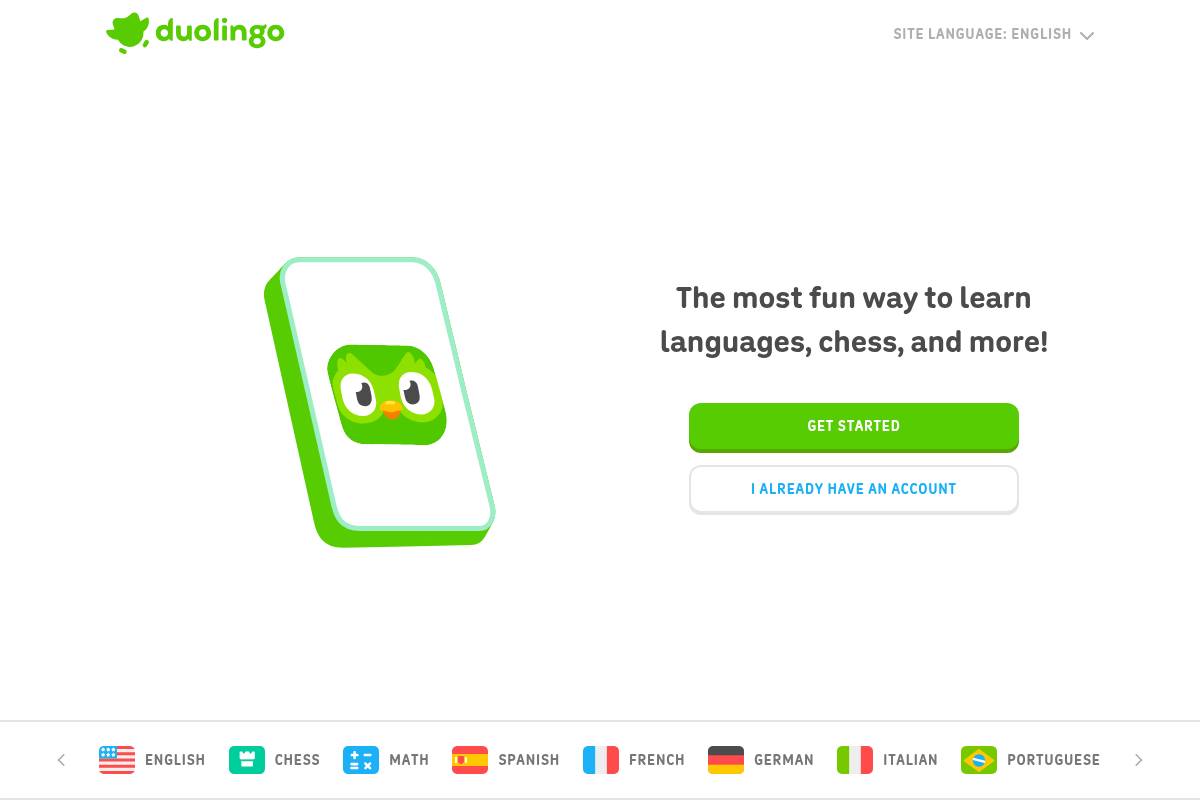
Duolingo Chess is a free, gamified course built into the Duolingo app. It uses bite-sized puzzles and an in-app coach character to guide new players toward roughly a 1500 Elo rating, a common measure of relative chess skill.
Key Features
- Puzzle-Heavy Curriculum: Roughly 75 percent of the course is puzzle-based, with the rest made up of mini and full games.
- In-App Coach: The virtual opponent responds to wrong moves, and the app guides learners with hints and visual cues.
- Player vs Player Mode: Adds a social layer, available on iOS and Android.
- Completely Free: The chess course is completely free. Super or Max subscriptions only remove ads and add perks.
Best For
Duolingo Chess is the first stop for a child who has never played chess. It offers a free, low-pressure way to gauge interest before committing to longer coaching.
Pros and Cons
- Pro: Entirely free with no chess-specific paywall.
- Pro: The familiar, game-like format keeps young beginners engaged.
- Con: Content is aimed at beginners and plateaus around the intermediate level.
- Con: No live coaching, parent dashboard, or structured competitive pathway.
Rating: 8.0/10
Key Takeaway: Duolingo Chess is a completely free, puzzle-heavy introduction ideal for young absolute beginners. Plan for more structure as your child improves.
5. ChessDojo: Best for Structured Rating-Based Training Plans
5. ChessDojo: Best for Structured Rating-Based Training Plans
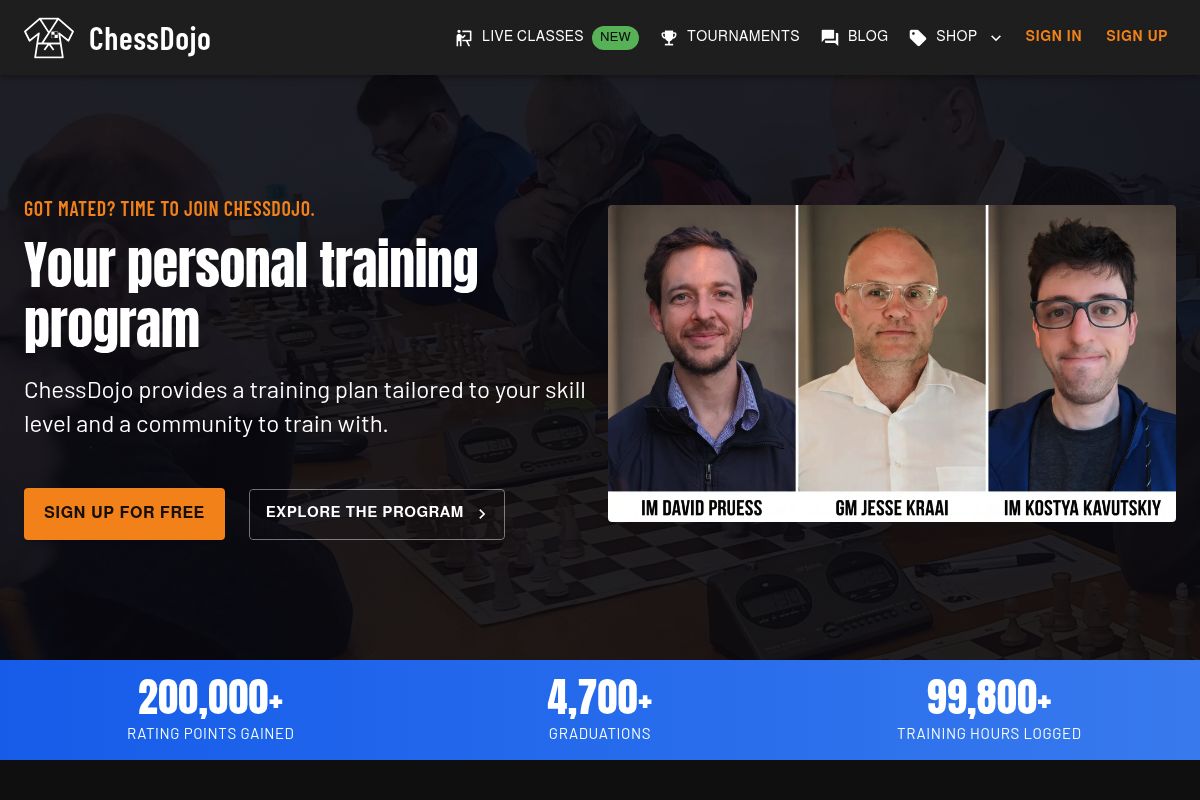
ChessDojo is an online training program and community that builds study plans around a student's current rating. Run by titled players, it offers roadmaps for skill levels from 0 to 2400+.
Key Features
- Rating-Based Roadmaps: Plans from 0 to 2500, with separate training for openings, tactics, endgames, and game analysis.
- Free Starter Plan: Basic training plans and a limited game database.
- Core Membership: Priced at $20, discounted to $12 per month, unlocking all training plans, a rating dashboard, and unlimited puzzles.
- Community Tournaments: Round-robins and open tournaments add structure and accountability.
Best For
ChessDojo fits older kids and teens past the absolute beginner stage who want a clear, rating-based roadmap. It complements live instruction rather than replacing it.
Pros and Cons
- Pro: Clear, rating-specific plans developed by titled coaches.
- Pro: An active community and tournament structure build accountability.
- Con: The free plan is limited, and most value sits behind Core.
- Con: Not designed for very young children or complete beginners.
Rating: 7.8/10
6. WhiteKnight Academy: Best for Small Live Group Classes
6. WhiteKnight Academy: Best for Small Live Group Classes
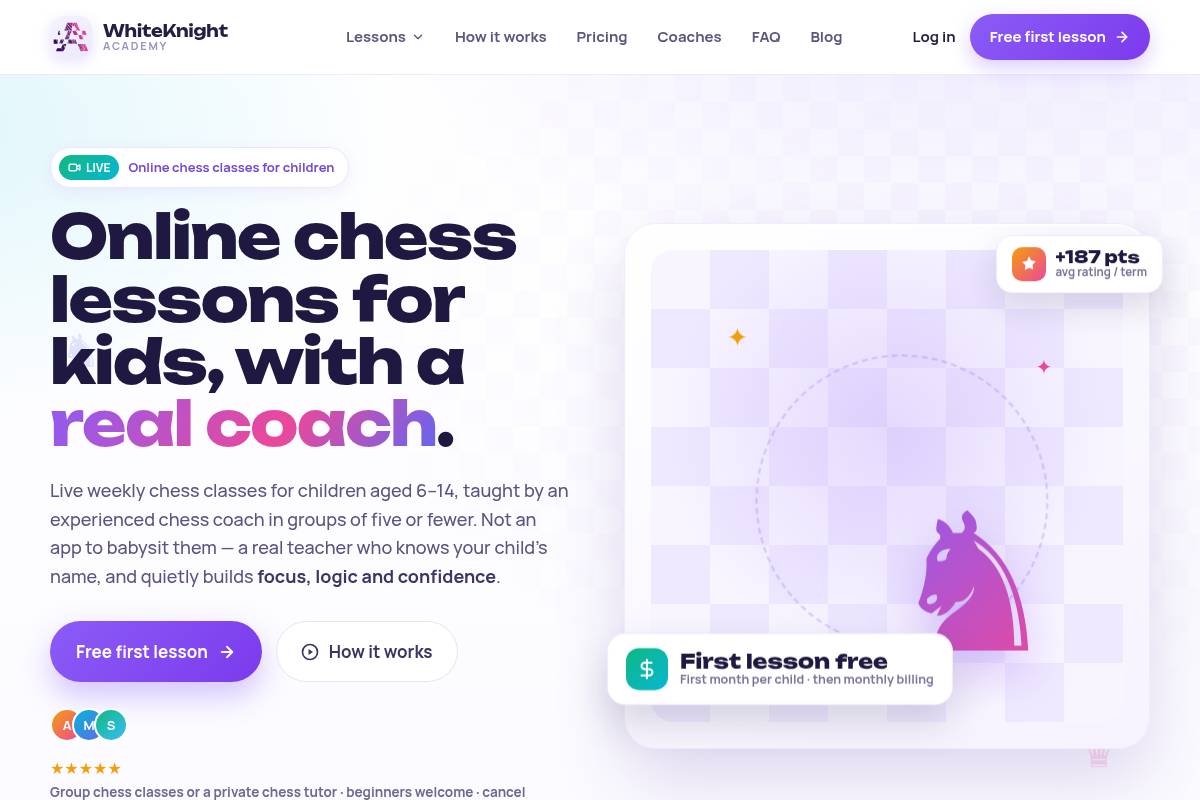
WhiteKnight Academy is an online chess school known for small live group classes led by FIDE-rated coaches. It isn't free, but it's a strong contender. Programs include homework and game analysis, with groups capped at five or fewer students.
Key Features
- Small Class Sizes: Groups of five or fewer keep instruction personal.
- FIDE-Rated Coaches: Live instruction, not recorded videos.
- Free Trial Lesson: The first one-on-one lesson is free. A monthly subscription applies afterward and can be canceled anytime.
- Homework and Game Review: Structured follow-up reinforces lessons between sessions.
Best For
WhiteKnight suits parents who want small, live group instruction with consistent weekly feedback, especially beginners and improvers who thrive on scheduled coaching.
Pros and Cons
- Pro: Groups are genuinely small, unlike larger webinar-style classes.
- Pro: A free first lesson makes evaluation easy.
- Con: Monthly pricing is higher than free apps or puzzle sites.
- Con: A smaller catalog and community than larger platforms.
Rating: 7.7/10
7. Chessly: Best for Gamified Courses from GothamChess
7. Chessly: Best for Gamified Courses from GothamChess
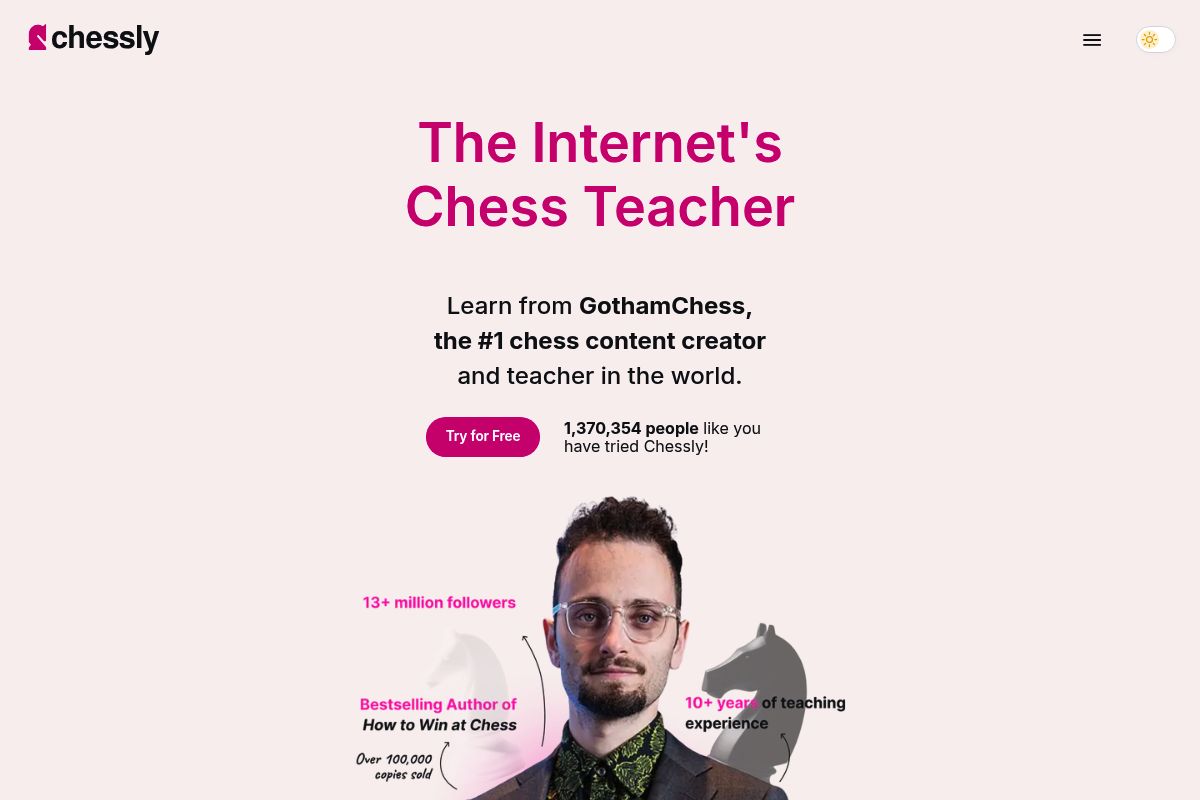
Chessly is an online course platform created by IM Levy Rozman, better known as GothamChess. It combines more than 70 structured video courses, gamified progress tracking, and an AI sparring bot, and has attracted more than 1.3 million users.
Key Features
- Large Course Library: Over 70 courses on openings, tactics, and broader skills.
- AI Sparring Bot: An AI opponent for practice between lessons.
- Gamified Progress: Experience points, achievements, and leaderboards.
- Subscription Pricing: Chessly Plus costs approximately $9.99 per month or $89.99 per year. Free trial chapters are available for individual courses.
Best For
Chessly suits kids who already know GothamChess from YouTube, and works especially well for beginner-to-intermediate openings. Players rated above roughly 1600 will likely find it less useful.
Pros and Cons
- Pro: Draws on a hugely popular, beginner-friendly instructor.
- Pro: Annual pricing is affordable compared with live coaching.
- Con: Mainly aimed at intermediate players.
- Con: No live coaching or dedicated parent dashboard.
Rating: 7.6/10
8. Chess24: Best for GM Commentary and Tournament-Based Learning
8. Chess24: Best for GM Commentary and Tournament-Based Learning
Chess24 is a chess media and learning platform mixing structured courses, free videos, and live tournament broadcasts. It's best known for grandmaster commentary and tournament-based learning.
Key Features
- Free Instructional Videos: Strategy, tactics, and famous-game breakdowns without a subscription.
- Live Tournament Broadcasts: Grandmaster commentary during major events.
- Premium Course Library: A paid subscription unlocks the full broadcast archive and comprehensive opening courses.
- Board-First Lesson Design: Annotated moves tied to openings, tactics, and position drills.
Best For
Chess24 suits families whose kids enjoy watching professional games and learn by example. It works best as a supplemental, media-first resource rather than a primary teacher for young beginners.
Pros and Cons
- Pro: A substantial free video library and thorough tournament coverage.
- Pro: High-quality grandmaster commentary.
- Con: The most in-depth courses sit behind a premium subscription.
- Con: No child-safety features or parent progress dashboard.
Rating: 7.4/10
9. FIDE Online Arena (World Chess): Best for Official FIDE-Recognized Ratings
9. FIDE Online Arena (World Chess): Best for Official FIDE-Recognized Ratings
FIDE Online Arena, run by World Chess, is the official online platform of the International Chess Federation and the only online platform where players can earn official FIDE-recognized ratings and online titles.
Key Features
- Official FIDE Titles: Arena Grandmaster, Arena International Master, Arena FIDE Master, and Arena Candidate Master, earned through rated play.
- Free Registration: Sign up at no cost.
- Daily Free Puzzles: Free-subscription members can solve up to 5 puzzles a day.
- Coach Mode: A post-game assistant helps review mistakes after casual games.
Best For
FIDE Online Arena suits competitive kids ready for an officially recognized rating path. It's less suited to absolute beginners who need foundational lessons.
Pros and Cons
- Pro: The only platform offering FIDE-recognized online ratings and titles.
- Pro: Free registration lets casual play start at no cost.
- Con: A paid membership and identity verification are required for official ratings and Arena titles.
- Con: Learning tools are more basic than dedicated course platforms.
Rating: 7.3/10
10. Remote Chess Academy: Best for Self-Paced GM Video Courses
Remote Chess Academy offers self-paced video courses taught by grandmasters and titled players. Courses are sold individually, often at promotional prices, suiting independent learners who want to own their content outright.
Key Features
- GM-Led Video Courses: Lessons recorded by grandmasters and titled coaches on openings, tactics, and strategy.
- Per-Course Ownership: One-time access rather than an ongoing subscription.
- Frequent Sales: Promotional pricing creates cost-saving opportunities.
- Self-Paced Format: Kids learn on their own schedule, allowing flexible learning.
Best For
Remote Chess Academy suits independent learners and older kids who want a library of lessons to revisit rather than a monthly fee.
Pros and Cons
- Pro: One-time ownership offers long-term value.
- Pro: Instruction comes from genuinely titled coaches.
- Con: No live coaching, parent dashboard, or child-specific safety design, limiting interactive support.
- Con: Per-course costs add up for families wanting a full curriculum.
Rating: 7.1/10
Full Comparison: Best Free Online Chess Lessons for Kids in 2026
| Tool | Live Coaching | AI Tools | Free Tier | Parent Dashboard | Child Safety Design | Starting Price |
|---|---|---|---|---|---|---|
| CircleChess | ✓ | ✓ | ✓ | ✓ | ✓ | ~$2-3/hr (group) |
| Chessable | ✗ | ✗ | ✓ | ✗ | ✗ | Free / $11.99/mo |
| ChessTempo | ✗ | ✗ | ✓ | ✗ | ✗ | Free / ~$25/yr |
| Duolingo Chess | ✗ | ✗ | ✓ | ✗ | ✗ | Free |
| ChessDojo | ✗ | ✗ | ✓ | ✗ | ✗ | Free / $12/mo |
| WhiteKnight Academy | ✓ | ✗ | ✓ | ✗ | ✓ | Free trial / $79/mo |
| Chessly | ✗ | ✓ | ✓ | ✗ | ✗ | Free trial / $9.99/mo |
| Chess24 | ✗ | ✗ | ✓ | ✗ | ✗ | Free / Premium |
| FIDE Online Arena | ✗ | ✗ | ✓ | ✗ | ✗ | Free / PRO for rating |
| Remote Chess Academy | ✗ | ✗ | ✗ | ✗ | ✗ | Per-course |
How to Choose the Right Chess Platform for Your Child
By Age Group
For ages 4 to 7, start with gamified tools like Duolingo Chess before moving to structured live classes. Ages 7 to 12 benefit from a live program such as CircleChess or WhiteKnight Academy. Teens aiming for a rating should consider ChessDojo, ChessTempo, or FIDE Online Arena.
By Budget
For zero ongoing cost, use Duolingo Chess, Chess24's free library, and ChessTempo's free puzzle tier. For more structure and live feedback, CircleChess's group classes at roughly $2-3 per hour offer one of the best value ratios among live-coached options.
By Goal
For exposure and fun, Duolingo Chess or Chessly work well. For a serious rating pathway with mentorship, CircleChess's FIDE pathway, monthly assessments, and parent dashboard offer the clearest route to competitive play.
What Is Online Chess Coaching for Kids?
Online chess coaching for kids covers any structured or self-paced program, delivered by video call, app, or browser, that teaches rules, tactics, and strategy. The category ranges from free puzzle sites to live academies with real instructors.
| Metric | Typical Range (2026) |
|---|---|
| Free self-paced apps | $0/month |
| Live group classes (budget) | $2-3/hour |
| Small-group live classes | $79-99/month |
| Premium subscription platforms | $9.99-129/month |
| Private one-on-one lessons | $20-150+/hour |
The market is growing quickly. The global online chess instruction market has reached roughly $270 million in 2026 and is projected to climb toward $860 million by 2035, driven largely by demand for structured kids' programs. For a more detailed primer, see SOHN - Lessons (Official Video).
Conclusion: Which Is the Best Free Online Chess Lesson Platform for Kids in 2026?
After testing all ten platforms, CircleChess remains our top pick. It combines live instruction from a curriculum designed by GM Vishnu Prasanna, a 24x7 AI coach, a parent dashboard, and a genuine FIDE rating pathway. A free demo class lets you try it with no risk. For purely free tools, Duolingo Chess and Chess24 are excellent starting points, while ChessTempo and ChessDojo suit kids ready for deeper, rating-based improvement.
Frequently Asked Questions
What are the best free online chess lessons for kids in 2026?
Top options include CircleChess (free demo class into full live coaching), Duolingo Chess (fully free gamified beginner course), and Chess24 (free video lessons and tournament commentary).
Is CircleChess really free for kids?
CircleChess offers free demo classes so families can try the curriculum first. Ongoing live group classes run roughly $2-3 per hour.
What age should a child start online chess lessons?
Most coaches recommend structured lessons between ages 5 and 7, though gamified apps like Duolingo Chess can introduce basics earlier.
Which free online chess classes for kids are safest for young children?
Live, instructor-led platforms such as CircleChess and WhiteKnight Academy offer more supervised, moderated environments than open-ended apps, which matters most for children under 10.
Do free chess apps actually improve a child's rating?
Free apps and puzzle sites meaningfully build tactical pattern recognition. Structured progress toward an official rating usually requires live coaching or a rating-based plan like CircleChess or ChessDojo.
What is the difference between live chess coaching and self-paced apps?
Live coaching provides real-time feedback, accountability, and a human instructor who addresses specific mistakes. Self-paced apps rely on preset lessons and puzzles completed alone.
How much do online chess courses for kids cost in 2026?
Prices range from free apps to $150 or more per hour for private GM coaching. Budget live group classes like CircleChess start around $2-3 per hour, and small-group academies typically run $79-99 per month.
Can online chess lessons help with a child's focus and critical thinking?
Yes. Programs that combine psychology and performance training with tactics, such as CircleChess's approach, are designed to build focus, resilience, and critical thinking, not just board skill.
Methodology: This listicle was compiled by researching official pricing pages, product documentation, and independent reviews for each platform as of October 2026. Ratings reflect a weighted evaluation of the criteria above and are general guidance, not a guarantee of fit for every child.