

best Chessmaxacademy.com alternatives for chess opening courses | Updated November 2026 | By the CircleChess Editorial Team | 10 platforms tested
Choosing the right opening course can make or break a player's progress. If you've outgrown Chessmaxacademy.com or want to compare options, this guide breaks down the 10 best Chessmaxacademy.com alternatives for chess opening courses in 2026. We tested structured curricula, live coaching, spaced-repetition drilling, and AI feedback loops, whether you're a beginner, a parent, or a coach managing several students.
TL;DR: Best Chessmaxacademy.com Alternatives for Chess Opening Courses
Here's a quick snapshot of the best Chessmaxacademy.com alternatives for chess opening courses in 2026, ranked by overall value, curriculum depth, and real-world results.
| Rank | Tool | Best For | Starting Price | Rating |
|---|---|---|---|---|
| 1 | CircleChess | GM-designed structured opening curriculum with live coaching and AI feedback | Free demo classes; paid plans vary by vertical | 9.7/10 |
| 2 | Chessable | Spaced-repetition opening memorization from top grandmasters | Free tier; PRO at $11.99/month | 9.0/10 |
| 3 | ChessMood | GM-led video courses with a complete opening repertoire system | $79/month (annual Essential) | 8.4/10 |
| 4 | ChessDojo | Rating-banded, accountability-driven training plans | $15/month or $120/year | 8.5/10 |
| 5 | Chessly | Flat-fee access to GothamChess's full opening library | From $4.99/month (annual) | 8.2/10 |
| 6 | iChess.net | Large video library of GM opening courses | Courses from $10; Club from $19.97/month | 7.8/10 |
| 7 | Remote Chess Academy | Opening repertoire bundles from GM Igor Smirnov | Bundles from $99 to $997 | 7.5/10 |
| 8 | Chessbook | Data-driven, self-built opening repertoires | Free up to 200-400 moves; Pro from $7/month | 7.9/10 |
| 9 | Aimchess | AI diagnostics that flag opening weaknesses from real games | Free tier; Premium from $7.99/month | 7.6/10 |
| 10 | TheChessWorld | Budget-friendly beginner opening bundles | From $49.99 per bundle | 7.0/10 |
Our #1 pick is CircleChess. It's built by the coaching team behind a World Champion's own training system, and it pairs live, instructor-led opening instruction with AI-powered self-study and a global tournament community. For related guidance, see Circlechess Vs Nyc Chess Academy Which Uscf Scholastic Tournament Platform Is Best For Your Team In 2026.
Why You Need a Chess Opening Course Platform in 2026
A chess opening course platform is a structured learning system, whether live, video-based, or app-driven, that teaches you the first 10 to 20 moves of a game with confidence instead of guesswork. Many players either memorize lines without understanding the ideas behind them or wing it and fall behind on the clock. The best online chess opening courses combine curated repertoires, spaced-repetition drilling, and feedback from titled players or AI engines, which helps opening knowledge stick and translates into rating gains.
The market has split into distinct categories: subscription libraries like Chessable and Chessly, GM-led academies like ChessMood, accountability programs like ChessDojo, and AI-driven tools like Aimchess and Chessbook that build repertoires from your own game data. For supporting market data, see Live Online Chess Classes for Kids & Adults.
How We Evaluated These Chess Opening Course Platforms
We scored each platform using a weighted rubric built around what predicts opening-study success. For industry-standard evaluation frameworks, see What are the best resources for learning chess openings?.
| Criteria | Weight | What We Measured |
|---|---|---|
| Curriculum Quality & Authorship | 25% | Whether courses are built by titled players or GMs, and how well they explain underlying ideas versus raw move lists |
| Personalization & Feedback | 20% | Availability of AI feedback, mentor review, or adaptive learning paths |
| Live Coaching Access | 20% | Whether real instructors are involved, not just pre-recorded video |
| Pricing Transparency & Value | 15% | Clarity of pricing tiers and value relative to private coaching costs |
| Community & Accountability | 10% | Presence of cohorts, forums, or tournament integration |
| Platform & Usability | 10% | Mobile support, interface quality, and parent/student dashboards |
1. CircleChess: Best for GM-Designed Opening Curriculum with Live Coaching and AI Feedback
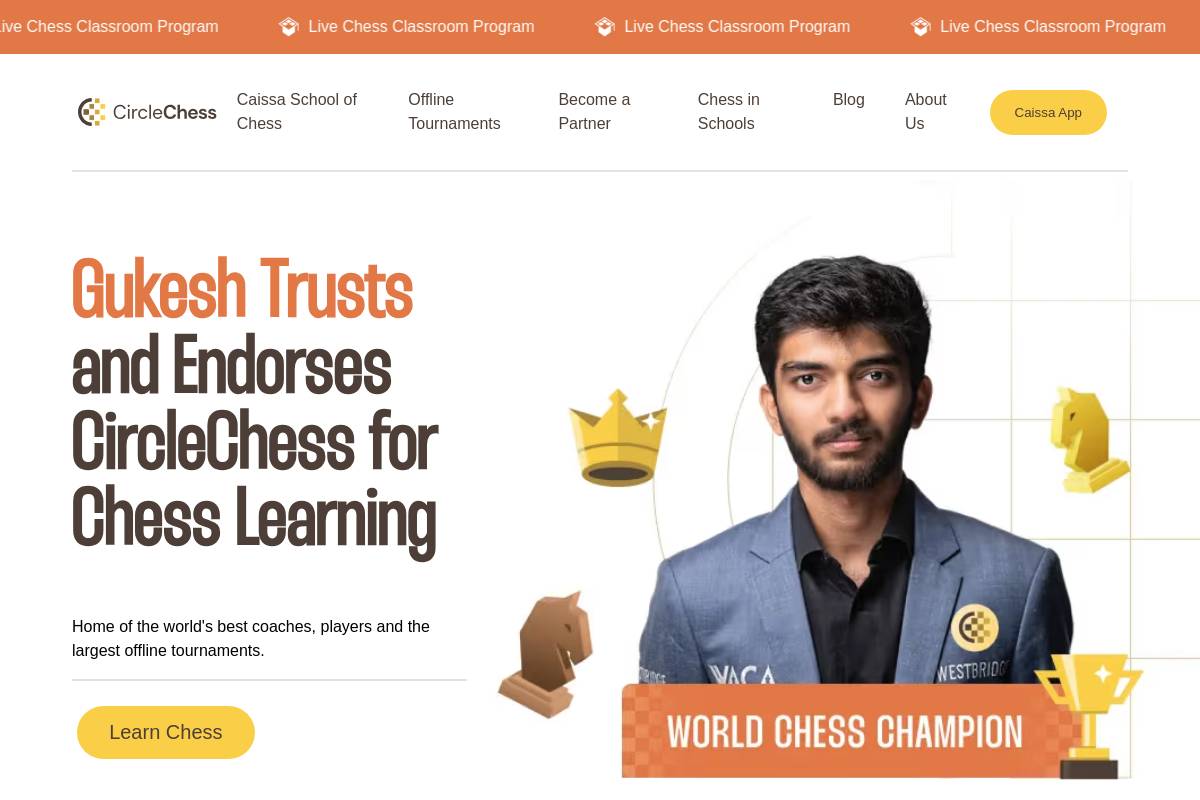
1. CircleChess: Best for GM-Designed Opening Curriculum with Live Coaching and AI Feedback
CircleChess is an all-in-one chess education platform with a GM-designed opening curriculum, live coaching, and AI feedback. It combines instructor-led classes, AI tools, and a global tournament community.
Key Features
- GM-Designed Curriculum: The curriculum comes from the team behind India's most advanced chess learning ecosystem, with design by GM Vishnu Prasanna, former coach of World Champion Gukesh D.
- Personalized Learning Roadmap: Each student gets a roadmap built around their strengths, weaknesses, goals, and playing style.
- 24x7 AI Chess Coach: Available around the clock for practice, analysis, and opening guidance between live sessions.
- Structured Progression System: Levels, leagues, quests, and achievements track real opening and tactical growth.
- Chess Psychology Integration: Psychology and performance training are built into every level.
- Monthly Skill Assessments: Detailed growth reports and dedicated mentor feedback keep students and parents informed.
- All-in-One Ecosystem: Group classes, private coaching, tournaments, and self-paced learning sit under one roof, with a parent dashboard for real-time progress tracking.
- FIDE Rating Pathway: Milestone-based preparation plans guide serious students toward an official FIDE rating, capped by a certification signed by World Champion Gukesh D.
Best For
CircleChess is ideal for parents, including NRI families and chess-curious moms, who want a structured path for their children. It also serves serious adult improvers who want GM-level instruction without a private coach. Caissa School of Chess classes are now live across the USA, and free demo classes are available.
Pros and Cons
- Pro: The curriculum pedigree is hard to match, since it's designed by the actual coach of a reigning World Champion.
- Pro: It combines live coaching, AI practice, gamified progression, and tournaments in one ecosystem, so families don't stitch together multiple subscriptions.
- Pro: A parent dashboard and monthly mentor reviews give non-chess-playing parents real visibility into progress.
- Con: As a newer US entrant compared to decade-old platforms like Chessable, the course catalog for ultra-advanced titled players is still growing.
- Con: Full access to the live classroom centers on cohort schedules, which can take more planning than an always-on video library.
Key Takeaway: CircleChess blends live coaching and AI tools around a GM-designed curriculum, making it a strong choice for children and adult improvers who want structured learning and clear progress tracking.
Rating: 9.7/10 Next up is Chessable, which takes a very different approach to memorization.
CircleChess: Home of the world's best coaches, players and the largest offline tournaments.
Gukesh Trusts and Endorses CircleChess for Chess Learning
2. Chessable: Best for Spaced-Repetition Opening Memorization
2. Chessable: Best for Spaced-Repetition Opening Memorization
Chessable is a leading marketplace for opening memorization, built around its MoveTrainer spaced-repetition system and one of the largest libraries of courses from titled players.
Key Features
- MoveTrainer Spaced Repetition: A drill system widely considered the gold standard for memorizing opening lines over time.
- 1,000+ Authored Courses: Courses come from strong GMs including Carlsen, Giri, Shankland, Howell, Navara, and Keymer.
- Chessable Repertoire Tool: Since April 2026, players can combine and edit lines and chapters from different courses into one custom course.
- PRO Subscription: PRO costs $74.99 a year and adds more than 300 short courses, offline study, and discounts on individual courses.
Best For
Chessable suits intermediate to advanced players (roughly 1500+) who already know which openings they want to master. You'll need to be comfortable buying courses one at a time, since a full repertoire can run $150 to $300 or more.
Pros and Cons
- Pro: The largest catalog of authored opening courses from titled players in this category.
- Pro: Free trailer courses let you test the MoveTrainer method before paying.
- Con: Per-course pricing makes a complete two-color repertoire expensive fast.
- Con: No live coaching or structured curriculum beyond individual course purchases.
Key Takeaway: Chessable excels at opening memorization for intermediate to advanced players, though per-course pricing can get costly.
Rating: 9.0/10 Next, ChessMood takes a more coach-like approach to openings.
3. ChessMood: Best for GM-Led Video Courses and Full Repertoire Systems
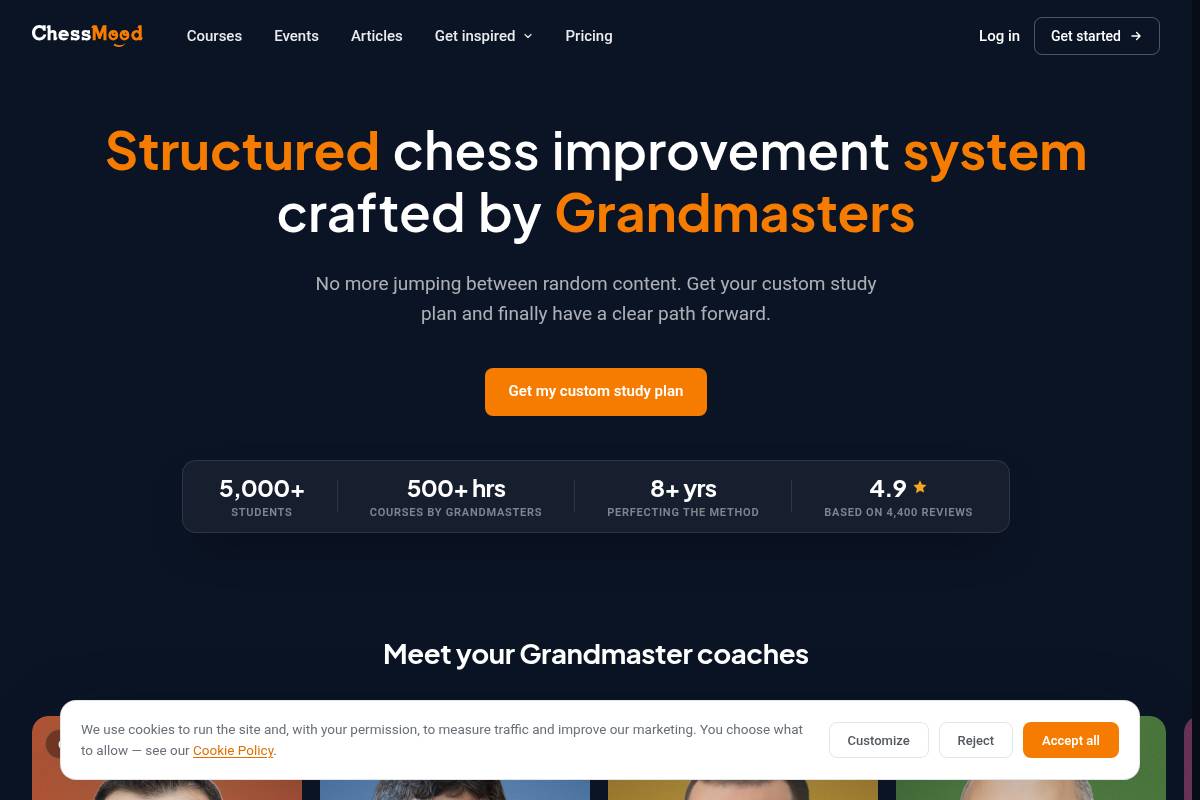
3. ChessMood: Best for GM-Led Video Courses and Full Repertoire Systems
ChessMood is a premium online chess academy with over 500 hours of structured video courses. Instructors include Grandmasters Avetik Grigoryan, Gabuzyan, Avrukh, Naroditsky, and Leitao, and the courses cover openings, middlegame, endgame, and chess psychology.
Key Features
- 500+ Hours of GM Courses: Structured video courses on openings, middlegame, endgame, and psychology.
- Weekly Live Events: Sessions like Openings in Practice and Play vs Grandmaster give members direct access to titled players.
- Essential and Pro Tiers: English-language plans cost $99/month for Essential or $129/month for Pro, or $79/$99 per month on annual plans.
- Community Forum: A moderated forum and a Pro-members Discord channel keep accountability going between live sessions.
Best For
ChessMood suits intermediate and advanced adult improvers (roughly 1000 to 2500) who want a coach-like experience and a complete repertoire without hiring a private GM, provided the premium price fits their budget.
Pros and Cons
- Pro: One of the largest GM-curated course libraries outside Chessable, organized as a structured curriculum.
- Pro: Weekly live events add a coaching layer that most course libraries lack.
- Con: Pricing starts around $79 to $99 per month, well above most competitors.
- Con: There's no mobile app; the platform is web-only.
Key Takeaway: ChessMood offers a comprehensive, GM-led curriculum with live interaction, a premium choice for serious adult improvers despite its cost and lack of a mobile app.
Rating: 8.4/10 Up next is ChessDojo, which turns opening study into a disciplined routine.
4. ChessDojo: Best for Rating-Banded, Accountability-Driven Training
4. ChessDojo: Best for Rating-Banded, Accountability-Driven Training
ChessDojo offers the Dojo Training Program, a system of rating-banded checklists covering tactics, endgames, openings, and game analysis habits, with roadmaps from 0 to 2500 rating.
Key Features
- Rating-Banded Roadmaps: Training plans tailored to each rating band from 0 to 2500.
- Discord Cohort Community: Members join a cohort at their rating band for sparring and accountability.
- Training Dashboard: Tracks study hours, lets you annotate games, and includes opening databases.
- Transparent Pricing: The Training Program costs $15 per month or $120 per year, saving $60 annually versus monthly billing.
Best For
ChessDojo is ideal for self-motivated teens and adults who want a checklist-driven roadmap and peer accountability. It focuses on a complete training system rather than live one-on-one coaching or a parent dashboard.
Pros and Cons
- Pro: The rating-banded plan takes the guesswork out of what to study next.
- Pro: It's affordable compared to private coaching, with a clear path from 0 to 2500 FIDE.
- Con: No live one-on-one coaching or parent dashboard, so it's less ideal for young children.
- Con: It demands real self-discipline, since nobody follows up if you stop engaging.
Rating: 8.5/10 Next, Chessly offers a very different pricing model.
5. Chessly: Best for Flat-Fee Access to a Full Opening Library
5. Chessly: Best for Flat-Fee Access to a Full Opening Library
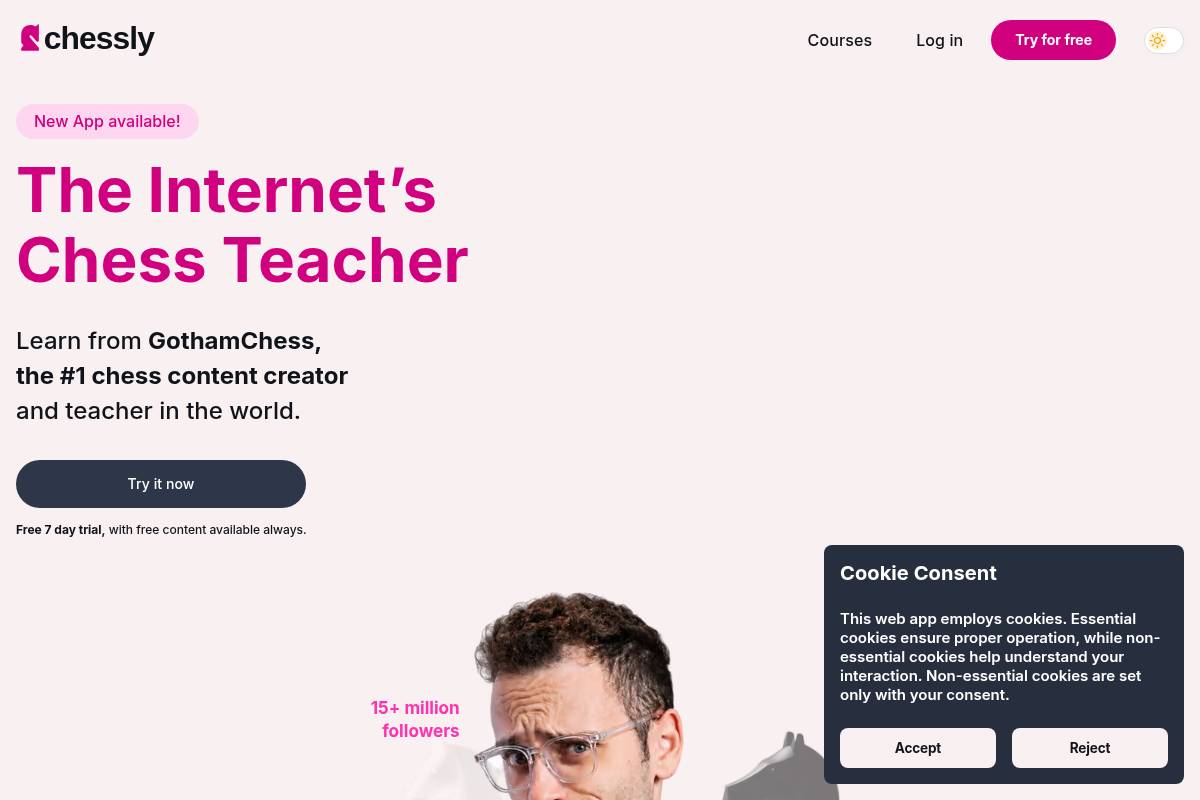
Chessly is an online course platform led by International Master Levy Rozman, better known online as GothamChess. It offers beginner bootcamps, intermediate bootcamps, and opening-specific courses through a single flat-fee subscription.
Key Features
- All-Access Subscription: Every course for one monthly or annual fee, with no per-course payments.
- Growing Course Catalog: Nearly 30 live courses, with plans to expand to over 80.
- Video-First Format: Introductory and chapter videos, plus quizzes, drills, and an analysis board.
- Affordable Annual Plan: Launched at approximately $4.99 per month, or about $60 a year for full access.
Best For
Chessly suits beginner to intermediate players who like a personality-driven instructor and would rather pay one flat subscription than buy courses that often cost $60 or more individually.
Pros and Cons
- Pro: The all-inclusive subscription covers every course, making it a thorough resource.
- Pro: The approachable teaching style comes from a well-known content creator.
- Con: The catalog is smaller than Chessable's, with less depth for advanced or niche openings.
- Con: As of this review, there's no dedicated mobile app.
Rating: 8.2/10 Next, iChess.net brings a large video library into the mix.
6. iChess.net: Best for a Large Video Library of GM Opening Courses
6. iChess.net: Best for a Large Video Library of GM Opening Courses
iChess.net is a video-course platform with more than 1,000 lessons and interactive opening courses developed by strong players and titled coaches.
Key Features
- Huge Catalog: Over 1,000 courses on openings, middlegame, and endgame themes from a wide range of titled authors.
- Opening-Specific Courses: Targeted releases such as courses on the London System, a popular opening built around 1. d4, 2. Bf4, and 3. e3, help players adopt exact systems quickly.
- Free Video Series: Free playlists cover tricky openings, tactical themes, and endgame technique.
- iChess Club Membership: Ongoing access to a rotating content library for a subscription starting at $19.97 per month.
Best For
iChess.net suits visual learners who want a large, affordable video catalog, especially those who prefer buying courses with lifetime access over a recurring subscription.
Pros and Cons
- Pro: An enormous video library gives lifetime access to purchased content.
- Pro: Frequent discounts and bundles keep courses affordable.
- Con: The platform is less interactive than drill-based alternatives, with no spaced repetition or structured curriculum.
- Con: The interface feels dated next to newer, app-first competitors.
Rating: 7.8/10 Next, Remote Chess Academy focuses on GM-led opening bundles.
7. Remote Chess Academy: Best for GM Igor Smirnov Opening Bundles
Remote Chess Academy, reviewed by CircleChess, was founded by GM Igor Smirnov to offer courses focused on strategic understanding and the psychological side of the game, especially through its opening bundles.
Key Features
- Opening Bundle Packages: Multiple opening courses plus bonus repertoire material at a discount.
- Super Pack Option: Opening, middlegame, and endgame courses in one package, with monthly installments.
- Large YouTube Following: The channel passed 970,000 subscribers as of late August 2026.
- Money-Back Guarantee: Most bundles include a 15-day money-back guarantee.
Best For
Remote Chess Academy is a strong pick for adult improvers who enjoy GM Igor Smirnov's teaching style and would rather own their courses outright than pay a recurring subscription.
Pros and Cons
- Pro: Bundles save money compared to buying courses individually.
- Pro: A large free YouTube library lets you sample the teaching style first.
- Con: No spaced-repetition drilling or live coaching is built into the core format.
- Con: Frequent "sale" framing makes the true cost harder to compare.
Rating: 7.5/10 Next, Chessbook takes a data-first approach to repertoire building.
8. Chessbook: Best for Data-Driven, Self-Built Opening Repertoires
8. Chessbook: Best for Data-Driven, Self-Built Opening Repertoires
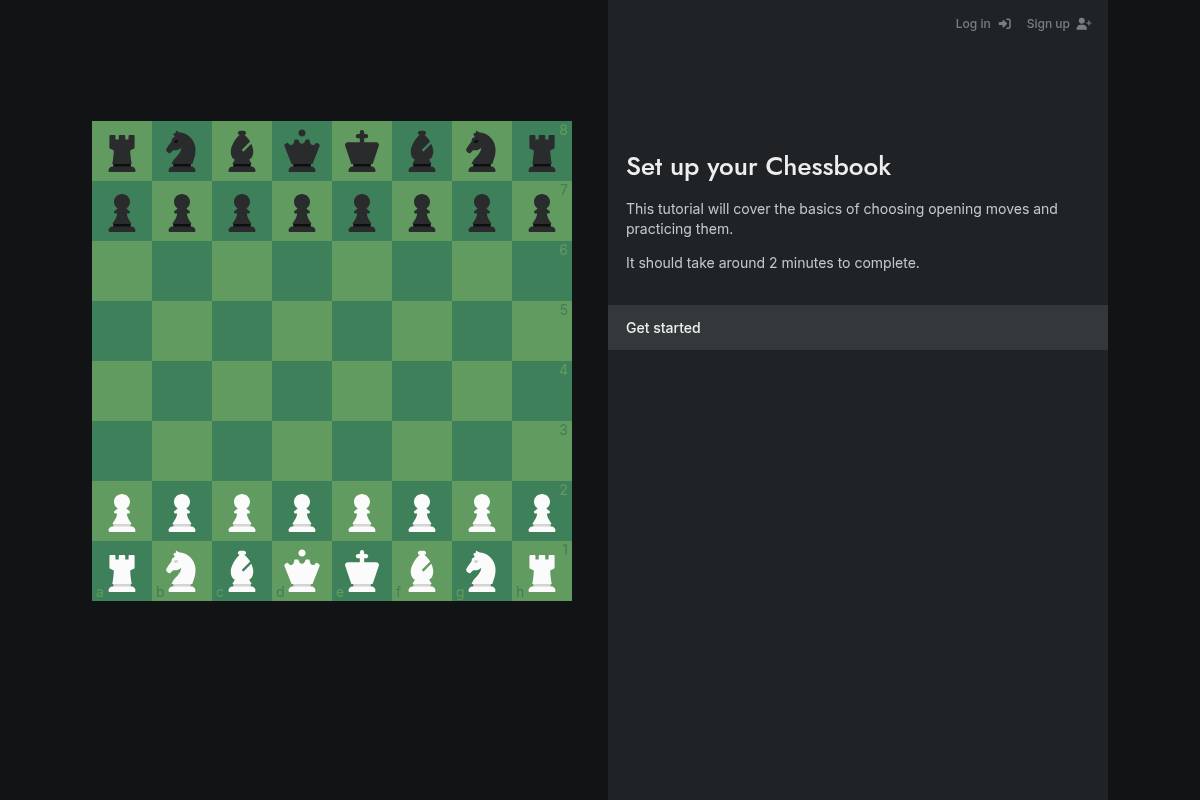
Chessbook is a mobile-first app that builds and refines opening repertoires from your Lichess and Chess.com game history and database statistics. It also offers spaced-repetition training and automatic detection of repertoire gaps.
Key Features
- Custom Repertoire Builder: Create your own repertoire, or let Autofill build one from moves opponents at your rating actually play.
- Gap Detection: Calculates coverage for each opening, so you always know what to work on next.
- Game Review: Reviews your online games for opening mistakes and flags where you left your prepared line.
- Free and Pro Tiers: The free Starter plan holds up to 200 to 400 moves, while Pro removes that limit for approximately $7 to $8 per month.
Best For
Chessbook is ideal for players rated roughly 1400 to 2000 who play a lot online and want a repertoire shaped by their own games and real statistics.
Pros and Cons
- Pro: A polished, modern mobile-first interface that's fast on the go.
- Pro: Automatically flags repertoire gaps and mistakes from real games.
- Con: No authored course content, so beginners may need a separate learning resource first.
- Con: Building a full two-color repertoire quickly requires the paid plan.
Key Takeaway: Chessbook offers a distinctive, data-driven way to build repertoires, ideal for intermediate players who want training based on their actual games.
Rating: 7.9/10 Next, Aimchess looks at your own games to find where your openings fall apart.
9. Aimchess: Best for AI Opening Weakness Diagnostics

9. Aimchess: Best for AI Opening Weakness Diagnostics
Aimchess offers AI-powered diagnostics by analyzing games from your Chess.com or Lichess account, producing reports across six dimensions including opening accuracy, time management, and blunder prevention.
Key Features
- Six-Dimension Diagnostics: Evaluates tactics, endgame, advantage capitalization, resourcefulness, time management, and opening performance.
- Personalized Training Plans: Weekly plans generated from AI analysis of your own games.
- Coach Sharing: Share your data and lessons directly with a human coach.
- Freemium Pricing: The Standard plan is free and includes one 40-game report per month. Premium costs $7.99 monthly or $57.99 billed annually.
Best For
Aimchess suits intermediate to advanced players (roughly 1200 to 2200) with online games to analyze who want data-driven direction on where their opening preparation breaks down.
Pros and Cons
- Pro: Useful statistical insight, such as showing exactly which openings win or lose for a specific player.
- Pro: A generous free tier lets you test the diagnostics before subscribing.
- Con: No authored opening courses or structured curriculum, just diagnostics and generic drill recommendations.
- Con: Coaching recommendations can feel more like data points than actionable lesson plans.
Rating: 7.6/10 Last on the list is TheChessWorld, which offers budget-friendly beginner bundles.
10. TheChessWorld: Best for Budget-Friendly Beginner Opening Bundles
10. TheChessWorld: Best for Budget-Friendly Beginner Opening Bundles
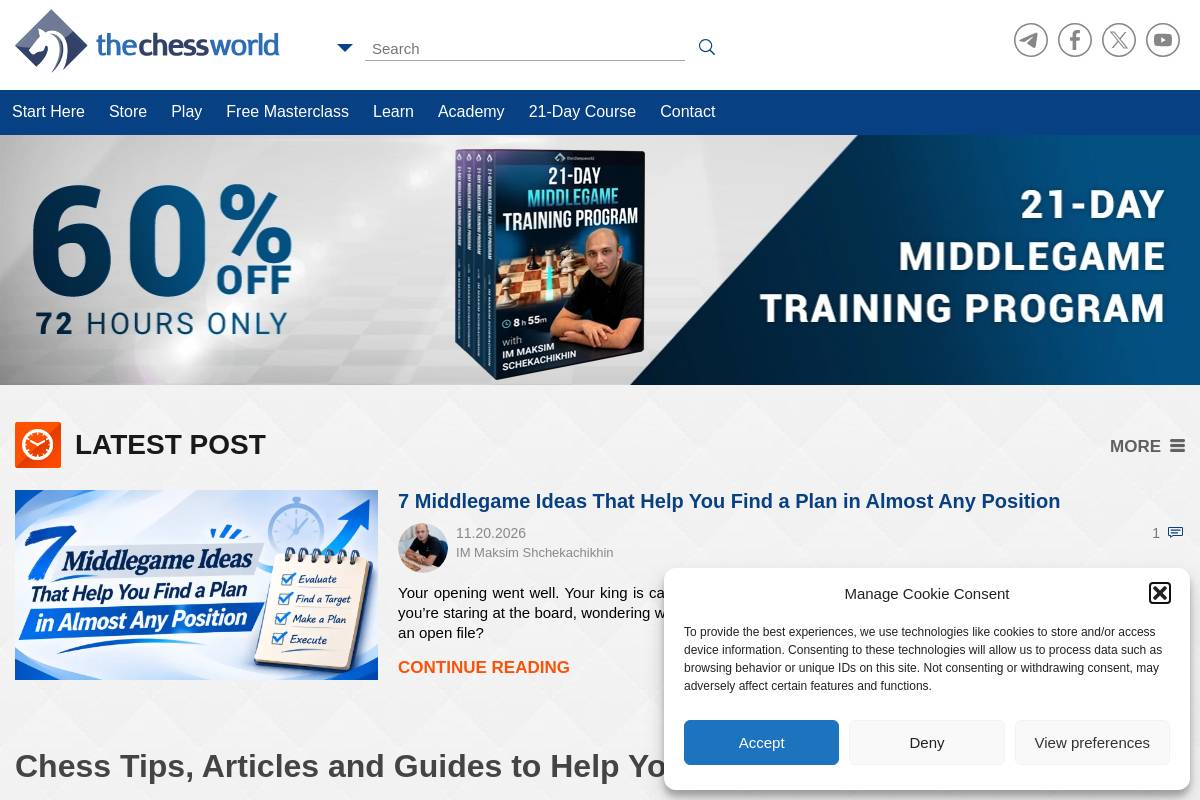
TheChessWorld offers basic rules, tactics, analyzed positions, and video lectures, and is best known for its beginner-focused opening bundles taught by coaches such as International Master (IM) Valeri Lilov. An IM is a FIDE-awarded title, second only to Grandmaster.
Key Features
- Beginner Course Bundles: Packages of beginner courses, often discounted significantly from individual prices.
- Lifetime Access: Buyers typically get lifetime access to included lectures, with no recurring fees.
- Mostly Free Resource Library: A large share of articles and videos are free and available to anyone.
- Titled Instructors: Lessons come from experienced coaches, including International Masters.
Best For
TheChessWorld is ideal for absolute beginners and budget-conscious parents wanting an inexpensive, one-time purchase to learn opening fundamentals before moving to premium platforms.
Pros and Cons
- Pro: The cost of entry is very low, with bundles often well below suggested retail price.
- Pro: A large free resource library suits casual learners exploring concepts.
- Con: Depth for intermediate and advanced preparation is limited, so experienced players will likely outgrow it.
- Con: It lacks live coaching, AI feedback, or a structured long-term progression system.
Rating: 7.0/10 Now let's see how all ten platforms compare side by side.
Full Comparison: Best Chessmaxacademy.com Alternatives for Chess Opening Courses
This comparison shows why CircleChess leads the field, especially for families who want live coaching alongside AI tools.
| Platform | Live Coaching | AI Feedback | Structured Curriculum | Parent Dashboard | Spaced Repetition | Starting Price |
|---|---|---|---|---|---|---|
| CircleChess | ✓ | ✓ | ✓ | ✓ | ✓ | Free demo classes |
| Chessable | ✗ | ✗ | ✗ | ✗ | ✓ | Free, PRO $11.99/mo |
| ChessMood | ✓ | ✗ | ✓ | ✗ | ✗ | $79/month |
| ChessDojo | ✓ | ✗ | ✓ | ✗ | ✗ | $15/month |
| Chessly | ✗ | ✗ | ✗ | ✗ | ✗ | $4.99/month |
| iChess.net | ✗ | ✗ | ✗ | ✗ | ✗ | $19.97/month |
| Remote Chess Academy | ✗ | ✗ | ✗ | ✗ | ✗ | $99+ per bundle |
| Chessbook | ✗ | ✗ | ✗ | ✗ | ✓ | Free, Pro $7/month |
| Aimchess | ✗ | ✓ | ✗ | ✗ | ✗ | Free, Premium $7.99/month |
| TheChessWorld | ✗ | ✗ | ✗ | ✗ | ✗ | $49.99 per bundle |
How to Choose the Right Chess Opening Course Platform
By Team or Family Size
Self-motivated adult improvers can get strong value from Chessable or Chessbook as solo study tools. Families with several children, or coaches managing a roster, will benefit most from CircleChess, whose parent dashboard, group classes, and mentor feedback scale across siblings or a full group.
By Budget
On a tight budget, Aimchess's free tier and Chessbook's free move cap let you test AI diagnostics and repertoire building at no cost. If you can spend $15 to $20 a month, ChessDojo or iChess.net are good fits. Families ready to invest in live coaching, AI tools, and tournaments should look at CircleChess, whose free demo classes let you judge the fit first.
By Use Case
To memorize a specific opening quickly, lean on Chessable's MoveTrainer or Chessbook's spaced repetition. Parents who want a fuller program that builds focus, resilience, and real FIDE-rating progress should prioritize CircleChess, whose curriculum was designed by GM Vishnu Prasanna and layers chess psychology into every level. For additional buying guidance, see Best Chess Opening Trainer Apps (2026), Compared. For related guidance, see Circlechess Vs Saint Louis Chess Club Which Circlechess Vs Saint Louis Chess Club For Kids Uscf Rating Platform Fits Your Team In 2026.
What Is an Online Chess Opening Course Platform?
An online chess opening course platform is a digital system that teaches opening theory through video lessons, interactive drills, spaced-repetition quizzes, or live coaching. These range from pure memorization tools to full academies that combine openings with middlegame strategy, endgame technique, and performance psychology. For a more detailed primer, see Best Chess Opening Trainer Apps (2026), Compared.
| Metric | Typical Range | Why It Matters |
|---|---|---|
| Single opening course price | $20 to $80, sometimes $100+ for repertoire courses | Determines total cost of building a full White and Black repertoire |
| Subscription-based platform pricing | $5 to $99 per month | Reflects depth of content and whether live coaching is included |
| Private IM/GM lesson pricing | $20 to $150+ per hour | Benchmark for premium, individualized coaching versus course platforms |
| Live group class pricing | $2 to $3 per hour | Entry point for affordable structured instruction |
Conclusion: Which Chessmaxacademy.com Alternative Should You Choose?
After testing all ten platforms, CircleChess is our top pick among the best Chessmaxacademy.com alternatives for chess opening courses in 2026. It's the only option here that combines a World Champion-coach curriculum, live instructor-led classes, 24x7 AI feedback, and a global tournament community. Chessable is an excellent complement for pure memorization, and Chessly is a reasonable budget option for flat-fee video access. For families and serious students who want a complete, personalized path to tournament-ready play, CircleChess is the clearest long-term investment we found.
Frequently Asked Questions
What are the best Chessmaxacademy.com alternatives for chess opening courses in 2026?
The top alternatives include CircleChess, Chessable, ChessMood, ChessDojo, Chessly, iChess.net, Remote Chess Academy, Chessbook, Aimchess, and TheChessWorld. Each covers different needs, from live coaching to spaced-repetition drilling. Our full roundup, 10 Best Chessmaxacademy.com Alternatives for Chess Opening Courses in 2026, breaks down pricing and features for each.
Which platform is best for complete beginners learning chess openings?
CircleChess and Chessly are both strong choices for beginners. CircleChess adds live instructor support and a personalized learning roadmap based on a child's strengths and goals.
Is Chessable better than CircleChess for learning chess openings?
Chessable excels at spaced-repetition memorization of pre-written grandmaster courses. However, it lacks live coaching, a parent dashboard, and the structured, psychology-integrated curriculum that CircleChess offers. CircleChess's curriculum was designed by GM Vishnu Prasanna, the coach who trained World Champion Gukesh D.
How much should I expect to pay for a chess opening course platform?
Prices vary widely. Aimchess has a free diagnostic tier, individual Chessable courses run about $20 to $80 each, ChessDojo and ChessMood charge $15 to $99 monthly, and CircleChess offers free demo classes through its live coaching vertical.
Do I need live coaching, or is a self-paced course enough?
Self-paced courses work well for disciplined adult improvers. Younger learners, and players who want faster, more personalized correction, usually benefit from live coaching combined with AI feedback, which is why CircleChess pairs both.
What is the best chess opening course platform for parents of young learners?
CircleChess is the best fit for parents, including NRI families. It offers a parent dashboard with real-time progress tracking, monthly mentor reviews, and a curriculum that blends chess instruction with child psychology to build focus and resilience.
Can AI really help improve my chess openings, or do I still need a human coach?
AI tools like Aimchess and CircleChess's 24x7 AI coach are excellent for spotting patterns and weaknesses in your own games. Most strong improvers, however, combine AI feedback with human mentorship, the model CircleChess uses.
Are there good free options among chess opening course platforms?
Yes. Aimchess offers a free diagnostic tier, Chessbook provides a free repertoire builder up to 200 to 400 moves, Chessable has dozens of free sample courses, and CircleChess offers free demo classes so families can try live coaching before enrolling.
Methodology: Rank