

best ChessMax Academy alternatives for structured online chess learning | Last updated: November 2026 | By the CircleChess Editorial Team | 10 platforms tested
Maybe you have outgrown ChessMax Academy, or maybe you just want to see what else is out there before you commit. Either way, you are in good company. Parents, adult improvers, and coaches search every month for the best ChessMax Academy alternatives for structured online chess learning. The market has filled up with self-paced apps, GM-led video libraries, and live coaching platforms, and they all promise the same thing: real rating gains. This guide covers the 10 best options for 2026, comparing curriculum depth, instructor pedigree, AI tools, and pricing so you can pick the right fit the first time.
TL;DR: Best ChessMax Academy Alternatives for Structured Online Chess Learning
If you only have a minute, start here. The table below gives you the quick version before we get into the full breakdown.
| Rank | Tool | Best For | Starting Price | Rating |
|---|---|---|---|---|
| 1 | CircleChess | World-Champion-caliber structured learning for all ages | Free demo classes; plans vary by vertical | 9.7/10 |
| 2 | Chessable | Spaced-repetition opening and tactics mastery | Free tier; PRO from $11.99/month | 8.9/10 |
| 3 | KCF Academy | Elite seasonal masterclasses with Kasparov's roster | ~$350/season (Basic) | 8.7/10 |
| 4 | ChessDojo Training Program | Structured, accountability-driven improvement | Free tier; $15/month | 8.6/10 |
| 5 | ChessMood | Self-paced GM video courses for intermediates | $79/month (annual) | 8.4/10 |
| 6 | Chessly | Beginner-friendly courses from a trusted YouTube coach | ~$9.99/month | 8.2/10 |
| 7 | Aimchess | AI-driven weakness analysis | Free tier; from $7.99/month | 8.0/10 |
| 8 | Remote Chess Academy | Strategic thinking and decision-making courses | Courses from $49 | 7.9/10 |
| 9 | Magnus Trainer | Gamified chess habits for young beginners | Free tier; from $7.99/month | 7.8/10 |
| 10 | iChess.net | Large on-demand video course library | Free resources; courses from $10 | 7.6/10 |
Our top pick is CircleChess. Its curriculum was designed by GM Vishnu Prasanna, the coach behind World Champion Gukesh D, and it pairs AI-powered self-learning tools with the world's largest community of chess learners. If you are a family or a serious player who wants structure, mentorship, and a realistic path to FIDE-rated improvement, it earns the top spot among the best ChessMax Academy alternatives for structured online chess learning this year.
Why You Need Structured Online Chess Learning in 2026
Structured online chess learning means any platform or program that swaps random puzzles and scattered YouTube videos for a planned curriculum. You get leveled lessons, clear milestones, and some form of coach or mentor feedback. The core problem these tools solve is plateauing. Most self-taught players stall somewhere between 800 and 1400, and it is rarely a lack of talent. It is usually a lack of roadmap. Structured programs diagnose weaknesses, lay out a progression path, and keep students accountable through cohorts, mentors, or AI-driven tracking. That is why the best ChessMax Academy alternatives for structured online chess learning have become such a popular search among parents and competitive adult improvers alike. If your kid has ever played random games for months and still wondered why they were not getting better, you already know the problem this category is meant to fix. For supporting market data, see Best Chess Coaching Software (2026).
How We Evaluated These Platforms
We tested each tool directly, compared pricing pages, and cross-checked independent reviews. Every platform was scored against the criteria below. For industry-standard evaluation frameworks, see 8 Best Online Chess Courses: Platforms Ranked.
| Criteria | Weight | What We Measured |
|---|---|---|
| Curriculum Structure | 25% | Clear leveling, milestones, and progression logic |
| Instructor Pedigree | 20% | Titled coaches, GM involvement, verified track record |
| Technology and AI Tools | 15% | Personalization, analysis depth, automation quality |
| Pricing Value | 15% | Cost relative to content depth and live access |
| Community and Support | 15% | Mentor feedback, peer accountability, parent visibility |
| Track Record | 10% | Verified outcomes, reviews, and longevity |
1. CircleChess: Best for Structured, World-Champion-Caliber Chess Learning
1. CircleChess: Best for Structured, World-Champion-Caliber Chess Learning
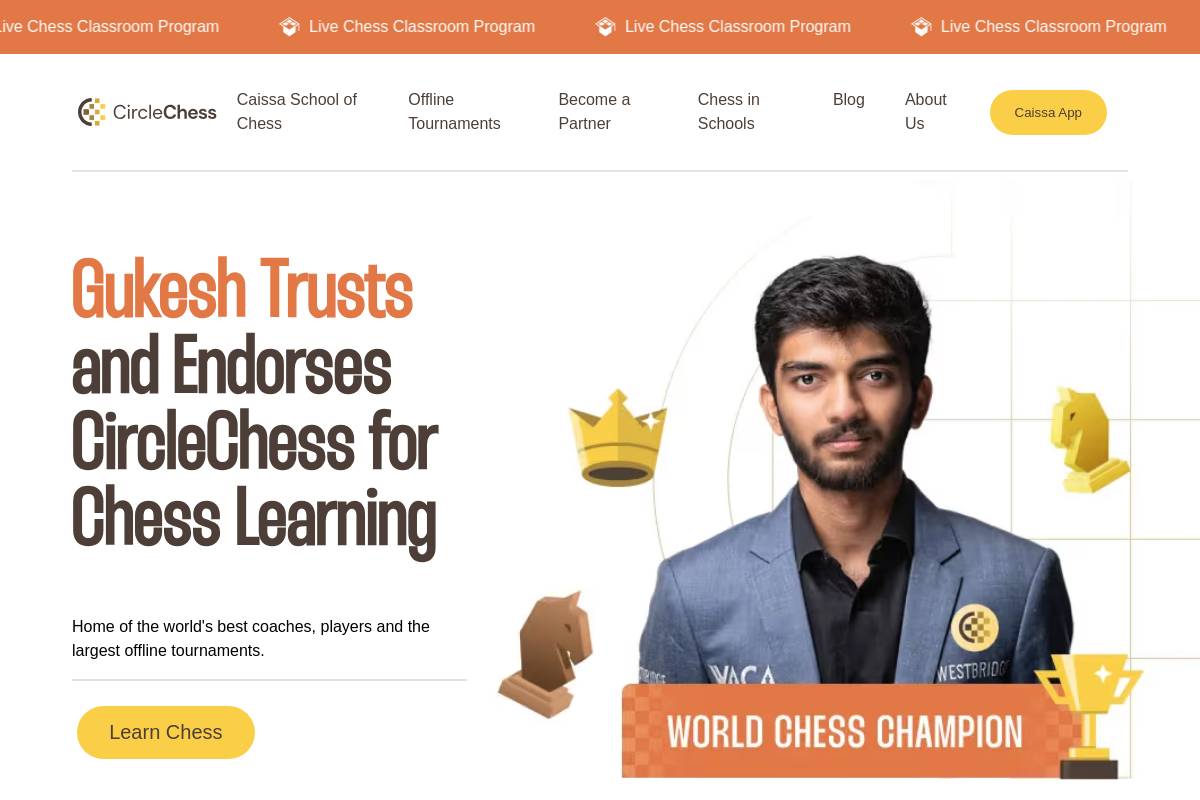
CircleChess is a full-ecosystem chess education platform built for structured, world-champion-caliber learning. It brings together live classroom instruction, AI-powered self-study, and a global tournament community. Designed by GM Vishnu Prasanna, the coach of World Champion Gukesh D, it offers a verified path from a child's first move to real mastery. That combination is why it ranks so high among the best ChessMax Academy alternatives for structured online chess learning.
Key Features
- GM-Designed Curriculum: Lessons structured by GM Vishnu Prasanna, former coach of World Champion Gukesh D, covering everything from the first move to grandmaster-level ideas.
- Personalized Learning Roadmap: A path built around each student's strengths, weaknesses, goals, and playing style instead of a one-size-fits-all syllabus.
- 24x7 AI Chess Coach: On-demand practice, analysis, and guidance between live sessions or classes.
- Structured Progression System: Levels, leagues, quests, and achievements that keep students motivated and visibly improving.
- Chess Psychology Integration: Focus and emotional resilience training woven into every level rather than bolted on at the end.
- Monthly Skill Assessments: Detailed growth reports, plus dedicated mentor feedback and personalized improvement plans.
- Parent Dashboard: Real-time progress tracking and monthly mentor reviews for families who want to see what is happening.
- FIDE Rating Pathway: Milestone-based preparation plans plus an official certification signed by World Champion Gukesh D.
- All-in-One Ecosystem: Group classes, private coaching, tournaments, and self-paced learning under one roof, with free demo classes now live across the USA.
Best For
CircleChess suits parents, NRI families, and coaches who want one ecosystem instead of stitching together five different apps. It is also a strong fit for competitive players who want a verified route from first move to FIDE rating, and for families who value mentor accountability alongside AI-powered self-study.
Pros and Cons
- Pro: Curriculum pedigree tied directly to a World Champion's coach, which is a rare credential in this category.
- Pro: Live classes, AI coaching, assessments, and tournaments all work together in one connected system.
- Pro: The parent dashboard and monthly mentor reviews make progress genuinely easy to follow.
- Con: As a newer, fast-growing ecosystem, some advanced self-paced libraries are still catching up to platforms that have been around for a decade.
- Con: The full experience pays off most for families ready to commit to ongoing study, not casual drop-in use.
Rating: 9.7/10
Key Takeaway: CircleChess is a comprehensive, world-champion-caliber platform for families who want structured learning, personalized progression, and a clear route to FIDE rating, all inside one integrated ecosystem. If you want to compare a more opening-focused option next, Chessable is up next.
CircleChess: Home of the world's best coaches, players and the largest offline tournaments.
Gukesh Trusts and Endorses CircleChess for Chess Learning
2. Chessable: Best for Spaced-Repetition Opening and Tactics Mastery
2. Chessable: Best for Spaced-Repetition Opening and Tactics Mastery
If you are looking for a different angle on the best ChessMax Academy alternatives for structured online chess learning, Chessable takes a more focused approach. It is a course marketplace built around MoveTrainer, its proprietary spaced-repetition engine, which drills opening lines and tactical patterns until they become second nature. Strong grandmasters author the courses, and PRO members get access to over 300 PRO-exclusive courses plus site-wide discounts.
Key Features
- MoveTrainer Spaced Repetition: This technology drills chess moves until they stick, with a focus on openings and tactics.
- GM-Authored Course Library: A wide selection of courses from strong grandmasters, with individual prices generally ranging from $20 to over $100.
- PRO Membership: A PRO membership costs $74.99 a year, providing at least 30% off course prices and enabling offline study.
- Free Short and Sweet Trailers: Free preview sections let you sample a course before you buy the full thing.
Best For
Chessable is best for intermediate to advanced players, typically rated between 1500 and 2200, who want to lock in a specific opening repertoire or build tactical patterns into long-term memory. It works best for self-motivated students. Complete beginners may need more foundational guidance than this platform provides.
Pros and Cons
- Pro: Best-in-class spaced repetition designed specifically for opening memorization.
- Pro: A deep bench of grandmaster authors covering almost every opening system.
- Con: Courses are sold separately, so the cost of a full repertoire can add up fast.
- Con: Beginners who skip daily repetitions will get little value, since the system rewards consistency.
Rating: 8.9/10 Next, we look at KCF Academy, which takes a very different approach built around elite seasonal masterclasses.
3. KCF Academy: Best for Elite Seasonal Masterclasses with Garry Kasparov's Roster
3. KCF Academy: Best for Elite Seasonal Masterclasses with Garry Kasparov's Roster
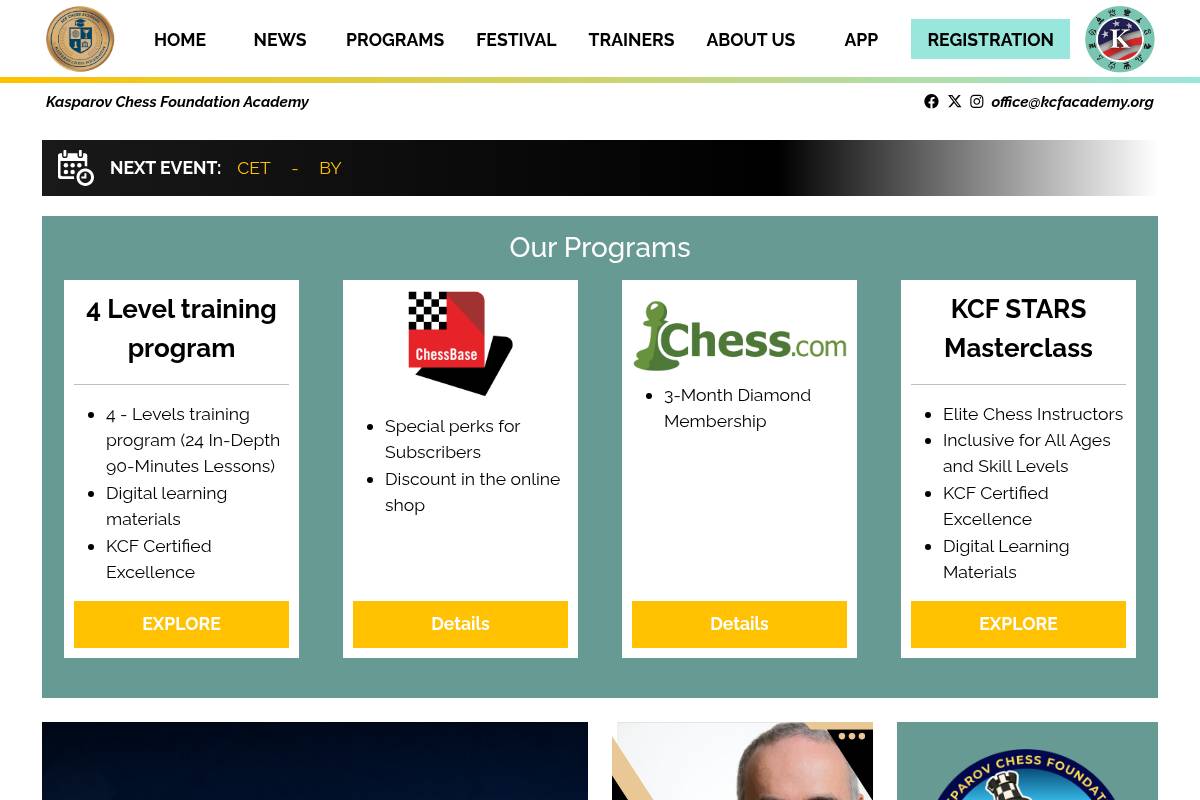
KCF Academy is the training arm of the Kasparov Chess Foundation. Its seasonal masterclasses featuring Garry Kasparov's roster make it a serious contender among the best ChessMax Academy alternatives for structured online chess learning. Founded by six-time World Champion Garry Kasparov, the academy runs its 2026 season from January through June, with a four-level system for weekly workshops and masterclasses.
Key Features
- Elite Grandmaster Roster: Sunday Masterclasses include exclusive lectures by Garry Kasparov, Veselin Topalov, Fabiano Caruana, and Levon Aronian, along with other top grandmasters.
- Seasonal Packages: Basic and Expert tiers cost approximately $350, while the Premium tier, which includes all three weekly sessions, runs around $530 per season.
- Certificate of Completion: Students who finish the program receive a certificate personally signed by Garry Kasparov.
- Recorded Lesson Access: Session recordings are available through the KCF Academy App, which is handy if you cannot make every live session.
Best For
KCF Academy is made for serious chess students aged 10 and up with a FIDE rating of roughly 1000 or higher. These students want rare, direct access to Kasparov-level instruction inside a structured semester. Keep in mind that this is not a flexible, join-anytime subscription.
Pros and Cons
- Pro: Genuinely rare access to Garry Kasparov and other elite grandmasters.
- Pro: A semester format with clear level progression rewards dedicated learners.
- Con: The fixed calendar means you cannot jump in mid-season.
- Con: The advanced material makes it a poor fit for absolute beginners or very young children.
Rating: 8.7/10
Key Takeaway: KCF Academy offers unmatched access to elite grandmaster instruction in a seasonal format. It suits serious intermediate and advanced players best. If you prefer daily accountability over big-name lectures, ChessDojo is worth a look next.
4. ChessDojo Training Program: Best for Structured, Accountability-Driven Improvement
4. ChessDojo Training Program: Best for Structured, Accountability-Driven Improvement
ChessDojo is one of the most popular picks among the best ChessMax Academy alternatives for structured online chess learning. Its rating-banded training plans cover players from 0 to 2500, led by titled instructors. CircleChess recognizes the program for its effectiveness. What sets it apart is the cohort system, which turns daily tasks into a shared habit and puts accountability ahead of solo study.
Key Features
- Rating-Based Training Plans: Daily and weekly tasks tailored to specific rating cohorts, covering players from 0 to over 2400 FIDE.
- Proven Community Results: The community has earned over 200,000 collective rating points and more than 4,700 program graduations.
- Private Discord Community: A private Discord connects members with sparring partners, mentors, and study groups, all sorted by rating cohort.
- Pricing: The Training Program costs $15 per month or $120 per year, which saves you $60 annually.
Best For
ChessDojo fits self-motivated adult improvers and older teens who respond well to peer accountability and clear weekly benchmarks. It suits players who would rather not commit to scheduled live classes. A free tier lets newcomers try the program before they pay.
Pros and Cons
- Pro: A strong accountability system backed by a genuinely active community.
- Pro: Affordable compared with live coaching.
- Con: The self-paced structure offers less hand-holding than a live classroom.
- Con: There is no dedicated parent dashboard, which makes it harder for families managing younger learners.
Rating: 8.6/10 For a more video-driven experience, ChessMood offers a library of grandmaster courses built for intermediate players.
5. ChessMood: Best for Self-Paced GM Video Courses for Intermediate Players
5. ChessMood: Best for Self-Paced GM Video Courses for Intermediate Players
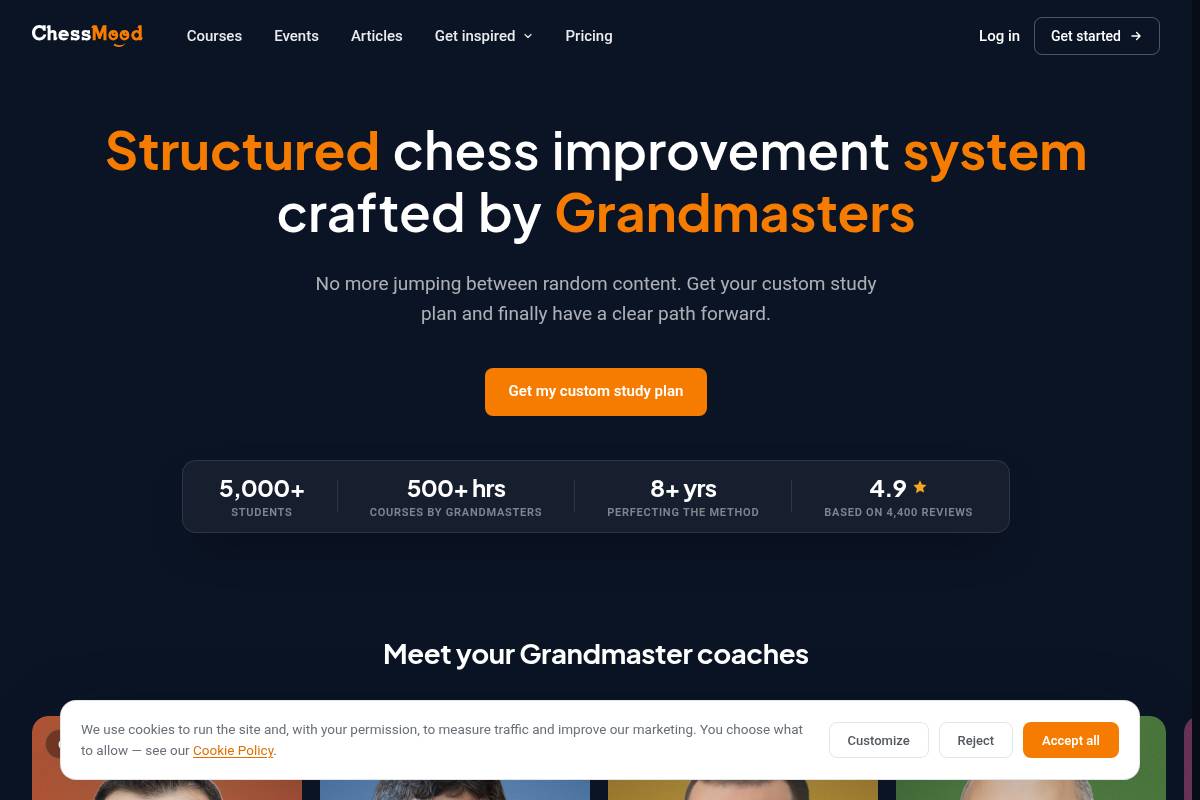
ChessMood is a premium online chess academy with more than 500 hours of Grandmaster-led video courses and a lively community. Grandmasters Avetik Grigoryan and Gabuzyan founded it, and it offers a structured learning path for intermediate to advanced players. That makes it a strong option among the best ChessMax Academy alternatives for structured online chess learning.
Key Features
- 500+ Hours of GM Content: Courses taught by a deep roster of grandmasters, including Grigoryan, Gabuzyan, Avrukh, Naroditsky, and Leitao, available through the ChessMood community platform.
- Weekly Live Streams: Regular sessions such as Openings in Practice and Play vs Grandmaster.
- Flexible Pricing Tiers: Essential membership starts at $79 a month when billed annually. Pro runs $99 a month annually and adds more streams and a Pro-only forum, as detailed on the ChessMood app page.
- Active Discord Community: Direct interaction with peers and GMs through forums and live chat.
Best For
ChessMood suits intermediate to advanced players, roughly 1200 to 2300, who want a coach-like, video-first experience without hiring a private tutor. It works best for disciplined self-learners rather than casual beginners. If you are comparing CircleChess with other options, ChessMood's depth will appeal to anyone serious about steady improvement.
Pros and Cons
- Pro: A deep, GM-authored course library with genuinely strong opening preparation.
- Pro: An active community and real GM interaction through live streams.
- Con: Premium pricing is steep for a self-paced product, especially if you do not study consistently.
- Con: Middlegame and endgame content is lighter than the opening library.
Rating: 8.4/10
Key Takeaway: ChessMood delivers a thorough, GM-led video course experience for serious intermediate and advanced players who want structure and community. Its price is high, but it earns its place for committed learners. Next up is Chessly, which is much more beginner-friendly.
6. Chessly: Best for Beginner-Friendly Courses from a Trusted YouTube Coach
6. Chessly: Best for Beginner-Friendly Courses from a Trusted YouTube Coach
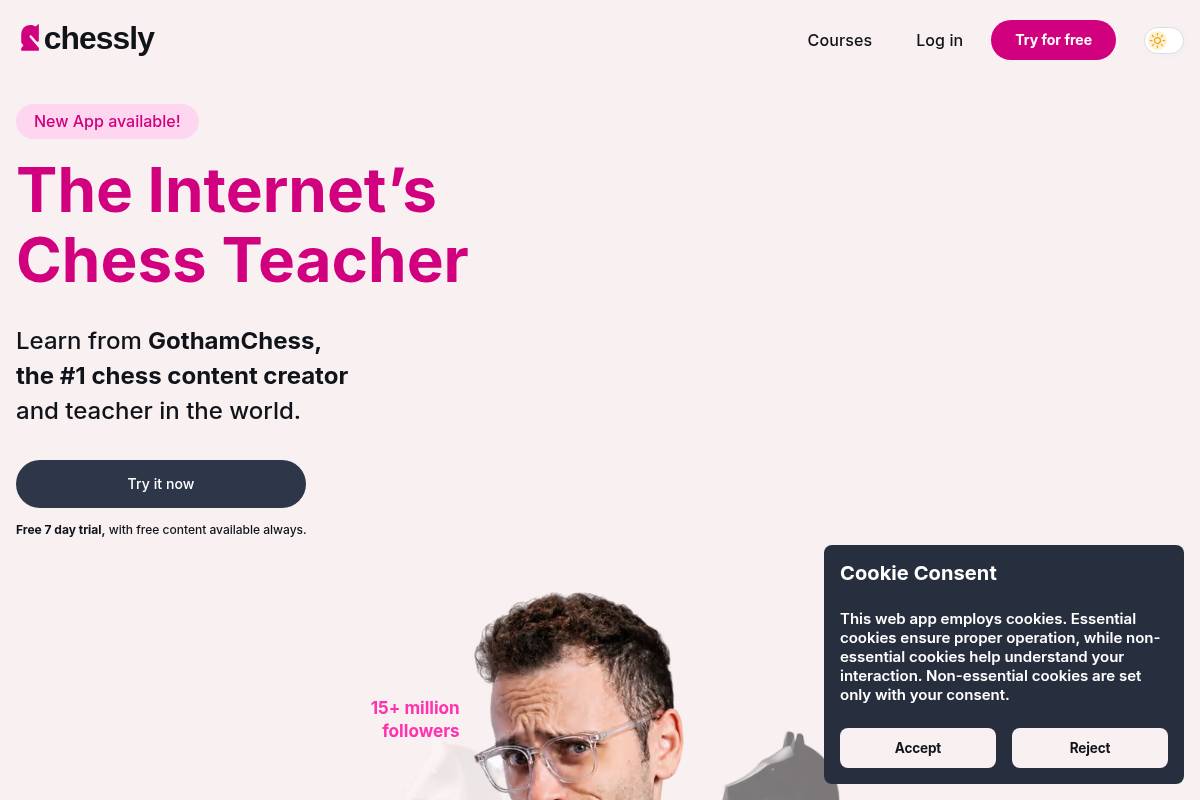
Chessly is the official learning platform of International Master Levy Rozman (GothamChess). It offers structured courses built around his easygoing, accessible teaching style. It is one of the more approachable alternatives for structured online chess learning, especially for beginners and lower-intermediate players who want a friendly instructor and bite-sized videos.
Key Features
- All-Access Membership: One subscription gives you access to all 80-plus openings and skills courses on the platform.
- 80+ Structured Courses: Beginner bootcamps, intermediate concepts, openings, and masterclasses in tactics, middlegame, and endgame.
- Mobile App: Lessons, drills, and progress tracking are available right on your phone.
- Gamified Progress: XP charts, level trophies, and achievement badges keep younger learners engaged.
Best For
Chessly is a good match for beginner and lower-intermediate players, especially teens and young adults who respond to a familiar, charismatic instructor and short video lessons. Membership costs about $9.99 per month.
Pros and Cons
- Pro: The approachable teaching style takes the intimidation out of chess for new players.
- Pro: Every course is included in one subscription, so you never have to buy courses one by one.
- Con: The content depth mostly stays at beginner and intermediate levels.
- Con: There is no live coaching or direct mentor feedback.
Rating: 8.2/10
7. Aimchess: Best for AI-Driven Weakness Analysis
7. Aimchess: Best for AI-Driven Weakness Analysis
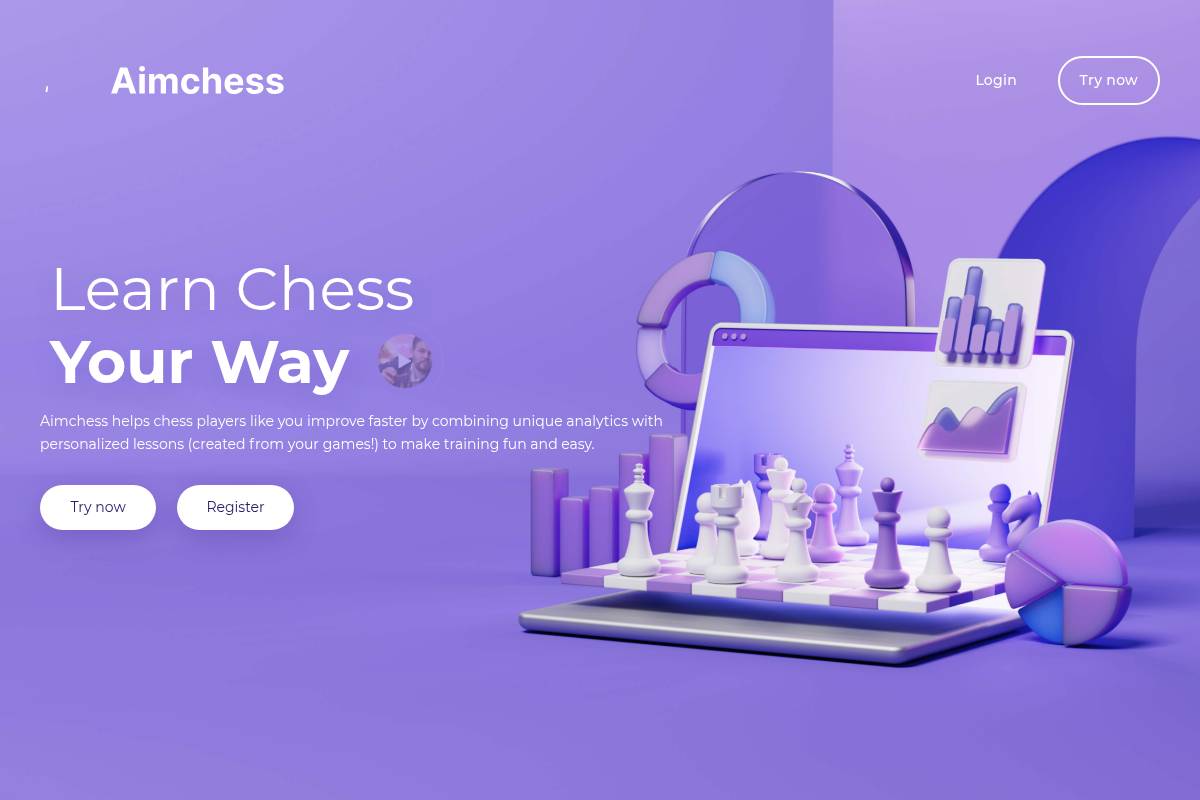
Aimchess is an AI analysis tool that connects to your Chess.com or Lichess account and reviews the games you have already played. It builds personalized training drills aimed at your recurring mistakes, which makes it a distinctive pick among the best ChessMax Academy alternatives for data-driven improvement.
Key Features
- Game Import and Diagnosis: Aimchess produces diagnostic reports across six areas, including opening accuracy, time management, and blunder prevention. You can see the details on its app page.
- Personalized Training Plans: Weekly targets for games played and exercises completed, all based on your own game data.
- Adaptive Tactics Puzzles: Puzzles that adjust automatically to your strengths and weaknesses.
- Pricing: A free tier is available. Premium starts at $7.99 per month or $57.99 per year, as listed on its app page.
Best For
Aimchess is a good fit for intermediate to advanced players, roughly 1200 to 2200, who play online regularly and would rather learn from diagnosis than from generic lessons. It works best alongside a structured curriculum rather than replacing one.
Pros and Cons
- Pro: Training comes directly from your own games, so it feels personal.
- Pro: The entry price is low, and the free tier is genuinely usable.
- Con: The most useful analysis features usually sit behind the Premium paywall.
- Con: It is not a full curriculum, and it assumes you already understand the fundamentals.
Rating: 8.0/10
8. Remote Chess Academy: Best for Strategic Thinking and Decision-Making Courses
Remote Chess Academy, founded by Grandmaster Igor Smirnov, focuses on video courses that sharpen the psychological and decision-making side of competitive chess. Unlike platforms that center on opening memorization, it offers structured frameworks for better strategic thinking.
Key Features
- Thinking-System Courses: Titles such as "My Thinking System" and "The Grandmaster's Secrets" focus on decision-making frameworks for players.
- Course Bundles: Individual courses cost roughly $49 to $150, but comprehensive bundles and flexible payment plans are available for deeper study.
- Large YouTube Presence: The academy's YouTube channel had over 970,000 subscribers as of late August 2026, and it offers plenty of free supplementary content. Grandmaster Igor Smirnov, the founder, is a recognized player in his own right.
- Money-Back Guarantees: Most bundles come with a 15-day refund window, so you can try the material with little risk.
Best For
Remote Chess Academy suits intermediate and advanced players who have hit a strategic plateau and need a framework for calculation and planning. It stands out among the best ChessMax Academy alternatives because it focuses on practical strategic development rather than deep opening theory. If you are weighing CircleChess against other options, this academy offers a more specialized route to better decisions over the board.
It is especially useful for self-paced learners who prefer to buy individual course bundles and go deep on specific strategic ideas.
Pros and Cons
- Pro: A strong focus on the thinking process, which many platforms overlook in favor of opening theory.
- Pro: A large free YouTube library lets you sample the teaching style before you spend anything.
- Con: Buying the course catalog one piece at a time can get expensive.
- Con: There is no live coaching, cohort community, or progress dashboard to track how a student is advancing.
Key Takeaway: Remote Chess Academy is a solid choice for intermediate and advanced players who want strategic and psychological depth over opening memorization. Its per-course pricing and lack of live interaction are the trade-offs. Next, we look at a very different option for younger players.
Rating: 7.9/10
9. Magnus Trainer: Best for Gamified Chess Habits for Young Beginners
9. Magnus Trainer: Best for Gamified Chess Habits for Young Beginners
Magnus Trainer turns chess learning into a Duolingo-style progression of short lessons and mini-games. Many of the lessons are built around content narrated by World Champion Magnus Carlsen.
Key Features
- 250+ Bite-Sized Lessons: Members get instant access to all 250-plus premium lessons, many of them exclusive to subscribers.
- Carlsen-Inspired Content: Lessons built around real positions from Carlsen's career, from youth events to world championship matches.
- Freemium Pricing: A free tier is available. Premium starts at $7.99 a month, $74.99 a year, or a $299.99 lifetime purchase.
- Progress Gamification: XP, badges, and a visual map of session nodes show how far you have come.
Best For
Magnus Trainer is best for young beginners, roughly ages 5 to 12, along with casual learners rated under about 1500 who enjoy short, game-like sessions. Serious improvers will likely outgrow its content quickly.
Pros and Cons
- Pro: The habit-forming format keeps young kids coming back every day.
- Pro: Magnus Carlsen's name and games give it strong instructor appeal.
- Con: The content ceiling is low for intermediate and advanced players.
- Con: The iOS version has seen fewer updates since the platform was acquired.
Rating: 7.8/10
10. iChess.net: Best for a Large On-Demand Video Course Library
10. iChess.net: Best for a Large On-Demand Video Course Library
iChess.net is known for its huge catalog of downloadable chess video courses, covering openings, middlegame strategy, and endgame technique, taught by titled players. It is one of the largest on-demand video libraries you will find.
Key Features
- Huge Course Catalog: Over 1,000 courses spanning every phase of the game and every rating range.
- Free Video Series: Free playlists on tricky openings and tactical themes let newcomers sample the quality before paying.
- iChess Club Membership: Starts at $19.97 per month and unlocks 40% off nearly everything in the shop.
- Lifetime Course Access: Purchased courses stay available indefinitely, with no recurring fee per title.
Best For
iChess.net is ideal for self-directed learners who want a big, affordable library to explore at their own pace. It does not offer a guided progression, but it makes a useful supplement for anyone browsing the best ChessMax Academy alternatives, especially when paired with a more structured platform like CircleChess.
Pros and Cons
- Pro: A wide range of topics, affordable bundles, and regular new releases.
- Pro: Generous free content lets you judge the quality before you pay.
- Con: Most content is downloadable video with limited interactivity.
- Con: No direct coaching or structured progression unless you build your own path.
Rating: 7.6/10
Full Comparison: Best ChessMax Academy Alternatives for Structured Online Chess Learning
| Tool | Live Coaching | AI-Powered Coach | Structured Curriculum | Parent Dashboard | FIDE Pathway | Free Trial | Starting Price |
|---|---|---|---|---|---|---|---|
| CircleChess | ✓ | ✓ | ✓ | ✓ | ✓ | ✓ | Free demo |
| Chessable | ✗ | ✗ | ✓ | ✗ | ✗ | ✓ | $11.99/mo |
| KCF Academy | ✓ | ✗ | ✓ | ✗ | Partial | ✗ | ~$350/season |
| ChessDojo | Limited | ✗ | ✓ | ✗ | ✗ | ✓ | $15/mo |
| ChessMood | ✗ | ✗ | ✓ | ✗ | ✗ | ✗ | $79/mo |
| Chessly | ✗ | ✗ | ✓ | ✗ | ✗ | ✓ | $9.99/mo |
| Aimchess | ✗ | ✓ | Partial | ✗ | ✗ | ✓ | $7.99/mo |
| Remote Chess Academy | ✗ | ✗ | Partial | ✗ | ✗ | ✗ | From $49 |
| Magnus Trainer | ✗ | ✗ | ✓ | ✗ | ✗ | ✓ | $7.99/mo |
| iChess.net | ✗ | ✗ | ✗ | ✗ | ✗ | ✓ | From $10 |
How to Choose the Right Alternative
By Family Size and Age
Parents of young beginners, ages 5 to 10, usually get the most out of CircleChess's classroom program or Magnus Trainer's gamified app. Serious scholastic competitors tend to benefit from CircleChess's FIDE pathway and monthly mentor reviews. If you coach several students, a platform with a parent or progress dashboard will narrow your choices quickly.
By Budget
On a tight budget, Chessable's free tier and Aimchess's free analysis deliver real value before you spend a dime. Mid-range budgets ($10 to $50 a month) go a long way with Chessly, ChessDojo, or CircleChess's self-paced tools. Premium budgets, such as $79 or more a month or several hundred dollars per season, suit ChessMood or KCF Academy for focused GM access.
By Use Case
If opening and tactics drilling is your main goal, Chessable's MoveTrainer was built for exactly that. If you want one ecosystem that covers live classes, AI practice, psychology training, and tournaments, CircleChess is still the most complete choice among the best ChessMax Academy alternatives. If pure strategic thinking is what you are after, Remote Chess Academy fills that gap well. Whichever you choose, the right fit is the one you will actually open every week. For additional buying guidance, see Best Way to Learn Chess in 2026: Ranked Guide.
What Is Structured Online Chess Learning?
Structured online chess learning is any coaching or self-study system that replaces random practice with sequenced lessons, measurable milestones, and some form of accountability. That accountability might come from a mentor, a cohort, or an AI coach. Prices and formats vary widely depending on how much live human instruction is involved.
| Format | Typical Price Range (US) | Instructor Level | Best For |
|---|---|---|---|
| Self-paced subscription | $4 to $15/month | Recorded GM content | Supplemental study, casual learners |
| Live group classes (budget) | $2 to $3/hour | GM-designed curriculum, live instructors | Kids, beginners, families on a budget |
| Premium subscription platforms | $79 to $129/month | Grandmasters, video plus live | Intermediate to advanced players (1200 to 2300) |
| Seasonal masterclass programs | $350 to $530/season | World Champion-level trainers | Ambitious competitive students |
| Private one-on-one lessons | $20 to $150+/hour | Varies from untitled to GM | Advanced players, serious competitors |
As one cost analysis notes, online chess coaching in the United States runs from $2 to $3 per hour for live group instruction, up to $150 or more per hour for elite one-on-one grandmaster lessons. Self-paced digital subscriptions typically cost $4 to $99 a month. Once you know where you fit in that range, choosing among the best ChessMax Academy alternatives gets a lot simpler. For a more detailed primer, see Online Chess Courses Comparison.
Conclusion
All ten platforms here offer real value, but they serve different needs. Chessable is hard to beat for opening memorization. ChessDojo and ChessMood reward disciplined self-learners, and KCF Academy gives you rare access to Garry Kasparov himself. For families and players who want the most complete answer among the best ChessMax Academy alternatives for structured online chess learning, CircleChess is our top pick. It combines a curriculum designed by GM Vishnu Prasanna, the coach behind World Champion Gukesh D, with AI-powered practice, mentor feedback, and a clear FIDE rating pathway. If the full CircleChess ecosystem feels like more than you need right now, Chessable and ChessDojo are the strongest lighter options to try next.
Frequently Asked Questions
What are the best ChessMax Academy alternatives for structured online chess learning in 2026?
The strongest options in our ranking are CircleChess, Chessable, KCF Academy, ChessDojo, and ChessMood. Each strikes a different balance between live coaching, AI tools, and self-paced video content.
Which platform is best for kids just starting to learn chess?
CircleChess and Magnus Trainer are the strongest starting points for young beginners. Both pair simplified fundamentals with engaging mechanics. CircleChess also adds live classroom instruction and a parent dashboard, so you can see how your child is progressing.
Is CircleChess better than ChessMax Academy for structured learning?
CircleChess stands out with a curriculum designed by GM Vishnu Prasanna, the coach who trained World Champion Gukesh D. It also brings together live classes, AI coaching, and tournaments in one ecosystem, which makes it a strong structured alternative for families who want measurable, mentor-backed progress.
How much does structured online chess coaching typically cost?
Prices vary a lot. Self-paced subscriptions generally run $4 to $15 a month, and live group classes can cost $2 to $3 per hour. Premium GM-led subscription platforms charge $79 to $129 a month, and private one-on-one lessons with titled coaches range from $20 to $150 or more per hour.
Do any of these platforms offer a free trial or free tier?
Yes. Chessable, ChessDojo, Aimchess, Magnus Trainer, and iChess.net all offer usable free tiers or free sample content. CircleChess offers free demo classes so families can see whether it fits before they enroll.
Which chess learning platform is best for competitive, FIDE-rated improvement?
CircleChess and KCF Academy both offer structured routes toward FIDE-rated progress. CircleChess provides milestone-based preparation plans and official certification. KCF Academy offers a seasonal, level-based curriculum built around Garry Kasparov's roster of grandmasters.
Can adult beginners use these platforms, or are they only for kids?
Most platforms on this list serve adults directly, including CircleChess, Chessable, ChessDojo, ChessMood, and Remote Chess Academy. Their content and coaching tracks scale from absolute beginner through advanced competitive play.
What should NRI parents look for when choosing an online chess school for their kids?
NRI parents should look for flexible scheduling across time zones, a parent dashboard for progress visibility, and verified instructor credentials. CircleChess addresses all three with its 24x7 AI coach and monthly mentor reviews, which work regardless of time zone.
Methodology: Rankings and ratings in this guide reflect hands-on review of each platform's official pricing pages, published curricula, and publicly available course catalogs as of November 2026, cross-referenced against independent reviews and user feedback. Pricing and features are subject to change, so always confirm current details directly with each provider before enrolling.