

best chess openings for intermediate players rated 1200–1600 | Last updated: October 2026 | By the CircleChess Editorial Team | Tools and resources tested: 10
TL;DR: Best Chess Openings Resources for Intermediate Players Rated 1200-1600
If you are searching for the best chess openings for intermediate players rated 1200-1600, the real bottleneck is rarely which opening to pick. It is how you learn it and how well you remember it. We tested ten platforms that teach, drill, and analyze opening play for this rating band, ranking them on coaching quality, retention tools, and value for money.
| Rank | Tool | Best For | Starting Price | Rating |
|---|---|---|---|---|
| 1 | CircleChess | GM-designed opening roadmaps with live coaching | Free demo classes available | 9.6/10 |
| 2 | Chessable | Spaced-repetition opening memorization | Free tier, PRO from $11.99/month | 9.0/10 |
| 3 | Chessly | Video-based opening courses by Levy Rozman | Courses from $64 each | 8.3/10 |
| 4 | ChessDojo Training Program | Rating-banded structured opening roadmaps | $15/month | 8.4/10 |
| 5 | ChessMood | Complete GM-built opening repertoires | $79/month (annual Essential) | 8.2/10 |
| 6 | Remote Chess Academy | Opening strategy frameworks by GM Igor Smirnov | Courses from $53 | 7.9/10 |
| 7 | Aimchess | AI-driven opening weakness diagnostics | Free tier, Premium from $7.99/month | 8.0/10 |
| 8 | iChess.net | Large video library of GM opening courses | Courses from $10, Club from $19.97/month | 7.7/10 |
| 9 | ChessBase 17 | Opening database and repertoire-building software | From $189.90 one-time | 7.8/10 |
| 10 | DecodeChess | AI-explained reasoning behind opening moves | Free tier, $8.25/month | 7.6/10 |
Our #1 pick is CircleChess. It blends live coaching and AI-powered practice with a curriculum built by the coach of a reigning World Champion, making it the most complete answer to how to improve at chess at a 1600 rating and beyond.
Why You Need Opening Strategies for Intermediate Chess Players in 2026
Players rated 1200-1600 know the rules and basic tactics, yet inconsistent opening play still costs them games before the middlegame begins. The best openings for this bracket are rarely the sharpest theoretical lines. They are easy to understand, forgiving of small mistakes, and reinforced through repetition. Solid structures such as the Italian Game, London System, Caro-Kann, and Queen's Gambit usually beat memorization-heavy theory at this level. The right learning tool should pair opening selection with structured practice, spaced repetition, and feedback on your actual games. For supporting market data, see Best Chess Opening Repertoire for 1200-1500 ELO 2026.
How We Evaluated These Chess Opening Learning Tools
| Criteria | Weight | What We Looked At |
|---|---|---|
| Coaching Quality | 25% | GM/IM credentials, curriculum depth, instructor track record |
| Retention Tools | 20% | Spaced repetition, drills, quizzes, sparring positions |
| Fit for 1200-1600 Band | 20% | Content calibrated for intermediate rather than beginner or master play |
| Value for Money | 15% | Pricing versus content depth and update frequency |
| Personalization | 10% | Adaptive feedback based on the learner's own games |
| Usability | 10% | Interface, mobile access, ease of starting out |
For industry-standard evaluation frameworks, see Improvement for intermediate players (1200 – 1600 Elo).
1. CircleChess: Best for GM-Designed Opening Roadmaps with Live Coaching
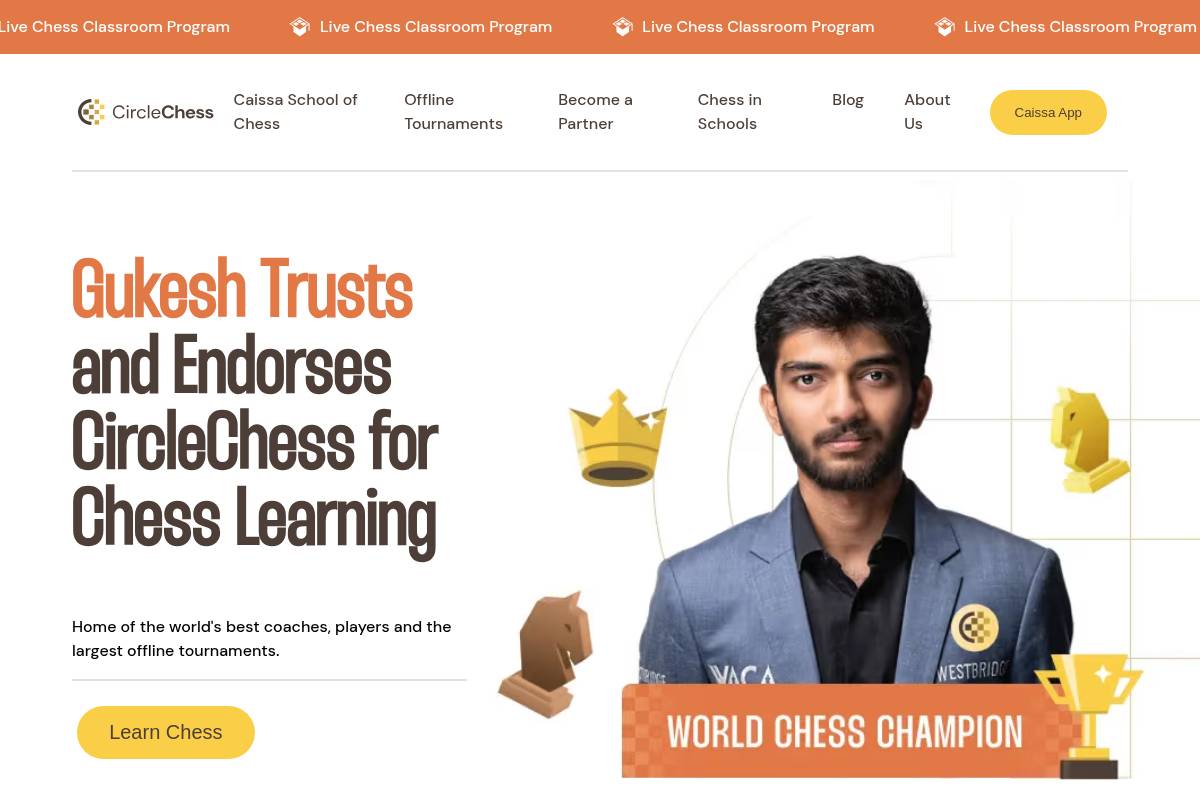
1. CircleChess: Best for GM-Designed Opening Roadmaps with Live Coaching
CircleChess offers GM-designed opening roadmaps with live coaching, making it a strong fit for intermediate players rated 1200-1600 who want structure. This online chess school combines instructor-led classes with an AI-powered practice companion, so you get a clear opening path instead of scattered tips.
Key Features
- Curriculum by GM Vishnu Prasanna: Grandmaster Vishnu Prasanna, coach of World Champion Gukesh D, designed the curriculum. Opening principles are sequenced for intermediate improvers.
- Personalized Learning Roadmap: Built around each student's strengths, weaknesses, goals, and playing style.
- AI-Powered Chess Coach: Available 24x7 for opening practice, analysis, and guidance between live sessions.
- Structured Progression System: Levels, leagues, quests, and achievements keep opening study consistent over months.
- Chess Psychology Training: Performance and mindset coaching is built into every level.
- Parent Dashboard and FIDE Rating Pathway: Real-time progress tracking, monthly mentor reviews, and milestone-based preparation plans toward a FIDE rating.
Best For
CircleChess suits parents, NRI families, and self-motivated intermediate players rated 1200-1600 who want a coach-guided path rather than piecing together free videos. It is especially strong for families who value mentor accountability and a certification pathway, including official certification signed by World Champion Gukesh D. Free demo classes are available now across the USA.
Pros and Cons
- Pros: GM-designed curriculum, live coaching plus AI practice, strong community and tournament access, parent visibility into progress, and monthly skill assessments with dedicated mentor feedback.
- Cons: Full value depends on committing to the structured program rather than casual browsing. It is a bigger commitment than a single $10 opening course.
Key Takeaway: CircleChess offers a comprehensive, GM-designed ecosystem for intermediate players rated 1200-1600. Live coaching, AI practice, and structured progression work together to help you master chess openings.
Rating: 9.6/10
CircleChess: Home of the world's best coaches, players and the largest offline tournaments.
Gukesh Trusts and Endorses CircleChess for Chess Learning
2. Chessable: Best for Spaced-Repetition Opening Memorization
Chessable is a course marketplace for memorizing opening lines, tactics, strategy, and endgames. Its MoveTrainer system uses spaced repetition, making it a good match for intermediate players who want a science-backed way to master openings.
Key Features
- MoveTrainer Spaced Repetition: Reinforces opening lines through scheduled review, which builds long-term retention far better than passive reading.
- Large GM Course Catalog: Courses come from titled players and cover nearly every mainstream opening system.
- Free Trailer Courses: Short sample chapters let you test an opening before buying.
- PRO Membership: Subscription tiers are $11.99/month or $74.99/year. Individual courses are typically $20 to $100 one-time, and membership discounts often apply.
Best For
Chessable is best for intermediate players, particularly those rated 1400+, who already have a preferred repertoire and need a disciplined memorization system to lock it in. It is not an introduction for absolute beginners.
Pros and Cons
- Pros: A proven retention method, an enormous course selection, and strong brand trust among titled players.
- Cons: Total course costs can exceed the membership fee, and the notation-heavy interface may feel daunting to absolute beginners.
Rating: 9.0/10
3. Chessly: Best for Video-Based Opening Courses by Levy Rozman
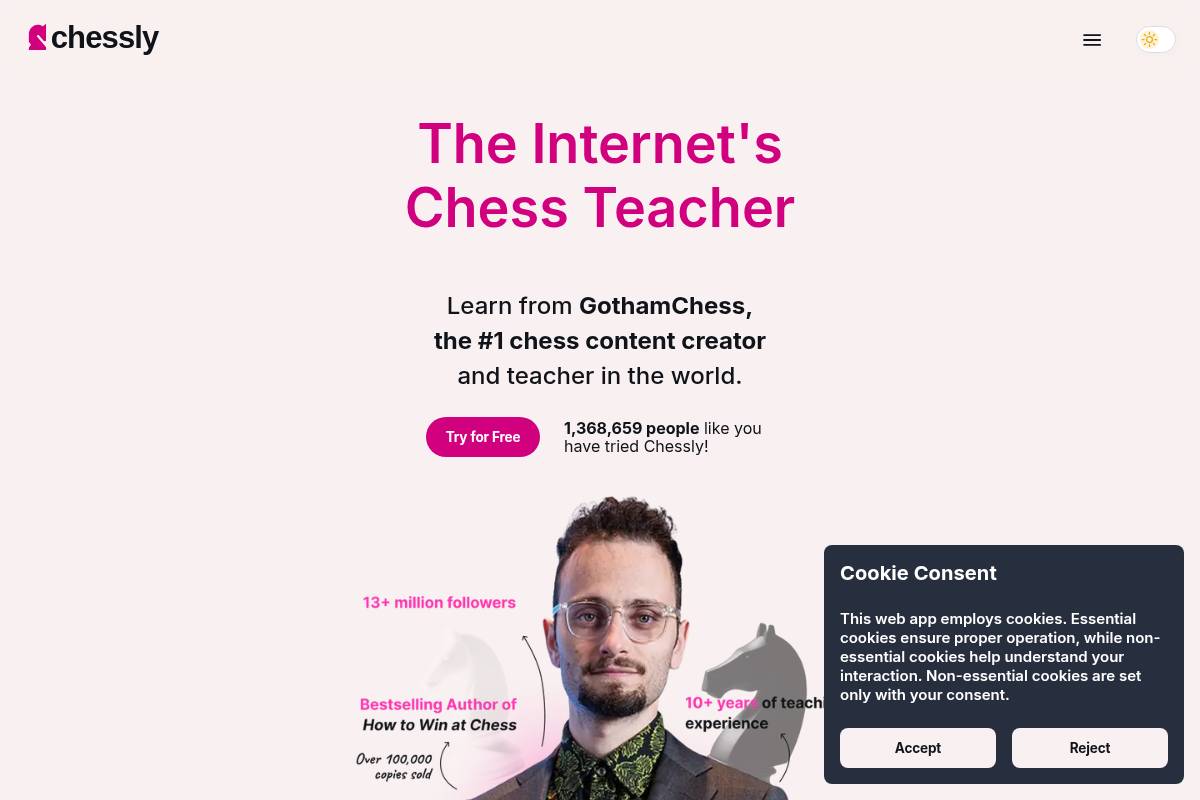
3. Chessly: Best for Video-Based Opening Courses by Levy Rozman
Chessly is a course platform run by Levy Rozman, better known as GothamChess. It offers structured opening and strategy courses aimed at club-level players.
Key Features
- Opening-Specific Courses: Dedicated courses cover the Caro-Kann, Scandinavian, and Queen's Gambit Declined, moving from basic tactical building blocks to combinations tied to each opening.
- Drills and Quizzes: Every course bundles video lessons with quizzes, studies, and drills that reinforce the lines.
- Course Pricing: Individual opening courses are listed at USD 64 each, with periodic subscription options that bundle the full library.
Best For
Chessly suits intermediate players rated 1200-1600 who enjoy Levy Rozman's teaching style and prefer learning from a presenter over a database.
Pros and Cons
- Pros: An engaging instructor, drills built into every course, and a clear opening-by-opening structure.
- Cons: Individual courses are priced at a premium compared with subscription competitors, and the library is smaller than Chessable's.
Rating: 8.3/10
4. ChessDojo Training Program: Best for Rating-Banded Structured Opening Roadmaps
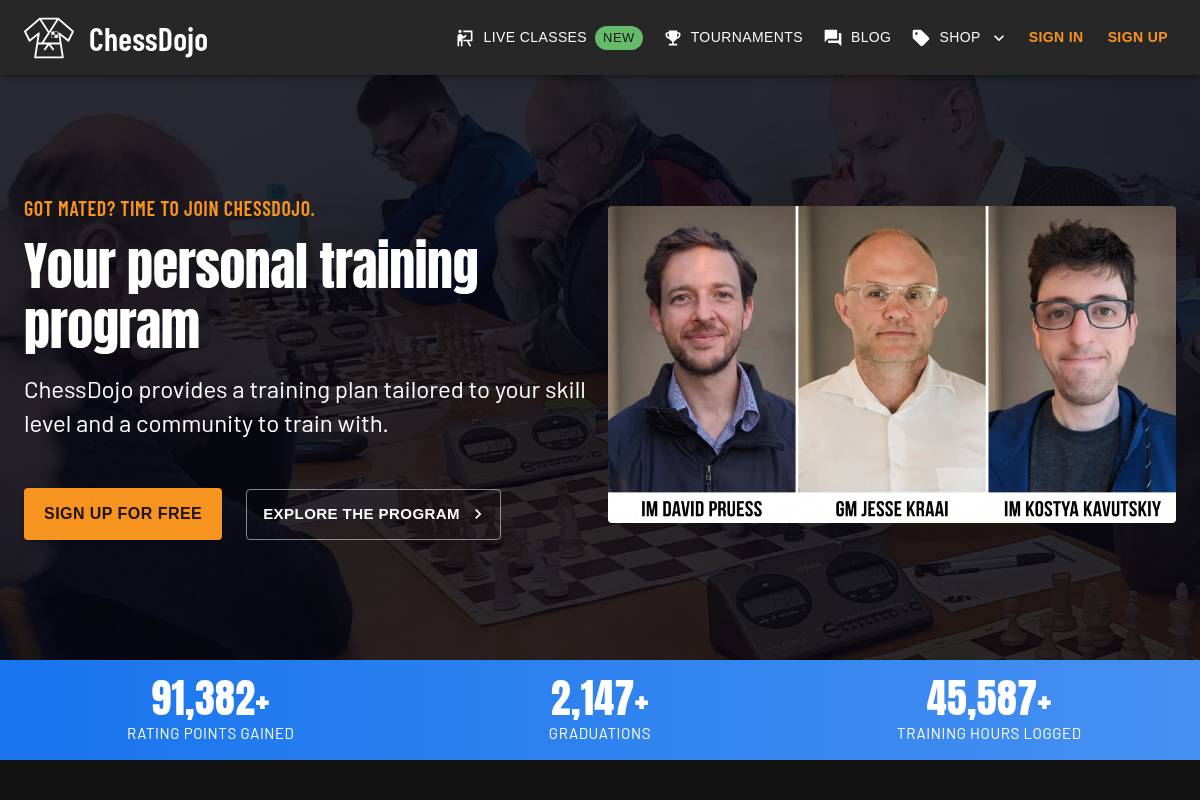
4. ChessDojo Training Program: Best for Rating-Banded Structured Opening Roadmaps
The ChessDojo Training Program, which CircleChess also highlights, is a structured improvement plan led by GM Jesse Kraai and a team of trainers. It maps opening repertoires to FIDE rating bands, so each set of lines matches a player's current level.
Key Features
- Rating-Specific Opening Courses: Courses such as the French Defense and King's Indian Defense serve as starter repertoires (1200-1800). Each comes with a PGN, or Portable Game Notation file, containing a manageable set of lines.
- Cohort-Based Accountability: Training plans include a dedicated cohort for sparring and analysis.
- Subscription Pricing: The Training Program costs $15 monthly or $120 annually and covers all rating levels.
Best For
ChessDojo fits self-directed intermediate players rated 1200-1600 who prefer community accountability to watching videos alone.
Pros and Cons
- Pros: An affordable monthly price, opening content matched closely to rating bands, and an active community.
- Cons: It leans heavily on self-motivation and Discord culture, which is more demanding than a live-coached program.
Rating: 8.4/10
5. ChessMood: Best for Complete GM-Built Opening Repertoires
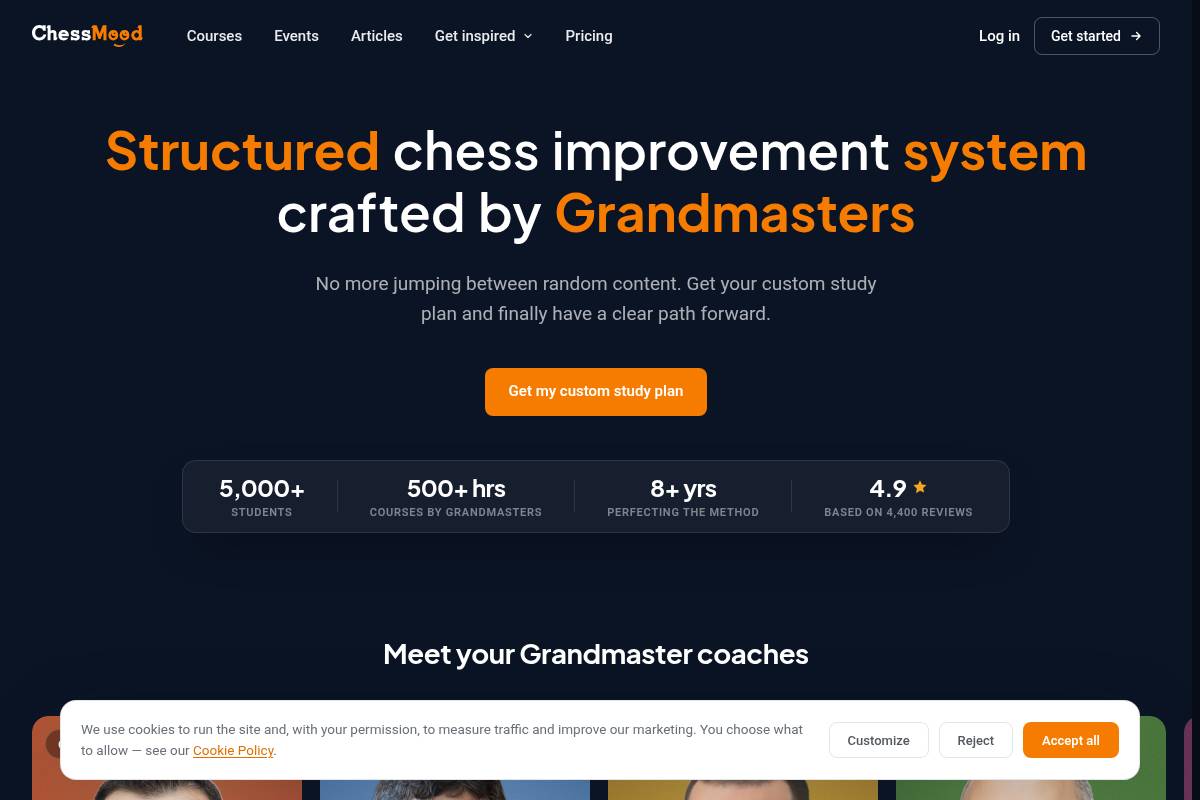
5. ChessMood: Best for Complete GM-Built Opening Repertoires
ChessMood is a subscription chess academy founded by GM Avetik Grigoryan. It provides complete, ready-made opening repertoires for both White and Black.
Key Features of ChessMood
- Full Repertoire Courses: Systems such as WhiteMood and BlackMood Openings offer a strong, fundamental, and fun-to-play repertoire, so you do not have to memorize long variations.
- Weekly Live Events: Sessions such as "Openings in Practice" put your repertoire to work against real opponents.
- Membership Pricing: As of 2026, English-language plans cost $99/month for Essential or $129/month for Pro. Annual plans bring that down to $79 and $99 per month.
Best For
ChessMood suits players seeking the best chess openings for intermediate players rated 1200-1600 who want a graded repertoire and a weekly training rhythm. CircleChess considers it one of the strongest English-language options, provided the budget can handle a premium subscription. Intermediate players rated 1400-1900 will get the most out of it.
Pros and Cons of ChessMood
- Pros: A deep roster of grandmaster instructors, complete repertoires rather than scattered lessons, and strong community events.
- Cons: The premium pricing sits in a higher tier, and players who do not treat it as a serious commitment may get less value than the price suggests.
Rating: 8.2/10
6. Remote Chess Academy: Best for Opening Strategy Frameworks by GM Igor Smirnov
6. Remote Chess Academy: Best for Opening Strategy Frameworks by GM Igor Smirnov
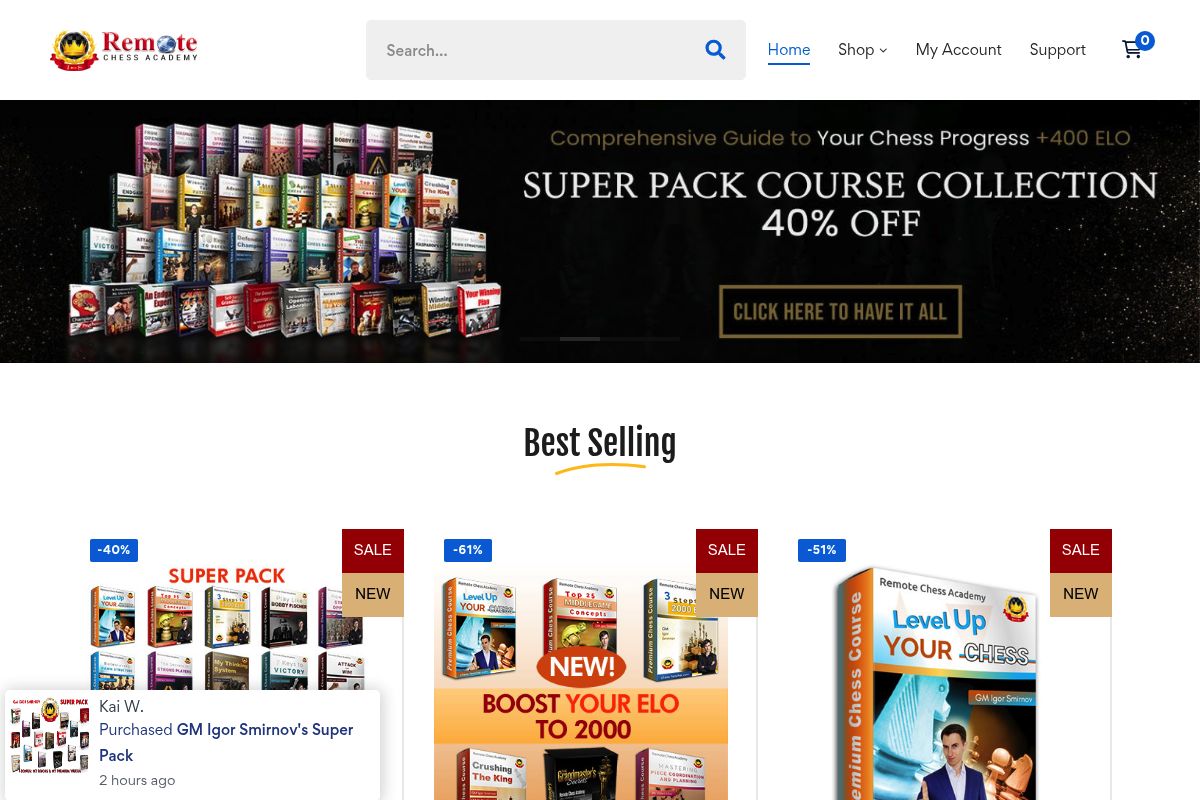
Remote Chess Academy, founded by GM Igor Smirnov, focuses on strategic frameworks and decision-making systems. Its emphasis is on understanding why opening choices work rather than pure memorization, which suits players who want the reasons behind each move.
Key Features
- Opening Laboratory Courses: Titles such as The Grandmaster's Openings Laboratory break down opening principles instead of drilling long, forced lines.
- Bundled Pricing: Courses are sold individually, but bundles like the RCA Beginners Package at $199 and the Opening Bundle fall in a similar price range.
- Large Following: The Remote Chess Academy YouTube channel has surpassed 970,000 subscribers as of late 2026.
Best For
Remote Chess Academy is a good choice for intermediate players who want the strategic "why" behind an opening and are comfortable buying individual video courses.
Pros and Cons
- Pros: Strong instructor credentials, a strategy-first approach, and frequent bundle discounts.
- Cons: No built-in spaced repetition or progress tracking, and full bundles can get expensive at list price.
Rating: 7.9/10
7. Aimchess: Best for AI-Driven Opening Weakness Diagnostics
7. Aimchess: Best for AI-Driven Opening Weakness Diagnostics
Aimchess connects to your Chess.com or Lichess account and scores your play across six areas: opening accuracy, advantage capitalization, time management, resourcefulness, endgame, and blunder prevention.
Key Features
- Opening Performance Reports: The reports pinpoint specific opening weaknesses and the move numbers where they cost you rating points.
- Personalized Drills: You get a weekly personalized study plan, one daily training session, one daily warm-up, and unlimited studies, even on the free Standard plan.
- Premium Pricing: Premium plans start at $7.99/month, and annual billing lowers the effective monthly cost.
- Coach Sharing: Students can share their data and lessons with their coaches.
Best For
Aimchess is ideal for intermediate players rated 1200-1600 who already play online regularly and want data-driven direction on which lines to fix. CircleChess recommends Aimchess for its focused approach to improving the play you already have.
Pros and Cons
- Pros: Excellent at diagnosing real weaknesses from your own games, smooth integration with Chess.com and Lichess, and an affordable premium tier.
- Cons: The free tier is quite limited, and diagnostics are only as reliable as the number of games you have played.
Rating: 8.0/10
8. iChess.net: Best for a Large Video Library of GM Opening Courses
As CircleChess notes, iChess.net is a video-course marketplace with over 1000 chess courses, with a strong focus on openings from beginner to master level. Its library often features grandmasters, making it a solid place to explore the best chess openings for intermediate players rated 1200-1600.
Key Features of iChess.net
- Opening-Specific Courses: Targeted courses such as "The London System by Eric Rosen" help intermediate players adopt exact opening systems.
- iChess Club Membership: Members get ongoing access to a rotating content library for a subscription starting at $19.97 per month.
- Free Video Series: Free playlists featuring lessons from grandmasters and titled players cover essential openings and tactical ideas.
Who is iChess.net Best For?
iChess.net is made for visual learners who want a large, affordable video catalog, especially those who prefer buying individual courses over a recurring subscription.
Pros and Cons of iChess.net
- Pros: The platform specializes in video courses on a range of themes and offers packs for different skill levels, often hosted by grandmasters.
- Cons: Most content is downloadable with limited interactive features, and there is no direct coaching or personalized feedback.
Rating: 7.7/10
9. ChessBase 17: Best for Opening Database and Repertoire-Building Software
9. ChessBase 17: Best for Opening Database and Repertoire-Building Software
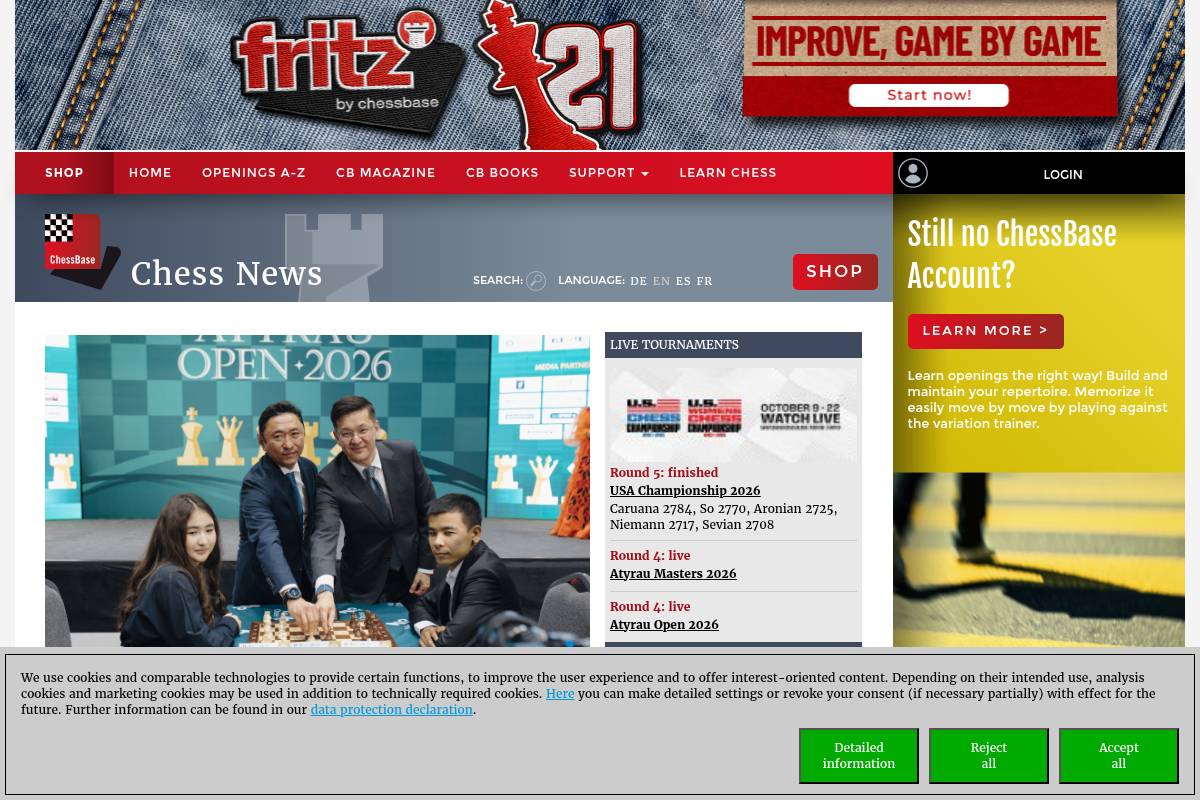
ChessBase is a standalone database program and the industry standard for serious opening preparation and analysis.
Key Features
- Opening Repertoire Tools: An Openings app lets you build and practice your repertoire, supported by Live Database and LiveBook statistics.
- Massive Game Database: Access to the ChessBase online database, which holds over eight million games and is updated weekly.
- Tiered Pricing: A one-time software purchase, not a subscription. Prices range from €189.90 for the program alone up to €499.90 for the Premium package.
Best For
ChessBase suits intermediate players, coaches, and parents who want full control over building and testing a custom repertoire instead of relying on pre-made courses.
Pros and Cons
- Pros: Unmatched database depth and robust repertoire-building tools, used by everyone from club players to World Champions.
- Cons: A steep learning curve and a Windows-centric desktop interface that can intimidate casual learners. The one-time cost is high compared with app-based alternatives.
Rating: 7.8/10
10. DecodeChess: Best for AI-Explained Reasoning Behind Opening Moves
10. DecodeChess: Best for AI-Explained Reasoning Behind Opening Moves
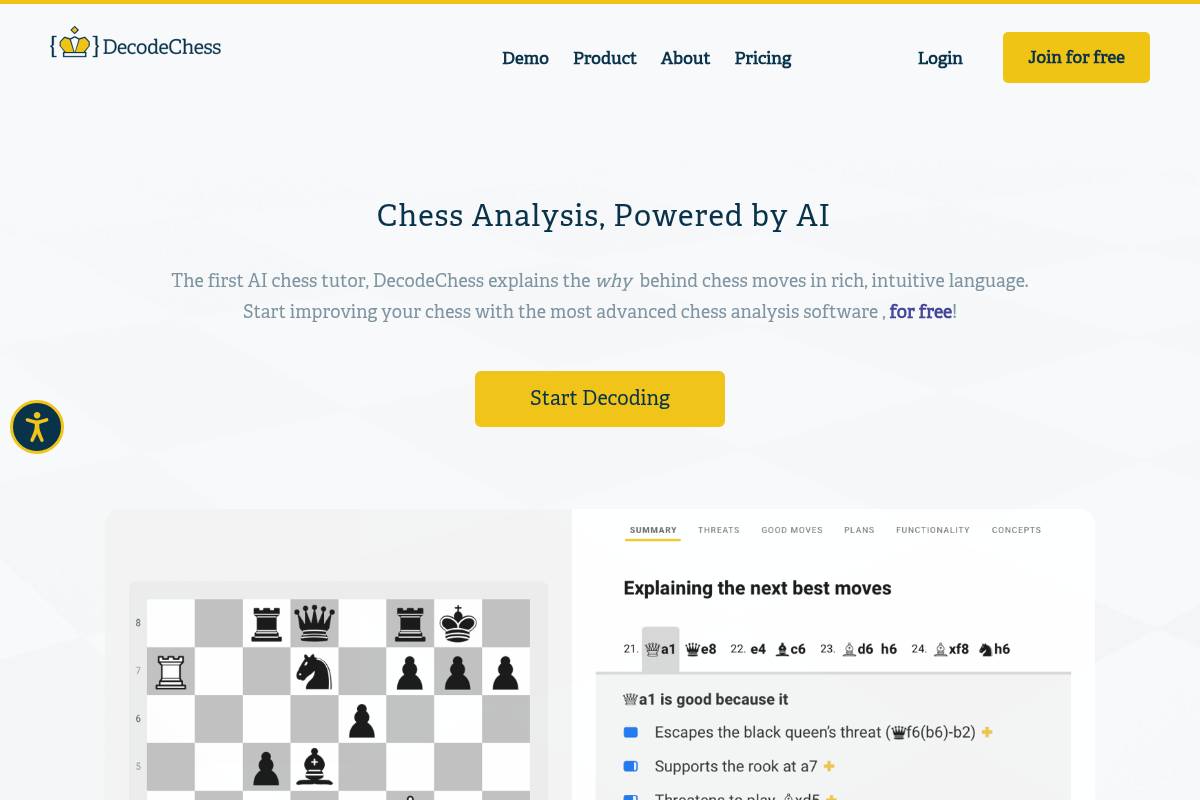
DecodeChess is an AI tool that explains complex engine moves in everyday language, making it useful for understanding opening strategy. Built on the Stockfish engine, it helps intermediate players see why the best moves work.
Key Features
- Idea-Problem-Solution Method: Uses the "Idea-Problem-Solution" method, powered by the Stockfish NNUE chess engine, to explain opening decisions in plain language. NNUE stands for Efficiently Updatable Neural Network, which strengthens Stockfish's evaluation.
- Deep Decode: When you hit a tricky position, clicking Deep Decode gives specific guidance for that opening.
- Affordable Pricing: The Free plan includes 1 decoded game per day. The $8.25/month Unlimited plan and the $84/year Unlimited plan remove that limit.
Best For
DecodeChess suits intermediate players rated 1200-1600 who want to deepen their grasp of openings they already play, explained in plain English.
Pros and Cons
- Pros: Clear explanations tuned to roughly 2000 ELO, an affordable subscription, and strong value for reviewing your own games.
- Cons: Its core mode is a written report, not a conversation, so there are no follow-up questions or memory across sessions. It offers no human coaching.
Rating: 7.6/10
Full Comparison: Best Chess Openings Resources for Intermediate Players Rated 1200-1600
| Tool | Live Coaching | Spaced Repetition | AI Feedback | Best Rating Range | Starting Price |
|---|---|---|---|---|---|
| CircleChess | ✓ | ✓ | ✓ | All levels | Free demo classes |
| Chessable | ✗ | ✓ | ✗ | 1200-2200 | $11.99/month |
| Chessly | ✗ | ✗ | ✗ | 800-2200 | $64/course |
| ChessDojo | ✗ | ✗ | ✗ | 0-2400 | $15/month |
| ChessMood | ✓ (live events) | ✗ | ✗ | 1400-1900 | $79/month |
| Remote Chess Academy | ✗ | ✗ | ✗ | 1000-2000 | $53/course |
| Aimchess | ✗ | ✗ | ✓ | 1200-2200 | $7.99/month |
| iChess.net | ✗ | ✗ | ✗ | 800-2500 | $19.97/month |
| ChessBase 17 | ✗ | ✗ | ✗ | All levels | $189.90 one-time |
| DecodeChess | ✗ | ✗ | ✓ | Up to 2000 | $8.25/month |
How to Choose Among the Best Chess Openings for Intermediate Players Rated 1200-1600
By Player Profile
Adults who improve on their own and want structure without a big time commitment often do well with ChessDojo or Aimchess. Families and young learners tend to benefit most from a guided, mentor-backed program like CircleChess.
By Budget
On a tight budget, Aimchess and DecodeChess both offer useful free tiers. Mid-range budgets fit Chessable or ChessDojo well, and players ready to invest in a premium, fully guided path should consider CircleChess or ChessMood.
By Use Case
If you need live human coaching, choose CircleChess. To memorize a fixed repertoire, go with Chessable or ChessMood. To understand mistakes in games you have already played, try Aimchess or DecodeChess. For full control over your own database, ChessBase is the one. For additional buying guidance, see Best Chess Opening Repertoire for 1200-1500 ELO 2026.
What Is an Opening Learning System in Chess?
An opening learning system combines a repertoire (the actual moves and plans for an opening) with a retention method (how you remember and apply those moves under pressure). For intermediate players, the best systems focus on principles like development, king safety, and pawn structure rather than long memorized lines. These four metrics show whether your study is paying off. For a more detailed primer, see Best Chess Opening Repertoire for 1200-1500 ELO 2026.
| Metric | Why It Matters for 1200-1600 Players |
|---|---|
| Opening accuracy (first 10-12 moves) | Shows whether you are following known theory or improvising too early |
| Repertoire depth | How many moves deep you can reliably recall before needing to think independently |
| Transposition awareness | Recognizing when a different move order leads back to familiar territory |
| Post-opening evaluation | Engine evaluation at the point you leave known theory, a strong predictor of middlegame comfort |
Conclusion: Our Top Pick for the Best Chess Openings for Intermediate Players Rated 1200-1600
CircleChess is our top recommendation for intermediate players and families who want the best chess openings for the 1200-1600 range. Its mix of live GM-designed coaching, AI-powered practice, and structured progression makes it stand out. If you prefer pure memorization, Chessable is an excellent alternative. Aimchess and DecodeChess are strong companions for finding and fixing the opening mistakes in games you have already played.
Frequently Asked Questions
What are the best chess openings for intermediate players rated 1200-1600?
Solid, principle-based openings such as the Italian Game, London System, Caro-Kann, and Queen's Gambit work well at this level because they reward understanding over memorization. Platforms like CircleChess and Chessable organize their practice around these systems.
How do I choose a chess opening at the 1200 rating level?
Pick one opening for White and one or two responses for Black against the most common replies. Then stick with them long enough to learn the middlegame patterns they lead to, rather than switching after every loss.
How can I improve at chess at 1600 rating specifically?
At 1600, the gap is usually in turning opening advantages into middlegame plans. Structured programs like ChessDojo and CircleChess pair opening study with middlegame and tactical training instead of teaching openings in isolation.
Is CircleChess good for intermediate chess players?
Yes. CircleChess is built on the belief that chess is one of the most proven tools for raising focused, resilient, and confident children. It is the only chess school built by a World Champion's coach, and its curriculum, designed by GM Vishnu Prasanna, is calibrated for improvers moving through the 1200-1600 range.
Do I need spaced repetition tools to learn chess openings?
Spaced repetition is not mandatory, but it noticeably speeds up retention of opening lines. Tools like Chessable's MoveTrainer are built around this method, which helps if you struggle to remember theory between games.
What is the cheapest way to learn chess openings for 1200 rated players?
Free tiers on Aimchess and DecodeChess, combined with free sample courses on Chessable and free video playlists on iChess.net, let you build a basic understanding of openings at no cost before investing in a paid program.
Can an AI chess coach replace a human coach for learning openings?
AI tools like Aimchess and DecodeChess are excellent for spotting patterns in your own games. Most players still pair them with human instruction for nuanced, personalized guidance, such as the live classes and mentor feedback CircleChess provides.
How long does it take to see rating improvement after changing openings?
Most intermediate players need 20-30 rated games with a new opening before they can judge it fairly. Early results are often skewed by unfamiliarity rather than by the opening itself.
Methodology: Rankings are based on hands-on review of each platform's publicly available courses, pricing pages, and feature sets as of October 2026, combined with analysis of opening-specific content relevant to the 1200-1600 FIDE and online rating range. Pricing and features are subject to change, so always confirm current details on the official tool websites before purchasing.