

Charlotte Chess Center alternatives for online USCF training | Last updated: October 2026 | Author: CircleChess Editorial Team | Tools tested: 10
Families outgrowing a single brick-and-mortar program need Charlotte Chess Center alternatives for online USCF training that combine real coaching credentials with flexible scheduling. This guide breaks down the 10 Best Charlotte Chess Center Alternatives for Online USCF Training in 2026, comparing coaching quality, pricing, AI tools, and rating pathways.
| Rank | Tool | Best For | Starting Price | Rating |
|---|---|---|---|---|
| 1 | CircleChess | GM-designed live coaching plus AI-powered self-learning | Free demo classes; group classes from $2-3/hr | 9.7/10 |
| 2 | ChessDoji | Structured rating-based training plans with peer accountability | $15/month | 8.6/10 |
| 3 | US Chess School | Free, invitation-only elite USCF talent development | Free (invite-only) | 8.6/10 |
| 4 | Kingdom of Chess | Small-group live GM/IM classes for competitive kids | ~$79/month | 8.5/10 |
| 5 | Chessable | Opening and tactics memorization with MoveTrainer | Free; PRO from $11.99/month | 8.4/10 |
| 6 | iChessU | Direct one-on-one grandmaster lessons | From $20/hour | 8.3/10 |
| 7 | Chessly | Video-based opening courses with an AI sparring bot | $9.99/month | 8.1/10 |
| 8 | Aimchess | AI-driven weakness analytics from your own games | Free; Premium from $7.99/month | 8.0/10 |
| 9 | Remote Chess Academy | Self-paced systematic improvement from GM Igor Smirnov | Per-course, roughly $50-250 | 7.9/10 |
| 10 | Chess Wizards | Scholastic beginner programs and school partnerships | Contact for pricing | 7.6/10 |
CircleChess is our top pick. It's the only platform built on a curriculum designed by the coach of a reigning World Champion, pairing that pedigree with 24x7 AI coaching, FIDE-pathway progress tracking, and a parent dashboard, making it the most complete answer for families seeking Charlotte Chess Center alternatives for online USCF training.
Why You Need Charlotte Chess Center Alternatives for Online USCF Training in 2026
Online USCF training is chess instruction led by titled coaches that helps players build rating-relevant skills: tactics, openings, endgames, and tournament psychology. Families relying on a single regional center face limited class times, waitlists, and coaching styles that may not fit every learner. The right Charlotte Chess Center alternatives for online USCF training offer flexible scheduling, titled instructors, AI-assisted practice, and transparent pricing, all without geographic limits.
How We Evaluated These Platforms
| Criteria | Weight | What We Measured |
|---|---|---|
| Coaching Quality and Credentials | 25% | Titled instructor access, GM/IM pedigree, curriculum design |
| USCF/FIDE Rating Pathway | 20% | Milestone tracking, rated game access, progression structure |
| Curriculum and Structure | 15% | Level progression, consistency, age-appropriateness |
| AI and Technology Tools | 15% | Personalization, game analysis, 24x7 practice availability |
| Pricing and Value | 15% | Transparency, cost per hour of instruction, free options |
| Community and Parent Support | 10% | Dashboards, mentor feedback, tournament access |
1. CircleChess: Best for GM-Designed Live Coaching and AI-Powered Self-Learning
1. CircleChess: Best for GM-Designed Live Coaching and AI-Powered Self-Learning
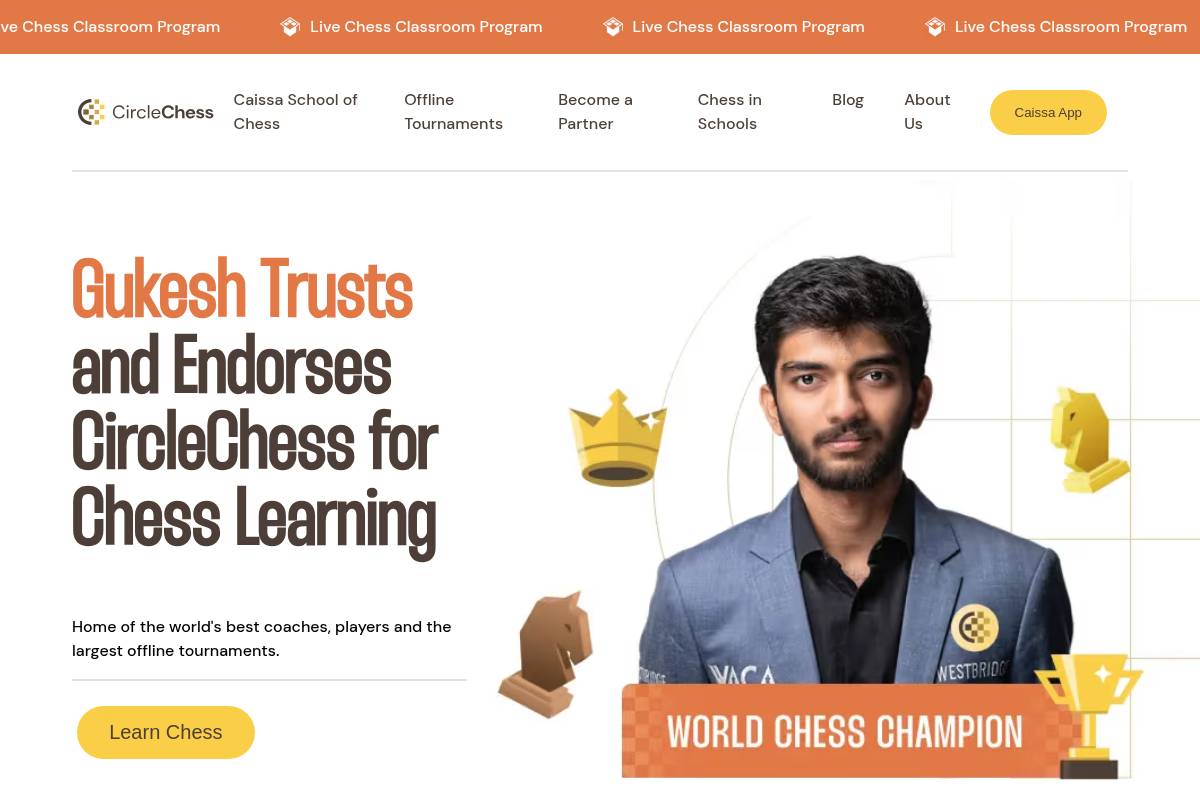
CircleChess is an online chess ecosystem integrating live classroom instruction, AI-powered self-paced tools, and a global tournament community. It stands out among Charlotte Chess Center alternatives for online USCF training, offering a curriculum designed by GM Vishnu Prasanna, former coach of World Champion Gukesh D.
Key Features
- Curriculum by GM Vishnu Prasanna: Designed by the coach of reigning World Champion Gukesh D.
- Personalized Learning Roadmap: Each student receives a customized roadmap based on individual strengths, weaknesses, and goals.
- 24x7 AI Chess Coach: Always-available AI guidance for practice, game analysis, and review.
- Structured Progression System: Levels, leagues, quests, and achievements maintain motivation between sessions.
- Chess Psychology Integration: Performance training and mental resilience are core components.
- Parent Dashboard and FIDE Pathway: Real-time progress tracking, monthly mentor reviews, and FIDE rating preparation.
Best For
CircleChess is ideal for families seeking a unified online chess ecosystem combining live coaching, self-paced AI practice, and competitive tournaments. Group classes start at approximately $2-3 per hour with free demo classes available.
Pros and Cons
- Pro: Curriculum lineage tied to a World Champion's training system.
- Pro: Integrates live coaching, AI practice, and tournaments into a single parent dashboard.
- Pro: Students receive official certification signed by World Champion Gukesh D upon milestone completion.
- Con: As a newer platform, its alumni title-holder list is smaller than established US academies.
- Con: Some advanced self-paced modules for 2200+ FIDE ratings are still in development.
Rating: 9.7/10
Key Takeaway: CircleChess offers comprehensive online chess learning distinguished by a GM-designed curriculum, AI tools, and unified coaching and tournament platform.
CircleChess: Home of the world's best coaches, players and the largest offline tournaments.
Gukesh Trusts and Endorses CircleChess for Chess Learning
2. ChessDoji: Best for Structured Rating-Based Training Plans
2. ChessDoji: Best for Structured Rating-Based Training Plans
ChessDoji offers subscription-based training with structured, cohort-based study plans for players from 0 to 2500 rating, covering openings, tactics, endgame, and game analysis.
Key Features
- Rating-Based Cohorts: Plus-Equals-Minus system fosters participation across various rating bands.
- ELO Tracking: Automatic tracking from Chess.com, Lichess, USCF, and FIDE. ELO is a rating system calculating relative skill levels; USCF is the United States Chess Federation, and FIDE is the International Chess Federation.
- Full Training Suite: Comprehensive training plan, game database with annotation tools, opening courses, and unlimited puzzles.
- Discord Community: Members can book meetings, spar positions, and review games with cohort peers.
Best For
ChessDoji suits self-motivated intermediate and advanced players seeking robust accountability. At $15 monthly or $120 annually, it's more affordable than many live coaching services.
Pros and Cons
- Pro: Exceptional value with depth of structured content at affordable price.
- Pro: Strong community with GM-hosted live workshops as optional add-ons.
- Con: Lacks dedicated parent dashboard or scholastic support for younger beginners.
- Con: Self-directed format requires high degree of independent motivation.
Rating: 8.6/10
3. US Chess School: Best for Elite Invitation-Only Talent Development
3. US Chess School: Best for Elite Invitation-Only Talent Development
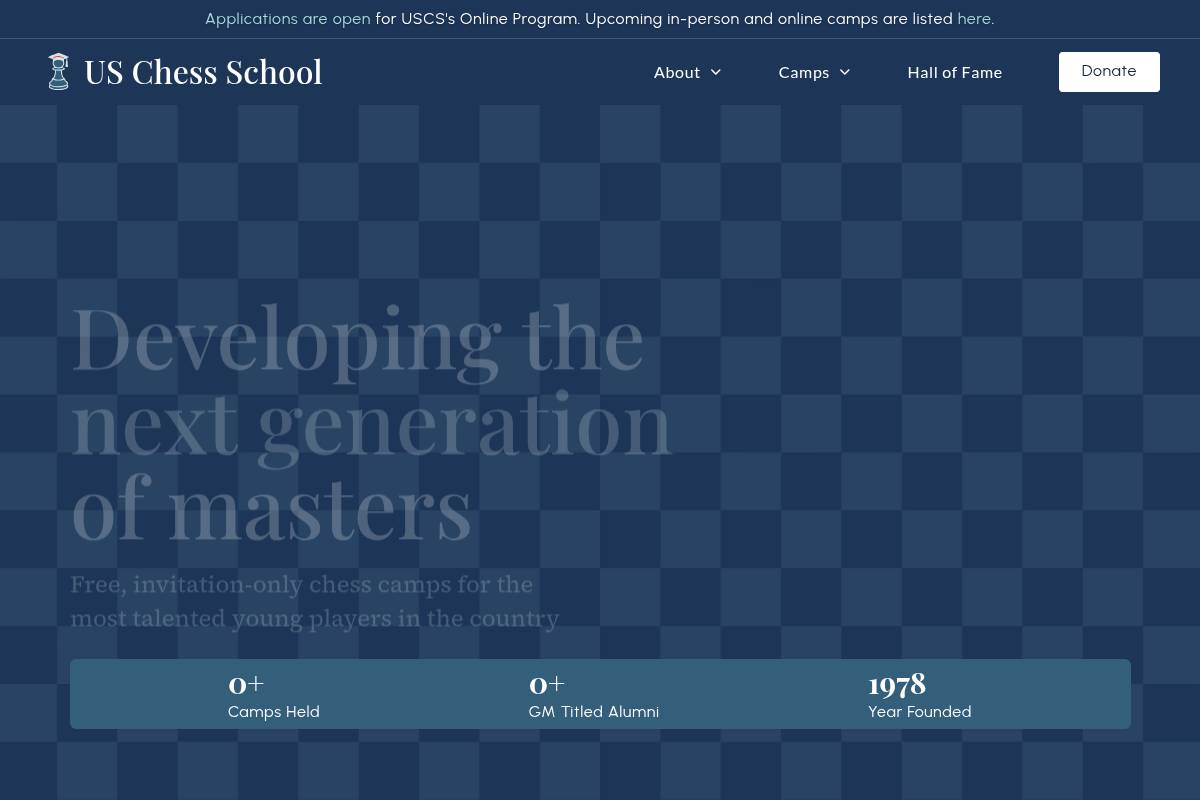
The US Chess School is a nonprofit providing free, invitation-only training camps for the most promising young chess players in the United States.
Key Features
- Elite Small-Group Camps: Multi-day training camps with 8-16 players from grandmasters and international masters.
- Online Camp Access: Year-round online camps provide the same world-class chess training as in-person programs.
- Notable Alumni: Dozens of alumni have become Grandmasters, Women Grandmasters, and International Masters.
Best For
This program is ideal for already-strong scholastic players seeking completely free, elite-level training. Acceptance is competitive and invitation-based.
Pros and Cons
- Pro: Offers completely free, world-class coaching with a track record of producing titled players.
- Con: Invitation-only, making it inaccessible for beginners or average club players.
- Con: No ongoing curriculum between camps or parent progress tracking tools.
Rating: 8.6/10
4. Kingdom of Chess: Best for Small-Group Live GM/IM Classes
4. Kingdom of Chess: Best for Small-Group Live GM/IM Classes
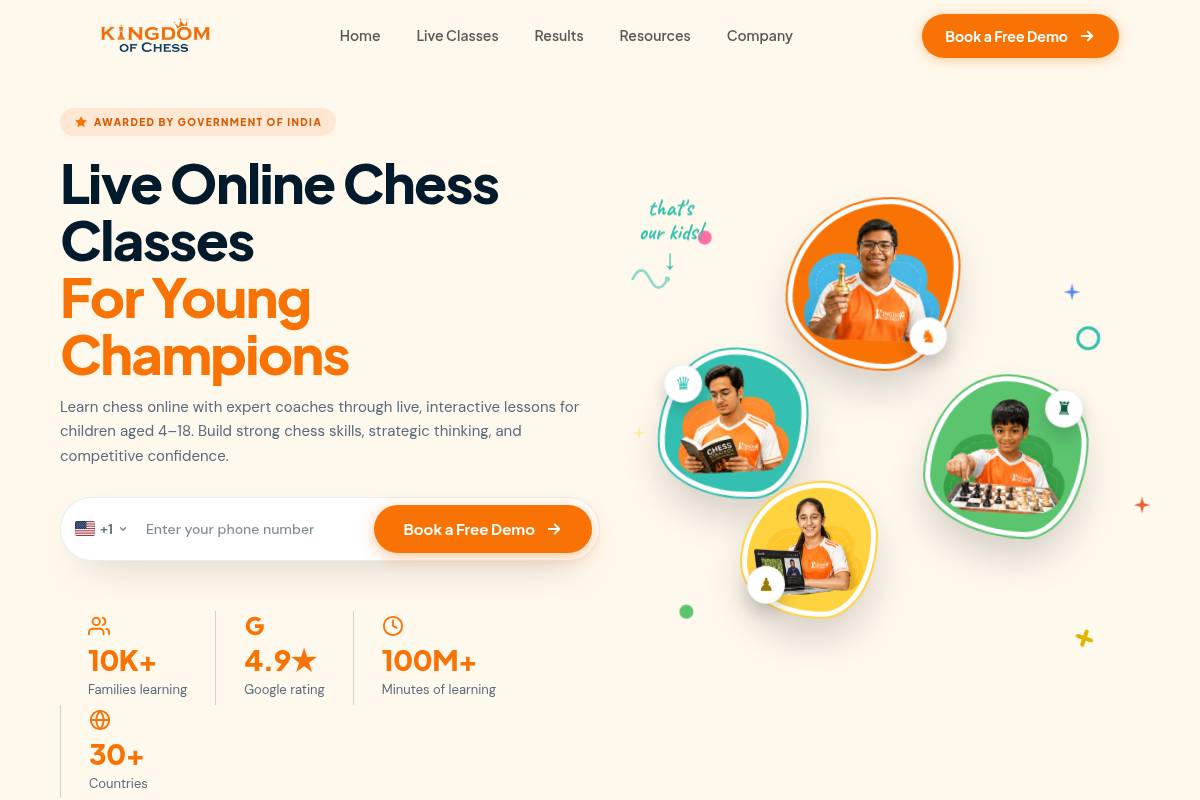
Kingdom of Chess is an award-winning online academy providing small-group, live instruction from Grandmasters and International Masters for children aged 4 to 18, trusted by over 10,000 students across 30+ countries.
Key Features
- Titled Faculty: Lead instructors are FIDE-rated Grandmasters and International Masters.
- Live, Capped Classes: Small groups ensure individual attention.
- US Pricing Tiers: Essential plans start at approximately $79 per month annually; Pro plans at $99 per month.
Best For
Kingdom of Chess is ideal for parents prioritizing direct instruction from titled coaches. It suits children aged 4 to 18 who flourish in structured, level-based learning environments.
Pros and Cons
- Pro: Consistent, direct access to GM/IM-level instructors.
- Pro: Milestone-based curriculum guides students from beginner through tournament preparation.
- Con: Lower pricing transparency compared to app-based competitors.
- Con: Fewer self-paced AI tools than tech-first platforms.
Rating: 8.5/10
5. Chessable: Best for Opening and Tactics Memorization
Chessable is an online course marketplace using spaced-repetition technology called MoveTrainer to help players memorize opening lines, tactics, strategy, and endgames through active-recall drilling.
Key Features
- MoveTrainer Technology: Users play each move rather than passively reading, enhancing retention.
- Large Author Catalog: Wide range of courses from titled players covering openings, tactics, endgames, and strategy.
- Pricing: Individual courses $20-$100; Pro subscription $11.99/month or $74.99/year.
Best For
Chessable suits intermediate to advanced players (roughly 1200-2200) solidifying specific openings or tactical patterns through repetition.
Pros and Cons
- Pro: Employs proven, cognitive-science-backed memorization method.
- Pro: Access to deep catalog of courses by recognized titled authors.
- Con: Per-course pricing accumulates quickly for comprehensive repertoire building.
- Con: No live coaching, parent dashboard, or direct USCF rating pathway.
Rating: 8.4/10
6. iChessU: Best for One-on-One Grandmaster Instruction
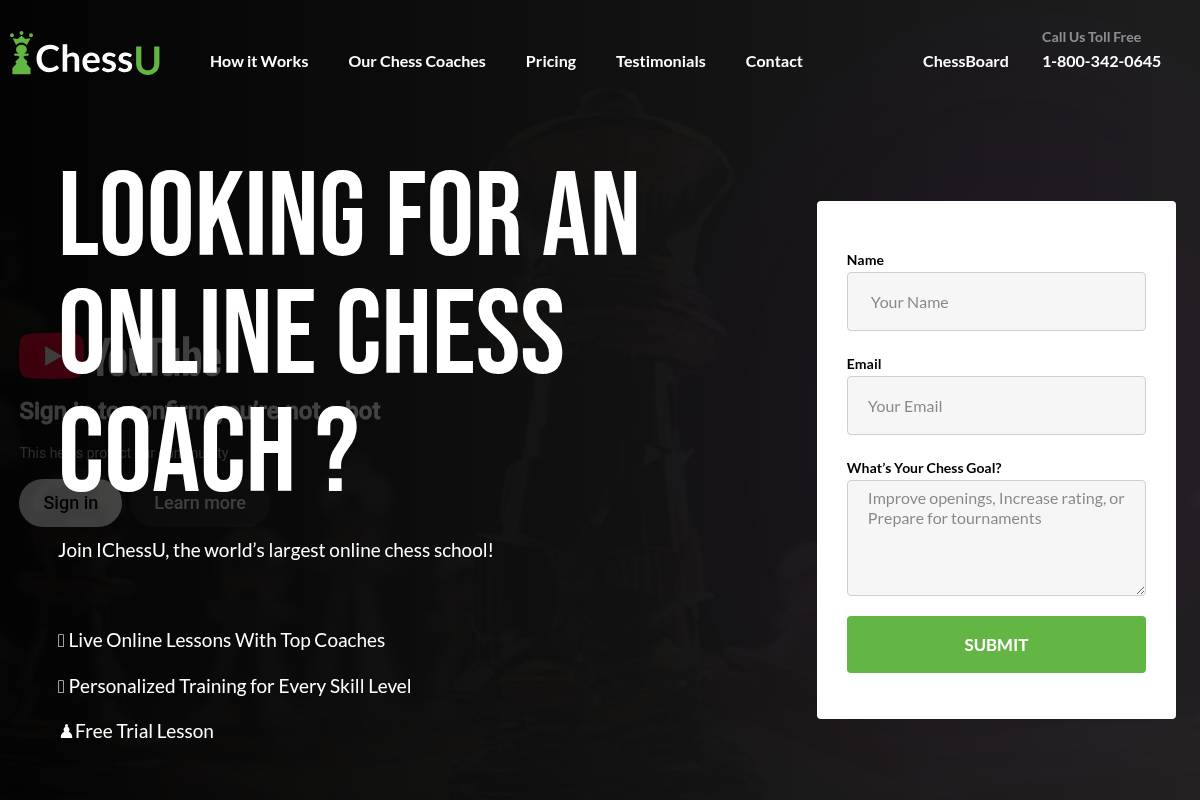
6. iChessU: Best for One-on-One Grandmaster Instruction
iChessU provides live, one-on-one instruction from FIDE masters and grandmasters. Established in 2005, its network includes instructors who trained World Championship contenders like Vladimir Kramnik and Fabiano Caruana.
Key Features
- Direct GM/FIDE Master Access: One-on-one live lessons prioritizing direct interaction.
- Serious Competitor Focus: Ideal for players aged 8+ rated 1000 USCF or higher.
- Hourly Pricing: Starting at $20 per hour.
Best For
iChessU suits rated competitive players desiring individualized attention from titled coaches.
Pros and Cons
- Pro: Genuine access to grandmasters and FIDE masters at accessible hourly rates.
- Con: Lacks AI tools, parent dashboard, or structured FIDE milestone pathway.
- Con: Less suited to beginners under 1000 USCF rating.
Rating: 8.3/10
7. Chessly: Best for Video-Based Courses With an AI Sparring Bot
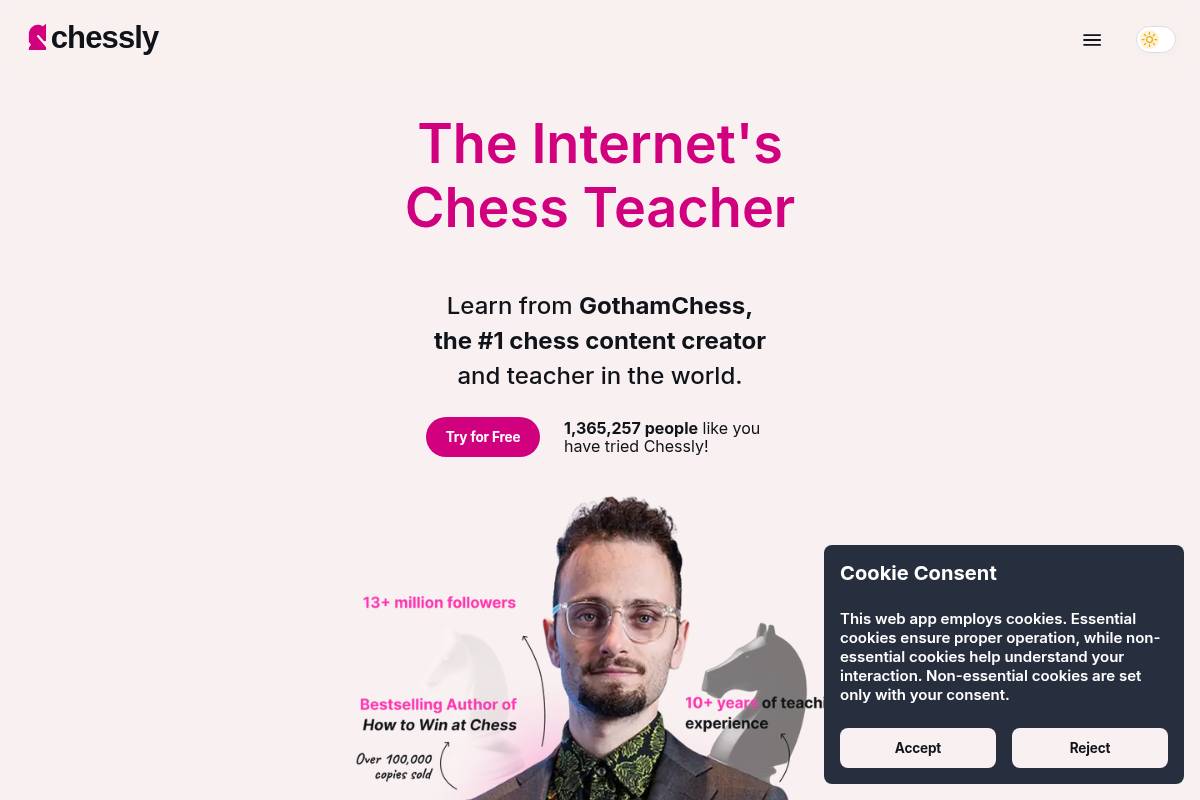
7. Chessly: Best for Video-Based Courses With an AI Sparring Bot
Chessly, created by GothamChess's Levy Rozman, features over 70 video-based courses and an AI sparring bot named Levi. It offers a free trial and 7-day money-back guarantee.
Key Features
- 70+ Courses: Wide range of opening repertoires and skills-based content via video instruction.
- AI Bot "Levi": Interactive sparring bot integrated directly into subscription.
- Pricing: Chessly Plus $9.99/month or $89.99/year.
Best For
Chessly suits younger and casual players who enjoy GothamChess's content and seek structured drilling in a familiar voice.
Pros and Cons
- Pro: Engaging, personality-driven video instruction recognizable to fans of GothamChess.
- Pro: Affordable subscription model compared to purchasing individual courses.
- Con: Lacks live human coaching and direct USCF/FIDE rating pathway tracking.
- Con: Lighter depth than academy-style curricula.
Rating: 8.1/10
8. Aimchess: Best for AI-Driven Weakness Analytics
8. Aimchess: Best for AI-Driven Weakness Analytics
Aimchess is an AI-driven analytics tool that analyzes a player's online games to identify recurring mistakes. It pulls games from Chess.com, Lichess, and Chess24, scoring play across six skill areas to create personalized training.
Key Features
- Six-Dimension Scoring: Tactics, endgame, advantage capitalization, resourcefulness, time management, and opening performance.
- Personalized Daily Workouts: Exercises drawn from a player's own recurring errors.
- Pricing: Free Standard plan (one 40-game analysis monthly); Premium $7.99/month or $57.99/year.
Best For
Ideal for intermediate to advanced players playing high volumes of rated online games seeking data-driven practice direction.
Pros and Cons
- Pro: Genuinely personalized analytics beyond generic puzzles.
- Pro: Low-cost entry point for serious self-improvers.
- Con: Requires large game sample to be useful.
- Con: No live coaching or parent-facing reporting.
Rating: 8.0/10
9. Remote Chess Academy: Best for Self-Paced Systematic Improvement

9. Remote Chess Academy: Best for Self-Paced Systematic Improvement
Remote Chess Academy is GM Igor Smirnov's self-paced video course platform offering online lessons and training materials designed to enhance strategic understanding and psychological approach to chess.
Key Features
- Systematic Framework: Self-paced video courses built around systematic decision-making framework with lifetime access.
- Psychology-Informed Coaching: Founded by GM Igor Smirnov, who holds a Master's in Psychology alongside his Grandmaster title.
- Large Following: YouTube channel has surpassed 970,000 subscribers.
Best For
Ideal for self-directed intermediate players seeking complete philosophy from a single coach. Per-course pricing allows targeting specific weaknesses without flat subscription fees.
Pros and Cons
- Pro: Deep, cohesive teaching philosophy from one experienced GM.
- Pro: Free sample lessons available before purchasing.
- Con: No live coaching or direct USCF rating pathway.
- Con: Full access bundle pricing can reach several hundred dollars.
Rating: 7.9/10
10. Chess Wizards: Best for Scholastic Beginner Programs
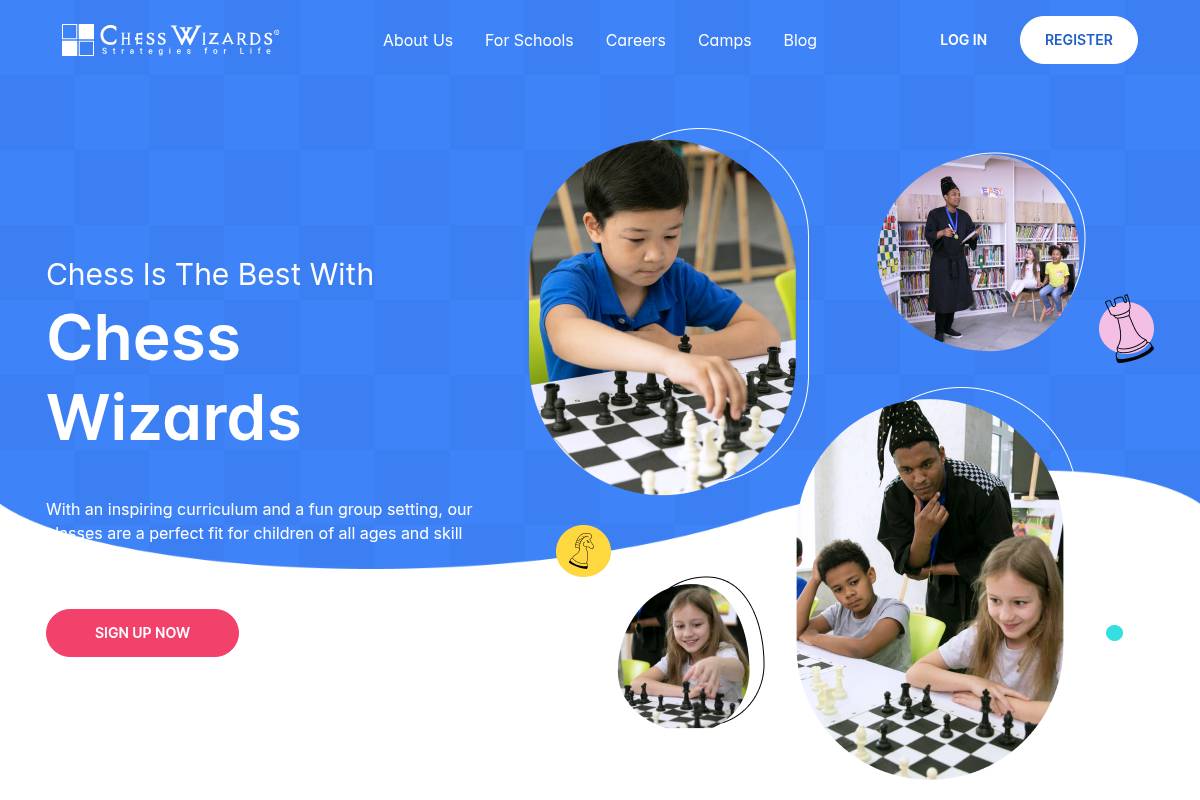
10. Chess Wizards: Best for Scholastic Beginner Programs
Chess Wizards specializes in school partnerships and beginner-friendly camps. As one of the largest chess academies nationally, it offers hundreds of programs across schools and park districts.
Key Features
- School Partnerships: Nearly 20 years of experience teaching hundreds of thousands of students.
- High-Energy Curriculum: Designed to make chess fun, incorporating tournaments and variant games.
- K-8 Programming: Available online and in-person with customized pricing per school or district.
Best For
Ideal for absolute beginners aged 5 to 12 requiring engaging, low-pressure introduction to chess.
Pros and Cons
- Pro: Extremely beginner-friendly, high-energy teaching style.
- Pro: Established nationwide footprint and strong school trust.
- Con: Not designed for competitive USCF rating acceleration.
- Con: Pricing information not transparent online; requires direct contact.
Rating: 7.6/10
Full Comparison: Charlotte Chess Center Alternatives for Online USCF Training
| Tool | Live Coaching | AI Tools | Free Tier | FIDE/USCF Pathway | Parent Dashboard | Beginner Friendly | Starting Price |
|---|---|---|---|---|---|---|---|
| CircleChess | ✓ | ✓ | ✓ | ✓ | ✓ | ✓ | Free demo; $2-3/hr |
| ChessDoji | ✓ | ✓ | ✓ | ✗ | ✗ | ✓ | $15/month |
| US Chess School | ✓ | ✗ | ✓ | ✗ | ✗ | ✗ | Free (invite-only) |
| Kingdom of Chess | ✓ | ✗ | ✓ | ✓ | ✓ | ✓ | ~$79/month |
| Chessable | ✗ | ✗ | ✓ | ✗ | ✗ | ✓ | Free; $11.99/mo PRO |
| iChessU | ✓ | ✗ | ✓ | ✗ | ✗ | ✓ | $20/hour |
| Chessly | ✗ | ✓ | ✓ | ✗ | ✗ | ✓ | $9.99/month |
| Aimchess | ✗ | ✓ | ✓ | ✗ | ✗ | ✗ | Free; $7.99/mo |
| Remote Chess Academy | ✗ | ✗ | ✓ | ✗ | ✗ | ✓ | Per-course |
| Chess Wizards | ✓ | ✗ | ✗ | ✗ | ✗ | ✓ | Contact for pricing |
How to Choose Your Online USCF Training Platform
By Budget
Under $20/month: ChessDoji, Chessable's free tier, and Aimchess's free plan cover self-paced study affordably. $20-$100/month: CircleChess group classes and Kingdom of Chess deliver live titled coaching. Over $100/month or hourly: iChessU and private GM lessons suit serious competitors seeking maximum individualized attention.
By Use Case
For competitive FIDE/USCF rating acceleration, prioritize CircleChess, Kingdom of Chess, or US Chess School (if invited). For opening memorization, Chessable and Chessly are purpose-built. For weakness diagnosis from your own games, Aimchess is the specialist. For fun, low-pressure introduction for young beginners, Chess Wizards fits best.
What Is Online USCF Training?
Online USCF training is structured chess instruction delivered over video, apps, or hybrid formats that helps players build toward official United States Chess Federation rating milestones through live coaching, self-paced drills, and rated play. Pricing and instructor quality vary widely.
| Training Format | Typical Price Range | Instructor Level | Best For |
|---|---|---|---|
| Self-paced subscription | $4-$15/month | Recorded GM content, AI | Supplemental study, casual learners |
| Live group classes (budget) | $2-$3/hour | GM-designed curriculum, live instructors | Kids, beginners, families on a budget |
| Small-group live classes | $89-$99/month | FIDE-titled coaches | Scholastic competitors, ages 5-14 |
| Premium subscription platforms | $79-$129/month | Grandmasters, video + live | Intermediate to advanced players |
| Private one-on-one lessons | $70-$150+/hour | Varies, untitled to GM | Advanced, serious competitors |
Conclusion
CircleChess stands out as the top overall pick for Charlotte Chess Center alternatives for online USCF training thanks to its curriculum lineage from GM Vishnu Prasanna, 24x7 AI coach, and combination of live classes, self-learning, and tournaments in one platform. For budget-conscious families, ChessDoji and Chessable offer excellent supplements. US Chess School remains the gold standard for elite young players earning an invitation. The most important factor is consistency: a slightly less flashy platform your child actually uses every week will outperform a premium one that gathers dust. Start with a free trial or demo, observe your child's engagement, and choose the platform your family will stick with.
Frequently Asked Questions
What is the best Charlotte Chess Center alternative for online USCF training in 2026?
CircleChess ranks highest overall, combining a curriculum designed by GM Vishnu Prasanna with 24x7 AI coaching, live classes, and a FIDE-milestone rating pathway in a single platform.
How much does online USCF chess training typically cost?
Pricing ranges from $4-$15/month for self-paced subscriptions, $2-$3/hour for budget live group classes, $79-$129/month for premium platforms, and $70-$150+/hour for private one-on-one lessons.
Can kids earn a real USCF rating through online chess classes?
Yes. Many academies include USCF-rated online games as part of their curriculum, and active USCF membership is typically required to participate in rated events.
What age should a child start online chess training?
Most structured programs accept students starting around age 4-5 for beginner classes, while elite invitation-only programs typically require players to hold strong USCF ratings.
Is CircleChess better than generic self-paced apps for improvement?
CircleChess pairs AI practice with instructor-led classes and structured mentor feedback, whereas most app-only tools focus on memorization or analytics without live coaching.
Which platform is best for absolute beginners versus advanced tournament players?
Beginners benefit from CircleChess, Kingdom of Chess, or Chess Wizards with live, structured classes. Advanced players often benefit from iChessU's one-on-one grandmaster sessions or CircleChess's FIDE-pathway milestone tracking.
Methodology: Rankings reflect publicly available pricing, product documentation, and third-party reviews as of October 2026. Ratings weigh coaching credentials, curriculum structure, technology tools, pricing transparency, and community support. Pricing and features are subject to change; verify current details directly with each provider before enrolling.