
Updated: July 2026 | Reading time: 8 min | By the CircleChess Editorial Team
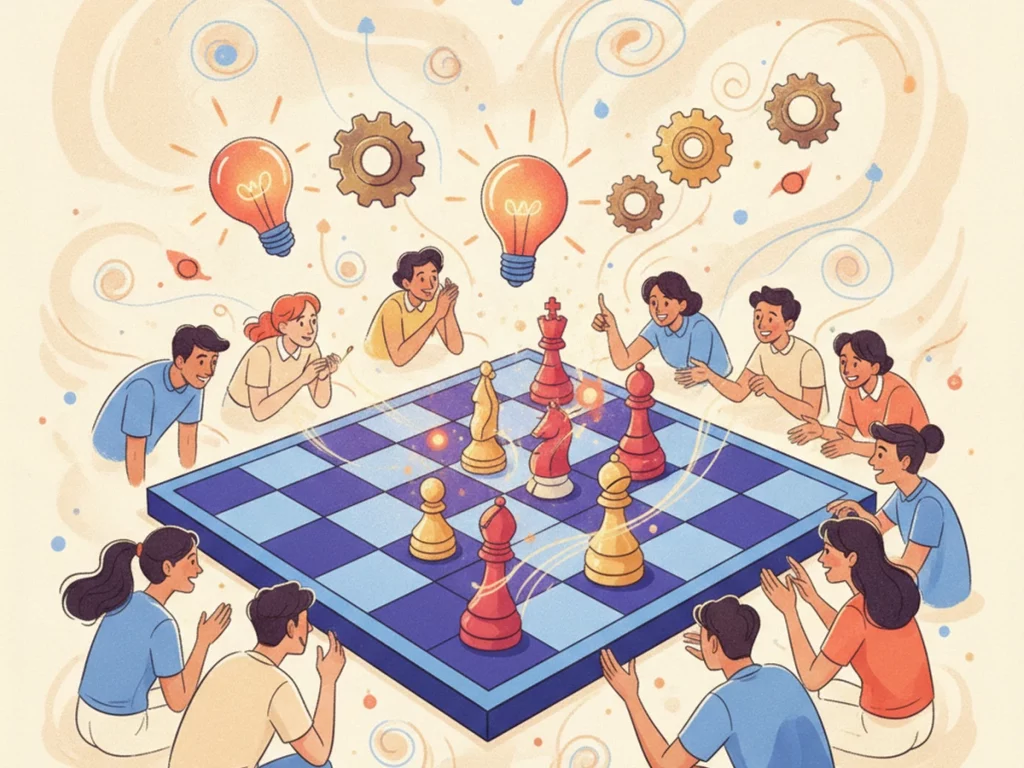
Chess simultaneously trains seven core cognitive systems in a single session: working memory, pattern recognition, strategic planning, decision-making, concentration, creative thinking, and emotional regulation. Drawing on neuroimaging studies, meta-analyses, and US school data, this article covers Why Chess Is the Best Game for Your Brain: 7 Cognitive Benefits Backed by Science.
Chess is among the highest-return investments you can make in brain development at any age, whether you’re a parent supporting your child’s development, an adult managing cognitive health, or a coach building the next generation of thinkers.
“A single chess game simultaneously demands memory, calculation, visual-spatial skill, emotional regulation, and time management — no other common activity integrates all of these cognitive systems at once.”
1. Memory and Pattern Recognition: How Chess Rewires Your Brain
Chess strengthens both working memory and long-term pattern storage measurably. A two-year controlled study found significant working memory gains in children who received weekly chess training. Expert players develop “chunked memory” — storing complex board configurations as single units, dramatically increasing recall speed.
What the Neuroimaging Evidence Shows
- Enhanced Neural Connectivity: A 2025 review of 18 neuroimaging studies found that chess players exhibit enhanced connectivity in decision-making networks, greater activation in spatial processing regions, and structural brain changes suggesting increased neural efficiency.
- Reorganized Brain Networks: A 2024 study in Frontiers in Psychology revealed that players’ brains are reorganized into highly efficient modules centered on visual, verbal, and executive processing, leading to superior visuospatial performance.
Memory Benefits by Age Group
| Age Group | Primary Memory Gain | Research Finding | Training Threshold |
|---|---|---|---|
| Ages 5–7 | Visuospatial working memory | Chess-playing children showed significantly higher visuospatial working memory scores vs. non-chess peers | 1–2 hrs/week |
| Ages 8–14 | Pattern recall and long-term storage | Children who engaged in chess demonstrated a 20% improvement in memory tasks | 4–5 months consistent practice |
| Adults 18–60 | Executive working memory | Chess activates decision-making, problem-solving, attentional processes, and working memory simultaneously | Regular weekly play |
| Adults 65+ | Processing speed and attention | A 12-week pilot study found seniors showed significant improvements in attention, processing speed, and executive function after regular chess sessions | 12+ weeks structured play |
- Chunked long-term memory: Expert players store thousands of “chunks” — patterned clusters of pieces — allowing near-instant recognition of complex positions.
- Working memory under load: Calculating future move sequences trains the same mental muscle used in math, reading comprehension, and language processing.
- Neural pathway reinforcement: Chess practice stimulates new neural connections and strengthens existing pathways, maintaining brain flexibility throughout aging.
Key Takeaway: Chess builds memory at the structural level by reorganizing how the brain stores and retrieves visual and strategic information. For deeper context, see 9 Benefits of Playing Chess: Plus Potential Downsides.
2. Critical Thinking and Problem-Solving
Every chess move requires evaluating multiple hypotheses simultaneously, rejecting inferior options, and committing to the best choice under time pressure. Research published in Frontiers in Psychology suggests that integrating chess into the curriculum is an effective strategy for developing critical thinking skills critical for academic success and lifelong learning.
The 7 Core Cognitive Benefits Chess Delivers
- Working memory: Holding multiple board states in mind while calculating variations trains circuits used in math and reading.
- Pattern recognition: Recognizing tactical motifs (forks, pins, skewers) transfers to faster pattern identification in academic and professional contexts.
- Strategic planning: Chess teaches planning several moves ahead and anticipating opponent responses — mirroring how we plan studies or projects.
- Decision-making under pressure: Chess players make more decisions based on expected value than non-chess players, reflecting stronger cost-benefit reasoning.
- Concentration and focus: Chess improves extended focus and concentration abilities.
- Creative thinking: Countless possible moves encourage thinking outside the box.
- Emotional regulation: Managing emotions in competitive play and learning from victory and defeat translates to better emotional management in other areas.
“Students who participated in chess programs improved their problem-solving abilities by roughly 32% higher than those who did not — a moderate but consistent boost confirmed across multiple study cohorts.” — Sala et al. (2017), as reported by peer-reviewed analysis
Why Chess Outperforms Other Brain Games
Unlike commercial brain-training apps, chess offers no skill ceiling, allowing improvement for decades. A single game requires memory, calculation, pattern recognition, emotional regulation, and time management — integrating all these cognitive systems simultaneously, which no isolated app can replicate.
Key Takeaway: The seven cognitive benefits activate together in every game, creating compounding mental development that no single-skill training method can replicate. For measured impact data, see The Effects of Chess Instruction on Pupils’ Cognitive and ….
To explore these concepts further, take a moment to watch the video below that highlights how chess enhances critical thinking and problem-solving skills.
3. Academic Performance: What US School Data Reveals
Across the United States, structured chess programs consistently show measurable gains in standardized test scores, with the greatest improvements in mathematics and reading.
US Academic Impact Data
| Study / Program | Subject | Improvement | Population |
|---|---|---|---|
| Poston & Vandenkieboom (2019), US tournament players | Math | 30–50% gain vs. non-chess peers | Rated tournament participants |
| Poston & Vandenkieboom (2019), US tournament players | Reading | 10–20% gain vs. non-chess peers | Rated tournament participants |
| First Move Chess (US Program) | Math & Reading | 10–15% higher on standardized tests | US elementary students |
| Stuart Margulies, Ph.D. (US) | Reading | Elementary students who played chess scored 10% higher on reading tests | US elementary students |
| Liptrap Study (US, Grade 5) | Math & Reading | 4.3 points higher in reading; 6.4 points higher in math on state testing | 5th-graders, US public schools |
- Dose-Dependent Gains: Math improvements require 25–30 hours of chess instruction — roughly one lesson per week during the school year — as the minimum threshold.
- Amplified by Competition: Students in structured instruction and tournaments show more substantial academic gains than casual players.
- Consistent STEM Improvement: Chess programs show particular promise for enhancing STEM education performance.
- Broad Academic Impact: Chess results in increased scores on standardized tests for both reading and math.
Key Takeaway: US data shows chess improves academic outcomes — especially math — and the effect scales with instruction quality and frequency. For supporting data, see Does Chess Really Improve Cognitive Function?.
4. Focus, Attention, and ADHD
For children struggling with sustained attention, chess demands focus naturally — an overlooked opponent move means a lost piece, training attention intrinsically rather than through external discipline.
Evidence for Chess and Attention Regulation
- ADHD Symptom Reduction: A 2016 study of 100 school-age children with ADHD found regular chess playing resulted in a 41% decrease in both inattentiveness and over-activity.
- Improved Concentration: Studies report positive effects on concentration, listening skills, and task focus in children aged 11–13, plus reduced symptoms in children aged 6–17.
- Impulse Control Training: Children in 10–12 weeks of chess training showed improved focus. Chess players with ADHD were less impulsive, performing better on patience-requiring tasks.
- Intrinsic Motivation for Focus: Chess provides a structured environment where focused attention is a natural requirement, helping children develop this difficult skill.
How Chess Engages Brain Regions Affected by ADHD
Chess activates brain areas involved in planning, judgment, memory, and visual processing. Since ADHD links to these same regions and executive functions, chess represents a viable non-drug, therapy-based support tool that directly trains affected networks.
CircleChess integrates chess psychology and performance training into every level of its curriculum, built on a curriculum developed by GM Vishnu Prasanna, coach behind World Champion Gukesh D.
Key Takeaway: Chess builds attention organically because the game itself creates conditions making focus rewarding, not obligatory. For deeper context, see The Benefits of Chess in Building Young Minds.
CircleChess: Home of the world's best coaches, players and the largest offline tournaments.
Gukesh Trusts and Endorses CircleChess for Chess Learning
5. Emotional Resilience and Long-Term Brain Health
Chess builds emotional resilience in children and protects cognitive function in older adults — making it genuinely lifespan-spanning in benefits.
Emotional Resilience in Children
- Productive Response to Loss: Chess instruction builds patience and self-discipline, highlighting its role in learning from mistakes.
- Frustration Tolerance: Improved emotional resilience helps children stay calm during games, developing resistance to frustration and improving self-control in daily life.
- Empathy and Perspective-Taking: Chess fosters emotional intelligence by enhancing self-awareness and empathy through considering opponents’ perspectives.
- Grit and Growth Mindset: Losing teaches children to handle setbacks with grace, building “grit” — analyzing mistakes, learning, and trying again.
Protecting the Aging Brain from Cognitive Decline
- Building Cognitive Reserve: Playing strategy games like chess helps brains build “cognitive reserve,” enabling them to better cope with age-related damage or dementia.
- Reducing Dementia Risk: Research in JAMA found mentally stimulating activities, including chess, were associated with a 9% lower dementia risk in healthy 70-year-olds.
| Life Stage | Key Benefit | Supporting Evidence |
|---|---|---|
| Early childhood (5–10) | Emotional resilience, patience, self-discipline | Significant improvements in attention, memory, logical thinking, patience, and self-discipline vs. controls |
| School age (10–18) | Grit, focus, academic confidence | Reduced ADHD symptoms; 30–50% math gains in tournament players |
| Adulthood (18–60) | Strategic decision-making, stress management | Superior expected-value reasoning vs. non-chess players |
| Older adults (65+) | Cognitive protection, dementia risk reduction | 12-week chess training programs show measurable improvements in institutionalized older adults with cognitive challenges |
CircleChess provides live instructor-led classes, an AI-powered coach available 24/7, monthly skill assessments, and a FIDE rating pathway. With a 9.5/10 satisfaction rating across 5,000+ families in 30+ countries, it is rated the world’s #1 online chess school.
Key Takeaway: Chess delivers measurable cognitive and emotional returns from age five through age eighty.
Conclusion
Chess is one of the most scientifically validated tools for building memory, critical thinking, focus, emotional resilience, and long-term brain health. The benefits of chess for the brain are broad, durable, and compounding.
- Neural Structure and Memory: Chess physically reorganizes brain networks toward greater efficiency, with visuospatial and working memory gains confirmed across all age groups.
- The 7 Interlocking Benefits: Planning, pattern recognition, decision-making, focus, creativity, emotional regulation, and working memory all activate together in a single game.
- Measurable Academic Gains: US school programs consistently report 10–50% improvements in math and reading scores, with effects scaling with instruction depth and consistency.
- Attention and ADHD Support: Structured chess reduces inattentiveness by up to 41% in clinical populations and builds self-regulation transferring to the classroom.
- Lifespan Brain Protection: From building grit in kindergarteners to reducing dementia risk in adults over 70, chess offers cognitive benefits at every life stage.
Explore a free demo class at CircleChess — the chess school built by a World Champion’s coach, designed to take any child from first move to mastery through live coaching, AI-powered tools, and the world’s largest chess learners community across the USA.
FAQ
Why is chess the best game for your brain?
Chess is one of the only activities that simultaneously trains seven core cognitive systems: working memory, pattern recognition, strategic planning, decision-making, concentration, creative thinking, and emotional regulation. Neuroimaging shows chess players develop more efficient, better-connected brain networks. Meta-analyses confirm structured chess instruction leads to 10-50% academic gains in math and reading, making it a uniquely comprehensive brain development tool.
At what age should a child start learning chess?
Ages 5–7 represent an optimal developmental window. Children at this stage are building foundational skills in rule-based thinking, patience, and focus. A 2025 study found kindergarten-age children showed significant improvements in attention, memory, logical thinking, and math scores after structured chess instruction. Children starting at 9, 12, or in their teens can still achieve high competitive levels with consistent, quality coaching.
Does chess really improve IQ scores in children?
Multiple studies support a meaningful link. A Venezuelan study of 4,000 second-graders found measurable IQ score increases after just 4.5 months of chess instruction. A meta-analysis by Sala and Gobet (2016) found positive effects on cognitive ability (effect size d = 0.34). Four to five months of consistent, structured lessons can lead to measurable IQ gains in fluid intelligence, working memory, and logical reasoning.
Can chess help children with ADHD?
Yes. A 2016 study of 100 school-age children with ADHD found regular chess practice led to a 41% reduction in inattentiveness and hyperactivity. Chess works because consequences are immediate and intrinsically motivating: an unfocused move costs a piece. This natural feedback loop trains impulse control and self-regulation as play rather than therapy.
Does playing chess protect against dementia in older adults?
Research cited in JAMA associated mentally stimulating activities like chess with a 9% lower dementia risk among healthy 70-year-olds. Chess may help the brain cope with dementia-related damage by building cognitive reserve.
How much chess does a child need to see cognitive benefits?
One to two hours of structured chess instruction and practice per week produces measurable cognitive gains. A meta-analysis found 25–30 hours of total instruction — roughly one lesson per week over a school year — is the minimum threshold for meaningful academic benefits. Quality and structure of instruction matter as much as quantity.
How is CircleChess different from teaching at home or through a casual app?
CircleChess is built on a curriculum designed by GM Vishnu Prasanna — coach behind World Champion Gukesh D — and integrates chess psychology and performance training into every level. Students receive personalized learning roadmaps, monthly skill assessments, an AI-powered coach available 24/7, parent dashboards with real-time progress tracking, and a FIDE rating pathway. This structured system produces the academic benefits that research attributes to quality, consistent instruction.
Is chess beneficial for girls and children from diverse cultural backgrounds?
Absolutely. The cognitive benefits — working memory, focus, critical thinking, emotional resilience — are neurological and independent of gender, ethnicity, or cultural background. US school programs across diverse student populations, including Special Education classrooms, consistently report improvements in reading, math, and social behavior. CircleChess serves 5,000+ families across 30+ countries with live programs now available across the USA.
Methodology and Disclaimer: This article synthesizes findings from peer-reviewed studies, published meta-analyses, and US educational program reports available as of July 2026. All statistics are attributed to their original sources. Research on chess and cognition continues to evolve; individual outcomes vary based on age, instruction quality, frequency of practice, and other factors. This article is for informational purposes only and does not constitute medical, therapeutic, or educational advice. For clinical concerns such as ADHD or cognitive decline, consult a qualified healthcare professional.