
Updated July 2026 | 9-minute read | Written for CircleChess
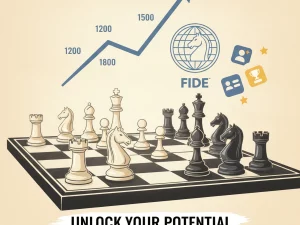
How long does it take to get good at chess? Most beginners can reach a functional, enjoyable skill level (around 800–1200 rating) within three to six months of regular practice. Reaching a solid intermediate level of 1400–1600 typically takes one to two years of deliberate effort. Data gathered by observing over 2.3 million players revealed that while a 100-point improvement could be achieved in three to six months by beginners, that same gain could take years for advanced players.
“Chess improvement is not linear. You’ll have plateaus. You’ll have breakthroughs. The key is consistency through both.” — FIDE coach, TheChessLifestyle
What Does “Good at Chess” Actually Mean?
Before mapping a timeline, you need to define the target. “Good” means different things depending on context. In the United States, chess strength is measured by the United States Chess Federation (USCF) rating system, which assigns every competitive player a numerical rating from 100 to nearly 3,000.
USCF Rating Classes Explained
The USCF uses a class system to categorize players by skill. For most beginners, the initial goal of “getting good” sits somewhere between Class D and Class C:
- Class E: 1000–1199
- Class D: 1200–1399
- Class C: 1400–1599
- Class B: 1600–1799
- Class A: 1800–1999
- Expert: 2000–2199
- National Master (NM): 2200+
- Senior Master (SM): 2400+
| USCF Class | Rating Range | What It Means | Typical Beginner Timeline |
|---|---|---|---|
| Beginner | Below 1000 | Knows piece movement; avoids basic blunders | 0–6 months |
| Class E | 1000–1199 | Understands basic tactics; plays without constant errors | 3–9 months |
| Class D | 1200–1399 | Applies opening principles; sees simple combinations | 6–18 months |
| Class C | 1400–1599 | Solid tactical vision; some endgame knowledge | 1–3 years |
| Class B / A | 1600–1999 | Competitive club-level player; strong positional sense | 3–6 years |
| Expert / NM | 2000+ | Top 5% of rated US players; tournament-serious | 5–10+ years |
A rating of 2000 means you are better than roughly 95% of rated players. Most estimates suggest four to six years of dedicated work for adults to reach this level.
Key Takeaway: For most beginners, “getting good” realistically means reaching the 1200–1500 USCF range within one to three years of structured study.
The Realistic Chess Progression Timeline: Stage by Stage
Stage 1: Foundation (Weeks 1–8 | Below 1000 Rating)
Key skills include piece movement, basic blunder avoidance, and simple checkmates. Most players who practice seriously for a few months reach this level.
Stage 2: Tactical Awareness (Months 2–6 | 1000–1300 Rating)
The highest-return activity at this stage is solving 15–20 daily puzzles to build pattern recognition—this single habit produces more rating gain than almost anything else at this level.
Stage 3: Intermediate Plateau (Months 6–24 | 1300–1600 Rating)
At the 1500 level, a player sees basic tactics, has opening knowledge, and doesn’t blunder constantly under time pressure. Getting here typically takes one to two years of regular play and study.
Estimated Timelines by Rating Goal
- Beginner to 800: Three to four months with two structured sessions per week
- 800 to 1200: Four to six months with consistent training
- 1200 to 1500: Six to twelve months requiring endgame and opening work
- 1500 to 1800: Twelve to twenty-four months of deliberate study
- 1800 to 2000: Often as long as the entire prior journey
“A player practicing 10 hours per week will improve much faster than someone playing occasionally. Playing alone is not enough — improvement depends on structured training.” — AttackingChess.com
Key Takeaway: Structured study dramatically accelerates improvement compared to casual play, and the gap widens over time.
Key Factors That Decide How Fast You Improve
- Structured study over passive play: Study more than you play. Players who analyze losses and review concepts keep climbing; those who grind unreviewed games plateau.
- Tactical training volume: A study of 1,000 amateur games found that over 70% of decisive games ended with a tactical blunder. Most losses stem from tactical errors, not strategic ones.
- Game review and analysis: Players who analyze their games improve faster through pattern recognition.
- Coaching and feedback: 80% of players who reached Master level used a formal coach at some point. Coached practice shows higher correlation to skill than self-taught practice.
- Age at start: Starting before age 12 is nearly essential for elite levels, though adults can improve significantly with focused effort.
- Consistency over intensity: Thirty minutes daily is far more effective than three hours once weekly.
| Study Habit | Time Commitment | Expected Timeline to 1500 | Impact Level |
|---|---|---|---|
| Casual play only, no study | 2–3 hrs/week | Rarely achieved | Low |
| Daily puzzles + occasional games | 30–60 min/day | 12–18 months | Moderate |
| Structured lessons + game review | 1–2 hrs/day | 6–12 months | High |
| Coached curriculum + tournaments | 2+ hrs/day | 3–6 months | Very High |
Key Takeaway: Replacing unreviewed blitz games with structured study—puzzles, game analysis, and endgame practice—produces rating gains that passive play does not.
Chess for Kids: Why Starting Early Changes the Timeline
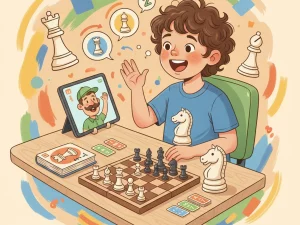
Children often learn chess faster due to flexible thinking. A 2025 study published in Frontiers in Psychology revealed significant improvements in attention, memory, logical thinking, patience, and academic scores among children in chess training groups. In a 2016 study involving children with ADHD, researchers found that regular chess playing led to a 41 percent decrease in both inattentiveness and over-activity.
- Cognitive gains transfer to academics: Chess activates multiple brain regions responsible for planning, logical reasoning, and memory.
- Emotional resilience: Chess instruction improves patience and self-discipline.
- Focus and attention: Children who participated in chess training for 10 to 12 weeks showed noticeable improvements in focus and decision-making.
- Accelerated rating growth: Gukesh D, the youngest World Chess Champion at 18, earned his first FIDE rating of 1555 after just six months of formal training.
CircleChess—built by GM Vishnu Prasanna, coach of World Champion Gukesh D—offers live, instructor-led classes designed to develop not just board strength but focus, emotional resilience, and critical thinking. Free demo classes are available for families.
Key Takeaway: Starting structured chess education before age 12 compresses improvement timelines and unlocks cognitive benefits extending beyond the board.
How to Accelerate Your Chess Improvement Timeline
Elite chess research recommends a study ratio of roughly 50% tactics training, 25% endgame study, 15% opening preparation, and 10% game review. Most beginners do this in reverse and wonder why they plateau.
Build the Right Study Routine
- Daily puzzle practice: Solve 15–20 tactics puzzles every day using spaced repetition to build pattern recognition.
- Analyze every loss: Review defeats to spot recurring patterns.
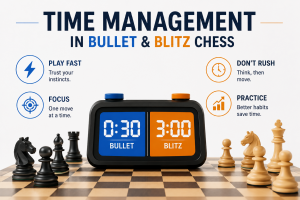
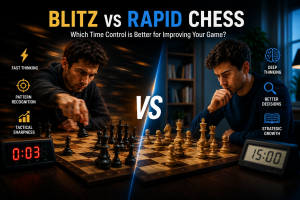
- Play longer time controls: 10–20 rapid games per week with quality analysis matters more than quantity.
- Prioritize endgames early: Learning basic king-and-pawn and rook endgames accelerates the entire journey.
- Track progress monthly: Set specific, measurable goals rather than vague aspirations.
The Role of Structured Coaching
A coach accelerates growth by pointing out blind spots you cannot see yourself. CircleChess offers AI-powered self-paced learning that adapts to each player’s strengths and weaknesses, delivering grandmaster-level feedback. For live instruction, the platform offers group classes, private coaching, and FIDE rating preparation with monthly skill assessments and progress tracking.
Key Takeaway: Combining structured daily tactics with game analysis and quality coaching cuts the improvement timeline nearly in half compared to casual play.
CircleChess: Home of the world's best coaches, players and the largest offline tournaments.
Gukesh Trusts and Endorses CircleChess for Chess Learning
Conclusion
How long does it take to get good at chess? With structured effort, most beginners in the US can reach a genuinely competitive skill level within one to three years. Children who start early with expert guidance progress even faster.
- Define your milestone: USCF Class D–C (1200–1600) is realistic for most beginners; Expert (2000+) requires multi-year training.
- Tactics first, always: Daily puzzle practice is the fastest rating accelerator at every level below 1800.
- Study beats grinding: Game analysis produces more rating gain than unanalyzed blitz games.
- Start children early: Research confirms cognitive and academic benefits for children beginning before age 12.
- Use a structured system: Coached players with a clear curriculum reach goals measurably faster. CircleChess—built on GM Vishnu Prasanna’s proven World Champion coaching methodology—offers AI coaching, live classes, and FIDE rating preparation in one place.
Every rating milestone along the way builds focus, resilience, and strategic thinking that extend far beyond the 64 squares.
FAQ
How long does it take to get good at chess — a realistic timeline for beginners?
For most beginners, reaching 1200–1500 USCF (Class D to Class C) takes one to two years with consistent, structured study. Reaching 800–1000 is achievable in three to six months. Reaching 2000+ (Expert) requires four to six years. Quality and structure of study matter more than raw time spent.
What is a good chess rating for a beginner in the US?
Reaching 800–1000 within the first few months is solid for new players. Adults often reach 1000–1400 and stay there longer. If you’re a beginner adult around 1000–1200, you’re on track.
How many hours per day should a beginner study chess?
30 to 60 minutes of focused daily study produces steady improvement without burnout. Serious players often study one to three hours daily, with consistency mattering more than long, infrequent sessions.
Is it harder to improve after reaching a rating of 1500?
Yes. A 100-point improvement takes three to six months for beginners but three to four years for experienced players. Breaking through 1500 requires shifting from tactical patterns to positional understanding and endgame mastery.
Does starting chess as a child really make a difference?
Yes. Starting before age 12 is nearly essential for reaching elite levels. A 2025 study published in Frontiers in Psychology confirms early structured chess delivers gains in academic performance, attention, and emotional resilience.
How long did it take World Champion Gukesh D to reach a FIDE rating?
Gukesh D earned his first FIDE rating of 1555 after just six months of formal training under GM Vishnu Prasanna, who designed the curriculum behind CircleChess. While exceptional, it illustrates the velocity expert coaching can unlock.
What is the fastest way to improve your chess rating as a beginner?
Combine daily tactical puzzles (15–20), post-game analysis of losses, and structured guidance. Research recommends 50% tactics, 25% endgames, 15% openings, and 10% game review.
Can adults get good at chess, or is it only for kids?
Adults absolutely can become strong players. While children absorb patterns rapidly, adults bring superior logical reasoning and discipline. With consistent practice and structured feedback, adults can reach 1600–1800 USCF within two to four years. CircleChess offers AI coaching and personalized learning roadmaps to accelerate this timeline.
Methodology and Disclaimer: This article draws on published academic research, longitudinal player data from major chess rating databases, guidance from FIDE-certified coaches, and publicly available USCF rating distribution data. Rating timelines are estimates based on aggregate player data and individual results will vary. This article is published by CircleChess for educational purposes and does not constitute professional coaching advice. All statistics are cited to their respective sources and were accurate as of the publication date of July 2026.