
Updated June 2026 · 9 min read · Written for Chess Enthusiasts, Parents & Beginners
Understanding how chess ratings work is essential for any serious chess player. A chess rating is a single number measuring your playing strength relative to other rated players worldwide. This guide covers the three major rating systems: the Elo formula (the mathematical foundation), FIDE (the global standard), and online platforms. Each uses different rules, scales, and update cycles — which is why a rating from one system doesn’t translate directly to another.
“A chess rating isn’t a judgment — it’s a compass. It tells you exactly where you are so you can plan where you’re going.”
What Is the Elo Rating System in Chess?
The Elo rating system is the mathematical foundation behind nearly all chess ratings. Developed by physics professor Arpad Elo in the 1960s and adopted by FIDE in 1970, it assigns each player a number — typically between 100 and 3000 — that predicts their probability of winning against any opponent. When you beat a higher-rated player, you gain more points than if you beat a lower-rated one. The system rewards playing above your rating and punishes losses to stronger opponents less severely.
How the Elo Formula Works
The system calculates an “expected score” before each game, estimating your probability of winning based on the rating difference. If you perform better than expected, you gain points; if you underperform, you lose them. The size of the swing is controlled by the K-factor.
- K-factor for new players (K=40): Ratings adjust quickly to reflect actual skill.
- K-factor for most players (K=20): Moderate swings per game, balancing responsiveness with stability.
- K-factor for top players (K=10): Players rated above 2400 see smaller adjustments, reflecting consistent elite performance.
- Rating difference edge: A 200-point rating gap means the stronger player is expected to win roughly 75% of the time.
A Practical Example
If you are rated 1200 and defeat a player rated 1400, the formula might award you +18 points instead of +10 — because you outperformed expectations. This reward structure incentivizes playing against stronger opponents.
| Rating Difference (Opponent Minus You) | Your Expected Score | Points Gained if You Win (K=20) | Points Lost if You Lose (K=20) |
|---|---|---|---|
| 0 (equal rated) | 50% | +10 | -10 |
| +200 (opponent stronger) | ~24% | +15 | -5 |
| -200 (you stronger) | ~76% | +5 | -15 |
| +400 (opponent much stronger) | ~9% | +18 | -2 |
Key Takeaway: The Elo system rewards playing against stronger opponents. Beating a higher-rated player yields larger gains; losing to one costs very little. This structure encourages competing up, not avoiding strong opposition.
FIDE Ratings: The Global Official Standard
The FIDE rating (issued by the Fédération Internationale des Échecs) is the most universally recognized measure of chess strength. It appears on grandmaster certificates, determines entry into elite tournaments, and is referenced for college scholarships. For serious players, earning a FIDE rating is a meaningful milestone.
How to Get a FIDE Rating
- Play in FIDE-rated events: Compete in officially sanctioned over-the-board tournaments. In the U.S., many US Chess Federation (USCF)-affiliated tournaments are also FIDE-rated.
- Minimum game threshold: Complete at least five rated games against FIDE-rated opponents before an initial rating is published.
- Rating categories: FIDE issues separate ratings for Standard (classical), Rapid, and Blitz time controls — each tracked independently.
FIDE Title Thresholds
| Title | Minimum FIDE Rating | Additional Requirements |
|---|---|---|
| Candidate Master (CM) | 2200 | Rating only |
| FIDE Master (FM) | 2300 | Rating only |
| International Master (IM) | 2400 | 3 IM norms required |
| Grandmaster (GM) | 2500 | 3 GM norms required |
Key Takeaway: A FIDE rating above 2000 places a player in roughly the top 5% globally. For U.S. youth, reaching 1500–1800 FIDE is a competitive goal that opens doors to scholastic and collegiate opportunities.
US Chess (USCF) Ratings: The American Standard
For most U.S. chess players, the US Chess Federation (USCF) rating is their primary measure of over-the-board strength. USCF ratings are used for K-12 scholastic tournaments, national championships, and club play. They use a modified Elo system and typically run 50–100 points higher than equivalent FIDE ratings.
USCF Rating Categories
- Class J / Beginner (below 1000): Players learning fundamentals. Common for children under 10 in their first year.
- Class E–D (1000–1399): Developing players with basic opening, tactical, and endgame knowledge.
- Class C–B (1400–1799): Intermediate club players with solid positional understanding.
- Class A (1800–1999): Strong club players representing roughly the top 15% of active USCF-rated players.
- Expert (2000–2199): Tournament-level tactical and strategic mastery.
- Master (2200+): The National Master (NM) title is awarded at 2200.
USCF updates ratings after every tournament event. Players can track rating history through the USCF member services portal. USCF membership (currently $25/year for scholastic members) is the essential first step for U.S. tournament participation.
Key Takeaway: USCF ratings are the most relevant benchmark for U.S. tournament play, particularly for K-12 students. They are not directly interchangeable with FIDE or online ratings.
Online Chess Ratings: What the Numbers Really Mean
Online platform ratings are designed for rapid feedback, not official measurement. They use Elo-derived formulas (often Glicko-2) and diverge significantly from USCF or FIDE ratings due to different player pools, time controls, and rating inflation. A 1500 on one platform may represent a different skill level than a 1500 USCF.
Why Online Ratings Differ from OTB Ratings
- Pool size and inflation: Platforms with millions of users often experience rating inflation over time.
- Time control variety: Bullet, Blitz, Rapid, and Classical produce separate ratings — a player can have drastically different numbers across formats.
- Glicko-2 system: Many platforms use Glicko-2, which tracks “rating deviation” — a confidence measure. New accounts start with high deviation, causing early ratings to swing dramatically.
- Unverified identity: Online play cannot verify who is at the keyboard, affecting rating integrity compared to OTB events.
Approximate Online-to-OTB Rating Mapping
| Skill Level | Typical Online Rapid Rating | Approximate USCF Equivalent | Approximate FIDE Equivalent |
|---|---|---|---|
| Absolute Beginner | Below 600 | Below 600 | Unrated |
| Casual Beginner | 600–1000 | 500–900 | Unrated / below 1000 |
| Developing Player | 1000–1400 | 900–1300 | 1000–1200 |
| Intermediate | 1400–1800 | 1300–1700 | 1200–1600 |
| Advanced Club Player | 1800–2200 | 1700–2100 | 1600–2000 |
| Expert / Master | 2200+ | 2000–2200+ | 2000–2400+ |
Key Takeaway: Treat online ratings as training tools, not official credentials. They are excellent for tracking weekly progress but should not be confused with OTB ratings.
What Is a Good Chess Rating?
A “good” rating is relative to context — age, playing duration, format, and goals. In the U.S., a USCF rating of 1000 after one year of serious study is solid early progress; reaching 1400–1600 within two to three years signals genuine competitive development.
Benchmarks by Player Profile
- First-year youth player (ages 6–10): Unrated or sub-600 USCF is normal. Focus on learning pieces, tactics, and enjoying competition.
- Active scholastic player (ages 10–14, 2–3 years): USCF 1000–1400 indicates solid progress. Players in this range compete in state and regional championships.
- Serious competitive student (ages 12–18): USCF 1600–2000 puts a student in contention for state titles and college chess scholarship consideration. Structured programs like CircleChess — built on a curriculum by GM Vishnu Prasanna, coach of World Champion Gukesh D — provide personalized FIDE rating pathways.
- Adult club player: USCF 1200–1600 is highly competitive and enjoyable for local club play.
“The most dangerous rating is the one you stop trying to improve. Every 100 points of rating growth represents measurable leaps in pattern recognition, calculation depth, and competitive confidence.”
Key Takeaway: Structure, coaching quality, and consistent study matter far more than raw talent in determining rating growth.
How to Improve Your Chess Rating
Deliberate, structured study consistently outperforms unguided practice. Research shows skill acquisition in chess accelerates dramatically when learners receive targeted feedback on specific weaknesses rather than repeating what they already know.
The Core Study Framework
- Tactics training daily: Tactical puzzles are the single highest-return activity for players under 1800. Even 15–20 minutes daily produces measurable improvement within weeks.
- Endgame fundamentals before openings: Most beginners over-invest in opening memorization. King and pawn endgames and basic rook endgames deliver more practical tournament points.
- Game analysis with a coach or engine: Reviewing losses identifies recurring mistakes that puzzle training alone cannot fix.
- Compete in rated over-the-board events: OTB tournament play develops competitive resilience that online play cannot replicate.
- Track progress systematically: Platforms like CircleChess offer monthly skill assessments and detailed growth reports with AI-powered analysis available 24/7.
Common Mistakes That Stall Rating Growth
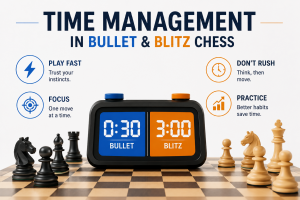
- Playing only bullet chess: One- and two-minute games suppress deep calculation habits. Players who play almost exclusively bullet often plateau below their potential OTB rating.
- Skipping the middlegame: Most games are decided in the middlegame through tactics or positional errors. Players focusing only on openings hit a ceiling early.
- No structured curriculum: Random YouTube videos rarely produce systematic improvement. A structured progression — like CircleChess‘s level-based system with leagues and quests — ensures no foundational concept is skipped.
Key Takeaway: The fastest path to a higher rating is identifying specific weaknesses and practicing those areas deliberately, ideally with a qualified coach.
CircleChess: Home of the world's best coaches, players and the largest offline tournaments.
Gukesh Trusts and Endorses CircleChess for Chess Learning
Conclusion
Chess ratings are powerful tools for measuring and motivating growth. Understanding the system transforms a rating from anxiety into a roadmap for improvement.
- Elo is the engine: The mathematical formula calculates expected outcomes and adjusts scores based on actual results.
- FIDE is the global standard: Official FIDE ratings require over-the-board play and are the benchmark for titles and elite competition.
- USCF is the U.S. standard: For American scholastic and club play, USCF ratings are most relevant and updated after every rated event.
- Online ratings are training tools: Platform ratings are valuable for daily practice but should not be confused with OTB ratings.
- Structured learning accelerates growth: Guided curriculum with coaching and systematic feedback produces faster improvement than undirected practice.
To turn rating milestones into reality, CircleChess — built on a World Champion’s coach’s curriculum — offers a free demo class and personalized learning roadmap designed to take any player from first move to genuine mastery.
FAQ
How do chess ratings work as a beginner’s guide to Elo, FIDE, and online ratings?
A chess rating measures your playing strength relative to others using the Elo system, which predicts your chance of winning and adjusts your score based on outcomes. Official over-the-board ratings come from FIDE (global standard) and USCF (American standard), used for titles and tournaments. Online ratings use similar math but differ due to separate player pools and rules, making them better for training than official measurement.
What is the difference between a FIDE rating and a USCF rating?
A FIDE rating is issued by the international governing body and recognized globally for titles and international competition. A USCF rating is issued by the US Chess Federation for domestic tournaments and scholastic events. USCF ratings typically run 50–100 points higher than equivalent FIDE ratings due to differences in the rating pool and calculation methodology. Both use Elo-based formulas but are separate systems and not directly interchangeable.
What is a good chess rating for a beginner?
For a first-year player, any rated game is a good start. A solid early goal is reaching 800–1000 USCF within the first year of structured play. For online rapid games, beginners typically start between 400 and 800. The most important metric for true beginners is improvement trajectory, not the absolute number.
Is a 1500 chess rating good?
A 1500 USCF rating is genuinely good — it places a player solidly in the intermediate “Class C” tier above the majority of casual players. It indicates reliable tactical awareness, basic endgame knowledge, and consistent tournament experience. In scholastic contexts, 1500 USCF is competitive for state and regional championships.
How many games does it take to get an official FIDE rating?
A player must complete at least five rated games against FIDE-rated opponents in officially sanctioned over-the-board events to receive an initial FIDE rating. Results are submitted to FIDE and published in the next monthly rating list. In the U.S., many USCF-affiliated tournaments carry FIDE rating status, allowing players to earn both ratings simultaneously.
Why does my online rating feel different from my tournament rating?
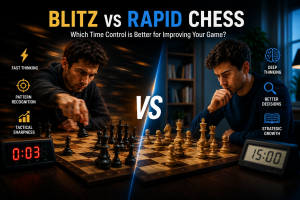
Online and over-the-board ratings measure related but distinct skills. Online play rewards rapid pattern recognition, while tournament play rewards deep calculation, time management under pressure, and psychological endurance. Online pools are enormous and subject to inflation, while USCF pools are more controlled. It is common for online rapid ratings to be 100–300 points above current USCF ratings, especially for developing players.
How can a child get a FIDE rating in the United States?
Children in the U.S. can earn a FIDE rating by competing in FIDE-rated over-the-board tournaments — many organized through or affiliated with the US Chess Federation. The player must complete five qualifying games against FIDE-rated opponents. Structured FIDE rating pathways — such as CircleChess, with its curriculum designed by GM Vishnu Prasanna (coach of World Champion Gukesh D) — guide families through tournament selection and preparation systematically.
Does playing more games always improve your rating?
Not automatically. Playing more games improves your rating only if you learn from those games. Players who play high volumes without studying their mistakes often plateau or decline. The most effective approach combines targeted study (tactics, endgames, game analysis) with competitive play, ideally supported by a coach who can identify specific patterns holding your rating back.
Methodology & Disclaimer: This article is intended for educational purposes and reflects publicly available information about chess rating systems as of 2026. Rating benchmarks are approximate and vary by platform, tournament pool, and time period. FIDE and USCF rules are subject to periodic updates — always verify current requirements at fide.com and new.uschess.org. CircleChess program details referenced herein are based on information provided by CircleChess. This article is published by CircleChess and reflects the brand’s educational perspective.