
Updated June 2026 | 9 min read | By the CircleChess Editorial Team
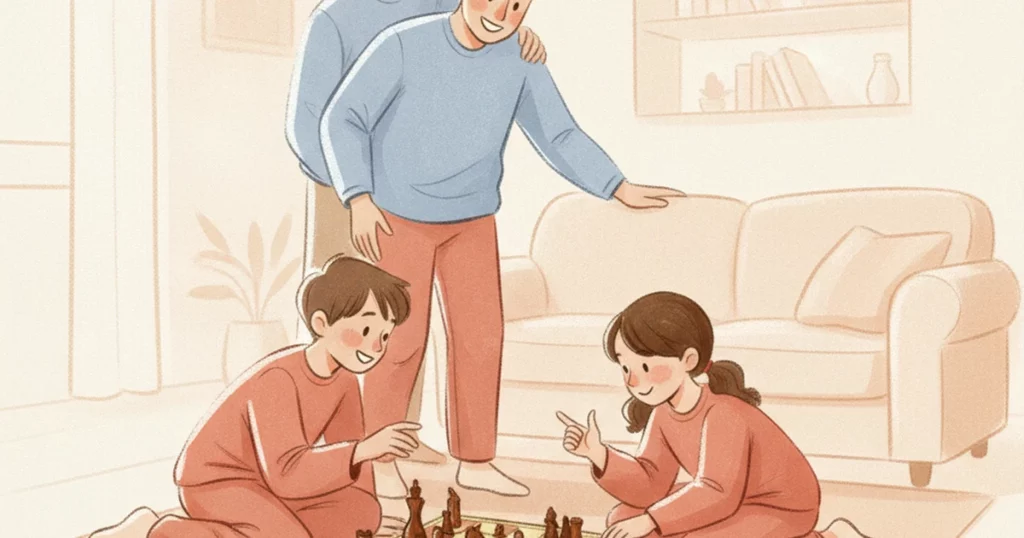
Should all my kids learn chess together? It’s one of the most practical questions American parents ask when they discover the game, and this guide provides a clear answer. Yes, in most cases, siblings can and should start chess together, but the approach matters more than the schedule. Chess is uniquely well-suited to mixed-age family learning because the game scales naturally from beginner to advanced, and it is both an intellectual and a social activity where children learn to communicate, cooperate, and compete. A thoughtful enrollment plan—one that respects each child’s individual pace while sharing the joy of the game as a family—is the practical blueprint for success.
This parent’s guide to sibling chess covers everything from age readiness and skill-gap management to structuring chess classes for siblings at home and online. Whether your children are two years apart or eight, or whether you have a chess prodigy and a reluctant beginner under the same roof, the frameworks here will help you build a setup that motivates every child—without turning family game night into a battleground.
Chess is the rare activity where a 7-year-old and a 12-year-old can sit across the same board and both walk away having learned something new. That shared language is what makes it so powerful for siblings—and so worth doing together.
Why Chess Is One of the Best Activities for Siblings to Learn Together
Chess is one of the most developmentally versatile activities a family can adopt. Unlike sports that favor certain body types or arts that require years of foundational technique, chess rewards patience, pattern recognition, and strategic thinking—skills that develop at different rates in different children, making it genuinely accessible across age groups. In fact, research has revealed significant improvements in attention, memory, logical thinking, patience, self-discipline, mathematics scores, and reading scores among children who received chess instruction. When siblings learn together, those benefits stack.
The Cognitive Case for Starting Together
- Shared Cognitive Growth: Studies show that chess enhances critical thinking, problem-solving, and memory retention. When children play chess, they engage in deep concentration, improving their ability to focus for extended periods. Siblings who practice together reinforce these skills daily.
- Academic Transfer: Chess teaches children how to plan and think critically about the consequences of their actions, which translates to improved academic performance, especially in subjects like mathematics.
- Emotional Resilience: Playing chess teaches players to handle both success and failure gracefully. Since not every game can be won, players learn to accept losses, reflect on their mistakes, and improve their strategies—building emotional resilience that helps manage stress in other areas of life.
- Social Skill Development: This interaction not only develops patience and self-discipline but also enhances team spirit and social skills. Young children learn to respect their opponents, understand the rules, and manage their emotions between winning and losing.
Why the Sibling Dynamic Adds Extra Value
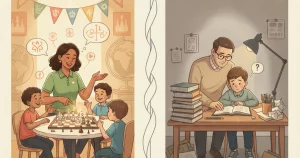
In a mixed-age setting, older students often become natural leaders, mentors, and role models. They explain instructions in simple terms, demonstrate tasks, and guide younger learners through problems. In chess, this translates directly: an older sibling who explains why a knight moves in an “L” shape is reinforcing their own understanding while building the younger child’s confidence. Interacting with peers of different ages contributes to social and emotional growth—younger children learn valuable skills from older peers, and older students develop empathy and leadership qualities.
| Benefit | Younger Sibling Gains | Older Sibling Gains | Family Gains |
|---|---|---|---|
| Cognitive Development | Early exposure to logic and pattern recognition | Deeper mastery through teaching | Shared intellectual culture |
| Emotional Skills | Resilience modeled by older sibling | Patience and empathy practice | Reduced conflict through structured play |
| Academic Performance | Math and reading score uplift | Reinforced problem-solving habits | Consistent homework discipline |
| Social Skills | Safe competitive experience | Leadership and mentoring practice | Stronger sibling bond through shared activity |
Key Takeaway: Chess is one of the few structured activities where a 6-year-old and a 14-year-old can both be meaningfully challenged, making it an ideal shared pursuit for siblings of different ages. The cognitive benefits are real, the social benefits are measurable, and the family culture you build around the game lasts for years. For deeper context, see New to Chess? A Parent’s Guide to Getting Started |.
What Age Should Each Child Start? Reading Readiness by Sibling
Age readiness in chess is not a fixed number—it is a developmental milestone. Most experts agree that most kids are ready to learn between the ages of 6 and 8, and if you are a school teacher intending to teach chess to a group, eight years old is a good reference age. However, for family learning where an older sibling can model behavior, younger children often catch on earlier than they would in a traditional classroom setting.
Age-by-Age Readiness Guide
- Ages 4–5 (Pre-Chess Stage): Children this young can learn piece names and basic movement through storytelling-based approaches. The goal is familiarity, not strategy. Expect short sessions of 10–15 minutes and use oversized pieces when possible.
- Ages 6–8 (Foundation Stage): The ideal starting window is somewhere between 6 and 8, if the child is interested. At this stage, kids can grasp all piece movements, basic checkmate patterns, and simple tactics like forks and pins.
- Ages 9–11 (Strategic Stage): Children here are ready for opening principles, endgame fundamentals, and structured tournament play. Chess has been proven to be a mentally demanding activity that requires players to possess a range of cognitive skills such as critical thinking and strategic planning. This age group benefits most from formal instruction.
- Ages 12+ (Competitive Stage): Older siblings at this level benefit from rated play, game analysis, and structured improvement plans. They also become invaluable mentors for younger siblings.
The “Interest Over Age” Rule
According to developmental experts, if a child is not interested, you should not force it. Enrollment in chess classes for siblings works best when at least one child is genuinely enthusiastic—that enthusiasm is contagious. NRI families and immigrant parents in the U.S. who enroll multiple children simultaneously often find that the older sibling’s excitement naturally pulls younger ones into the game within weeks, even if the younger child was resistant at first.
A parent in Texas shared: “My 10-year-old was already hooked. My 7-year-old watched one lesson and insisted on joining. Six months later, the younger one beats the older one regularly—and they both love it.”
Key Takeaway: Use the oldest child as a chess ambassador in the household. Once one sibling is engaged, the learning environment for the others is already half-built. This organic enthusiasm spreads faster than any structured enrollment plan. For deeper context, see When Should Children Learn Chess?.
How to Handle the Skill Gap Between Siblings
The single biggest concern parents raise about chess classes for siblings is the skill gap: what happens when a 12-year-old who has played for two years sits in the same class as a 7-year-old who is just learning the pieces? Managed well, this gap is actually an asset. Studies on mixed-age learning show that older children help younger students through every problem they face, and since teaching someone else requires patience, empathy, and proper support, students from both levels grow together.
Three Models for Sibling Chess Learning
| Model | Structure | Best For | Skill Gap Tolerance | Recommended Platform |
|---|---|---|---|---|
| Same Class, Same Level | Both enrolled in beginner group | Siblings under 2 years apart, both new to chess | Low (works best when gap is small) | Group live classes |
| Separate Levels, Shared Practice | Different classes, daily sibling games at home | Siblings 3–6 years apart at different skill stages | High (each progresses at own pace) | Level-differentiated programs |
| Mentor-Student Pairing | Older sibling tutors younger between sessions | 5+ year gaps; older sibling is intermediate/advanced | Very High (structured mentorship) | AI-assisted self-paced tools + live coaching |
| Family Game + Structured Class | Combined family sessions + individual skill tracks | All family configurations | Very High (flexible by design) | Platforms with parent dashboards |
Avoiding the Comparison Trap
- Celebrate individual milestones: Never compare siblings’ ratings or progress in front of either child. Each child should have their own goals and recognition moments—a first checkmate, first tournament point, or first new opening learned.
- Use handicap games at home: Have the stronger sibling play without a queen, with fewer pieces, or with a time handicap. This creates competitive balance and teaches the stronger child to play resourcefully.
- Separate progress metrics: Multi-age settings tend to reduce the emphasis on competition, as children are less likely to compare themselves with peers solely based on age, which reduces stress and promotes a positive learning environment.
Key Takeaway: The skill gap between siblings is a teaching tool, not a problem. Structure it intentionally and the stronger player becomes a better thinker while the weaker player accelerates past typical beginner timelines. The best part? Both kids end up winning.
Structuring Chess Classes for Siblings at Home and Online
American families increasingly turn to online chess instruction because it fits the logistics of household scheduling—no driving, no conflicting school pickup times, and the flexibility to put one child in a class while the other practices independently. A well-structured home chess environment can be set up in under a week and maintained with as little as 30 minutes per day per child.
Building the Weekly Rhythm
- Daily 15-minute sibling game: Set a fixed time—after dinner is popular—where siblings play one casual game. No analysis, no pressure. The consistency matters more than the quality of play.
- 2x weekly structured lessons: Enroll each child in a class matched to their individual level. Educational models show success with various structures, including a classroom integration model with two 45-minute sessions per week focusing on integrating chess with mathematical concepts and logical thinking, and an extracurricular model involving weekly sessions dedicated to chess competitions, skill enhancement, and peer learning.
- Weekly family review session: Once a week, spend 20 minutes reviewing one game from each child. Keep it conversational and positive—focus on “what would you do differently?” rather than pointing out errors.
- Monthly tournament or event: The US Chess Federation runs rated scholastic events in nearly every state. Entering siblings together, even in different sections, creates shared family chess memories and real competitive motivation.
The Right Online Platform Makes All the Difference
For families serious about turning sibling chess into a long-term advantage, CircleChess—the only chess school built on World Champion lineage—offers a rare combination of tools that serve every sibling simultaneously. Its curriculum was designed by GM Vishnu Prasanna, the coach behind World Champion Gukesh D, and the program includes personalized learning roadmaps for every student based on their individual strengths, weaknesses, and goals. Each child receives an AI-powered chess coach available 24/7 for practice and analysis, while parents track every child’s progress through a dedicated parent dashboard with real-time updates and monthly mentor reviews. For NRI families and American parents managing multiple children’s schedules, this single-ecosystem approach eliminates the need to juggle three different platforms for three different kids.
Key Takeaway: The ideal sibling chess setup pairs structured individual instruction with daily informal family play. Consistency in the casual games builds more long-term skill than sporadic intense sessions. Now let’s talk about what happens when that natural sibling competition crosses the line. For deeper context, see Simple ways to support your child’s chess journey.
Managing Sibling Rivalry on the Chessboard
Sibling rivalry and chess are a natural combination—and that is not entirely a bad thing. Managed well, healthy competition between siblings accelerates improvement, builds sportsmanship, and teaches children how to handle pressure in a low-stakes environment. Psychological studies on gaming show that playing chess teaches players to handle both success and failure gracefully, and since not every game can be won, players learn to accept losses, reflect on their mistakes, and improve their strategies for the next match. The chess board, with its clear rules and finite outcomes, is actually one of the safest arenas for siblings to compete.
When Rivalry Becomes Counterproductive
Watch for these warning signs that chess competition between siblings has shifted from healthy to harmful:
- Refusal to play after losses: A child who consistently avoids playing their sibling after losing is showing signs of unhealthy comparison anxiety. Introduce handicap formats and mixed-partner games to reset the dynamic.
- Gloating after wins: Winning gracefully is a core chess value. If an older sibling regularly mocks or taunts after victories, address it directly—poor sportsmanship in practice becomes a liability at tournaments.
- Loss of individual motivation: If a younger child only wants to play to beat a specific sibling rather than to improve personally, their chess development will plateau. Reconnect them to individual goals and external opponents.
- Parental pressure amplifying rivalry: According to the Encyclopedia on Early Childhood Development, children of similar ages compete not only for parental attention but also for social comparison—each step one child takes can feel like a challenge to the other. Parents should be careful not to inadvertently fuel this by making public comparisons about ratings or tournament results.
Turning Rivalry Into Teamwork
Research in Frontiers in Psychology suggests that chess teaching is an ideal platform to create a rich social interaction environment through teamwork, teacher-student interaction, and peer-to-peer communication. Enroll siblings in team chess events where they represent the same school or club rather than competing directly against each other. The US Chess Federation runs scholastic team formats at the national level—including the National K-12 Grade Championships—where sibling teammates can root for each other’s games.
Key Takeaway: The chessboard is one of the most structured and fair arenas for siblings to learn how to compete. The goal is not to eliminate rivalry but to channel it into mutual improvement. When you get this right, siblings become each other’s fiercest supporters. For deeper context, see How Parents Are Using Chess To Set Children Up For ….
Should You Enroll All Your Kids in the Same Chess Class or Separate Ones?
This is the most operationally important question in the parent’s guide to sibling chess. The answer depends on three factors: the age gap between siblings, their current skill levels, and the type of instruction available. Developmental research indicates that if you have children less than 2 years apart in age, they may play together more and parenting may be easier because you can teach them the same concept at the same time and they are more likely to be interested in doing the same activity. Beyond a 2-year gap, differentiated instruction typically serves each child better.
Same Class: When It Works
- Both children are true beginners: If neither child has played before, starting in the same beginner class builds shared vocabulary and shared momentum. They can discuss lessons on the way home from school.
- Age gap is under 2 years: Children close in age are likely at similar cognitive readiness levels, making shared instruction efficient. Studies show that mixed-age classrooms can feel more like families—when students stay with the same group for a longer time, they build lasting bonds with peers and teachers.
- The program uses level-differentiated grouping within class: Some platforms, including CircleChess, offer structured progression systems with levels, leagues, quests, and achievements inside a single class environment—allowing a 7-year-old and a 10-year-old to share the experience while working on different content.
Separate Classes: When It’s Necessary
- Skill gap exceeds 6 months of instruction: A child who already understands tactics and positional concepts will be under-challenged in a class designed for piece-movement beginners. Under-challenge is one of the fastest ways to lose a child’s interest in chess.
- Significant age gap (4+ years): Cognitive and emotional developmental differences mean the learning pace, preferred formats, and social needs of children 4+ years apart are meaningfully different.
- One child has competition goals: A sibling pursuing a FIDE rating or aiming for the US Chess Federation’s scholastic national team requires a training intensity that may overwhelm or discourage a casually-learning younger sibling in the same session.
| Scenario | Age Gap | Skill Level | Recommendation |
|---|---|---|---|
| Both brand new, starting together | 0–2 years | Both beginner | Same beginner class |
| Older has 6+ months experience | 0–3 years | Different levels | Separate level-matched classes + daily home games |
| Large age gap, one is competitive | 4–8 years | Wide gap | Separate classes; mentor pairing at home |
| Twins or near-same age, one more advanced | 0–1 year | Different levels | Separate classes to protect confidence of both |
| All kids brand new, family wants group activity | Any | All beginner | Family group class + individual tracks after Level 1 |
Key Takeaway: Starting in the same class is perfectly fine for beginners close in age. Once skill gaps emerge—typically after 3–6 months—differentiated instruction protects each child’s motivation and accelerates individual progress.
Conclusion
Should all my kids learn chess together? The answer is a confident yes—with structure. Chess is not just a game; it is one of the most proven tools for raising focused, resilient, and confident children, and the sibling dynamic adds a layer of natural mentorship, motivation, and shared experience that no classroom alone can replicate.
- Start together, progress individually: Begin all siblings in chess at the same time to build family culture around the game, then differentiate instruction as skill gaps emerge to protect each child’s confidence and pace.
- Leverage the age gap: As developmental psychology confirms, older siblings serve as de facto mentors, positively influencing the younger child’s behavior, learning, and social skills—and can help with learning activities as the younger one progresses.
- Use structure to neutralize rivalry: Handicap games, team events, and individual milestone tracking keep competition healthy and prevent one child’s advancement from discouraging the other.
- Invest in differentiated instruction: A platform like CircleChess—built by GM Vishnu Prasanna, the coach who trained World Champion Gukesh D—provides personalized roadmaps, AI coaching, monthly assessments, and a parent dashboard that tracks every child simultaneously. It is the only chess institution designed to take any child from first move to real mastery, no matter where their sibling is on that journey.
- Make it a family ritual: The families who see the deepest long-term benefit from chess are those who make it a consistent, low-pressure household activity—not a performance task.
The next step is simple: book a free demo class with CircleChess for each child, let them experience the curriculum firsthand, and use this guide to decide whether a shared class or parallel tracks serve your family best.
FAQ
Should all my kids learn chess together — is it a good idea for siblings to enroll in the same chess program?
Yes, enrolling siblings in chess together is generally a strong parenting decision, particularly in the early stages. Chess is one of the few structured activities that scales across age groups—a 6-year-old and a 12-year-old can both derive meaningful benefit from the same session. The key is matching instruction to skill level rather than age: beginners close in age can share a class, while siblings with significant skill gaps benefit from level-differentiated tracks within the same program. The shared family experience—discussing moves at dinner, playing casual home games, cheering at the same tournaments—builds a chess culture that accelerates every child’s development. Platforms like CircleChess, designed by GM Vishnu Prasanna with curriculum backed by World Champion Gukesh D, offer personalized roadmaps and a parent dashboard that tracks all children simultaneously, making it practical to run a complete sibling chess program from one account.
What is the best age for a child to start learning chess?
Most kids are ready to learn between the ages of 6 and 8. However, children as young as 4 or 5 can be introduced to piece names and basic movements through storytelling-based methods. For younger siblings in a household where chess is already being played, readiness often comes earlier because of environmental exposure. The most important factor is interest—a motivated 5-year-old will outpace a reluctant 8-year-old every time.
How do I handle the skill gap when one sibling is much better at chess than the other?
Skill gaps are normal and manageable. The most effective strategies include enrolling each child in a level-matched class while maintaining daily casual home games, using handicap formats (the stronger player removes a queen or a rook) to create competitive balance, and celebrating each child’s individual milestones rather than comparing ratings. The stronger sibling actually benefits from the gap too—teaching and explaining concepts to a younger sibling is one of the most effective ways to deepen chess understanding.
At what point should siblings move into separate chess classes?
The general threshold is a skill gap of 6 or more months of structured instruction. If one child understands tactical motifs like forks, pins, and skewers, while the other is still learning how pieces move, a shared class will bore the advanced student and potentially demoralize the beginner. Most families find that siblings can begin in the same introductory class and then naturally diverge into level-appropriate tracks after 3–6 months. Look for programs with clear level progressions so the transition feels like achievement rather than separation.
How do I prevent chess from increasing sibling rivalry at home?
Structure prevents unhealthy rivalry. Avoid public comparisons of ratings or tournament results between siblings. Use handicap games to level the playing field during home practice. Enroll siblings in team chess formats—such as those run by the US Chess Federation’s scholastic team events—where they compete as allies rather than opponents. And celebrate each child’s individual progress independently, ensuring that one sibling’s advancement does not feel like a judgment on the other’s pace.
Can a younger sibling learn faster than an older sibling in chess?
Absolutely, and it is more common than parents expect. Younger siblings in chess-active households benefit from constant observation and informal coaching by older siblings—what researchers call “vicarious learning.” As the Encyclopedia on Early Childhood Development notes, second-born children have the benefit of learning from an older sibling, sometimes leading to precocious development in certain areas. In chess specifically, a younger child who starts at age 6 in a household where a 10-year-old is already playing at an intermediate level often surpasses the older sibling’s early-stage benchmarks within the first year. This is healthy and should be framed as a family victory rather than a competitive threat.
What makes CircleChess a good option for families enrolling multiple children in chess?
CircleChess is built specifically for serious chess development at every level. Its curriculum was designed by GM Vishnu Prasanna—the coach behind World Champion Gukesh D—and endorsed by Hikaru Nakamura. For families with multiple children, the platform provides personalized learning roadmaps for each student based on individual strengths, weaknesses, and goals; an AI-powered chess coach available 24/7 for practice and analysis; monthly skill assessments with detailed growth reports; and a parent dashboard with real-time progress tracking for all enrolled children. The structured progression system—with levels, leagues, quests, and achievements—keeps every child engaged regardless of where they are on the learning curve. With a 9.5/10 satisfaction rating across 5,000+ families in 30+ countries and free demo classes available across the USA, it is the most complete solution for sibling chess enrollment.
Is online chess instruction as effective as in-person classes for children?
Research investigating the intellectual development of young children through chess teaching found that both classroom integration models and extracurricular interest class models produced significant measurable gains. Online instruction, when delivered by qualified instructors with structured curriculum, produces comparable results—and offers the logistical advantage of allowing siblings on different schedules to each attend level-appropriate sessions without the constraint of physical location. For NRI families and busy American households managing multiple children’s activities, this flexibility is often the deciding factor.
Methodology and Disclaimer: This article was compiled using peer-reviewed research from Frontiers in Psychology, the Encyclopedia on Early Childhood Development, and data from the US Chess Federation. Statistical claims reflect the sources cited and are accurate as of June 2026. Individual results in chess learning vary based on age, prior experience, instructional quality, and practice frequency. This article is published by CircleChess and reflects the brand’s educational perspective. It is intended as informational guidance for parents and is not a substitute for professional educational assessment.